
How Your Oven Can Help Solve the Global Waste Problem.
Waste-to-Energy – Get Rid of the Trash!
Hello, dear community,
Have you ever wondered if trash could be put to good use? The topic of “Waste-to-Energy” is less common in Germany and yet hotly debated, but it’s of paramount importance worldwide. But why? In Germany, we have a largely robust and advanced circular economy, which will—and must—experience rapid growth in the future, even within the EU and the U.S. Nevertheless, the total amount of waste worldwide will continue to rise.
And what role might your oven play in this?
I’ll try to explain this from a technological perspective.
If you have a modern oven, you generally no longer have to clean it by hand. It has a special program called the pyrolysis function. Roughly speaking, your oven is heated to such a high temperature (~500 degrees Celsius) that food scraps and grease splatters are “burned” into ash. Chemically speaking, the organic compounds (your leftovers) undergo uncontrolled decomposition in the absence of oxygen. The resulting ash is a mixture of organic residues.
If this technical process is applied to biomass, for example, it’s possible to produce fuels and chemicals from waste.
It is precisely this process that people around the world are trying to utilize in modified forms. The goal is to produce diesel, naphtha (crude gasoline), and kerosene without generating toxic emissions.
In my last post about the petroleum industry, I explained some of its uses.
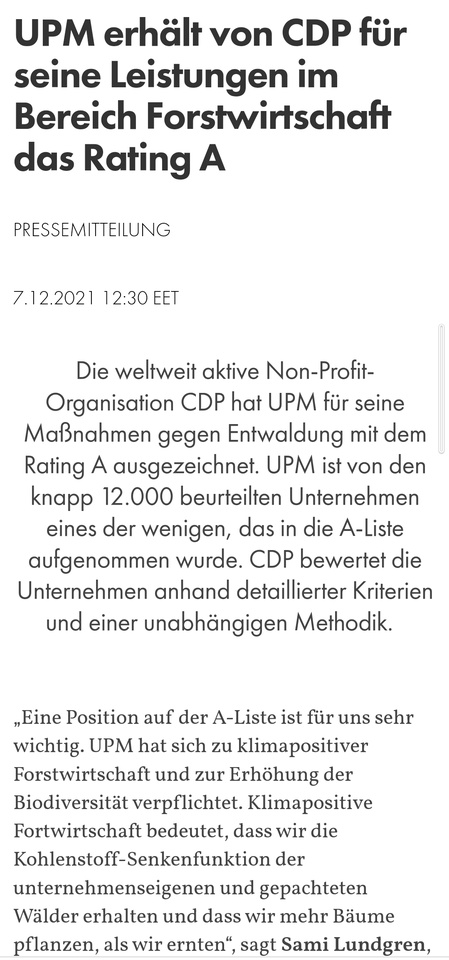
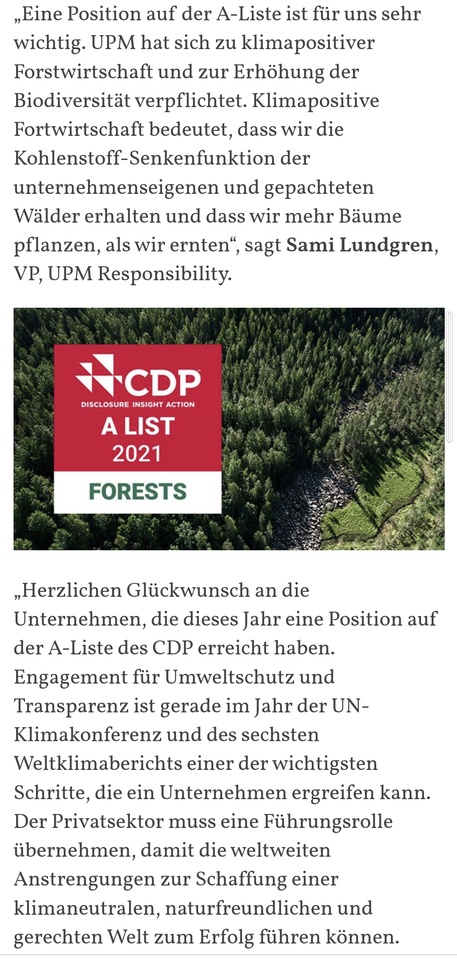
However, this should not be confused with the emerging and existing biorefineries, such as those operated by UPM $UPM , Verbio $VBK (+2,32 %) or Lenzing $LNZ (+0 %) . In these facilities, wood and various types of grain are used almost exclusively as biomass.
What can be used for this?
Biowaste is, of course, ideally suited for this purpose, since it consists primarily of organic materials, such as hydrocarbons and their derivatives.
But “plastic” is also a very suitable material for this process. That makes sense, since it, too, consists of organic materials. Accordingly, one could roughly say that all products made from the original sources—crude oil and natural gas—could also be converted back.
Well…
Many everyday items are compounds that, while organic, often have fluorine, chlorine, or sulfur compounds “mixed in.” As we know, these aren’t exactly the healthiest substances for everyday use.
But there are technical solutions for this as well:
As I briefly described above in the section on pyrolysis, the materials undergo gasification. In most cases, this results in the chemical bonds being broken, thereby breaking down the substances.
Fluorine, chlorine, and sulfur, for example, can be easily “rebound” chemically, so that no new emissions result from them.
Is the implementation complicated, and who would benefit from it?
The process involves key steps that are already among the top tier in process engineering today. In most cases, the individual steps are not consolidated within a single company but, as is typical, are specialized.
1. Waste separation:
As is already standard practice in Germany, recyclable waste is returned to the circular economy. Residual waste and organic waste, on the other hand, are very well suited for this process.
The waste disposal companies we’re familiar with benefit particularly from this. This could be your local waste management authority, but it could also be global corporations such as Waste Management $WM (-0,05 %) , Republic Services $RSG (+0,45 %) , or Alba $ABA .
2. Separation
Here, the process involves further separation using mechanical methods such as grading or sorting. The winners here are the specialists in separation equipment, such as Tomra $TOM , Veolia $VIE (+1,49 %) or Derichebourg $DBG (-0,84 %) .
3. Incineration
This is the pyrolysis process mentioned earlier, similar to an oven. Here, the materials are incinerated. The resulting gases are relevant to the process.
The ash, on the other hand, is enriched with metals and can therefore be returned to the circular economy. One potential beneficiary of this is Befesa $BFSA (-0,4 %) .
Ash that cannot be reused, on the other hand, can be stored in landfills with virtually no problems. In Germany, it is already common practice today to fill soil layers with ash, for example, to backfill salt mining sites.
(Pyrolysis is not the only factor at play in this incineration process. It is more accurate to also mention the processes of “gasification” and “combustion.” The resulting “excess” heat can then be used, for example, to power a generator and produce electricity.
This has the advantage of generating energy on the one hand and cooling the gases on the other.)
4. Conversion—the interesting part
By passing the gases through various catalyst layers in a multi-stage process, the desired chemicals can now be produced.
This includes “pyrolysis oil,” which has somewhat similar properties and can be fed into a conventional refinery.
This works particularly well with diesel and kerosene. In fact, renewable fuels that comply with the relevant DIN standards can already be produced today.
But how could I benefit from this “trend”?
In fact, many energy providers have already addressed this issue. A major pioneer in this area is actually Eni $ENI (+0,47 %) in Europe. Waste Management $WM (-0,05 %) from the U.S. has been harnessing landfill gas for years—though primarily for local heat generation. That is set to change in the future, with “waste-to-energy” processing also set to take off. The oil giants BP $BP. (+0,7 %) and Shell $SHEL (+0,74 %) are investing in this technology sector.
Advantages:
- The problem of waste taking up space can be mitigated.
- Emissions from landfills can be significantly reduced through reuse.
- Alternative sources of fuel, chemicals, and heat are created.
- It can be considered “net zero” since the emissions were already generated in the feedstock.
- The necessary technologies are already sufficiently mature and proven.
- A quick potential solution for decarbonizing the transportation sector.
Disadvantages:
- Fossil fuel alternatives are significantly cheaper.
- Plant capacities are completely insufficient for mass-market application.
- High costs relative to low output.
- Low efficiency due to very high energy consumption.
- Enormous logistical efforts are required to transport waste to the processing facility.
- A steady supply of waste must be maintained to sustain the value chain.
- Public interest is very low.
- Your home oven is unsuitable for producing fuels. – Not recommended for cooking.
Which topics related to alternative energy options interest you?
The ongoing plan is:
- “Green ammonia”—why it offers better prospects than hydrogen.
- Lithium—why market capitalizations are completely misweighted.
Do you have any requests, suggestions, or criticism?