I think they also do waste management that is quite a good business. French company

Veolia Environment
Price
Debate sobre VIE
Puestos
38Veolia Expanded
$VIE (+0,44 %) - I increased my position in Veolia today. I’ve had the stock in my savings plan for some time, but it just seemed to be moving very slowly, so I’m giving it a little nudge now. I also think the price is good.
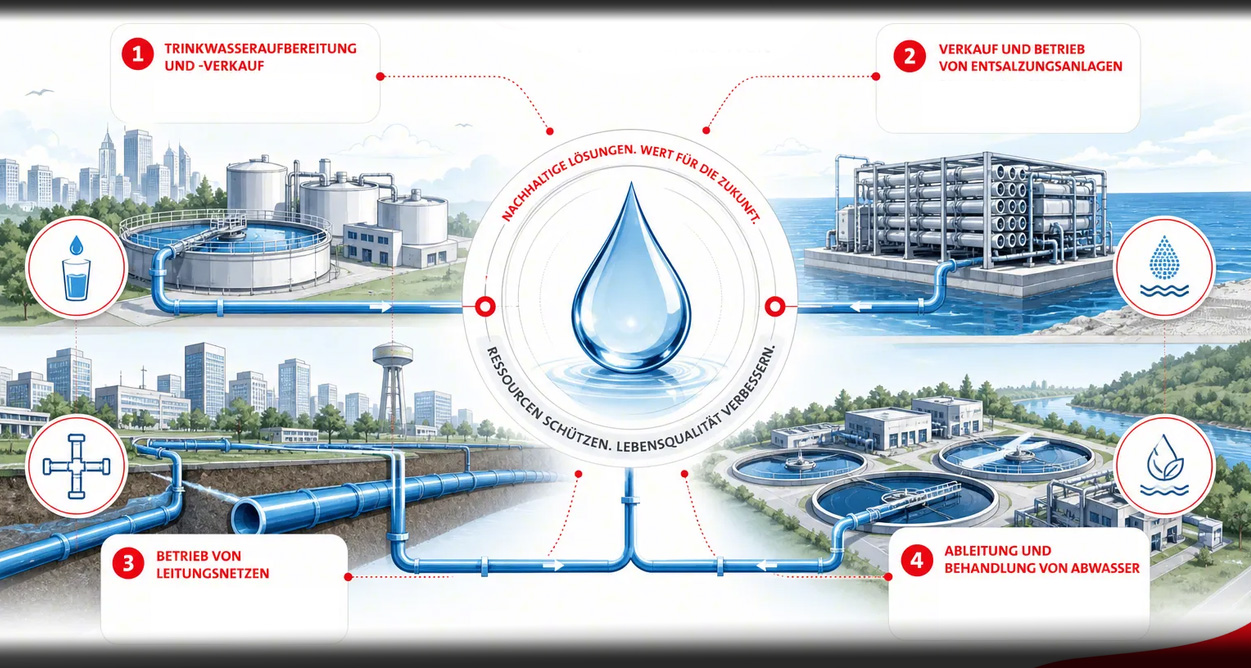
In the medium and long term, the sectors of drinking water treatment, water networks, and wastewater disposal/treatment are gaining importance; Veolia also pays a decent dividend (even if its headquarters in France is somewhat of a drawback due to taxation)—which fits well into my long-term dividend-focused portfolio.
(Illustration created with Lovart.ai, modified in Photoshop)

Cooperation for wastewater treatment
Cooperation between $VIE (+0,44 %) and $AMZN (+4,54 %) is a very interesting collaboration.
- Source: www.Aktien.news
Easter special 🐰 Easter special 🐇 What is the importance of desalination plants?
Hello my dears,
so that you have something to read and analyze for Easter. There's another one for you in the evening:
EASTER special
If this unnecessary war is about the destruction of important infrastructure that ensures the survival of humans and animals. It is certainly not a pleasant and enjoyable topic.
The Pope has taken a stand on this war today and has found clear words.
I hope that these words have reached the right people.
But as investors, we are of course also concerned about this issue. From the perspective of who are the specialists here and who can rebuild this important infrastructure.
Ladies and gentlemen, let's discuss this in the comments. I'm looking forward to it.
Is a war over water looming in the Middle East?
Attacks on water facilities are rather rare in wars, but they have dramatic consequences. In Bahrain and Iran, authorities recently reported an attack on a desalination plant - such facilities are vital for millions of people in the Middle East. Water economist Esther Crauser-Delbourg warns of a war "far more devastating than the current one" in the event of targeted attacks on water.
What is the significance of desalination plants?
The Middle East is one of the driest regions in the world and is therefore dependent on desalination for water production. According to a study published in the journal Nature, 42 percent of the world's desalination capacity is located in the region. In the United Arab Emirates, 42 percent of drinking water comes from such plants, in Kuwait it is 90 percent, in Oman 86 percent and in Saudi Arabia 70 percent, according to a study by the French research institute Ifri. "Without desalinated water there is nothing",
Desalination plants play an important role in Kuwait's drinking water supply. An Iranian attack has now severely damaged two power plants with such facilities.
05.04.2026
Wichtige Kraftwerke getroffen: Schwere Schäden in Kuwait durch iranischen Angriff - ntv.de
On Sunday, an Iranian drone hits a seawater desalination plant in Bahrain. Millions of people in the Gulf States depend on such facilities. An escalation of the attacks would have devastating consequences.
10.03.2026
Entsalzungsanlagen im Visier: Droht im Nahen Osten ein Krieg um Wasser? - ntv.de
🌍 What happens if desalination plants in the Middle East are damaged?
Destruction of such plants leads to:
- Acute water shortage
- Need for emergency supplies
- Need for reconstruction
- Need for engineering expertise
- Need for spare parts, membranes, pumps, control technology
🧩 Industries that are typically in greater demand in such situations
1️⃣ Engineering & consulting companies
They are needed for damage analysis, reconstruction planning and environmental assessments.
Examples (neutral, without rating):
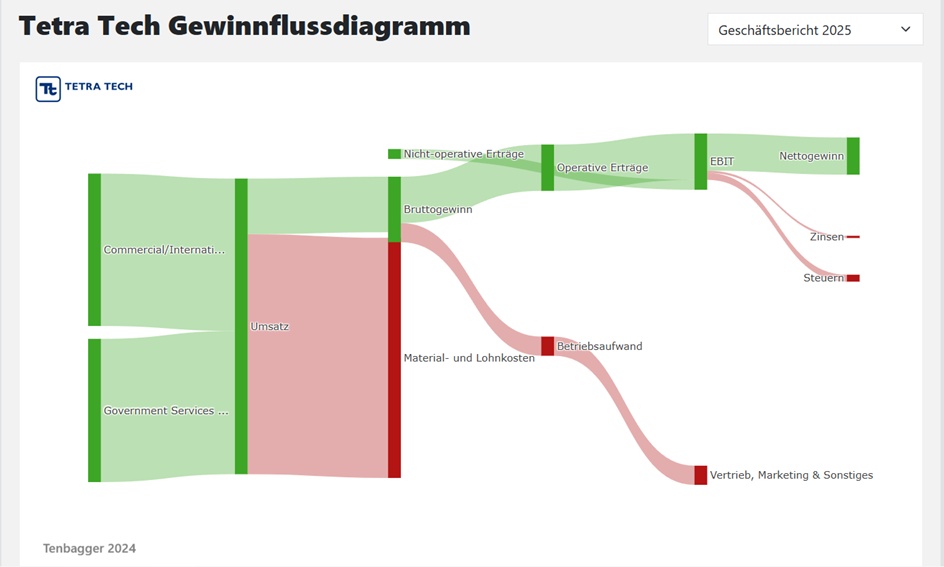
- Tetra Tech
- AECOM
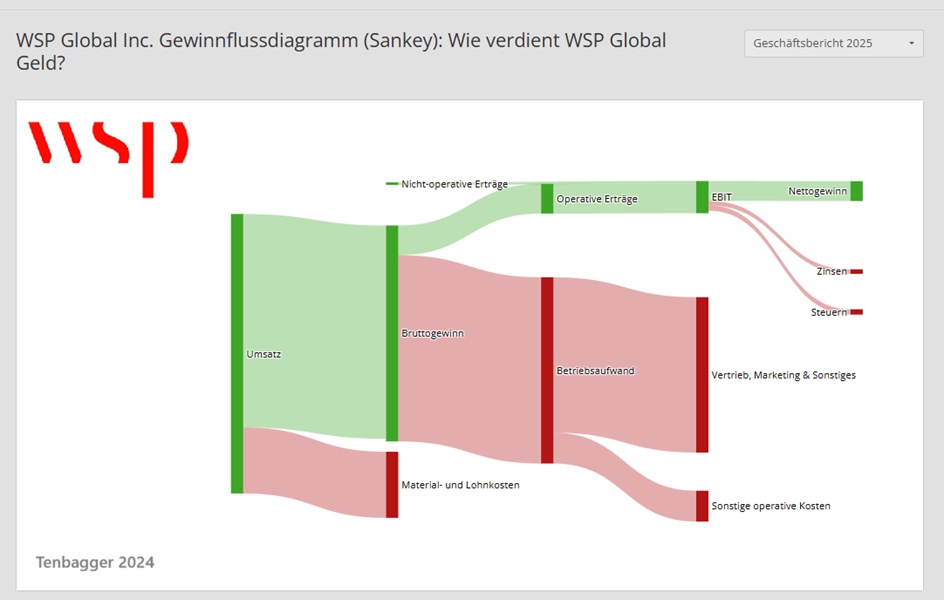
- WSP Global
These companies supply planningnot construction.
2️⃣ EPC companies (Engineering, Procurement, Construction)
They are contracted for repair and reconstruction.
Typical players in the Middle East:
- Doosan Enerbility
- Hitachi Zosen
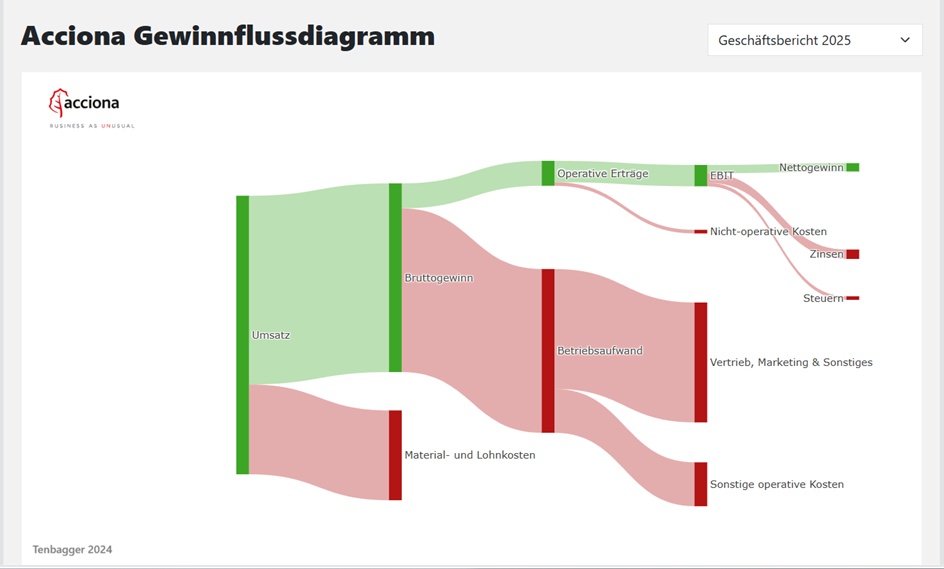
- Acciona
- Metito (not listed)
- Veolia / Suez (for operation & modernization)
3️⃣ Manufacturer of membranes, pumps, control technology
When RO systems are damaged, components need to be replaced.
Typical global suppliers:
- DuPont Water Solutions (membranes)
- Toray Industries (membranes)
- Xylem (pumps, sensors)
- Grundfos (pumps)
- ABB / Siemens (control technology)
🌊 Listed companies with a focus on planning
1.🔹 Tetra Tech - (Ticker TTEK) $TTEK (+0,37 %) (@Simpson )
- Leading consulting and engineering company focusing on water, environment, infrastructure and high-end engineering.
- Asset-light business model: provides planning, analyses, environmental assessments, digital water solutions - but does not build plants itself.
- Strong in the area of "Digital Water": data analysis, monitoring, SCADA systems, optimization of water infrastructure.
- Active worldwide, including projects in the Middle East (feasibility studies, environmental assessments, technical consulting).
- High margins for the industry (EBITDA ~10-12%) and stable demand from long-term infrastructure and government projects.
- Role in desalination market: enabler/consultant - supports planning & optimization, but not EPC contractor or operator.
Year Earnings p share Earnings growth
2025 0,80
2026 1,33 +65,59 %
2027 1,47 +12,01 %
2028 1,58 +6,09 %
Year P/E ratio PEG
2025 36,08 +0,55
2026 20,11 +1,91
2027 18,20 +2,54
2028 16,98 +1,83
Year Dividend Yield
2025 0,21 0,72 %
2026 0,22 0,82 %
2027 0,26 0,97 %
2028 0,29 1,09 %
(in euros)
2.🏗️ AECOM - (Ticker ACM) $ACM (+5,29 %)
- One of the largest engineering and infrastructure consulting firms in the world, focusing on large-scale projects in water, transportation, energy and environment.
- Strong in water infrastructure, including planning, optimization and modernization of desalination plants, waterworks and distribution networks.
- Not an EPC contractor but, like Tetra Tech, a high-end engineering and consulting player (feasibility studies, design, project management).
- Very active in the Middle East, especially in government and mega projects in Saudi Arabia, UAE and Qatar (water, energy, smart cities).
- Asset-light business model with stable, recurring revenues from long-term infrastructure and government contracts.
- Market positioning: One of the top 3 global engineering service providers, often leading the planning & management of large water and desalination projects.
Year Earnings p share Earnings growth
2025 3,63
2026 4,61 +34,68 %
2027 5,65 +14,88 %
2028 6,11 +8,66 %
Year P/E ratio PEG
2025 22,64 +0,84
2026 15,84 +0,71
2027 12,94 +1,59
2028 11,97
Year Dividend Yield
2025 0,66 0,80 %
2026 0,74 1,01 %
2027 0,83 1,13 %
2028 1,23 1,68 %
(in euros)
🌐 WSP Global - (Ticker WSP) $WSP (-0,42 %)
- One of the largest engineering and consulting service providers worldwide, with a focus on infrastructure, environment, water, energy and urban development.
- Very strong in water & desalination, especially in planning, optimization, hydraulic modelling and technical studies for large scale plants.
- Not an EPC contractor but, like AECOM and Tetra Tech, a high-end engineering and consulting player with a focus on design, project management and technical expertise.
- Active worldwide, including the GCC region (Saudi Arabia, UAE, Qatar), where WSP is frequently involved in mega projects - from water infrastructure to smart city systems.
- Asset-light business model with stable, recurring revenues from government and infrastructure projects; margins typically solid for the industry.
- Market positioning: One of the top 3 global engineering groups, often leading complex water and environmental projects, including desalination.
Year Earnings p share Earnings growth
2024 3,36 22,45 %
2025 4,59 +36,67 %
2026 5,34 +17,26 %
2027 7,08 +34,76 %
Year P/E ratio PEG
2024 48,84 +1,28
2025 33,67 +2,05
2026 25,57 +0,79
2028 19,30
Year Dividend Yield
2024 0,93 0,59 %
2025 0,93 0,60 %
2026 0,93 0,68 %
2027 0,93 0,68 %
(in euros)
🌊 Listed companies with a focus on repair and reconstruction
1.💧 Acciona - (Ticker ANA) $ANA (-0,09 %)
- Spanish infrastructure and energy group, one of the world's leading providers of water, desalination and sustainable infrastructure.
- Strong EPC player: Acciona plans, builds and operates large seawater desalination plants (RO technology) - in contrast to Tetra Tech, which primarily provides consulting services.
- Very active in the Middle East, especially in Saudi Arabia, the UAE and Qatar; involved in several of the largest RO plants in the region.
- Technology focus on energy-efficient RO systems, often combined with renewables (solar + RO).
- Solid margins and stable demand as water infrastructure is growing strongly worldwide; business model less volatile than traditional EPC groups.
- Market positioning: One of the top 3 global RO desalination providers, with a strong track record in mega projects.
Year Earnings p share Earnings growth
2025 14,74 +90,44 %
2026 8,99 -39,06 %
2027 9,53 +7,23 %
2028 9,83 +2,82 %
Year P/E ratio PEG
2025 12,61 -0,32
2026 25,77 +4,24
2027 24,30 +7,77
2028 23,56 +8,58
Year Dividend Yield
2025 5,54 2,98 %
2026 5,63 2,43 %
2027 5,91 2,55 %
2028 5,93 2,56 %
(in euros)
🌊 Listed companies with a focus on seawater desalination
🔹 1. Veolia Environnement (Euronext: VIE / OTC: VEOVY) $VIE (+0,44 %)
- Global leader in water, waste and energy services
- Very active in the Middle East (Saudi Arabia, UAE)
- Major projects in Saudi Arabia, UAE, Oman, Qatar
- Operates and builds large RO desalination plants
Year Earnings p share Earnings growth
2025 1,71 +17,93 %
2026 2,33 +43,37 %
2027 2,50 +9,24 %
2028 2,77 +11,92 %
Year P/E ratio PEG
2025 17,38 +0,48
2026 14,38 +1,88
2027 13,36 +1,24
2028 12,06 +0,72
Year Dividend Yield
2025 1,50 5,05 %
2026 1,62 4,83 %
2027 1,77 5,29 %
2028 1,92 5,72 %
(in euros) ⬆️ @Dividendenopi
2. ecolab (NYSE: ECL) $ECL (+0,88 %)
- Provider of water treatment technologies, incl. membrane and desalination solutions
Strong in the industrial sector, increasingly also in the Middle East
Year Earnings p share Earnings growth
2025 6,28 -1,22 %
2026 7,06 +15,33 %
2027 8,26 +14,96 %
2028 9,39 +12,41 %
Year P/E ratio PEG
2025 36,06 +2,90
2026 32,29 +1,90
2027 27,59 +2,03
2028 24,29
Year Dividend Yield
2025 2,31 1,02 %
2026 2,51 1,10 %
2027 2,72 1,19 %
2028 3,02 1,32 %
(in euros)
🔹 3. Consolidated Water Co. Ltd (NASDAQ: CWCO) $CWCO (-0,54 %)
- Specializes in seawater desalination
- Operates plants in the Caribbean, but is expanding into regions with water shortages
- - Small but growing - increasingly active in regions with water stress
- - Potential beneficiary of GCC outsourcing
Year Earnings per share P/E ratio
2025 1,14 30,85
2026 1,05 32,37
2027 1,54 22,07
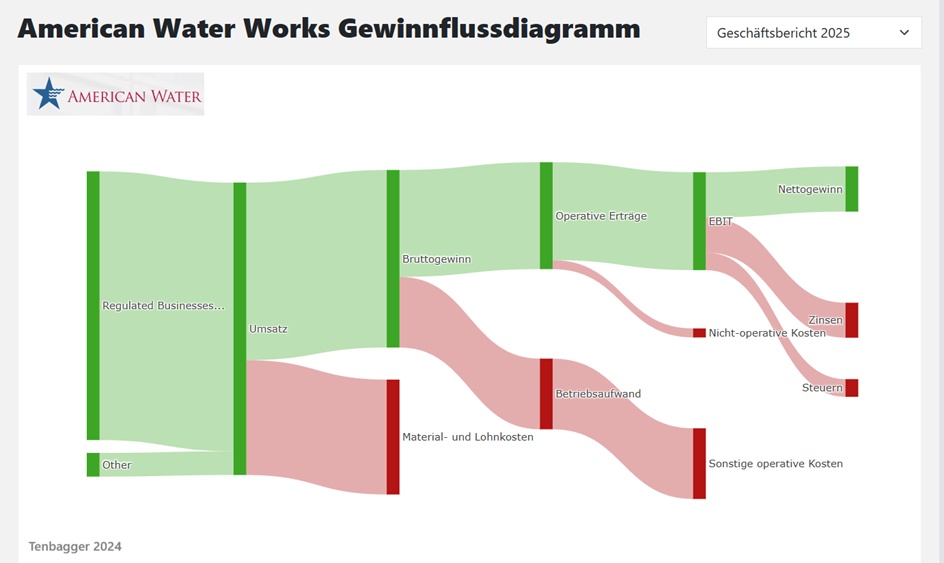
🔹 4. American Water Works (NYSE: AWK) $AWK (+1,79 %)
- Largest listed water utility in the USA
- Active in desalination technologies, including for coastal regions
Year Earnings per share Earnings growth
2025 4,91 +5,57 %
2026 5,27 +7,12 %
2027 5,69 +7,79 %
2028 6,17 +8,22 %
Year P/E ratio PEG
2025 22,93 +3,17
2026 22,64 +2,79
2027 20,94 +2,52
2028 19,33 +2,05
Year Dividend Yield
2025 2,86 2,54 %
2026 3,04 2,55 %
2027 3,28 2,75 %
2028 3,53 2,96 %
(in euros)
🔹 5. Hitachi Zosen Corp (TSE: 7004)
- Japanese plant manufacturer
- Builds large desalination plants, e.g. in the Middle East
- Long-standing partner in Saudi Arabia & UAE
🔹 6. Suez (formerly EPA: SEV - now part of Veolia, but still active)
- Strong in membrane and thermal desalination plants
- Large projects in Saudi Arabia, Qatar, UAE
7. ACWA Power (Tadawul: 2082) - Saudi Arabia
- One of the most important companies in the Middle East for desalination
- Operates the gigantic RO plants, among others Rabigh, Shuaibah, Jubail
- Focus: water + energy + PPP models
- Very strong regional player
ACWA Power Co. is included in 78 ETFs.
3% weighting in Franklin FTSE Saudi Arabia UCITS ETF (FLXS) $FLXS (+0,09 %)
8. Doosan Enerbility (KRX: 034020)
- South Korean large-scale plant manufacturer
- Leader in MSF/MED plants
- Projects in Saudi Arabia, Kuwait, UAE
Doosan Enerbility Co, Ltd. is included in 141 ETFs.
4.98% weighting in UBS Nuclear Economies UCITS ETF USD acc
(BCFW) $IE0009TPHUV6 (-3,66 %)
🏆 Summary for investors
- ACWA Power = the GCC champion (direct exposure to Saudi megaprojects).
- Veolia = global water blue chip with stable cash flows.
- Doosan & Hitachi Zosen = EPC exposure, benefits from large projects.
- Xylem = technology supplier, less cyclical.
- CWCO = small-cap growth, but volatile.
🌍 Why the Middle East in particular?
- Region holds over 50 % of the global desalination market
- Saudi Arabia, UAE and Qatar are investing heavily in large-scale RO plants
Dear all, thank you for reading.

+ 4

Infrastructure and waste disposal: The profiteers of the nuclear boom
Dear Community,
Where the hunger for energy is being met by nuclear power and the new generation of Small Modular Reactors (SMRs), a massive growth market for downstream services is inevitably emerging.
This applies above all to nuclear waste disposal, the professional dismantling of old plants and the recycling of fuels and water.
Since there is currently no pure "nuclear waste ETF" (at least that I am aware of), we investors must focus on specialized individual stocks that are global leaders in the disposal of uranium and contaminated components (including water).
1. the operational heavyweights for dismantling and disposal
- Veolia ($VIE (+0,44 %)
): Although Veolia is primarily perceived as a global environmental services provider, it also operates a nuclear power plant with Veolia Nuclear Solutions a highly specialized division. As the global market leader in robot-assisted cleaning and the dismantling of highly radioactive sites (such as Fukushima), they are indispensable. They offer technologies for the vitrification of waste ("vitrification", the transformation of liquid or solid nuclear waste into a solid glass body) and for water treatment in contaminated areas. Veolia thus bridges the gap to the traditional water business and covers two key areas in its portfolio at the same time.
- Fortum ($FORTUM (+1,6 %)
): The Finnish energy group is a hidden champion of nuclear aftercare. In addition to operating power plants, Fortum offers specialized services for the purification of radioactive liquids (NUKEM technology) and final disposal. They are a key player in European waste management standards.
- Jacobs Solutions ($J (+1,54 %)
): The US engineering services giant manages major government nuclear sites such as Sellafield (UK) and Hanford (USA). Its focus is on program management for the long-term storage of fuel elements. The SMR connection is particularly exciting: Jacobs is already advising numerous developers on planning the entire life cycle, including disposal.
- Perma-Fix Environmental Services ($PESI (-5,56 %)
): Perma-Fix is regarded as one of the few genuine "pure plays". The company operates its own facilities for the treatment of nuclear and mixed waste. Its core competence lies in massively reducing the volume of nuclear waste before it is transferred to a final repository.
2 The fuel cycle: Cameco and Westinghouse
Cameco ($CCO (-4,55 %)
) is primarily known as a uranium producer, but together with Brookfield Asset Management holds a majority stake in Westinghouse Electric Corporation (electrical engineering). The company thus covers the entire cycle:
- Operations: Cameco produces uranium concentrate (yellowcake), while Westinghouse supplies the reactor technology and maintenance.
- Disposal expertise: Through Westinghouse, Cameco covers the lucrative "back end". This includes the decontamination of process water as well as the conditioning and volume reduction of of radioactive waste.
- Dismantling service: As a technological market leader, the team offers solutions for the dismantling (D&D) of old plants, using specialized filter systems to clean contaminated liquids.
- Market model: Sales are stable through long-term supply contracts. The service division makes the company less dependent on fluctuations in the uranium price, as maintenance and waste treatment are permanent tasks required by law.
Energy Fuels ($UUUU (-5,66 %)
): This company occupies a strategic niche. In its White Mesa Mill they recover uranium from residual materials and waste from other industries. This positions Energy Fuels as a pioneer in "uranium recycling", which reduces dependence on primary extraction and makes waste streams economically viable.
3. specialty materials and water technology
In the nuclear industry, water is not only a coolant, but often also a transport medium for contaminants. This is where the technology leaders come into play:
- Xylem Inc. ($XYL (-0,34 %)
): As a pure water technology company, Xylem supplies the heavy-duty pumping and filtration systems that are essential for the cooling circuits of modern reactors and subsequent wastewater treatment.
- Danaher Corporation ($DHR (+1,05 %)
): Via the divested environmental division Veralto Danaher offers high-precision analytical instruments for monitoring water quality - a critical component for detecting leaks and contamination in real time.
- Umicore ($UMI (+0,43 %)
): The materials technology group is pursuing a "closed-loop" model. In the long term, its expertise in recovering metals from complex industrial waste could play a role in the recycling of power plant components.
The new generation of reactors: SMR specialists in detail
When it comes to direct energy supply for the AI sector, two companies are in the spotlight:
- NuScale Power ($SMR
): The conservative pioneer relies on proven light water reactor technology (VOYGR™). As NuScale traditionally relies on water, the need for water technology (pumps, filters from suppliers such as Xylem) is extremely high. This makes NuScale an ideal partner for traditional infrastructure investors.
- Oklo Inc.$OKLO
): The radical innovator (supported by Sam Altman) develops "fast reactors". The key feature: these can be fueled with recycled nuclear waste (HALEU). Oklo transforms a disposal problem directly into an energy source and thus addresses the waste problem at its root.
Strategic conclusion
If you want to bridge the gap between water cooling and waste disposal, you will find in Veolia the most stable connection.
Jacobs Solutions and Perma-Fix are the most direct options for physical dismantling.
Energy Fuels offers an exciting bet on the recycling of uranium residues, while Xylem and Danaher provide the indispensable technological basis for water management in a nuclear renaissance.
However, the decisive strategic winner of the current nuclear renaissance could be the team of Cameco & Westinghouse ($CCO) (-4,55 %) could be:
By merging uranium mining and reactor technology, they have created a vertically integrated business model. They not only profit from the sale of the fuel, but also control the entire downstream value chain via Westinghouse - from the purification of the process water to the final storage preparation.
As a result, Cameco has risen from a pure mining player to an indispensable infrastructure partner for the energy and AI economy.
In addition, the 80 billion dollar agreement with the US government agreed at the end of 2025 is likely to have cemented Cameco's long-term market leadership in the West (https://de.marketscreener.com/boerse-nachrichten/westinghouse-electric-cameco-und-brookfield-starten-80-milliarden-dollar-offensive-fuer-atomkraft-in-ce7d5ddcd88cf127).
Risk analysis
The nuclear renaissance is more real today than it was ten years ago, but as investors we need to look at two sides of the coin:
Opportunities through regulatory certainty: Waste disposal and dismantling are not "optional services", but permanent tasks prescribed by law. Financing is often already secured by existing provisions of the groups, which makes the service providers (Veolia, Jacobs, Perma-Fix) crisis-resistant.
Risks: Political risks remain. A change of government can delay approval processes for final storage facilities. In addition, the sector is highly emotional; ESG ratings often (still?!) determine how much capital actually flows into the shares.
Could water and waste management technology end up being the safer investment than the actual SMR builders, because it makes money from every technological outcome? How do you see the risk/reward ratio?
Best regards and thank you very much for the positive response and all the feedback on my previous and very first post ✌🏼
Anderlé
Personally, I am currently still playing the hype cycle around the manufacturers, as I expect a greater return here in the short term. In the long term, however, the music is at least as strong here.
Totally attractive - right?
$VIE (+0,44 %) - I have selected this as my new savings plan entry. Strategically, I think wastewater is really quite good as a non-cyclical buy & hold for eternity. What do you think?
Here are my thoughts:
For defensive stocks, I used to bet relatively heavily on utilities (15 years ago) - at that time electricity producers like $EOAN (+1,06 %) (EON) or $RWE (+2,48 %) (RWE) or $CEZ (-0,13 %) (CEZ) . My idea at the time was: electricity will always be needed - in the future even more than today. However, the problem was then the state (de)regulation (free choice of supplier, division between grid operator and electricity supplier) and the energy transition in Germany (more decentralized electricity instead of large power plants). I then gradually sold these shares.
In the case of water and wastewater, however, it is not easy to decouple network and provider, as there is no coherent national network for water and wastewater. In the case of wastewater in particular, there is only one treatment plant where the sludge flows, and there are no branches or alternatives. The operator therefore has a virtual monopoly here. Many municipalities no longer want to operate the plants themselves and outsource supply and disposal to companies such as $VIE (+0,44 %). The fact that the state or the municipalities are much more directly involved (unlike with the electricity supply) means that I don't believe that legislators have any great interest in stirring up the market through regulation.
Water and wastewater disposal will always be needed, which is why the sector is extremely crisis-proof in my opinion. The pollution of water and the need for drinking water treatment will also tend to increase significantly. Here, too $VIE (+0,44 %) and has the necessary expertise in drinking water treatment. The dividend is currently over 4% and the dividend growth looks very good.
(Illustration created with lovart.ai, modified in Photoshop)
Veolia - Savings plan established
$VIE (+0,44 %) . Veolia is a well-established supplier of drinking water, waste water and waste disposal.
Wiki: 'Veolia supplies 100 million people worldwide with drinking water, disposes of the wastewater of 71 million people and serves 40,000 industrial customers.
Why do I like this value?
(Drinking) water is a commodity that is becoming increasingly scarce. It needs to be produced, treated, distributed and disposed of so that it can be used by households and industry. It can hardly be organized decentrally (in contrast to utilities that sell energy/electricity) and is always needed regardless of the economic situation. In my view, it is therefore a non-cyclical, absolutely crisis-proof business model.
I find corporate profits, dividends and dividend growth attractive. I see the stock as a long-term investment.
Water as an investment theme: Why seawater desalination and decentralized treatment are among the most exciting industries of the future
Reading time: 10 minutes
Today I would like to give you a brief insight into what I consider to be an enormously exciting industry of the future.
Water is becoming the strategic resource of our time. While capital flows continue to flow into energy, AI and defense, an industry is growing in the background that is likely to determine security of supply, quality of life and geopolitical stability in the future: the efficient extraction, treatment and distribution of clean water. The combination of seawater desalination and decentralized water treatment in particular is developing into a future sector with considerable structural potential.
According to the World Bank, more than two billion people already live in regions with chronic water shortages. Climate change is further exacerbating this situation: periods of drought, declining groundwater reserves and increasing water consumption due to urbanization and industrial production are pushing existing systems to their limits. Traditional water management is increasingly coming up against physical and ecological limitations. As a result, desalination and treatment are being transformed from an emergency solution into a pillar of modern infrastructure - a market which, according to industry analysts, could reach a volume of up to 250 billion US dollars by 2035. These estimates mark the upper end of the forecast range; realistically speaking, growth is likely to be in the region of 6 to 8 percent annually, driven by public investment programs and private infrastructure partnerships.
Technological progress is giving this development a boost. Reverse osmosis, the core process of seawater desalination, is becoming more efficient, more durable and more modular. A key role is played here by$ERII (+1,18 %) I (Energy Recovery Inc.): With its PX Pressure Exchanger, the Californian company has established a technology that reduces the energy consumption of desalination plants by up to 60 percent. This brings the economic viability of such projects within reach - even in regions that were previously considered too cost-intensive. ERII acts not as an operator, but as an enabler: a technology supplier that brings efficiency and scalability to a traditionally sluggish industry.
$CWCO (-0,54 %) (Consolidated Water Co.) stands for the operational implementation of this change. The company plans, builds and operates desalination plants in the Caribbean, Mexico and increasingly also in the USA. The latest project in Hawaiʻi, with a contract value of over 200 million US dollars, shows that desalination is no longer just a niche technology, but is becoming part of modern public services - even in industrialized countries. While $ERII (+1,18 %) stands for energy efficiency and technological differentiation, desalination embodies $CWCO (-0,54 %) embodies the infrastructural core: physical access to water.
A broad industrial ecosystem is emerging along the value chain. $XYL (-0,34 %) (Xylem Inc.) develops digital control and sensor systems for water and wastewater networks, $VIE (+0,44 %) (Veolia Environnement) is a global market leader in the treatment and reuse of water, and $PNR (-0,09 %) (Pentair plc) serves the filtration and pump technology sector. $AWK (+1,79 %) (American Water Works), the largest listed utility in the USA, stands for stability and predictable cash flows. In addition, there are specialized providers such as Forward Water Technologies or Desalitech (DuPont Water Solutions), which develop decentralized, modular treatment plants - an area that is increasingly seen as a driver of innovation for the entire industry.
This decentralization in particular is changing the logic of the market. While mega-projects such as those in Saudi Arabia or Israel dominate the media attention, the demand for compact, scalable systems for hotels, farms, industrial parks or coastal communities is growing. Such modular systems can be operated locally, require fewer permits and can be flexibly adapted - characteristics that are becoming increasingly important in times of geopolitical uncertainty and disrupted supply chains. This is reminiscent of the transformation in the energy industry: once centrally organized, now increasingly distributed.
The comparison with the solar industry is therefore understandable - albeit with limitations. Water infrastructure remains a local, permit-intensive and capital-intensive business. Scaling is not exponential, but gradual. Nevertheless, the direction is right: just as photovoltaics has decentralized access to energy, water technology will increasingly organize access to drinking and process water locally. Increased efficiency, automation and digitalization do not replace speed here, but ensure sustainability and profitability over long periods of time.
This will create a new form of infrastructure that combines economic stability with ecological necessity. Water is not a substitutable good; it is the basis of every industrial activity. Demand is inelastic, supply is increasingly driven by technology. For investors, this results in a rare combination: social relevance, political backing and economic predictability. Water treatment addresses key sustainability goals of the United Nations and is one of the few areas in which ESG capital flows are congruent with real economic benefits.
Of course, the industry remains challenging. Desalination is energy-intensive, the recycling of concentrated brine is ecologically sensitive and approval procedures often take years. Many projects depend on state planning and financing, which harbors political risks. Nevertheless, the structural logic prevails: without investment in water infrastructure, neither agriculture nor industry will be sustainable in the long term.
The sector offers several opportunities for investors: Technology providers such as $ERII (+1,18 %) and $PNR (-0,09 %) benefit from margin levers through innovation, operators such as$CWCO (-0,54 %) or $VIE (+0,44 %) offer stable, inflation-protected cash flows, and digital and infrastructure service providers such as $XYL (-0,34 %) connect both worlds via data and control technology. This interplay forms an industry that is not defined by cycles, but by necessity.
Water treatment will therefore become one of the key topics of the coming decade - not as a quickly scalable growth story, but as a long-term answer to the most pressing resource issues of our time. Water is the foundation of every economy, and desalination is its silent but indispensable engine. In my opinion, anyone investing in this sector today is not positioning themselves in the trend, but in the substance.