
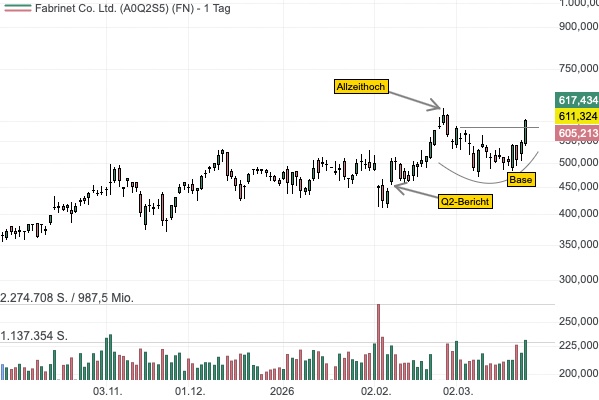
📉 Fabrinet sank 11.3% despite beating Q4 estimates, as investors focused on weaker margins and negative free cash flow.

Fabrinet
Stock
Stock
ISIN: KYG3323L1005
Ticker: FN
KYG3323L1005
FN
Price
Discussion about FN
Posts
11

5Mon·
World market leader in the high-precision production of optical transceivers and communication components.
Good morning, my dears,
I don't want to write many words of introduction today. And go straight to the introduction.
As always, we look forward to many comments.
On March 24, Jensen Huang, CEO of NVIDIA, said on the Lex Fridman podcast, "I think we're there now. I think we've reached AGI." In terms of this scenario, I find Fabrinet exciting. If we take Huang's outlook as a basis, then I see 3 reasons why it makes sense to buy into Fabrinet shares right now: Autonomous AI agents and the future outlined by Huang require huge GPU clusters. The absolute bottleneck of these data centers is no longer just the chip itself, but the communication between the tens of thousands of GPUs. Fabrinet is the undisputed world market leader in the high-precision manufacture of optical transceivers and communication components. Without the optical connections manufactured by Fabrinet, the data streams required for AGI-like workloads simply cannot be transported.
Huang predicted chip demand of USD 1 trillion by 2027 in the wake of his AGI statements. Fabrinet is a primary contract manufacturer for NVIDIA's optical networking solutions, albeit with a much more moderate valuation than many chip designers. The P/E ratio for the 2027 financial year is 4.1 and 37.
With the rapid increase in computing power, conventional cables in data centers are finally reaching their physical limits. The future belongs to silicon photonics and co-packaged optics, in which light is brought directly onto or extremely close to the chip for data transmission. The packaging of these components requires incredible precision on a microscopic level. Over the years, Fabrinet has built up a large technological moat in this highly complex niche. This creates long-term customer loyalty.
Darum sehe ich bei Fabrinet mittelfristig weiteres Potenzial!
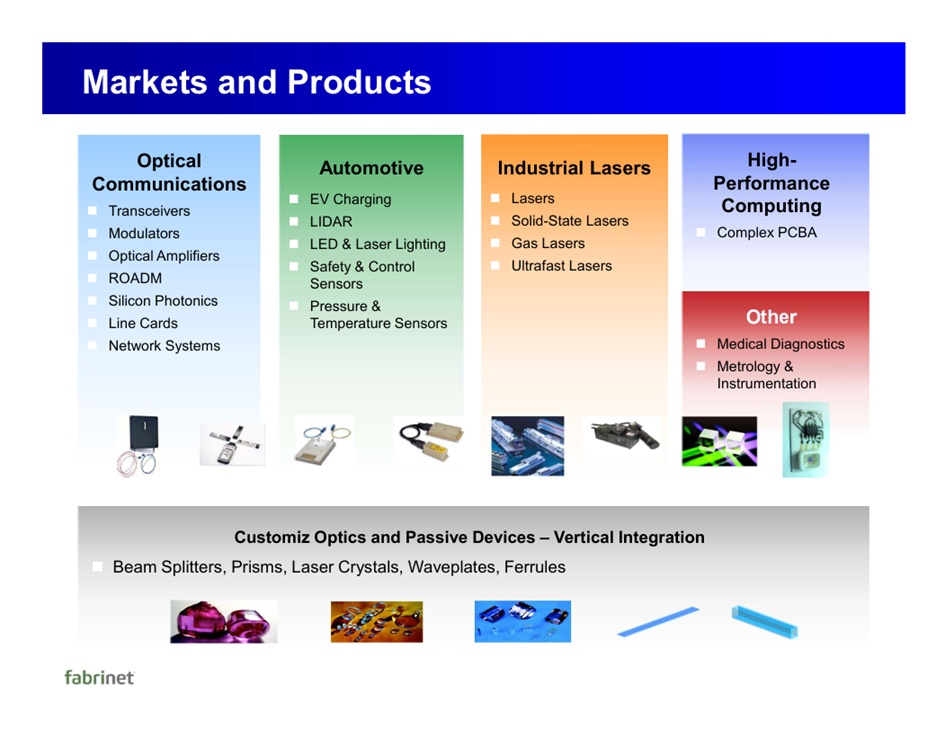
Fabrinet is a provider of advanced optical packaging and precision optical, electromechanical and electronic manufacturing services to original equipment manufacturers of complex products such as optical communication components, modules and subsystems, automotive components, industrial lasers, medical devices and sensors. The company offers a range of advanced optical and electromechanical capabilities across the entire manufacturing process, including process design and development, supply chain management, manufacturing, complex PCB assembly, advanced packaging, integration, final assembly and testing. The company focuses primarily on low-volume production of a variety of highly complex products. In addition, the company designs and manufactures application-specific crystals, lenses, prisms, mirrors, laser components and substrates (custom optics) as well as other custom and standard products in borosilicate, clear fused silica and synthetic fused silica (custom glass).
Number of employees: 16,457
05,05,2026
Brief summary of the report
The Fabrinet share has fallen despite better than expected sales in Q3 by 12.88 % in Q3. The company reported:
- Turnover: USD 1.21 billion → +39 % YoY, +7 % QoQ → USD 37 million above analyst estimates
The strong driver was the telecommunications segment:
- +55 % YoY, +13 % QoQ
- Particularly strong: Data Center Interconnect → 197 million USD, +91 % YoY, +39 % QoQ
Why is the share still falling?
The outlook for Q4 disappointed. Reason: continuing supply bottlenecksthat are slowing down growth.
- Around 150 million USD HPC turnover will be postponed to the next quarter.
- Datacom and HPC were weaker than expected.
What do analysts say?
Barclays:
- Positive Q3, but Q4 outlook limits potential.
- Supply bottlenecks remain the main problem.
Rosenblatt:
- Price target raised: USD 715 → 750
- Very optimistic for OCS and CPO
- Fabrinet makes targeted investments in advanced packaging
- Minority stake in Raytek Semiconductor strengthens position in CPO ecosystem.
Wolfe Research:
- Results positive overall
- But: Decline in Datacom segment could disappoint investors
- Highlighted: new hyperscaler deals, Amazon order, expansion of production capacities
May 04, 2026
Fabrinet gibt Finanzergebnisse für das Geschäftsjahr 2026 für das dritte Quartal bekannt
Microsoft PowerPoint - Fabrinet Investor Deck May 2026 v2.pptx
Geographical distribution of sales:
2025 (USD)
U.S. 1.47 billion
Israel 993 million
India 324 million
U.K. 156 million
Hong Kong 101 million
Other Europe 81.69 million
Thailand 57.37 million
China 56.36 million
Singapore 52.54 million
Germany 43.89 million
Japan 37.54 million
Malaysia 32.4 million
Other North America 6 million
Other Asia-Pacific and Oth 2.94 million
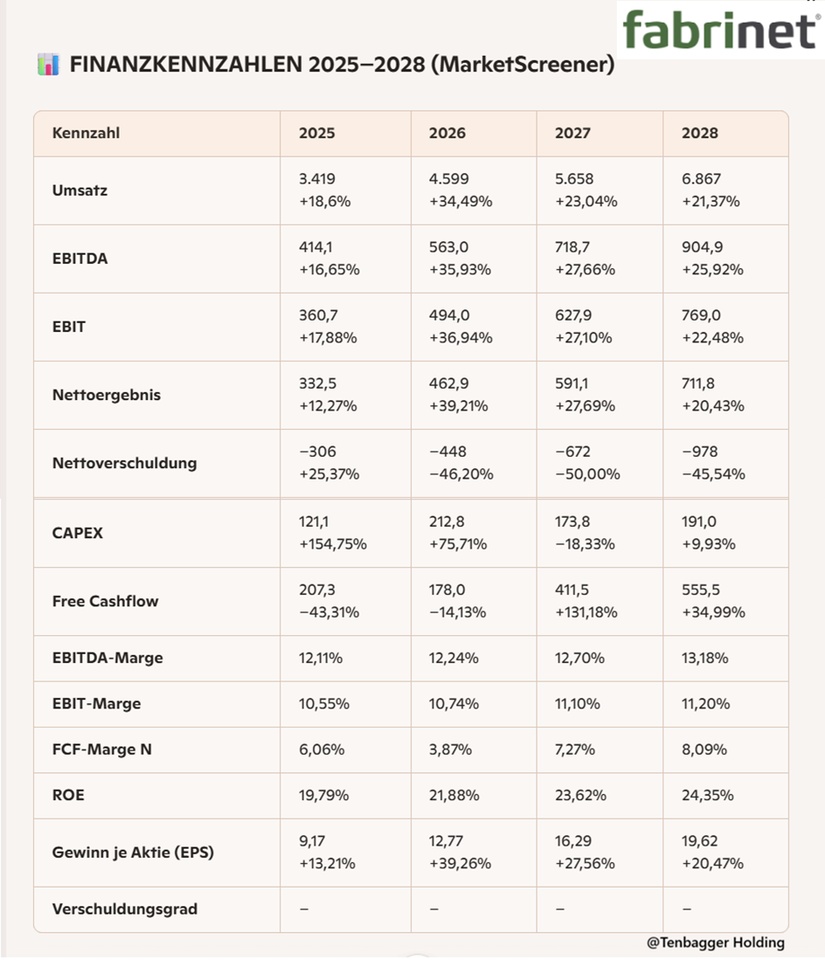
🧑💻 Juan conclusion on the key financial figures 2025-2028
Fabrinet delivers a number setup here that looks almost outrageously clean. The store is not only growing - it is accelerates. Turnover, EBITDA, EBIT, net profit: everything is growing at double-digit rates year after year, and 2026 is set to be a real turbo boost.
The margins? Stable, strong and slightly increasing. This is rare with such high growth.
The free cash flow jumps brutally upwards from 2027 - exactly the pattern you want to see in future compounders.
The net debt? Actually none. Fabrinet is building more net cash every year. That's like a built-in safety belt for the valuation.
ROE increases continuously → management knows how to scale capital
EPS grows cleanly in double digits → shareholder value machine.
In short: Fabrinet looks like a company that is simultaneously growing, becoming more efficient and becoming financially stronger. To me, that screams: "high quality compounder in the making". Hoodie-approved."
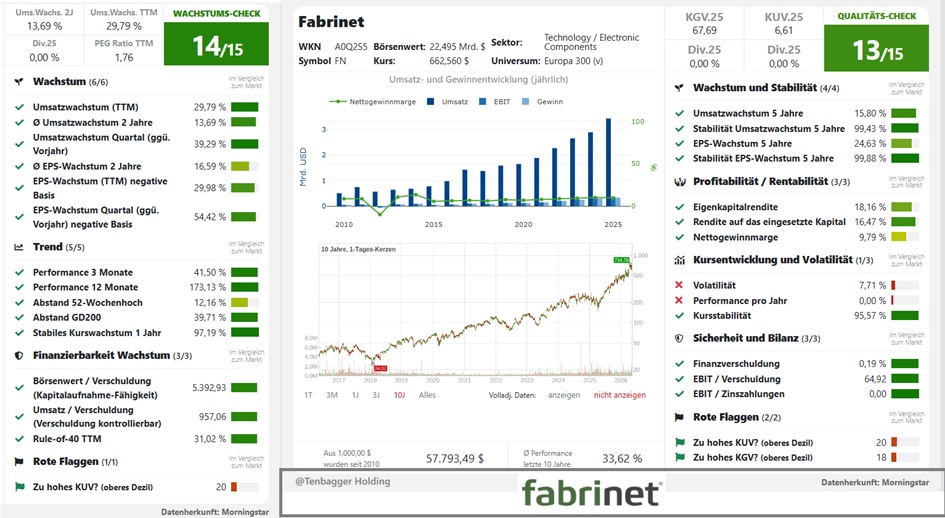
Market value 22,260
Number of shares (in thousands) 35,830
Date of publication 18,08,2025
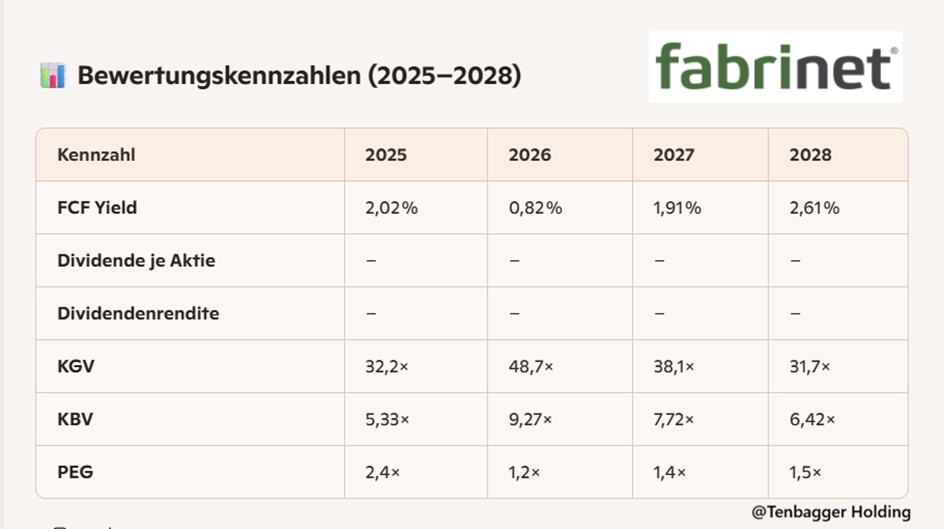
🧑💻 Juan conclusion on the valuation ratios
"So... Fabrinet's valuation is a bit like a high-end chip: expensive, but not without reason. The P/E RATIO seems crisp at first glance, but the EPS growth justifies much of it.
The PEG between 1.2 and 1.5 shows: This is no bargain, but neither is it overheated hype - rather Quality growth at a fair price.
The P/B RATIO rises briefly, but then falls back again cleanly, which shows that equity is growing strongly. The FCF yield is low in 2026, but rises sharply from 2027 - exactly the pattern you want to see in a future compounder.
In short: Fabrinet is not "cheap", but highly highly valued, but with a clear fundamental underpinning. A classic case of: Quality costs - and delivers."
Performance:
1 week -12.07 %
1 month +1.82 %
6 months +38.33 %
1 year +198.55 %
3 years +564.54 %
5 years +628.77 %
7 years +953.73 %
10 years +1,701.33 %
PRICE: 548.60€ 12.05.2026 at 9:42 a.m.
+ 4
aktienmagazin.deDarum sehe ich bei Fabrinet mittelfristig weiteres Potenzial!
5050
28 Comments
TomTurboInvest@TomTurboInvest
5Mon
•
99
•View all 16 further answers

5Mon·
Future AI bottleneck #2: Photonics 💡
Many AI investors are primarily looking at GPUs, memory or energy supply. I believe that the next big bottleneck is already slowly emerging: Photonics.
The background: modern AI systems have to move ever larger amounts of data. However, classic copper cabling is increasingly reaching its physical physical limits. Energy consumption, heat generation, signal losses and susceptibility to errors are increasing massively. This is why the industry is moving step by step towards light instead of electricity.
- Photonics simply put, means that data is no longer transmitted primarily electrically, but optically via light signals.
- Optoelectronics as a sub-sector combines electronics and lighting technology.
- CPO/Co-Packaged Optics describes the approach of placing optical components directly next to AI chips in order to massively improve speed, energy efficiency and bandwidth.
NVIDIA is now visibly driving this development forward. The company is investing billions in optical infrastructure and partners in the field of AI photonics. (For example, Lumentum and Coherent are currently benefiting from a 2 billion dollar investment each).
For me, this is therefore likely to be the next big upcoming AI bottleneck. What I find particularly interesting is that photonics does not consist of just one area. There are very different levels of risk and maturity within the stack.
Level 1: Established photonics infrastructure
This is where the more stable infrastructure players are located. Companies such as $COHR (-0.57%) (Coherent), $LITE (+1.13%) (Lumentum), $CIEN (+2.82%) (Ciena) or even $FN (+0.49%) (Fabrinet) are already benefiting from the fact that optical systems are increasingly moving into AI data centers.
This is mainly about:
- lasers
- optical components
- Fiber optic infrastructure
- transceivers
- Optical Networking
Level 2: Optical Interconnects & Data Center Connectivity
A field in which there is currently a lot of momentum. AI clusters require ever faster connections between GPUs, storage and switches. I'm thinking of companies like $AAOI (-2%) (Applied Optoelectronics), $ANET (-0.73%) (Arista Networks) or in some cases also $5802 (-0.33%) (Sumitomo Electric). Optical interconnects could develop into a central AI bottleneck in the next few years.
Level 3: Materials, substrates & manufacturing bases
This area usually receives much less attention, although it is here that important prerequisites for modern photonics systems are created. Photonics requires highly specialized materials, new substrates and precise manufacturing structures. I find companies such as $AXTI (-0.94%) (AXT), $SOI (+1.88%) (Soitec), $5802 (-0.33%) (Sumitomo Electric) or in some cases also $TSEM (+0.45%) (Tower Semiconductor).
Materials such as indium phosphide (InP), special wafer technologies and optical integration platforms are becoming increasingly important as data rates and integration density rise. And the more complex optical systems become, the more relevant the future bottleneck of "test & metrology" becomes, because these structures have to be controlled and measured with extreme precision (see my last post).
Level 4: Optionality & Next Generation Photonics
The risk increases significantly here. At the same time, however, the potential leverage effect also increases. Companies such as $LWLG (Lightwave Logic), $SIVE (-2.86%) (Sivers Semiconductors), $INFQ (Infleqtion) or even $LASR (nLight) are working on technologies that could make future optical systems even more efficient or powerful. For me, these are not sure winners. But they are often the early technological options for the next wave of infrastructure. Incidentally, Sivers will soon also be listed in parallel on the NASDAQ.
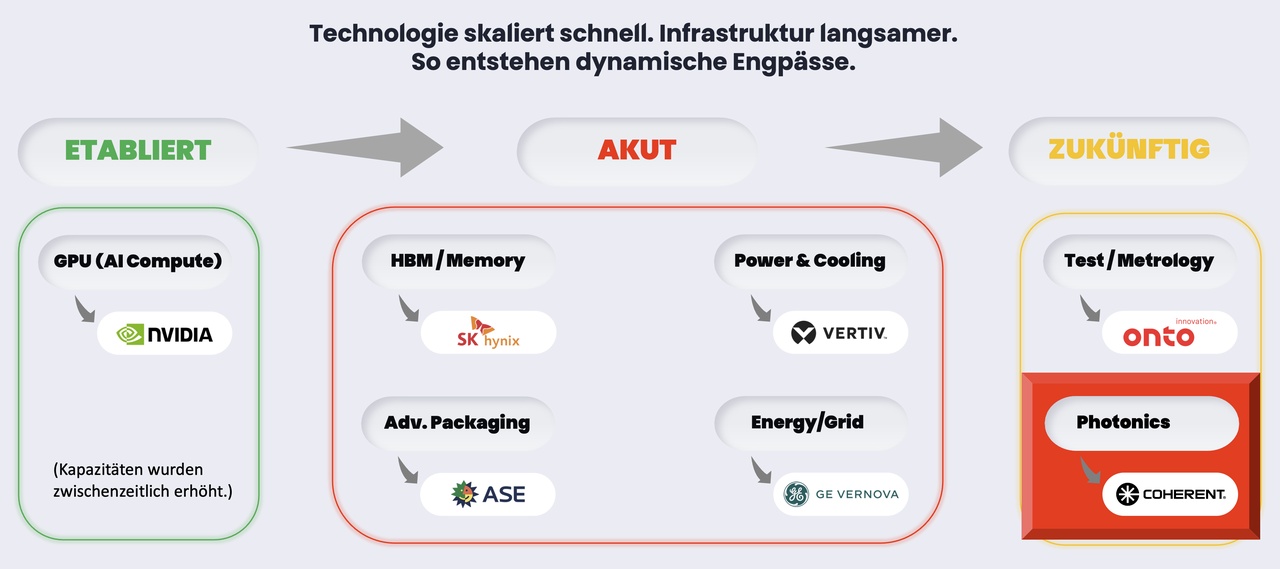
The exciting thing is that the AI bottleneck is shifting further and further away from pure compute and into the physical infrastructure of data movement.
Acute/Active:
HBM + Power & Cooling + Advanced Packaging + Energy/Grid
Future/Emerging:
Test & Metrology + Photonics
AI will not only need more computing power in the future. Above all, AI needs the ability to move gigantic amounts of data efficiently, quickly and stably.
A third AI bottleneck in the "future/emerging" category could already arise: Edge AI. More on this soon.
5353
14 Comments
•
33
•7Mon·
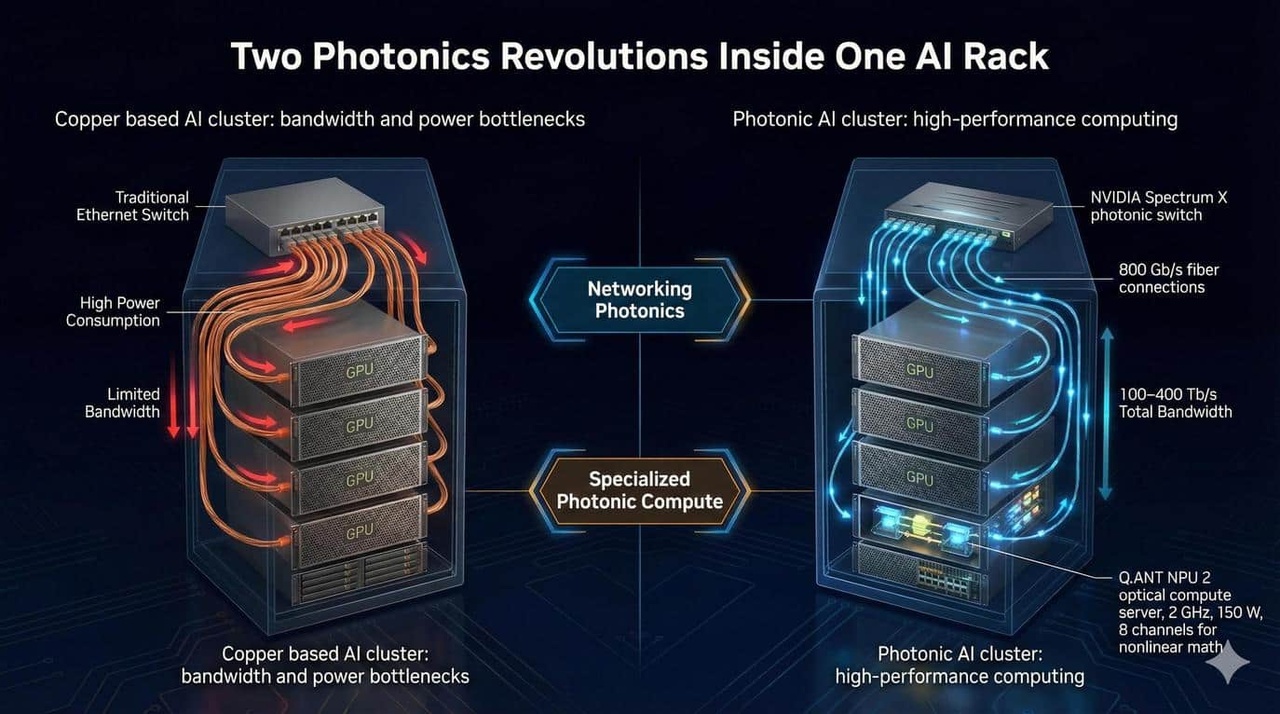
Photonics - Computing with the lower-energy speed of light
The photonics industry has virtually completed its first major cycle - some players are still taking the last leg, others are already making corrections.
One basic idea is the difference in weight between electrons and photons, which massively reduces the energy required to transmit a datum in transmission lines - keyword fiber optics.
The more interesting part, however, is the spreading of the binary logic in light wavelengths in the CPU in order to be able to calculate in a defined space/frame with a higher base than 2. These analog protocol options are physically unlimited, as there is no longer a base number.
In my view, this is one of the most disruptive markets of the next few years.
For the watchlist
Q.ANT (IPO pending) https://qant.com/de/
From a chart technical point of view $CRDO bottoming out since the beginning of February, accumulation is still possible. Average price target $199 (+86%).
1414
7 CommentsWhich companies do you find most interesting and why?
•
22
•
9Mon·
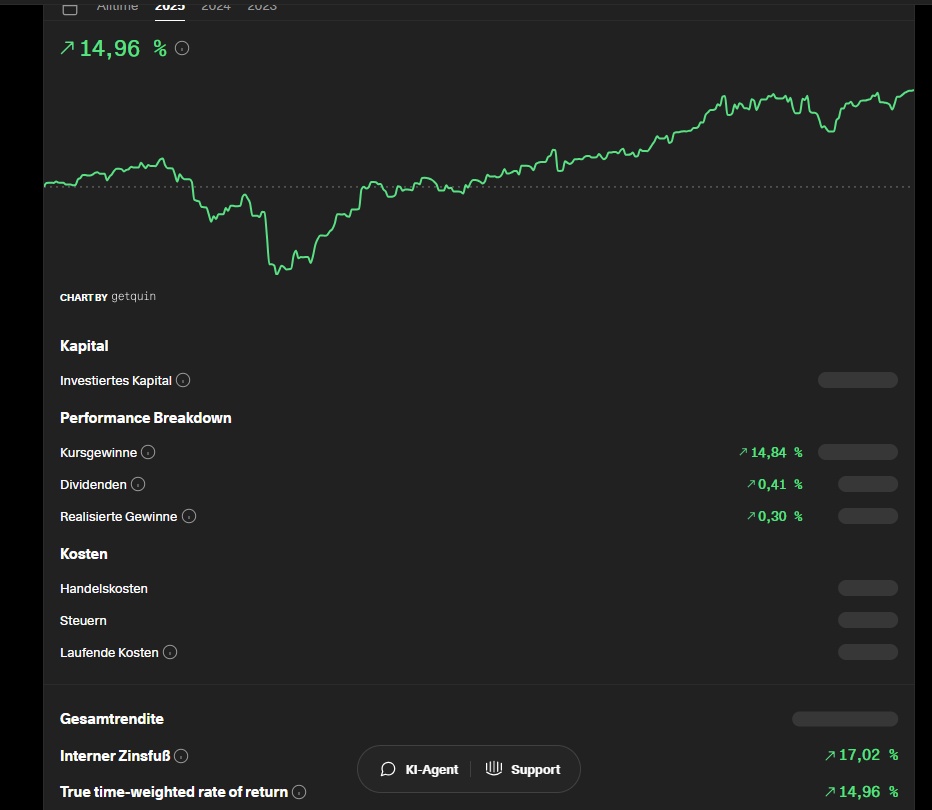
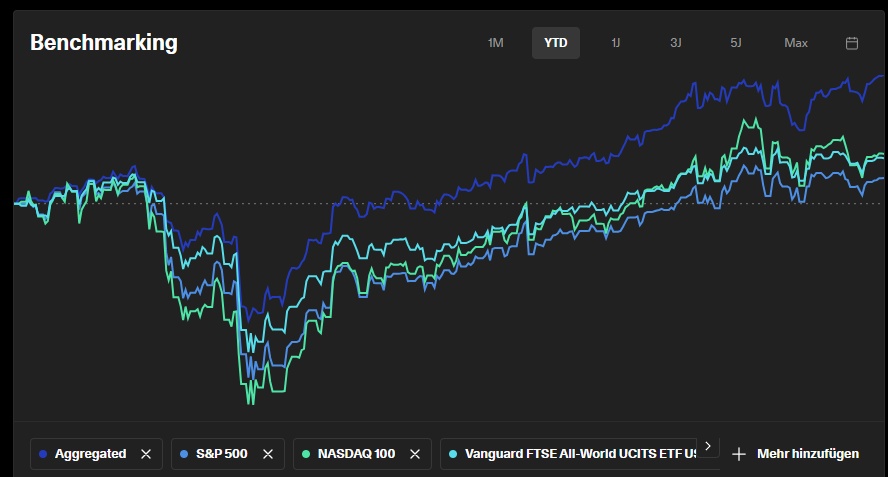
Performance 2025
Hello everyone,
I would like to wish everyone a happy holiday and a happy new year.
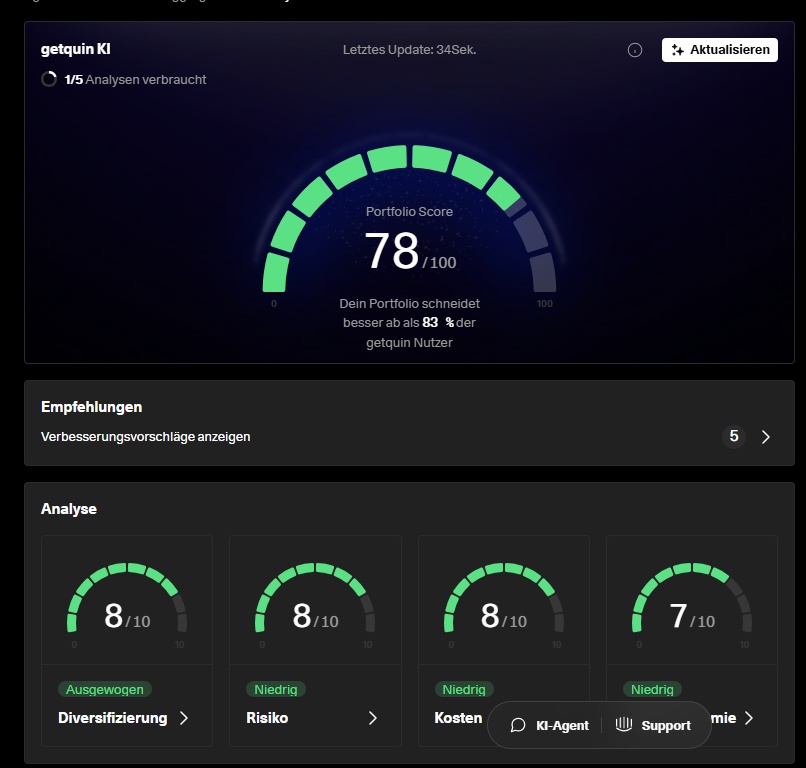
Here is my annual performance, which I am satisfied with, not only because of the return I achieved - some have achieved far more - but also because I was able to reduce my drawdown compared to my "comparison benchmarks".
I thought my 3 best stocks would be the ones I bought in the "Trump Crash". But the 3 best were the ones I bought before and simply held:
And also the ones I bought after the big carnage did well
However, the following did not go well at all
The surprise of the year for me was silver, which of course benefited my portfolio.
Best regards
1616

11Mon·
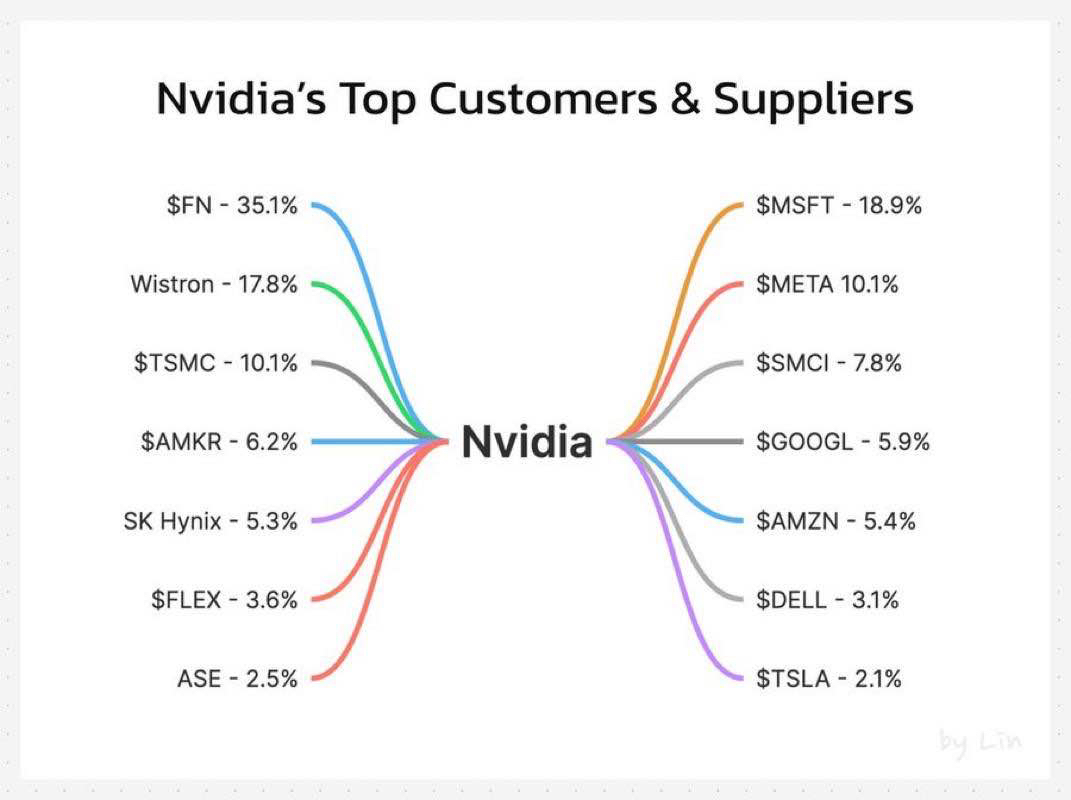
Fabrinet Q1’26 Earnings Highlights
🔹 Revenue: $978.1M (Est. $933.6M) 🟢; UP +22% YoY
🔹 Adjusted EPS: $2.92 (Est. $2.82) 🟢; UP +22% YoY
Guidance:
🔹 Q2 Revenue: $1.05B–$1.10B (Est. $979.6M) 🟢
🔹 Q2 EPS: $3.15–$3.30 (Est. $2.98) 🟢
🔸 “We had an outstanding first quarter with record revenue above guidance, driven by strong telecom performance, early HPC contributions, and smaller-than-expected Datacom decline.” – CEO
33
1Yr·
$FN (+0.49%) Fabrinet reported earnings
Q1 FY2025 results ended on September 27th 2024
- Revenue: $804.2M, +17% YoY
- GAAP Net Income: $77.4M, +19% YoY
- GAAP EPS: $2.13 vs $1.78 in Q1 2024
- Non-GAAP EPS: $2.39 vs $2.00 in Q1 2024
CEO Seamus Grady: "We started fiscal year 2025 with significant momentum across our business. Record revenue of $804 million increased 17% from a year ago and was above our guidance range. We saw revenue growth from every product area, including our first telecom revenue growth in several quarters. Strong margins coupled with our revenue performance helped produce earnings per share at the upper end of our guidance range."
Other Metrics:
- Gross Margin (GAAP): 12.3%, flat YoY
- Operating Margin (GAAP): 9.6% vs 9.3% in Q1 2024
- Operating Margin (Non-GAAP): 10.7% vs 10.5% in Q1 2024
- Free Cash Flow: $62.9M vs $133.6M in Q1 2024
Business Highlights:
- Growth across all product areas
- First telecom revenue growth in several quarters
- Strong margins performance
- Operating cash flow of $83.2M
- Total cash and investments of $908.9M
Outlook (Q2 FY2025):
- Revenue: $800M-$820M
- GAAP EPS: $2.20-$2.28
- Non-GAAP EPS: $2.44-$2.52
- Based on approximately 36.4M diluted shares outstanding
22

Trending Securities
Top creators this week
Real-time data from LSX · Fundamentals & EOD data from FactSet