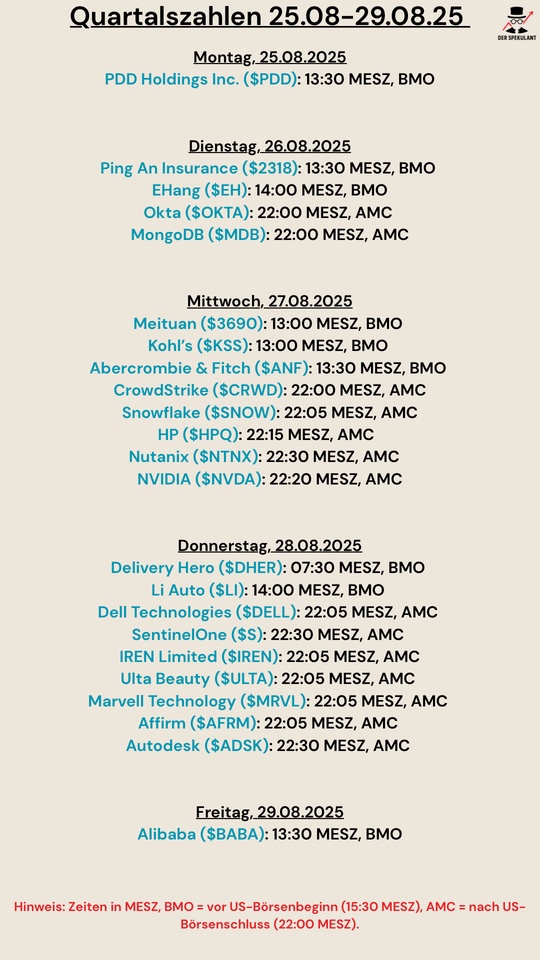
$DHER (-0,2%) It's €41.50 per share.
I bought some more today.

Messaggi
42• The Financial Times reported Uber is considering raising its bid for Delivery Hero after a €11.5B offer was rejected
• Uber reportedly offered €38 per share to one of Delivery Hero’s largest investors in recent days, but the proposal was turned down

... and that was almost certainly the last one of the year.
As announced, a short post about the last two (actually only one was planned, but what does the world cost😅) purchases I made this year.
I ordered today, in my usual entry-level sizes in total:
13x $NPN (-1,88%)
and
27x $CHWY (+4,89%)
For those who don't know Naspers: a South African holding company that, through its majority-owned subsidiary $PRX (-1,59%) significant shares in, among others $700 (-1,11%) , $DHER (-0,2%) and $MMYT (+2,34%) among others. It also has an extensive investment portfolio in South Africa. The corporate structure is well established (anyone interested in international corporate law or ways to successfully counter hostile takeovers should really take a look at it😅), but above all, in my view, the company holds predominantly strong investments and only invests very selectively in new investments. The shareholder return is excellent! Since direct investments in China and India are otherwise usually difficult or even impossible and I would rather entrust my money to a South African holding company that is over 100 years old than to major American banks (no hate, just healthy skepticism about ADRs and the like), my choice fell on Naspers.
Just this much about Chewy: in my view, a tempting entry valuation. Strong in the pet food market in the USA across all price segments, online trading, subscription model with a (again) significantly growing number of users. My Everyday pet supplement to $ZTS (+3,91%) quasi.
Maybe also something for @Max095 😉.
My next post will certainly not follow until the end of the week (i.e. not until 2026😳) on my targeted increases in my existing portfolio values, so I wish you all a good start to the new year, stay healthy and active here or get yourself to become active, that can only bring us all forward here.
In the spirit of our dear @Tenbagger2024 it means #gemeinsammehrerreichen 😘
So see you at dahin✌🏻
Thanks to a.o. $IREN (-8,86%) and $ALCRB (-2,67%) I really had a very good year. I made a good exit from the former and then invested the money well again. $DHER (-0,2%) It was certainly very badly done with a knockout, but it's part of it. Let's see what happens in 2026.
Good luck to everyone!
🍀
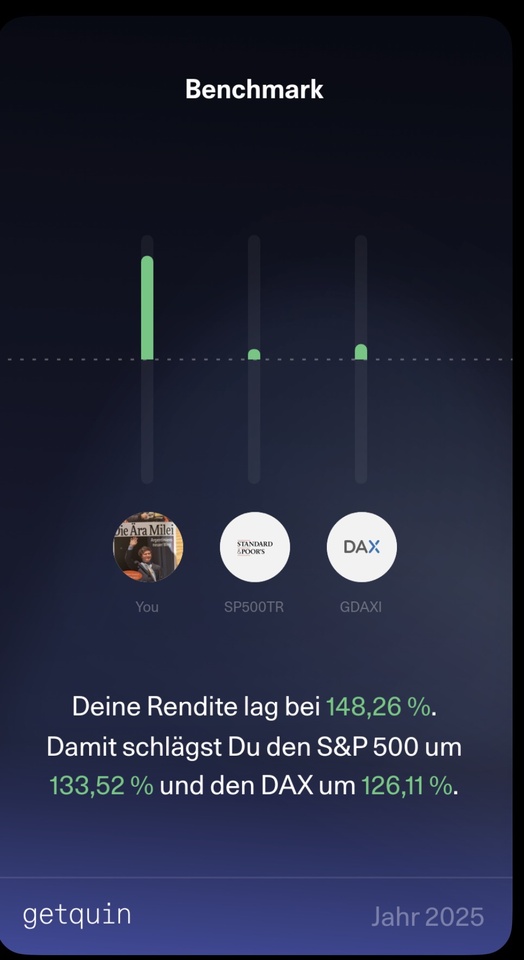
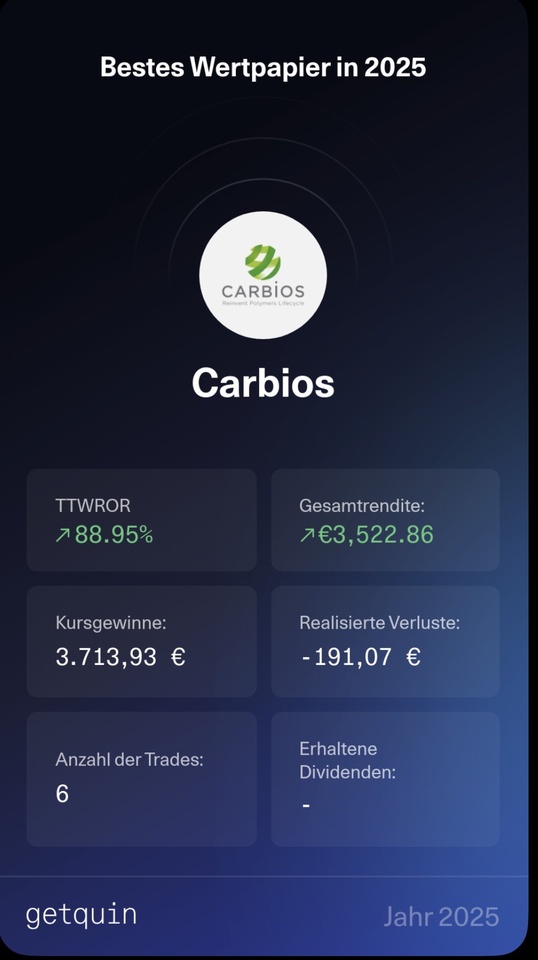
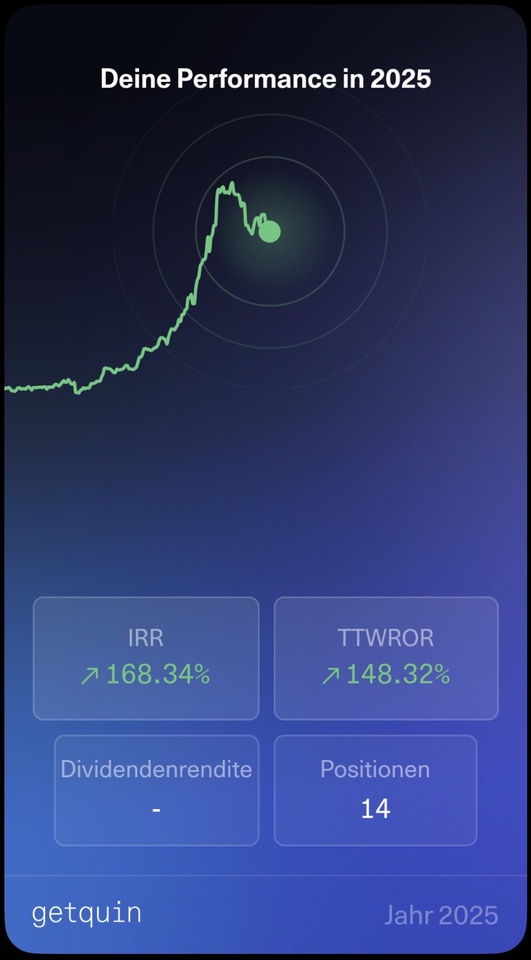
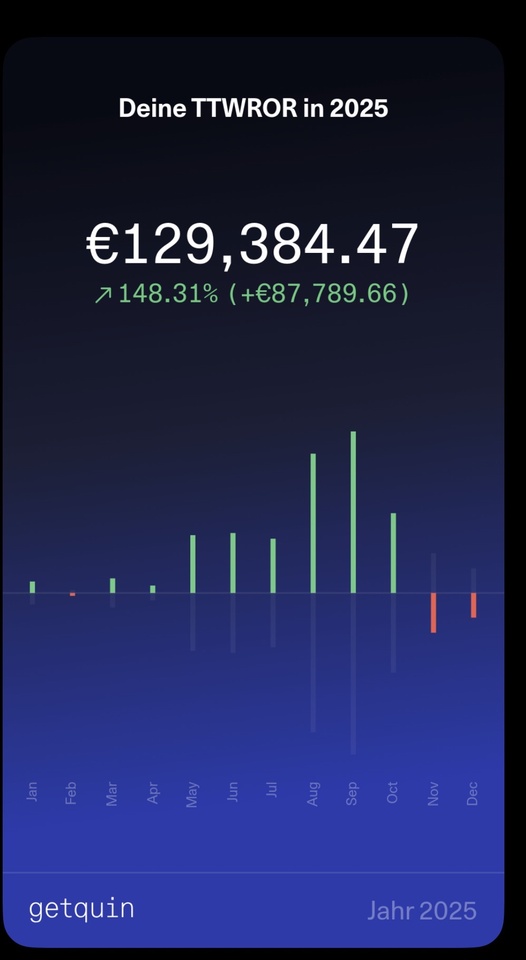
True to the motto: back and forth empties the pockets, November was once again a lesson and shows once again that stock market wisdom (even if it is sometimes worth EUR 5 for the phrase pig) is definitely justified 🫣
But that's also part of it and maybe I'll learn from my mistakes 🤣$DEFI (+0%) out after the figures with -30% and at the end of the week they are back at the entry level... But my biggest highlight was certainly the trade listed below.... 2k in the 10 lever knockout $DHER (-0,2%) but sold on Friday a week ago out of fear of the WE... Yesterday it would have been +7k ...
But that's how it is on the stock market ... sometimes you win, sometimes the others win ;)
vg and good luck with your investing.

$DHER (-0,2%) is always worth a trade :)
intra it already looked quite good :)

📊 Underlying Delivery Hero $DHER (-0,2%)
💡 New issue: Deka Express certificate "Memory with airbag" (WKN DK1GKX)
😎 Opportunities
⚠️ Risks
🧘 My conclusion
Delivery Hero is still a grab bag: sales are growing, profitability is getting closer, but Spain/Glovo remains a big question mark. If you want a return and don't want to jump straight into the deep end, the certificate is a more relaxed alternative.
👉 Now it's your turn:
What do you think - 12 % p. a. with airbag up to -50 % ... clever move or would you rather keep your hands off and play the share directly? 🤔

Grab Holdings ($GRAB (+1,22%) ) is the leading provider of ride-hailing, food delivery and digital financial services in Southeast Asia. With a wide range of services, the company has established itself as a "super app" and has become an essential part of daily life in many Southeast Asian countries. However, after strong growth and an IPO, the stock has gone through a difficult phase - but is Grab on track to become a turnaround story in 2025?
Overview: What does Grab do?
Grab is active in several business areas:
✅ Ride-hailing: Grab is the market leader in the ride-hailing sector and competes with Uber in Southeast Asia. In addition to passenger transportation, Grab also offers delivery services for parcels.
✅ Food delivery (GrabFood)With GrabFood, the company has a strong position in the food delivery business, especially in cities such as Singapore, Indonesia and Malaysia. The business is growing steadily, especially during the pandemic.
✅ GrabPay and financial servicesGrab has also positioned itself in digital financial services, with GrabPay, a mobile payment platform, and a range of loans and insurance for its customers.
Competition: Who are the competitors?
🔸 Gojek (now part of Tokopedia) $GOTO : The biggest competitor in the ride-hailing and food delivery industry in Indonesia and other Southeast Asian markets.
🔸 Uber $UBER (+2,18%) Also active in Southeast Asia, particularly in the Philippines and Vietnam. Uber continues to be a significant competitor in the ride-hailing segment.
Correction: Uber is no longer directly active, but rather an indirect beneficiary of Grab's development through its shareholding..
🔸 Foodpanda $DHER (-0,2%) : A strong competitor in the food delivery sector in several countries, including Grab's main markets.
🔸 Ant Group (Alipay)
$9988 (-3,04%) and PayPal $PYPL (+0,91%) competitors in the field of digital payments and FinTech services.
Opportunities: Why could Grab make a comeback in 2025?
✅ Leading market position: Grab is well established in Southeast Asia, with a broad user base and a strong brand. This position could protect the company in the long term.
✅ Expansion potential in the FinTech sector: GrabPay and other financial services continue to be a valuable source of revenue. Grab could further expand its FinTech business as the region continues to offer great potential for digital payments and banking services.
✅ Growth in the food delivery business: The trend towards online delivery services continues to grow. GrabFood could gain even more market share, especially through partnerships with local restaurants and expanded services.
✅ Synergies from the super app strategy: Grab offers not only transportation and delivery, but also financial services and entertainment. This integration of services creates a strong ecosystem for users and partners.
Risks: What could continue to burden Grab?
⚠️ Strong competition: There are already strong local and international competitors in financial services.
⚠️ High losses and high expensesGrab has repeatedly made losses in the past. Sustainable growth and a return to profitability remain a major challenge, especially in view of the high operating costs.
⚠️ Regulatory risks: Like many companies in the region, Grab has to deal with changing and strict regulatory requirements, particularly in the FinTech and ride-hailing sectors.
⚠️ Macroeconomic uncertainties: Economic uncertainty in Southeast Asia, ongoing political tensions and the impact of the pandemic could weigh on business.
Conclusion: Can Grab achieve a turnaround?
Grab has the potential to remain a major player in Southeast Asia if it can overcome competitive challenges while increasing growth in its various business segments. Especially the FinTech-expansion and the synergies as a super appcould be decisive in the long term.
For investors who believe in the potential of Southeast Asia and have a long-term perspective, Grab could be an exciting turnaround candidate for 2025.
What do you think? Does Grab have what it takes to make a comeback in 2025 and remain successful in the long term?
Last week was the week of food delivery services, so of course $DHER (-0,2%) (Delivery Hero) should of course not be missing. Here is the summary of the analyst conference:
Niklas Östberg, CEO, presented the key results. GMV increased by 8% at constant exchange rates, and adjusted for the effects of hyperinflation accounting. Growth outside Asia was particularly pleasing, accelerating from 25% in the third quarter to 27% in the fourth quarter. There are signs of a return to growth in Asia, with GMV growth already recorded in 8 out of 12 countries. The company exceeded its own sales forecast with growth of 22% for the year as a whole.
Adjusted EBITDA improved by almost EUR 500 million year-on-year to around EUR 750 million, which was also above the forecast. Free cash flow improved significantly to around 100 million euros. Thanks to the IPO of Talabat, net debt was reduced to 1.9 billion euros, which corresponds to a leverage ratio of 2.5x.
Marie-Anne Popp, CFO, provided insights into the development of the individual segments. In Europe, strong order growth led to GMV growth of 17%. The MENA segment recorded accelerated GMV and sales growth of 34%, driven by Saudi Arabia and Talabat. In the Asia segment, the expiry of the free delivery offer for non-subscribers in Korea had a short-term negative impact on sales, but improved profitability. The Americas segment recorded GMV growth of 25% and positive adjusted EBITDA for the year as a whole. The gross profit margin increased to a new record level in the fourth quarter. For the year as a whole, GMV grew by 8% to almost 49 billion euros and segment sales by 22% to almost 13 billion euros.
GMV growth of 8% to 10% and sales growth of 17% to 19% are expected for 2025. Adjusted EBITDA is expected to be between EUR 975 million and EUR 1.025 billion, including additional investments in Korea and costs related to the change of the rider model in Spain. Free cash flow is expected to exceed EUR 200 million in 2025.
Niklas Östberg presented a short case study on the business in Saudi Arabia, where the company maintains a strong leadership position despite a very competitive market. The advertising business already generates more than EUR 1 billion in revenue, with growth of 36% in 2024.
In the subsequent Q&A session various topics were addressed:
Korea: The analysts inquired about the growth outlook and product developments. Delivery Hero expects growth in Korea to improve over the course of 2025, driven by product improvements and a stronger focus on subscriptions.
Saudi Arabia: There were questions about the competitive situation and the investments made. Delivery Hero emphasized that it is focused on providing an excellent customer experience and is able to compete in a highly competitive environment.
Hong Kong: Analysts asked about the recovery of the Hong Kong business. Delivery Hero explained that it is responding to increased competitive activity and expects to return to growth in the coming quarters.
M&A: There were questions about the company's cash position and M&A ambitions. Delivery Hero emphasized that the focus is on organic growth and that it does not want to be distracted by M&A activities.
Take Rate: Analysts inquired about the factors influencing take rate improvement. Delivery Hero explained that it is a mix of different factors, including increasing subscriptions, higher delivery fees and a growing share of own deliveries.
Spain: There were questions about the changes related to the rider employment model in Spain. Delivery Hero is in a transition to an employment model and is working on a smooth implementation.
In closing, Niklas Östberg thanked all participants and emphasized that the company remains focused on profit and growth.
I hope this summary has helped you to better assess the current situation at Delivery Hero.