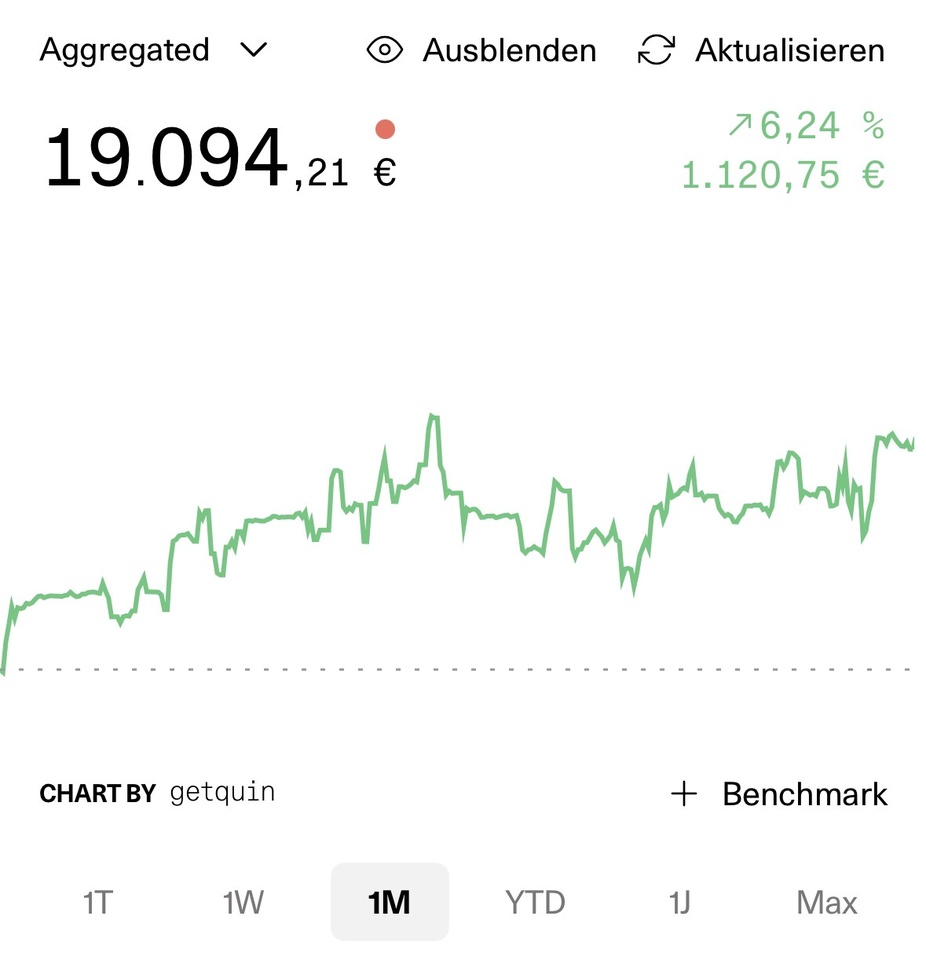
The money freed up by the triggered SL of $OHB (-6,24%) has now been partly invested in a new security that I did not know about until yesterday.
Thank you @Get_Rich_or_Die_Tryin for the great presentation!

Messaggi
26The money freed up by the triggered SL of $OHB (-6,24%) has now been partly invested in a new security that I did not know about until yesterday.
Thank you @Get_Rich_or_Die_Tryin for the great presentation!

A little gambling is a must. A set SL protects against losses.
I hope that this will not be triggered before the IPO of #spacex and that the IPO catapults OHB even higher.
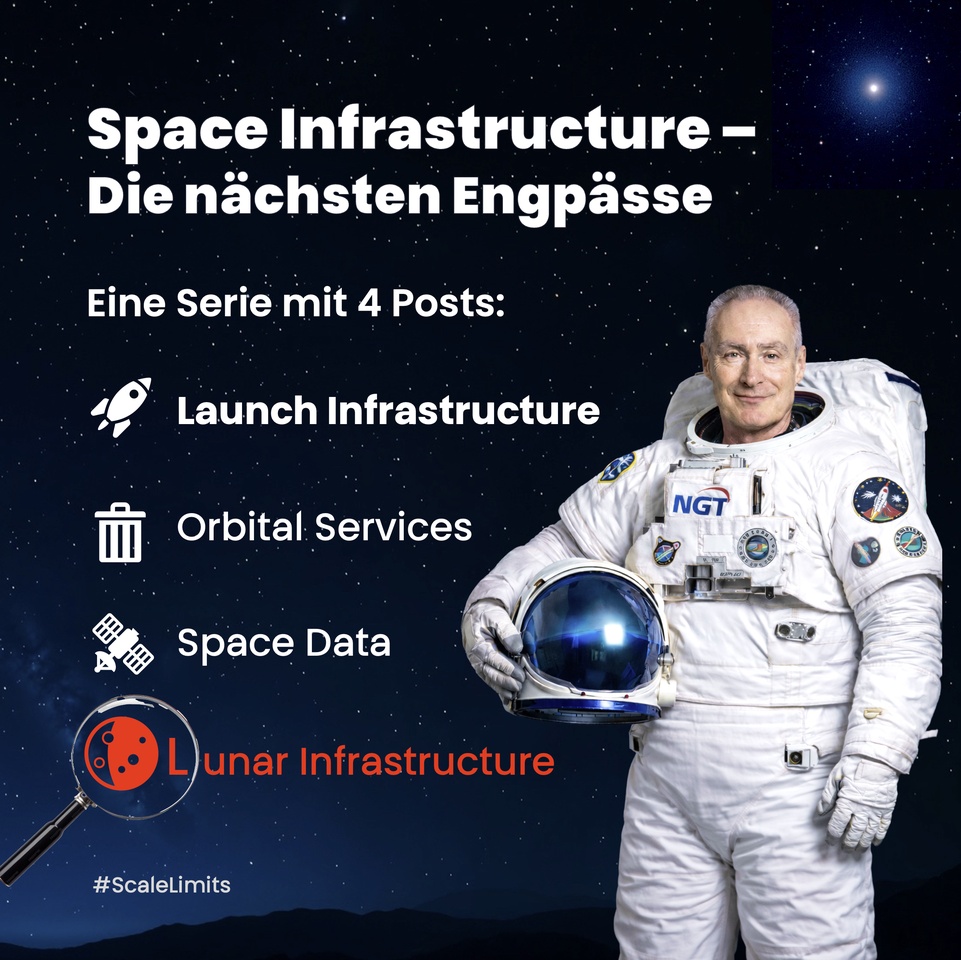
The first three levels of this series dealt with access to orbit, the operation of orbital infrastructure and the resulting data and communication systems. Lunar Infrastructure goes one step further.
There is still hardly any economic activity there. This is precisely why I find this area exciting. Many of the necessary building blocks are known, but the infrastructure is almost completely lacking.
Should a permanent economic presence develop beyond the Earth's orbit in the coming decades, new bottlenecks will arise practically from scratch. These include, among others:
- Energy supply - Electricity will become a basic requirement for any activity on the moon and space stations
- Nuclear systems - compact Compact reactors for permanent energy supply in extreme environments
- Communication networks - Data links between Earth, Moon and orbital infrastructure
- Navigation and positioning - GPS does not exist on the moon
- Resource extraction - Using water, oxygen and raw materials directly on site
- Robotics and autonomous systems - Maintenance and operation without permanent human presence
- Transportation and logistics systems - Supply of lunar and orbital sites
- In-Situ Manufacturing - Production directly outside the earth (advantage: no gravity)
- New space stations - Research, industrial and logistics platforms in orbit
- Computing power and data processing - Local processing of large amounts of data in space
I find it particularly interesting that many of these future bottlenecks are already recognizable today. Some of the actual business models do not even exist yet. The infrastructure problems, on the other hand, are already becoming apparent. Investment in this area has so far been limited.
$LUNR (+11,03%) (Intuitive Machines) is working on central building blocks for a future lunar infrastructure. $FLY (+16,97%) (Firefly Aerospace) is increasingly expanding its activities in the direction of lunar services. $RDW (Redwire) is developing technologies for space stations and industrial applications in orbit. $VOYG (+12,54%) (Voyager Technologies) is working on commercial space station projects (Starlab) as a possible successor to today's government infrastructure. $OHB (-6,24%) (OHB) builds satellite and space systems that could also become relevant for more distant missions in the long term.
Companies outside the traditional space sector could also play a role in the future. If nuclear energy supplies on the moon or space stations become a reality, suppliers of compact reactor systems, e.g. $OKLO (Oklo) will come more into focus. The same applies to robotics, communication and automation technologies.
Many of these ideas still seem a long way off today. However, this applies to almost any infrastructure before it is actually built. Perhaps the next major infrastructure zone will not be built on Earth, but a few hundred thousand kilometers away.
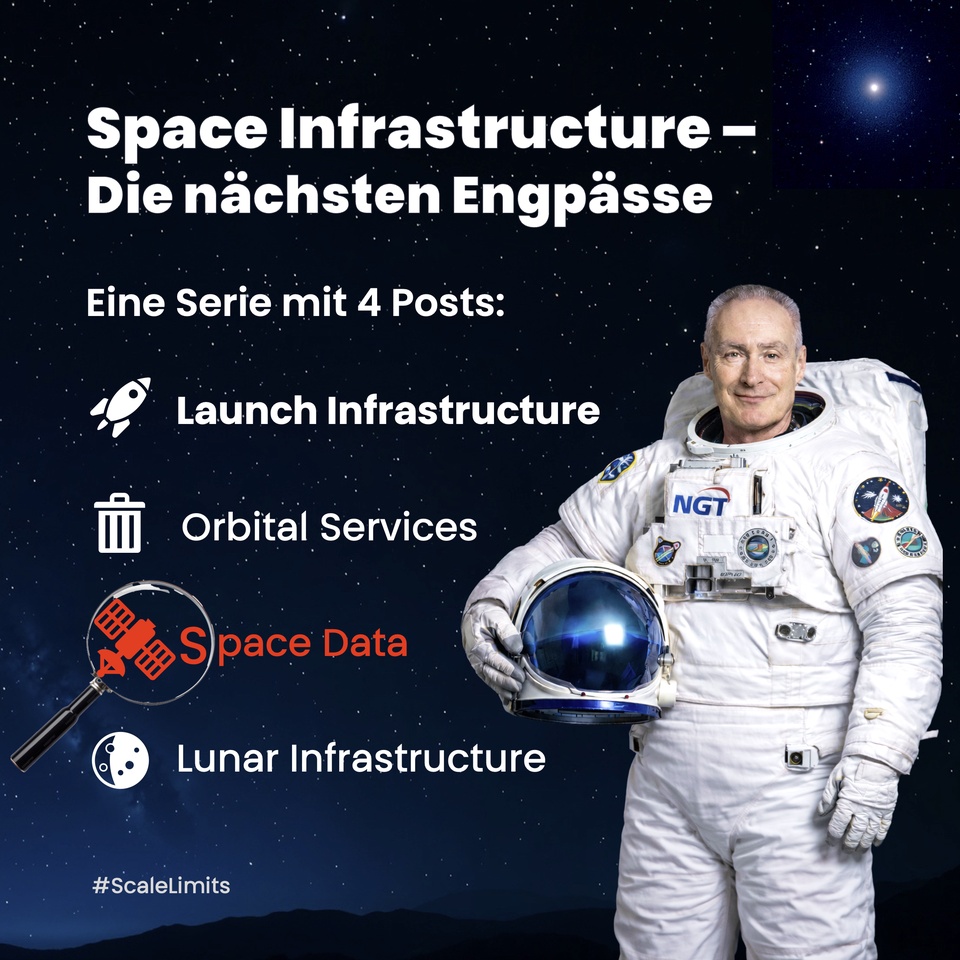
Satellites alone do not create a strategic advantage. The decisive factor will be who can build permanently usable data, communication and information systems from orbital infrastructure.
The focus is therefore slowly shifting from physical access to orbit to the utilization of the use of the data streams generated there.
This is because the requirements for communication, navigation, reconnaissance and real-time data are increasing significantly in parallel with the growing number of satellites. Orbit is gradually developing into an additional
information and network layer of the global infrastructure.
Space data encompasses much more than traditional satellite images. Among other things, it becomes critical:
- Earth Observation - Real-time data on infrastructure, climate and movement patterns
- Direct-to-Device Communication - direct satellite connection with smartphones
- resilient communication networks - independent infrastructure during crises and conflicts
- Tracking and navigation data - precise position and movement information
- maritime and military surveillance - Visibility of critical infrastructure and sea routes
- orbital data platforms - Processing and provision of large data streams
- low latency - fast transmission of time-critical information
- Frequency and spectrum utilization - limited communication capacities in orbit
The importance of independent communication and reconnaissance systems is likely to increase further, particularly in the event of geopolitical tensions or disruptions to terrestrial infrastructure.
$PL (+5,51%) (Planet Labs) addresses the area of earth observation and global image data infrastructure. $ASTS (+8,79%) (AST SpaceMobile) is working on direct-to-device communication via satellites - conveniently via standard smartphones. $OHB (-6,24%) (OHB) is increasingly moving along European satellite and infrastructure programs. Companies such as $BKSY (Black Sky) or $SPIR (+10,33%) (Spire Global) are offering early data-driven space services.
However, many of these areas are still in an early early phase. Numerous companies are small, highly specialized or hardly investable. At the same time, an independent infrastructure ecosystem is slowly emerging around data, communication and orbital information systems.
The real value in the space sector will therefore often no longer lie in the satellites themselves, but in the data, communication and control systems behind them.
The final part of the series will deal with lunar infrastructure and the question of what new bottlenecks could arise as soon as space travel expands permanently beyond Earth orbit.
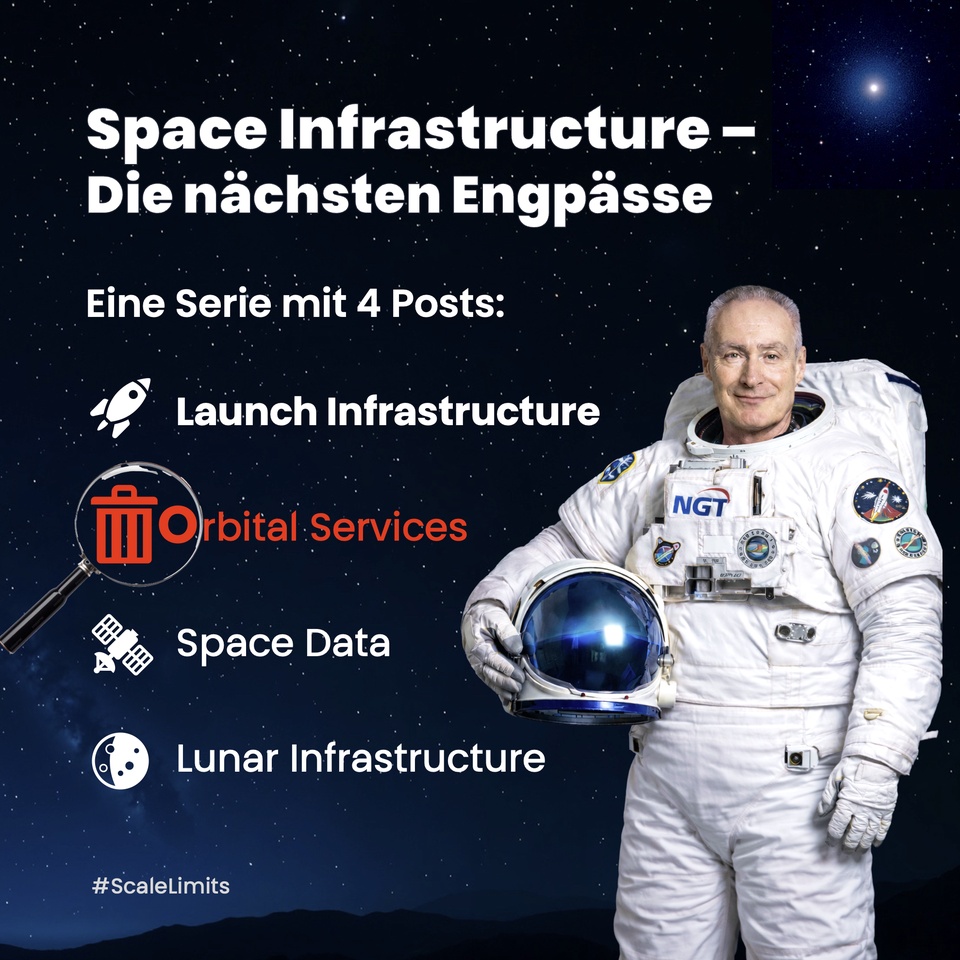
With increasing activity in orbit, the bottleneck is slowly shifting further. Access to space is becoming cheaper and more frequent. At the same time, however, a new problem is growing: Who will control, maintain and protect the emerging infrastructure up there?
This is where the next level of space infrastructure begins. The more satellites, stations and military systems there are in orbit, the more important visibility, control and operational monitoring become increasingly important. Orbit is gradually developing from a largely unregulated space into an increasingly dense infrastructure zone.
Orbital Services encompasses much more than just "space repairs". The new bottleneck arises in areas such as:
- Space domain awareness - Overview and control of orbital activities
- Debris Removal - Removal of hazardous space debris
- On-Orbit Servicing - Maintenance of technical systems in space
- Refueling - Refueling of orbital infrastructure
- Repair and maintenance systems - Longer service life of critical systems
- precise navigation and control - Stable positioning in orbit
- secure communication between orbital systems - resilient data and control levels
- frequency and spectrum management - limited communication resources in orbit
- re-entry services - Controlled return of satellites, samples and materials to earth
With increasing satellite density stability more important than mere presence in orbit. A single failure, collision or uncontrolled space debris could have a major impact on entire communication and infrastructure systems in the future. This is precisely why control and maintenance more strategically relevant in the long term.
Companies such as $186A (+20,28%) (Astroscale, Japan) are addressing early debris and servicing issues. $MDA (MDA Space, Canada) is working on robotic servicing and control systems. $OHB (-6,24%) (OHB, Germany) is increasingly positioning itself along European satellite and infrastructure programs. $RDW (Redwire, USA) addresses technical systems for the permanent operation of orbital infrastructure.
In addition, new requirements are arising from military use, resilient communication networks and the increasing commercialization of orbit.
However, many of these areas are still at an early stage. Numerous specialized companies are privately financed, small or not yet investable. Especially in debris removal, reentry and orbital maintenance, an independent industrial ecosystem is only slowly emerging. In my view, this makes the development strategically interesting, but at the same time difficult to invest in directly.
The bottleneck is therefore shifting again. No longer just: Can we get infrastructure into space? But rather: Can we control and operate it up there permanently?
More on this in the third post in the series on "Space Data".
The German $OHB (-6,24%) and French Dassault Aviation want to jointly develop the reusable spacecraft VORTEX-S for the European Space Agency. The two companies have submitted a joint proposal to the ESA.
How is the market reacting to the VORTEX-S news?
The cooperation with Dassault Aviation is seen as strategically important because it could make Europe more independent in terms of space transportation. Investors see this:
For me, it's time to hold on and add to the stock again at the next setback.
📊 𝐄𝐫𝐠𝐞𝐛𝐧𝐢𝐬𝐬𝐞
- Turnover: €270.9M (previous year €229.3M)
- Total operating performance: €279.3M (previous year €242.4M)
- Adjusted EBITDA: €27.3M (previous year €20.0M)
- Adjusted EBIT: €16.8M (previous year €10.3M)
- EBT: €13.7M (previous year €5.8M)
- EPS: €0.52 (previous year €0.20)
- Order backlog: €3.35B (previous year €2.31B)
⠀
🎯 𝐀𝐮𝐬𝐛𝐥𝐢𝐜𝐤𝐜𝐜𝐤
- Management Board expects continued positive development of the financial position and net assets
- High order backlog offers long-term planning security
- Rising production cadences in the Ariane program support further growth
⠀
📌 𝐖𝐢𝐜𝐡𝐭𝐢𝐠𝐬𝐭𝐞 𝐏𝐮𝐧𝐤𝐭𝐞
- Order backlog reaches new all-time high (+45%)
- EPS-Sterna major order (€248M) drives growth
- Ariane 6 ramp-up supports increasing production cadences
- European Moonport Company founded for future moon missions
- Space Systems remains biggest growth driver
- Profitability significantly improved with strong EBITDA and EBIT growth
- High order base ensures long-term planning security
⠀
💬 𝐌𝐚𝐧𝐚𝐠𝐞𝐦𝐞𝐧𝐭-𝐀𝐮𝐬𝐬𝐜𝐚𝐠𝐞𝐞
"At the present time, the Executive Board assumes that the financial position and net assets will continue to develop well."