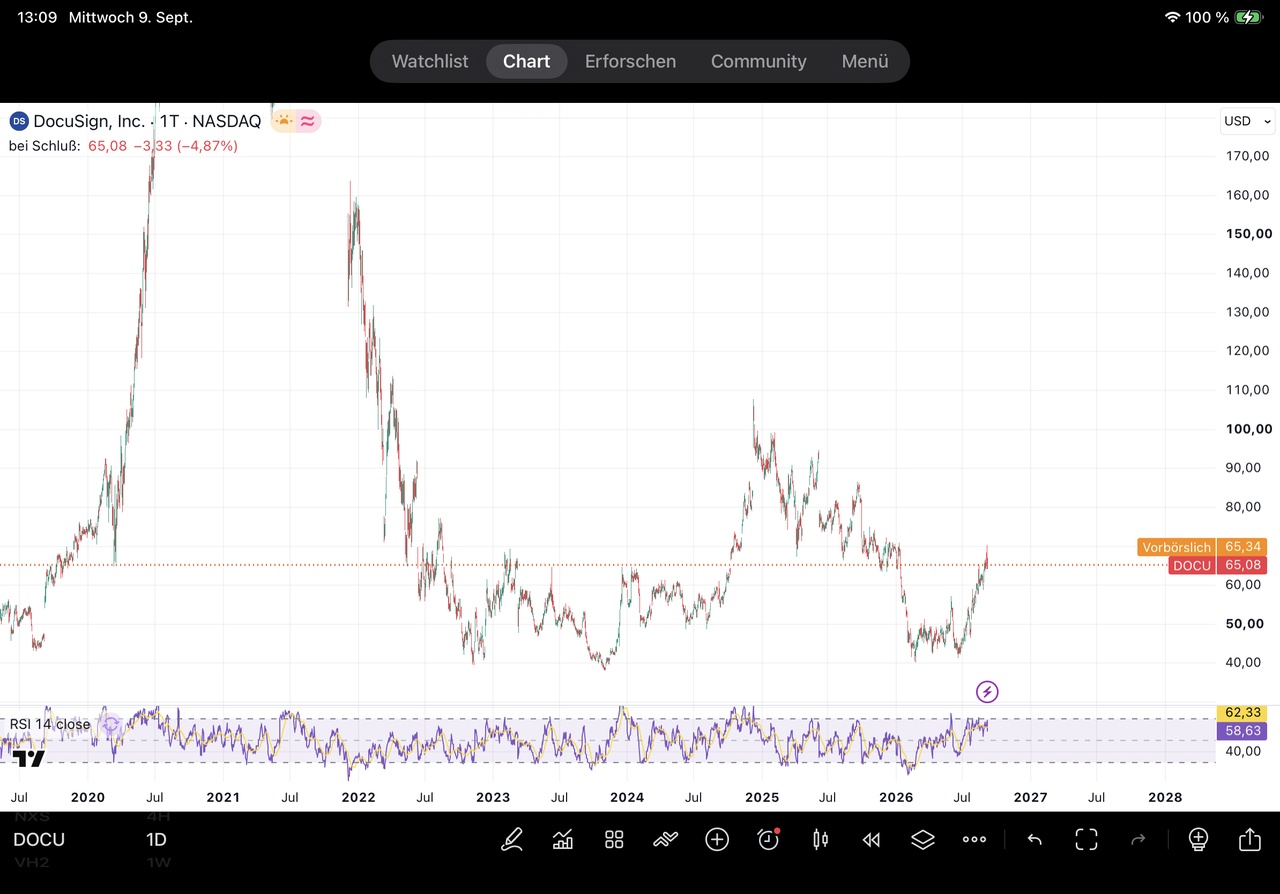

Price: $65.08 | Market Cap: $12.2 billion | Forward P/E: 13.3 | Rating: Hold, Price Target $66.46
DocuSign was the go-to digital signature tool during the pandemic; after soaring to over $300, it plummeted to under $40—and has since quietly reinvented itself.
From Signature Tool to Platform
E-signatures remain the core business (~42% enterprise market share), but have long since become a commodity. The growth driver is Intelligent Agreement Management (IAM): an AI platform that creates, understands, and automates contracts—supported by over 400 integrations (Salesforce, Microsoft 365, SAP) and millions of contracts as its data foundation.
Q2 FY27: Proof that the strategy is working
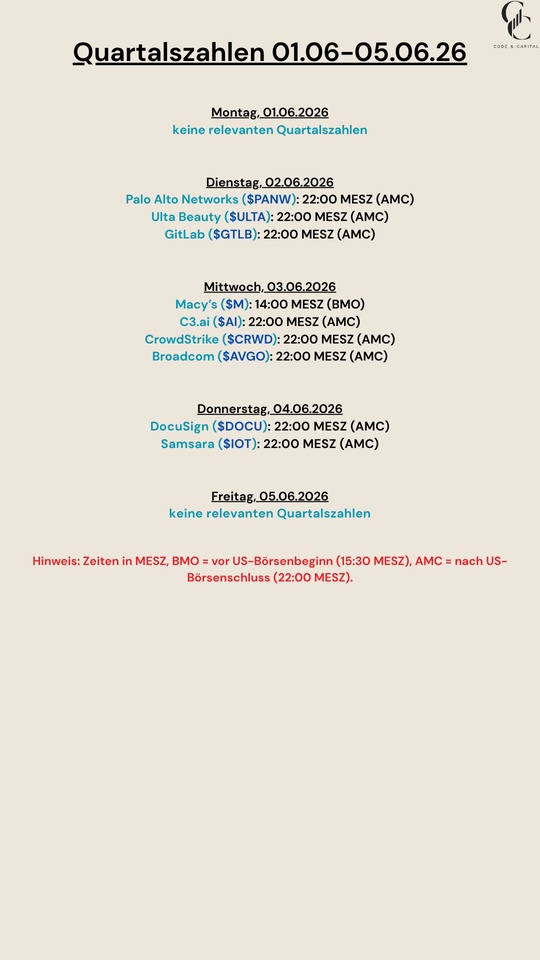
Revenue up 9% to $876 million, non-GAAP margin ~32%, FCF margin 34%. IAM’s share of ARR jumped from 12.6% to 15.1%, with a target of 18–19% by year-end. The full-year forecast was raised accordingly for the second time. This was accompanied by substantial share buybacks: over $300 million in the quarter, with $2.1 billion in authorization remaining.
Why the market is still hesitant
The stock price gave up its post-earnings rally within days—a familiar DocuSign pattern. Analysts remain at “Hold” on average: Morgan Stanley sees $75, while BofA sees only $64 with an “Underperform” rating. Unanswered question: How much of the IAM growth is truly new, and how much is simply replacing the old signature business? Added to this is competitive pressure from Adobe and concerns that AI agents could process contracts entirely without a separate tool in the future.
Valuation
A forward P/E of 13 looks attractive compared to SaaS peers (20–25), with a PEG ratio below 1. However, the GAAP P/E is around 40—the gap is primarily due to stock-based compensation.
Conclusion
No longer a high-growth story, but a mature, profitable company with strong customer loyalty that is building a second pillar of revenue through AI. The coming quarters will determine whether IAM brings in genuine new business or merely replaces the old one.
Merry Christmas 🫶🏼