
$1810 (-3,4%)
$BIDU (-0,57%)
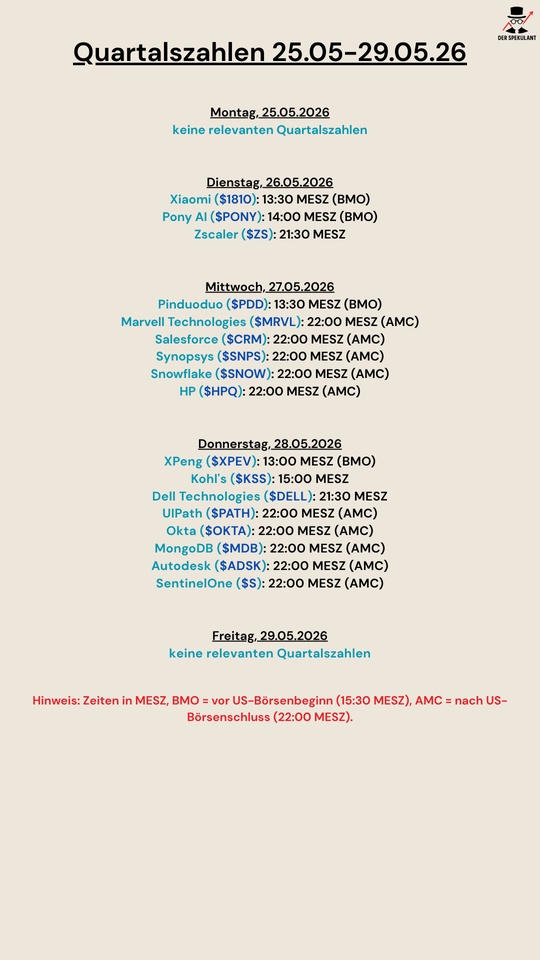
$08X (+0,94%)
$KLAR (+0,62%)
$HD (+0,59%)
$EL (+0,71%)
$FLNG (+0,89%)
$ADI (+0,99%)
$BABA (-0,45%)
$WMT (-0,05%)
$TNIE (+0,88%)
$DE (+0,71%)
08 X
Pony AI ADR
Azione
Azione
Ticker: 08X
08X
Price
Discussione su 08X
Messaggi
6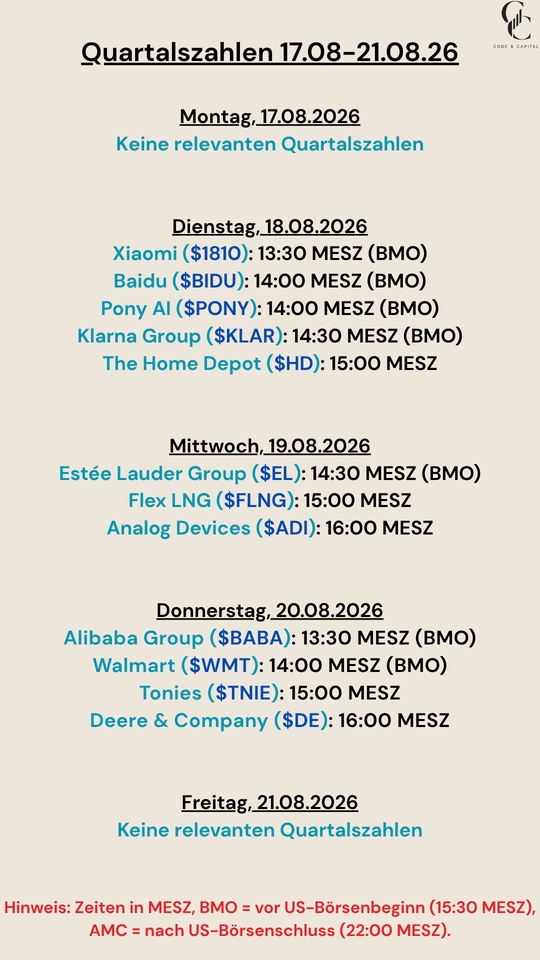


1Anno·
Billion-dollar robotaxi market: Pony.ai as the secret favorite?
👋 Hello dear Getquin community,
Anyone who has followed my last posts will know that I have already addressed the topic of robotaxis. Today I would like to follow up on this and add an update. This time with a special focus on $08X (+0,94%) Pony.ai. I have not yet presented this company in detail, although it is one of the most exciting players in the global competition.
🌏 The exciting thing about Pony.ai is its dual role. Officially, the headquarters are in Guangzhou, China, while Fremont in California serves as an important research and development location. So you could say that Pony.ai has two centers: China as the operational base with the major test sites and approvals, and the US as the tech hub for development and partnerships. However, the real growth is happening in China. Pony.ai has the largest test areas there, the first permits for driverless robotaxis and strong industry partners. China is pushing the topic of robotaxis on a massive scale with the aim of becoming the world market leader in autonomous driving by 2030. This is precisely why the greatest market potential is currently not in the USA, but in China.
$08X (+0,94%) (CN) Pony.ai as an up-and-coming player in the field of autonomous robotaxis with strong roots in China
$TSLA (+1,29%) (US) Tesla with ambitions in autonomous driving, so far more pilot projects than fleet deployment
$GOOGL (+0,43%) (US) Waymo as a tech pioneer with first large-scale deployments in US metropolitan areas
📊 Market & outlook
Pony.ai currently operates over 300 robotaxis in Chinese tier 1 cities and has over 200 7th generation vehicles in production. The target is 1,000 robotaxis by the end of 2025 and 10,000 units in the medium term. Studies predict a market potential of USD 183 billion in China by 2030 - a huge growth market for all providers.
🏙️ Comparison of the players in the robotaxi market
Pony.ai: approx. 300+ vehicles in China, target 1,000 by 2025
Waymo: approx. 2000 vehicles in US metropolitan areas
Tesla: pilot projects so far, no real robotaxi fleet
👉 Impact: Pony.ai is already in practical use before Tesla and is developing into a serious competitor to Waymo.
📌 Take-away
The battle for supremacy in the robotaxi market is on. Whoever achieves economies of scale and overcomes regulatory hurdles first will secure the platform and thus recurring revenue streams. Pony.ai is one of the most exciting candidates here. Still risky, but with a clear plan towards profitability.
You can find out more about investing in robotaxis and autonomous driving here:
👉 Question for you: Do you believe that Pony.ai will achieve its growth targets and become one of the leading providers in the global robotaxi market by the end of the decade or will a tech giant like Google or Tesla end up overrunning the Chinese competition?
Source: UBS market study, company information Pony.ai, chinadaily.com
Picture: Photo: AlinStock/shutterstock
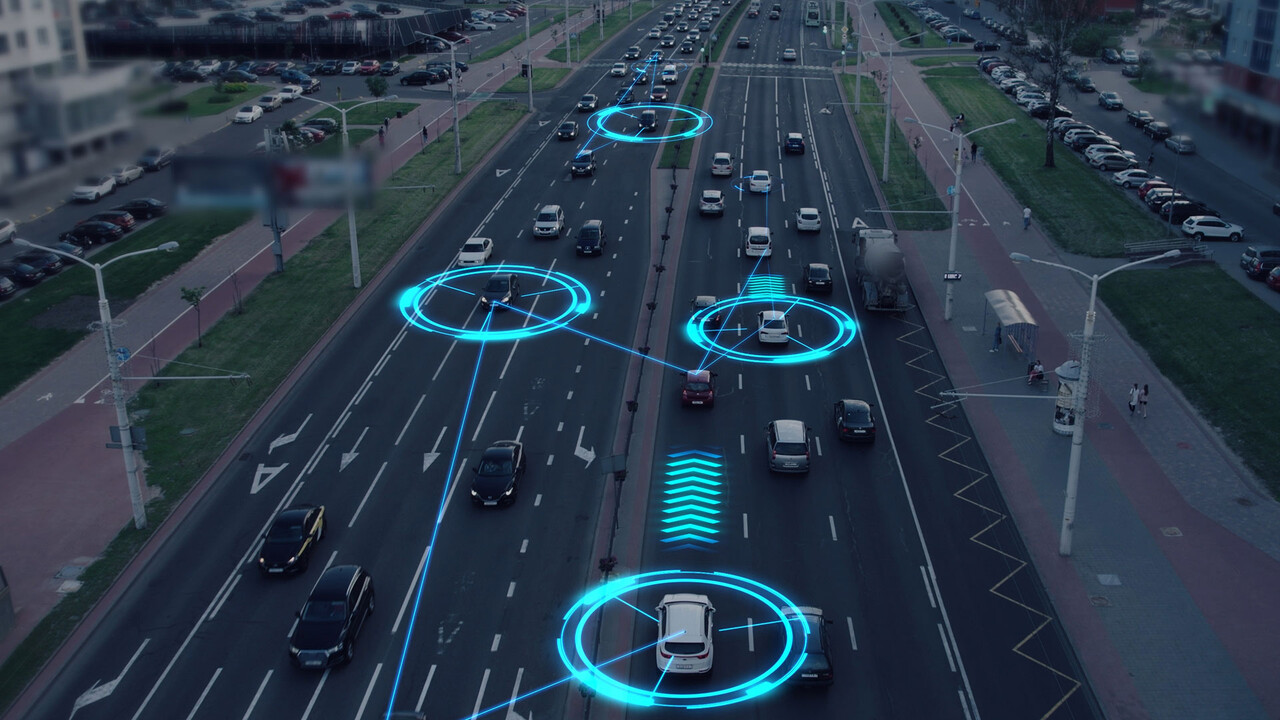
app.getquin.comRobotaxis und Autonomie das Milliarden Ökosystem hinter den Autos IAA 2025
1111
4 Commenti

1Anno
I had actually discovered them in the spring and got in. Unfortunately, however, they were unable to meet the high standards I set for my investments in the first three months, so they had to leave my portfolio again. But in general, the stock is very exciting and will perform in the medium to long term.
•
77
•
1Anno·
Pony.ai Q2'25 Earnings Highlights
$08X (+0,94%) $PONY
Q2 Financials:
🔹 Revenue: $21.45M (Est. $16M) 🟢; UP +75.9% YoY
🔹 EPS: $(0.14) vs. $(0.92) YoY
🔹 Gross Margin: 16.1% vs. (0.3%) YoY
🔹 Net Loss: $(53.3M) vs. $(30.9M) YoY
🔹 Cash & Investments: $747.7M
Revenue Breakdown:
🔹 Robotaxi: $1.53M; UP +157.8% YoY; fare-charging +300% YoY
🔹 Robotruck: $9.52M; DOWN -9.9% YoY
🔹 Licensing & Applications: $10.41M; UP +901.8% YoY
Operational Highlights:
🔹 Over 200 Gen-7 Robotaxis produced since June; on track for 1,000-vehicle fleet by YE 2025
🔹 Only company with fully-driverless commercial ops in all four tier-one Chinese cities
🔹 Expanded 24/7 Robotaxi service in parts of Guangzhou & Shenzhen
🔹 Strategic partnership with Shenzhen Xihu Group for >1,000 Robotaxis in Shenzhen
🔹 Expanded global footprint — Dubai, South Korea, Luxembourg
Efficiency Gains:
🔹 Improved remote assistant-to-vehicle ratio; targeting 1:30 by YE 2025
🔹 Reduced insurance costs, improving unit economics
CEO Commentary:
🔸 “We’re scaling mass production toward 1,000 vehicles by year-end, with robust revenue growth and clear path to positive unit economics.”


1Anno·
Pony.ai (PONY) launches with over 1,000 robotaxis in Shenzhen - milestone for autonomous mobility in China!
The Chinese technology company Pony.ai is taking a major step towards the mass commercialization of autonomous vehicles: In cooperation with the largest cab company in the city of Shenzhen, the Xihu Group, Pony.ai plans to put more than 1,000 seventh-generation robotaxis on the road in the coming years. The two partners are relying on a so-called "asset-light + AI-supported model", in which Xihu takes over the fleet as well as operation and maintenance, while Pony.ai focuses on the further development of its AI-based driving and dispatching systems.
The strategic alliance combines Xihu's decades of experience in fleet operations with Pony.ai's advanced autonomous driving technology. The first vehicles will still be on the road with safety drivers, but fully driverless operation is the declared goal - subject to regulatory approvals. Pony.ai is already the first company to receive approval for paid driverless rides in the city center of Shenzhen. The company almost tripled its revenue in the robotaxi business to USD 1.7 million in Q1 2025. With its model of intelligent task sharing and strong local roots, the move in Shenzhen is seen as a potential blueprint for other major cities in China.

mobile.aktien-mag.dePony.ai (PONY) startet mit über 1.000 Robotaxis in Shenzhen – Meilenstein für autonome Mobilität in China!
1Anno·
"We are years behind": Tesla AI boss admits to lagging behind in autonomous driving
$TSLA (+1,29%) . $GOOGL (+0,43%)
Shortly before the launch of the new robotaxi service, a surprisingly honest statement provides a deep insight into the company's true capabilities.
By Hannah Klaiber
01.06.2025, 16:50
In a rare moment of candor, Ashok Elluswamy, Head of AI and Autopilot Software at Austin, Texas-based car manufacturer Tesla, has admitted to being significantly behind the competition in terms of technology. Speaking to a journalist, Elluswamy admitted that Tesla's technology for fully autonomous driving (FSD) lags behind that of Waymo, a subsidiary of Google parent Alphabet from Mountain View in the US state of California.
The head of AI said: "Technically, Waymo is already capable. We are perhaps a few years behind." This statement provides a remarkable categorization, as Waymo is already considered the "gold standard" of autonomous driving and operates commercial robotaxi services in several US cities. First reported by InsideEVs.
Vision vs Lidar: Which solution is better?
At the heart of the gap lies a fundamentally different technological philosophy. Tesla is known to rely on "Tesla Vision", an approach that relies solely on data from cameras, which, according to Elluswamy, only cost between one and ten US dollars each.
Waymo, on the other hand, equips its fleet with lidar and radar sensors in addition to cameras. These were long regarded as extremely expensive, but according to industry observers, the cost of lidar units has now fallen to less than 1,000 dollars, which makes their use in cheaper vehicles possible in principle.
Elluswamy defends Tesla's path as the "more valuable to the world", as a low-cost solution allows for faster scaling. However, he admits that it is "technically challenging" to solve the problem of autonomous driving with cameras alone. Corresponding tests are repeatedly posted on social media, for example on ex-Twitter X:
Business Insider magazine observed in a test just how challenging Tesla's alternative approach can be: According to it, a Tesla with FSD software activated had driven into a bicycle lane and run a red light, while a Waymo mastered a comparable route flawlessly.
A reality check for Musk's robotaxi plans
Elluswamy's admission puts another damper on Tesla boss Elon Musk's ambitious plans. Musk has been promising an imminent autonomy revolution for years and wants to launch his first robotaxi service in Austin as early as next month.
The realistic assessment of his own AI boss now raises the question of how efficient this service will really be in the beginning. In any case, it fits seamlessly into a series of postponed schedules. For example, a fully autonomous journey from coast to coast in the USA was already promised for 2016. So far, that has not happened.
https://t3n.de/news/wir-liegen-jahre-zurueck-tesla-ki-robotaxi-1689325/
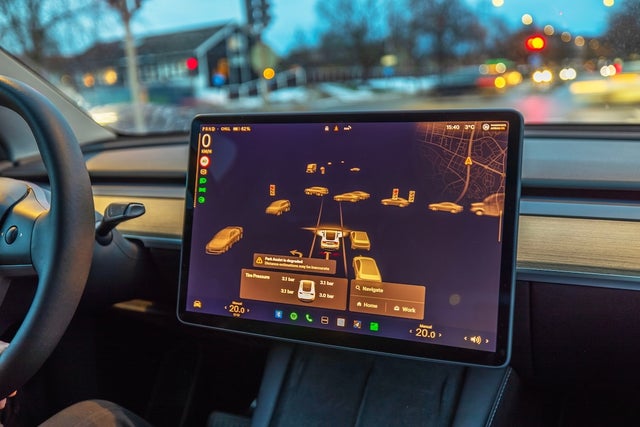
t3n.de„Wir liegen Jahre zurück“: Tesla-KI-Chef gesteht Rückstand bei autonomem Fahren ein
77
3 Commenti1Anno
Does anyone here have bangs in their depot?
•
11
•