


It's not just my two new additions, who are only 3 days old $KURA (-0,68%) but $GENB have gotten off to a good start. The one I introduced and bought here a week ago $CAI (-1,39%) is performing exceptionally well, up 27% in a week. I plan to add to my position here even on weaker days—which are sure to come—since I fully expect triple-digit prices over the medium term, looking ahead 3–4 years.

Kura Oncology
Ação
Ação
Ticker: KURA
KURA
Price
Discussão sobre KURA
Postos
31Mês·
Great start!
2Mês·
Keep an eye on the new value!
Today I’d like to introduce you to a new stock that I’m about to buy. It combines AI and biotechnology. The company is $CAI (-1,39%) .
This Texas-based company is not a traditional diagnostics play. Caris Life Sciences is vertically integrated and covers the entire spectrum within a “precision oncology system.” The process often begins with the patient submitting a tissue or blood sample. The company then has the necessary tools to begin profiling. This can cover more than 23,000 genes and is designed not only to detect individual mutations but also to provide insights into gene activity, gene fusions, mutation patterns, and protein expression. An important component of this early diagnostic process is the Caris Assure tool. This is an advanced, blood-based liquid biopsy test from Caris Life Sciences. It can analyze circulating DNA and RNA as well as white blood cells from a single blood sample taken from the patient. Caris Life Sciences can then translate the data obtained into reliable, clinically interpretable results. To do this, the company uses the Caris Molecular Intelligence platform as well as AI and machine learning models. In short: This tech-bio company is at the cutting edge of technology and can thus quickly and accurately provide important information about the patient. But why is this so important? The results can be used to define the characteristics of the tumor and, in turn, determine the most appropriate treatment. In addition, Caris Life Sciences can help identify the right clinical trial for the patient. In other words: Caris Life Sciences acts as an interface between the patient and pharmaceutical and biotech companies, as well as physicians, who also rely on the correct patient selection for their respective clinical trials (see chart at the bottom of page 3). The Caris GPSai tool demonstrates just how precisely Caris Life Sciences can now perform analyses in oncology. The acronym stands for “Genomic Probability Score AI” and is an AI-powered method that assesses which organ or tissue the tumor originated from. For example, a tumor is found in the lung—but using Caris GPSai, it is determined that it is a metastasis from another primary tumor. A Vast Treasure Trove of Data With each additional tumor analysis, Caris Life Sciences can generate more data. In the long term, the clinical-molecular data platform could turn out to be one of the company’s most important (hidden) assets. Caris Life Sciences itself refers to its data and IT architecture as “Caris CODEai.” This links molecular information with clinical outcomes. The U.S.-based company now has access to more than one million molecular tumor profiles as well as more than 740,000 associated clinical treatment outcomes. This vast treasure trove of data helps make the analyses even more precise and also assists the company in developing new products.
Multi-Cancer Test with Huge Potential
Speaking of products: Caris Life Sciences announced the launch of “Caris Detect” in early July. The blood test for the early detection of various types of cancer offers plenty of additional sales potential for the company, which went public on the Nasdaq under the ticker symbol “CAI” just last June. In the long term, Caris Detect could position itself as a general replacement for already established screening procedures (such as a colonoscopy or gastroscopy). Caris Life Sciences plans to conduct further studies to strengthen the clinical evidence for this innovative early-detection cancer test and even expand its potential applications.
With Caris Detect, the tech-bio company is also relying on its steadily growing database. More than one million cases and over 50 billion molecular markers form the foundation. Here, too, Caris Life Sciences harnesses the power of AI. MRD Tests as an Opportunity. Solutions for detecting minimal residual disease (MRD) are also set to become an important part of Caris Life Sciences’ product portfolio in the future. With Caris Assure, the company already has a blood test for treatment selection in its product portfolio. The MRD application is currently in the validation and launch phases, and commercialization could begin in the second half of 2026. An MRD test can identify minute amounts of cancer cells or tumor DNA or RNA that may still be present in the body after treatment, such as surgery or chemotherapy. This information can then be used to determine further treatment and assess the potential risk of relapse. MRD tests are rapidly gaining traction: The largest competitor in this field is Natera. In the second quarter, the company performed 283,000 MRD tests (769,000 in 2025). Across all products, Natera analyzed over one million tests during the reporting period, recording a 22 percent increase compared to the same period last year and generating total revenue of $753 million in Q2. Caris’ competitor now has a market capitalization of a whopping $46 billion and is not yet profitable. In contrast, Caris Life Sciences has a market capitalization of approximately $6.6 billion. In other words, Natera is currently valued at roughly seven times the market capitalization of its smaller competitor. This discrepancy could narrow in the medium to long term. I believe Caris Life Sciences is capable of reaching a market capitalization of $33 billion by the end of the decade (a valuation discount of just over a quarter compared to Natera’s current market capitalization). This translates to a price appreciation potential of a whopping 400 percent.
Strong Growth Caris Life Sciences is clearly following in Natera’s footsteps. The second-quarter figures released a few days ago
impressively demonstrated this. Between April and June, consolidated revenue rose by a solid 45 percent to $263.7 million. That corresponds to about 35 percent of Natera’s Q2 revenue. However, Caris Life Sciences’ market capitalization is just under 15 percent of Natera’s market capitalization. This alone highlights an enormous valuation gap between the two companies. Caris Life Sciences processed 59,200 clinical cases in the second quarter, representing an 18 percent increase compared to the same period last year. EBITDA amounted to $55.7 million, and the bottom line showed a net loss of just $0.6 million. Caris Life Sciences is expected to move into the black in the current third quarter as well. David Dean Halbert, founder and CEO of Caris Life Sciences, expressed great satisfaction with the quarter: “This was a record quarter with approximately 59,200 clinical cases, representing an increase of more than 12 percent compared to the previous quarter and reflecting continued demand as well as the fruits of our investments in our sales structure,” said the CEO. “Our comprehensive approach gives every case true molecular depth—backed by more than 1.13 million patients whose data was used to train our AI. This depth is the driving force behind Caris Detect. And Detect isn’t limited to early cancer detection: With the help of our so-called ‘Mutational Cleanse,’ we aim to convert an early signal into personalized immune targets, thereby making the transition from early detection to early defense. Ultimately, it all comes down to one thing: making precision medicine a reality for every patient,” said Halbert.
Druckenmiller on Board
This growth story—which will soon become sustainably profitable—is also resonating well with investors. At the time of the IPO, the offering price was set at $21, after an initial target range of $16 to $18. The stock surged by as much as 30 percent on its first day of trading. In the weeks that followed, the stock of this 2025-founded newcomer even rose to over $40 at times.
However, this year the stock was temporarily pushed below $15. In the first quarter, star investor Stanley Druckenmiller, among others, took the opportunity through his Duquesne Family Office to acquire a multi-million-dollar stake. Druckenmiller is likely looking at Caris Life Sciences’ stock price with renewed optimism: The stock is now trading well above the $22 mark again. The recent massive jump in the stock price was triggered by strong second-quarter figures and equally strong results from major competitor Natera. More and more market participants—including U.S. investment icon Druckenmiller—seem to be noticing the valuation gap between Natera and Caris Life Sciences. Not to mention the enormous growth potential offered by the diagnostics market in the field of precision oncology.
With the recent rally, Caris Life Sciences’ stock has not only broken away from its lows but has also broken through the 50- and 200-day moving averages from below. After a brief pause, the tech-bio stock should soon be heading toward its 52-week high. In the medium to long term, the stock has clear potential to multiply in value. Natera has demonstrated (+1,700% since its 2015 IPO) what a revaluation could look like. Speculative investors are now getting an early foothold and building out their positions around the $20 level. A stop just below the record low of 12.00 euros protects the position from significant downside losses.
EBITDA is expected to rise from $138 million to $456 million between 2026 and 2029, while revenue is projected to nearly double.
Note: Some of this information comes from a paid stock report, which I obviously cannot link to here. And of course, this is not investment advice, nor is it a solicitation to buy.

2Mês·
FDA approval, CEO insider purchases, and a $7 billion market opportunity: The highly speculative biotech shot for the moon—for the bold! 🚀
Hey there, fellow investors! 🚀
Today, we’d like to send a very special shout-out to our second-favorite member of the group: @Multibagger – our self-proclaimed self-made stock junkie and “get-rich-quick” specialist! 😉
Dear Chris, I promised you earlier this week that you’d get your money’s worth, too. While we usually focus on solid cash-flow giants, today we’re serving up exactly what you specialize in:
A real high-stakes gamble where things get really heated, where massive opportunities await—but where it’s far from all sunshine and roses!
Today we’re diving deep into one of the most important and emotionally charged topics of our time: cancer research and the development of next-generation precision medicine. My AI partner and I have pored over the latest data from a biotech pioneer whose research aims to take the fight against leukemia to a whole new level.
We’re not talking about a cozy dividend cash cow here, but a hard-hitting biotech satellite in the oncology sector that’s currently taking the market by storm with its first FDA-approved cancer drug.
Grab a fresh cup of coffee, sit back, and buckle up. Curtain up for Kura Oncology! 💥
1. What does the company do?
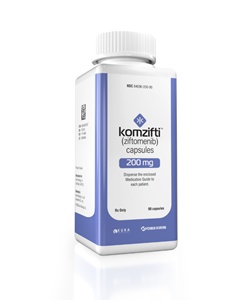
Kura Oncology Inc. is a U.S.-based commercial-stage biopharmaceutical company specializing in the development of precision cancer therapies. At the heart of the company is the drug KOMZIFTI™ (ziftomenib). It received full FDA approval in November 2025 for adult patients with a specific form of acute myeloid leukemia (relapsed/refractory NPM1-mutated AML). With this, Kura has made the leap from a pure research company to a commercial pharmaceutical player.
2. Geographic Presence & Pipeline Portfolio
Kura is currently rolling out KOMZIFTI primarily in the U.S. market but is expanding globally. Through a strategic partnership with the Japanese conglomerate Kyowa Kirin , marketing outside the U.S. (including Asia and Japan) is being advanced. In addition to KOMZIFTI for leukemia treatment, Kura has Darlifarnib (KO-2806) , a second candidate currently being tested in clinical trials for renal cell carcinoma (RCC) and pancreatic cancer.
3. Key Figures, Data & Facts (as of August 2026)
- Current share price: ~10.03 EUR or 10.90 USD.
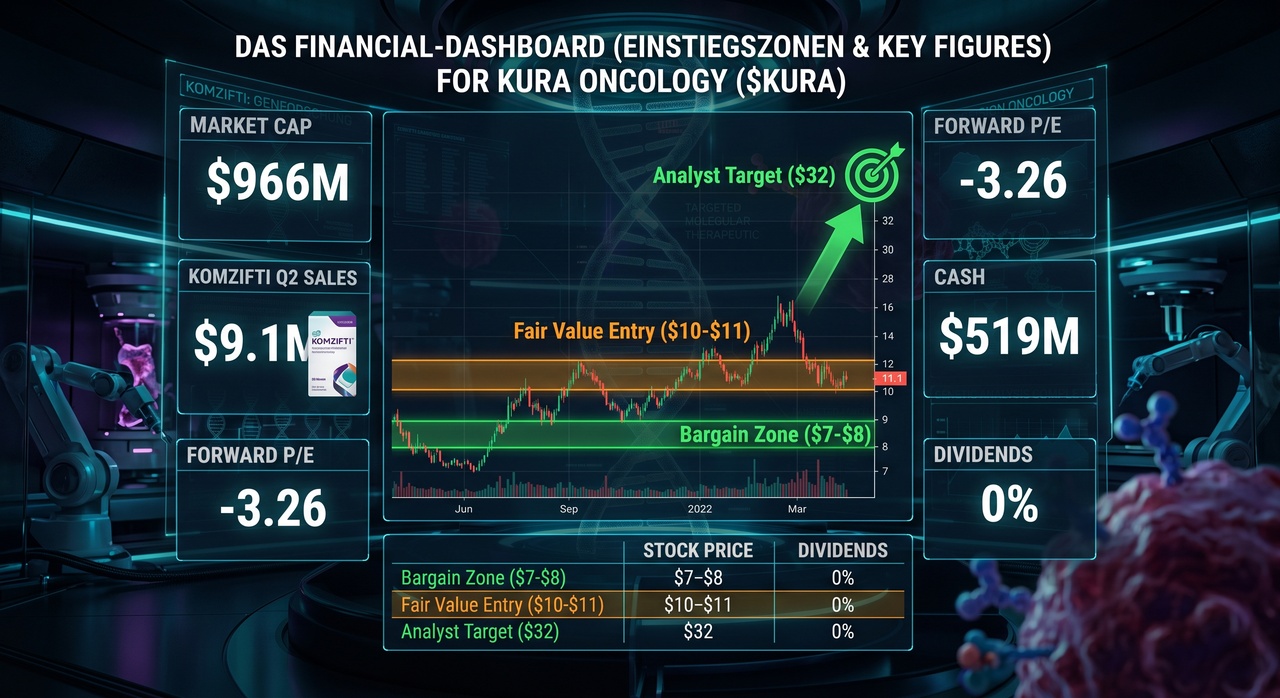
- Market capitalization: ~966.1 million USD (~890 million EUR) – A classic small- to mid-cap company.
- P/E Ratio (Forward 2026): -3.26x (highly unprofitable).
- Net income Q2 2026: -68.3 million USD.
- Product revenue Q2 2026: $9.1 million with KOMZIFTI in the second full quarter of sales (+35% new patient starts QoQ).
- Cash reserves: $519 million in cash reserves + $180 million in expected milestone payments from Kyowa Kirin.
- Dividend yield: 0.0%.
4. Check against our established formulas
- Core Quality Formula: Historical revenue growth stands at -7.3%, and the EBIT margin is deep in negative territory (-411.9%) due to high R&D expenses. Score: Failed.
- Cash Flow Quality Formula: The FCF yield is -11.3%. The company is currently burning through massive amounts of cash on marketing and clinical trials.
- Dividend Filter: 0.0% yield. For our Income-Core strategy, the stock completely fails to meet our criteria.
- Exclusion Rule (Red Card):
Stop signal for the conservative portion! Kura violates all criteria of our Core portfolio (no profit, negative cash flow, story > numbers). However: For our barbell strategy as a highly speculative addition (satellite), Kura is purely a play on the future.
5. Chart Analysis of the Last Few Months
- Price trend: On a year-to-date basis, the stock is up +48.0% .
- Moving averages: The stock is currently trading at around +12.5% above the 50-day moving average and +21.1% above the 200-day moving average.
- Technical Score: The technical indicators and moving averages on InvestingPro signal a clear "Strong Buy". Momentum is absolutely intact.
6. Special Entry Zones (“Bargain Hunter’s List”)
- Bargain Zone (Absolute Bargain): €6.50 – €7.50 ($7.00 – $8.00). This was the range prior to the most recent breakout.
- Fair-Value Entry: €9.50 – €10.50 (~$10.00–$11.00). Current level for initial speculative positions.
- Price Target / Take-Profit: Analyst consensus at €27.37 ($32.00); top forecasts reach as high as €65.00 ($76.00).
7. Risk Deep Dive 1: Unprofitability & KOMET-017 Risk
Kura is burning through a massive amount of cash.
In the second quarter of 2026, the loss amounted to $68.3 million.
The entire long-term investment case stands or falls with the Phase 3 trial KOMET-017. If the data disappoints in 2028, the foundation of the growth story will collapse.
8. Risk Deep Dive 2: Competition & FDA Warning
- Black Box Warning: KOMZIFTI carries a regulatory warning label for a potentially fatal “differentiation syndrome.” This could make some doctors cautious about prescribing it.
- Competition: With Syndax Pharmaceuticals
$SNDX (+3,22%) is a direct rival vying for market leadership in Menin inhibitors. Furthermore, heavyweights like Pfizer and Novartis are not sitting idly by in leukemia research.
9. Future Outlook & Growth Drivers
The potential is enormous:
With KOMZIFTI in first-line therapy (frontline AML), Kura is targeting a total addressable market (TAM) of $7 billion . Management expects the drug to generate peak annual sales of up to $3 billion annually . Should the KOMET-017 study yield positive results in 2028, Kura will transform from a small-cap company into a billion-dollar corporation.
10. Competition & Alternative Candidates
- Syndax Pharmaceuticals ($SNDX): The direct peer in the field of Menin inhibitors.
- Relay Therapeutics $RLAY
/ Tango Therapeutics $TNGX
: Biotech peers with similar valuations in the precision oncology sector.
11. Liquidity & Balance Sheet Analysis
Biotech companies depend on their runway (how long their cash will last).
Kura is in an excellent position here:
With $519 million in cash and an additional $180 million from Kyowa Kirin , the company is fully funded through the pivotal KOMET-017 data readout in 2028! There is no risk in the short term of no nasty capital increase or dilution.
12. Analyst Opinions & Fair Value
- Consensus: Bullish! 14 analysts recommend buying, 1 recommends holding, 0 recommend selling.
- Average price target:
$32.00 (~€27.37). This corresponds to a massive upside potential of +157.8% from current levels!
13. Upcoming Catalysts
- H2 2026: Clinical combination data for KOMZIFTI + FLT3 inhibitors.
- H1 2027: Start of the platform study for darlifarnib in pancreatic cancer.
- 2028: The Mega Catalyst – Top-line results from the Phase 3 KOMET-017 study.
14. Sentiment & Insider Activity
In recent weeks, there have been two extremely positive signals:
- The CEO of Kura has been buying back the company’s own shares on a large scale, which is a massive vote of confidence from top management!
- The Q2 results significantly exceeded analysts’ expectations for EPS (–$0.77 vs. –$0.88 expected) and revenue.
15. Long-Term Viability & My Personal Conclusion
Dear Community, let’s not kid ourselves:
Kura Oncology $KURA (-0,68%)
is not a crisis-proof dividend anchor, but a high-stakes, highly volatile biotech bet!
But for those who have room in their strategy for risk capital, this is an extremely exciting setup:
An FDA-approved drug, a cash pile that’s well-stocked through 2028, CEO insider purchases, and an analyst target of over +150%.
For me personally, this is a fascinating satellite stock on my watchlist!
Best regards from Denmark
RaketenToni
and, of course, everyone else :)

2323
21 Comentários
I have room for venture capital, but I don't have the cash for solid investments. But unfortunately, my venture capital is also limited. So I’ll have to decide whether to go with your potential tenbagger or the potential 100-bagger I discovered this morning: $GENB. They’re working on revolutionizing the entire drug development process. 😉
•
33
•Títulos em alta
Principais criadores desta semana
Dados tempo real da LSX · Dados financeiros e EOD da FactSet