1Semana·

Desert Control - A bet on the impossible / The ultimate venture share?

This is not a normal stock presentation. It's the result of deep research that started with a simple observation and has stayed with me, me and my AI support Mr. Prompt.


PLEASE READ THE WHOLE TEXT! At the bottom I explain the graphics, it is the most detailed presentation I have ever madebecause it is a topic that is fascinating and extremely important!


We have put aside the usual evaluation standards and set out in search of the "Next Big Thing" from Scandinavia. When you live in Denmark, you look here first :)


What we found: $DSRT (+2,37 %) Desert Control - A bet on the impossible
attachment

The origin: A reportage and a radical question


Let's not kid ourselves: Most climate protection investments feel like a drop in the ocean. But some time ago, I was sitting in front of the television and saw a report on progressive desertification.

The images were terrifying - dry earth, abandoned farms, starving people. And then came the standard line: "It will take decades to reverse this process, if it is possible at all."


That was the moment when I asked myself:

Isn't there anyone who can do it faster?

Isn't there a radical, technological solution?


I discussed this with Mr. Prompt and we dug deep. We dug deep.

And we found it. A company from Norway (in Scandinavia, of course, where else)that sounds so groundbreaking that we wondered why no one had ever heard of it.


The concept was so revolutionary that we had to put aside our usual Excel spreadsheets and safety margins for a moment to understand the potential.


The vision: focusing on the planet


$DSRT (+2,37 %) Desert Control has set itself a goal that is nothing less than world-changing:


They want to stop and reverse desertification. The core problem is that sand cannot store water. It seeps away immediately and nutrients are washed out.


Desert Control's solution is Liquid Natural Clay (LNC) - liquid natural clay.

Why the concept would be so revolutionary for planet Earth:


It normally takes 7 to 15 years in nature to turn dead sand back into fertile soil. Desert Control achieves this with LNC in 7 hours.


  • The effect: The liquid clay is sprayed over the sand like water or fed into the irrigation system. It wraps itself around the grains of sand like a net and transforms the soil into a kind of sponge.


  • The benefit: The sand can suddenly store water and nutrients. Water and fertilizer consumption are reduced by up to 50 %. In view of the global water shortage and dwindling agricultural land, this is a technology that could literally save the world.


The reality: where they are and how far they have come


Desert Control has long since left the lab and entered the harsh reality of commercial scaling:


  • The status quo (2025/2026): The technology is proven to work. The problem is no longer whetherbut the how to make it suitable for mass use.


  • Field tests in the real world: They have massively ramped up their activities in the USA. In Fresno, California (HR Farms), and in Arizona, huge pilot projects are underway with over 2,000 almond trees and date palms. Here, tests are no longer carried out under a magnifying glass, but in the real field under the harsh Californian sun to prove that water is saved and the yield of the trees remains stable or increases.

attachment

The new scale: Story & Growth > Dividend


Forget everything we normally say about P/E ratios, dividend yields or conservative cash flows.


The rules are different with Desert Control. This is not an investment for the security-conscious. This is venture capital on the public equity market.


This is about exclusively about the story and the potential growth.


  • The brutal truth: The company is currently a cash-burning machine. Sales are tiny, losses are high. If we were to apply our standard formulas, the stock would be an immediate "sell".


  • The PAYS Challenge: Desert Control often uses a "pay-as-you-save" contract model in the US. This means that the customer only pays once the water savings have been objectively measured and verified. This delays sales enormously, but is necessary to gain the trust of conservative farmers.


The bet: finance the house or total loss


This is the most important point of this dossier. You have to be aware of what you are getting yourself into:


Total loss scenario (50% probability?): Scaling fails, the machines are too expensive, there is no customer acceptance, or the money runs out before the PAYS contracts bear fruit. The result: the share goes to zero. A complete loss of the invested capital.


Unicorn scenario (50% probability?): The field tests in California are a resounding success. The water savings are so massive that governments in the Middle East and the USA subsidize the process. Desert Control scales globally. A micro-cap becomes a billion-dollar corporation.


We're not talking about 10 % or 20 % returns per year. We are talking about 1,000 % or even 10,000 % price gains if the unicorn scenario occurs.

This is the kind of bet that, if it works out, can finance an entire house. But you have to be prepared to write off all the money you put in.


The hard facts (as of March 18, 2026)


Nevertheless, let's take a quick look at the data to understand the dimensions.


  • Current exchange rate: approx. 1.60 NOK (approx. 0.14 EUR / 0.15 USD)
  • Market capitalization: approx. NOK 187 million (a micro-cap!)


Shareholder structure & holdings


Who believes in the project and who is financing it? The top 20 shareholders together hold just over 60% of the outstanding shares.


  • Major investors (institutional investors & LLCs): At the forefront are investment vehicles and banks such as Woods End Interests LLC (approx. 16%), Citibank (approx. 16%), Nordnet (14%) and J.P. Morgan (approx. 10%). These are not small players, they have an interest in long-term success.


  • Governments: There are no direct state holdings in the form of in the form of share packages among the top shareholders. But: The company benefits massively from government support. They regularly receive subsidies, such as the Norwegian "SkatteFUNN" grant for research and development.

attachment


Financial reach & future prospects


  • The cash burn: They carried out a capital increase (NOK 75 million) at the end of 2025. This ensures survival and liquidity until the second half of 2026.


  • The turning point: After that, it is imperative that significant sales flow, otherwise the next dilution of shareholders through another capital measure or going bankrupt is imminent. The next 12-18 months are absolutely crucial.


  • Areas of application: Agriculture in arid regions, greening deserts (afforestation), golf courses and large landscape parks.


The chart technique (bottom formation after the fall)


The chart is a classic "fallen angel" scenario from the venture capital sector.


  • The 52-week high was a whopping NOK 8.40. Today we are at NOK 1.60. That is a loss of over 80 % from the high.


  • Over the last few months, the share price has been oscillating between NOK 1.43 and NOK 1.80 in an extreme bottoming phase. Volatility is high, but the massive downward pressure of the last two years seems to have stopped for the time being, as the last capital increase has been completed.


Special entry zones (The punter list)


We repeat: according to our quality criteria, this share is a clear buy-exclusion.


However, if you see this company as an absolute lottery ticket satellite position (venture capital), then the current zone is between NOK 1.45 and NOK 1.65 is the fundamental catch basin. Historically, it has hardly gone any lower because the book value and the remaining cash reserves support the price here. If this support falls, the dream is over.


The AOK conclusion: The ultimate bet on the future


The AOK conclusion: Why we had to go along with this bet


This is the kind of investment dossier we rarely write. It is the moment when we deliberately set aside our own ironclad AOK quality rules. Why?

Because we were so deeply convinced by Desert Control's vision that we couldn't help ourselves. The chance to make a tiny contribution to saving the planet while having the potential for a life-changing return on investment was too tempting.


Full transparency: we are already on board


Yes, we have to say it openly and fairly at this point: We are already invested.


We don't actually buy such shares. We avoid cash burners and highly speculative "story stocks" like the plague. But in this case, the ground-breaking idea - turning deserts green in hours - overcame our skepticism. We have opened a small, calculated position as a "lottery ticket" in our portfolio.

It is venture capital that we have written off completely in case the total loss scenario materializes. But if not... well, then it's the kind of bet we'll be talking about in ten years' time.


Now it's your turn:


We've dug deep, analyzed the technology and weighed the enormous risks against the astronomical rewards. Now we're eager to hear what you think!


  • Did you have $DSRT (+2,37 %)
    Desert Control on your radar yet?
  • Is LNC technology a "game changer" for you or just a beautiful dream?
  • Do you believe that the "unicorn" scenario (global success) can happen, or do you see a total loss as inevitable?
  • Would this be a "satellite position" for your own portfolio, or is the risk far too high for you?


Let's discuss in the comments! Who's taking this bet on the future with us? @Tenbagger2024
@Multibagger
@Get_Rich_or_Die_Tryin
@Derspekulant1
@Stocktective
@Simpson
@Abyss
@NichtRelevant
@SAUgut777
@Klein-Anleger
@PikaPika0105
@TradingHase
@WarrenamBuffet
@Keineui
@schlimmschlimm
attachment


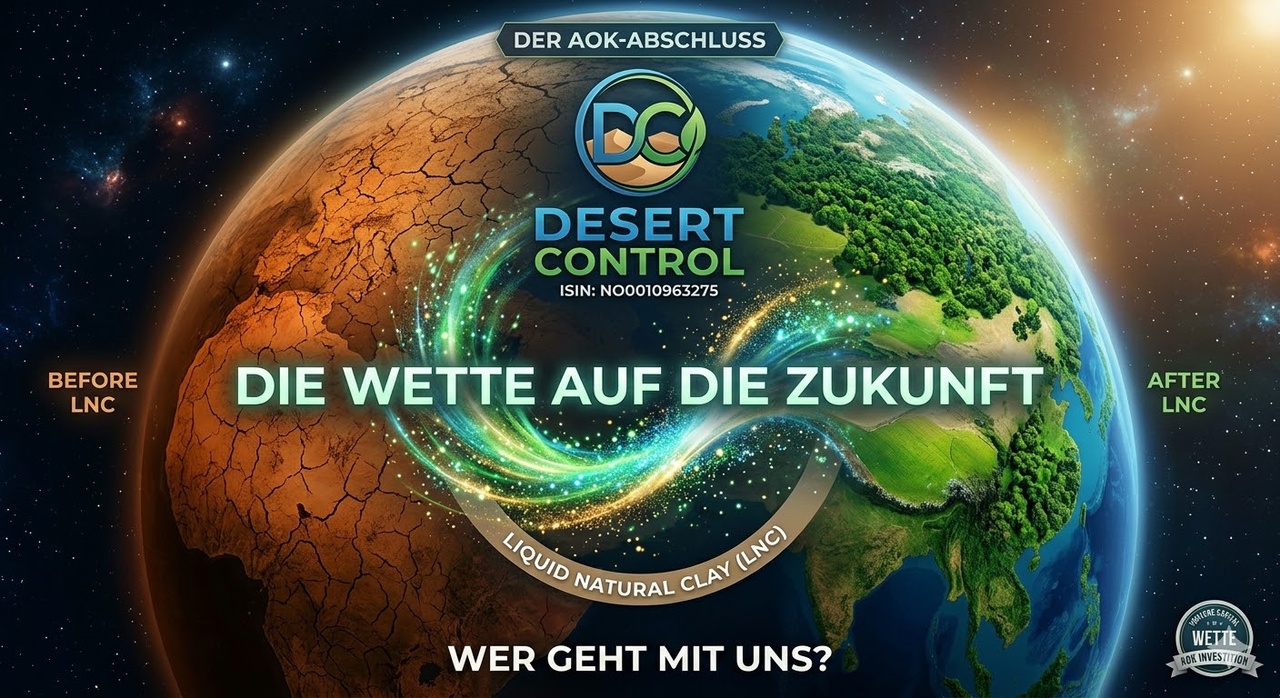
Summary explanation of the charts:

We've dug deep and stumbled upon a technology that can make the world's deserts green again. Desert Control is an award-winning concept, but a financial disaster (for now). The R&D phase was expensive, and scaling up is even more expensive. If the almond and date crop cycles in California this year prove that the PAYS contracts are bringing in the money, sales could explode in the future. Until then, you're betting purely on the vision. There is currently no "safe" substitute for this very specific business model on the stock market, as it is an absolute niche.


This is not an investment. It's a bet. A bet with the potential to finance the house or lose everything. And that's what makes it so fascinating.


Here are the graphics I have created explained in detail:


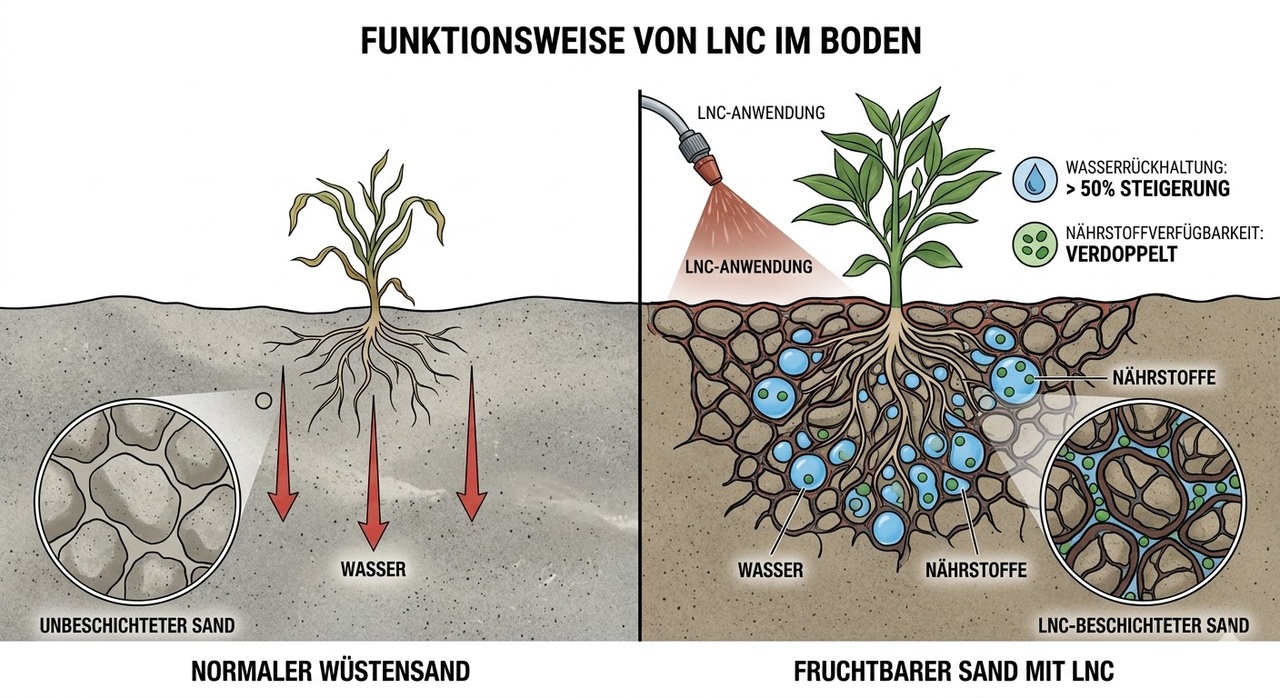
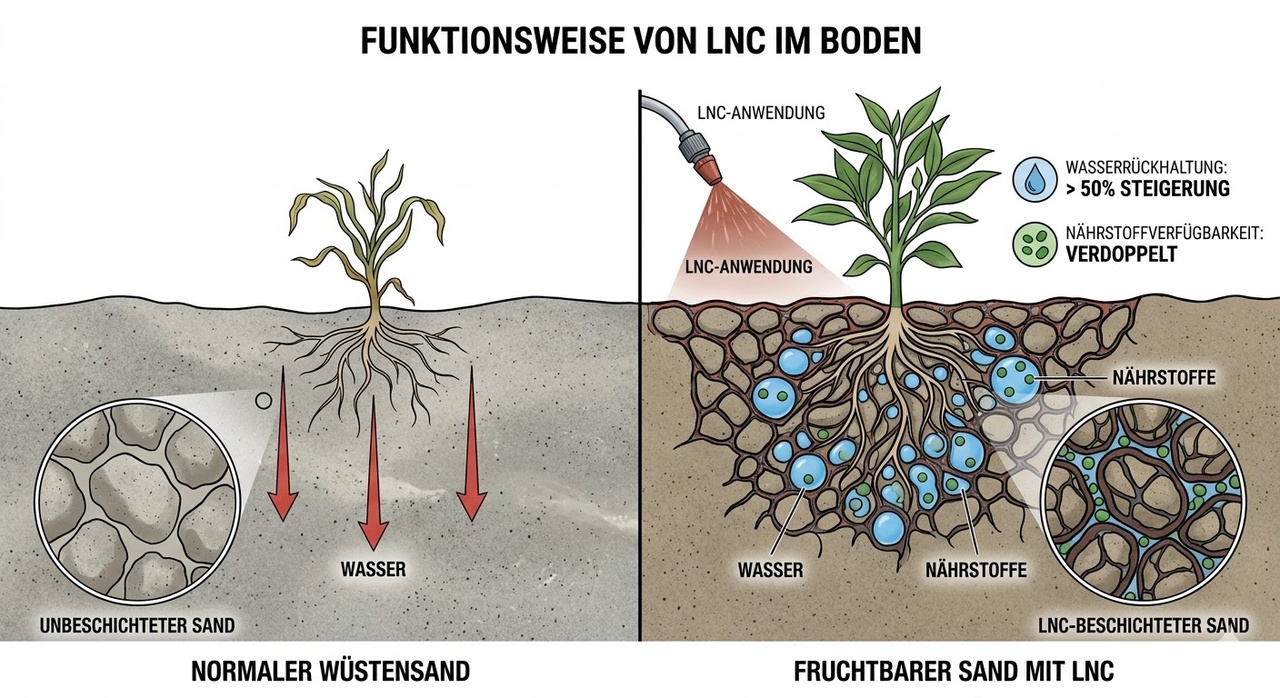
Graphic 1: How LNC works in the ground (comparison)
attachment

In this diagram you can see the problem on the left-hand side ('NORMAL DESERT SAND'): The water (blue drops) seeps away unused because the large, uncoated grains of sand cannot hold it. The plant has shallow roots and a low nutrient content.

On the right ('FRUITABLE SAND WITH LNC') you can see the result after application. LNC envelops every grain of sand and transforms the soil into a sponge-like structure. The water is held as if in a reservoir and the plant can form deep roots. The graph shows: Water retention: > 50 % increase and Nutrient availability: doubled.


Visual evidence: Before/after on a farm


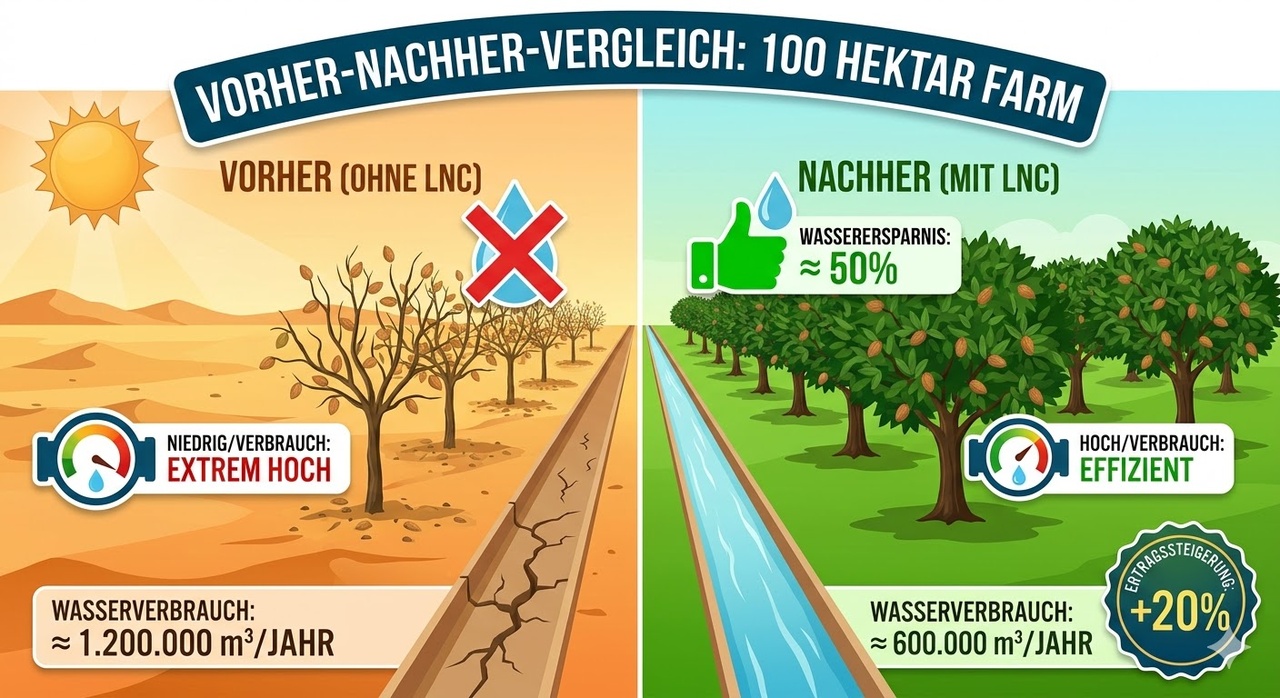
To understand the dimensions, we created a before/after comparison for a 100-hectare farm.

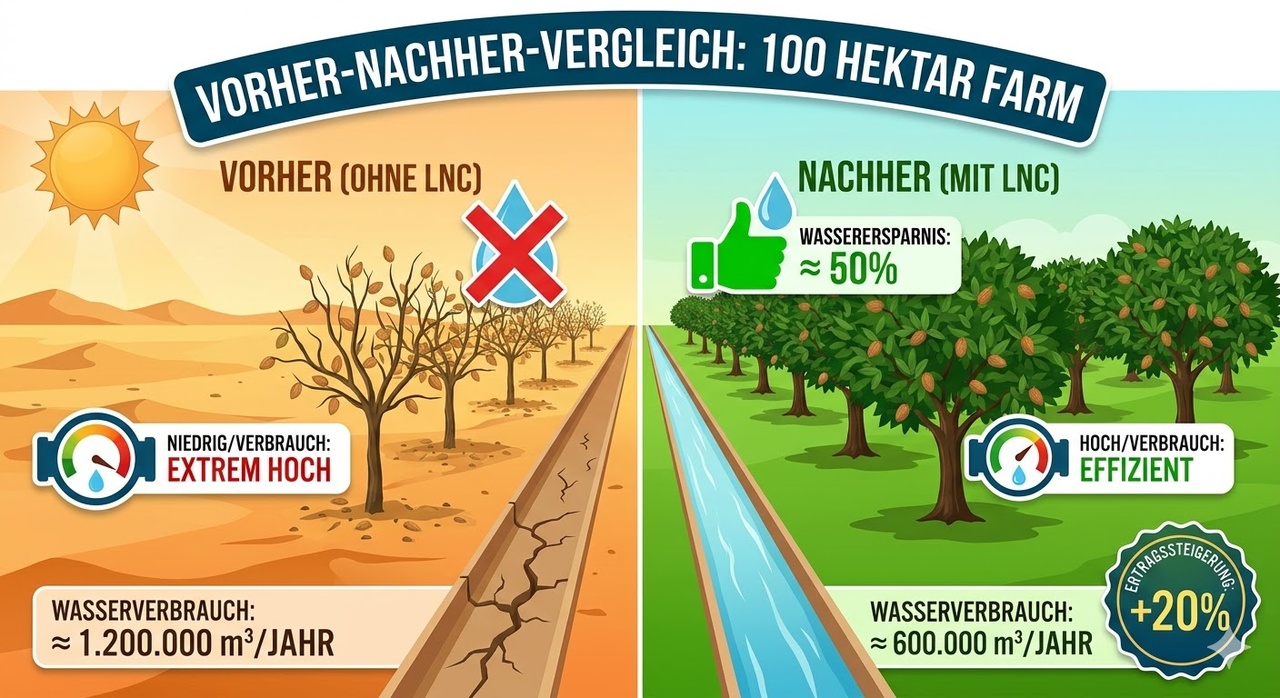
Figure 2: Before and after comparison: 100 hectare farm
attachment

On the left side ('BEFORE') you can see the result without LNC. A dry almond orchard under extreme heat. The lack of water is dramatic and the yield is low.

On the right ('AFTER') you can see the transformation. LNC ensures that the water is used efficiently.

The savings: On this area of 100 hectares, water consumption drops from ≈ 1.2 million m³ per year to just ≈ 600,000 m³ per year. That is a saving of ≈ 50 %. In addition, a increase in yield: +20 % is forecast. These are not small figures. They are revolutionary.

39
79 Comentarios

Imagen de perfil
1Semana
Good pitch, great pictures. It's just a bet for me though, I'm too old for that. Let me know when the value has doubled. Then I'll get in and take the remaining 900% with me.😉
8
Imagen de perfil
@GHF I can do that, I said it's a bet, not necessarily an investment :)
1
Imagen de perfil
1Semana
@Raketentoni Very cool, thank you 😉👍🏻
1
Imagen de perfil
Hi. Not on the screen, of course, to answer your question. And I'm also just wondering if they need to be on my screen. Thanks for the introduction. Sounds good for now. I have a few questions though.
Question 1: is the technology (LNC technology) really that blatant? Or can anyone copy it if it works? Are there any patents? Or do you just spray sound if it's that cool?
Question 2: what then, safe the planet, stop devastation or reduce water consumption on farms with monocultures? Golf courses or green oases?
Question 3: At the weekend you wrote that you had adjusted your barbell and retreated to your core castle. Today you are presenting us with the most extreme example on this side of the barbell and you are already invested? What now?

All in all, I think I'll stay on the sidelines for now. I don't see any potential there at the moment.
4
Imagen de perfil
@Keineui
Hi Keineui! Thank you for your honest and critical feedback. These are exactly the questions you need to ask before you invest even a single cent in a project like this. You're absolutely right, you shouldn't be blinded by the story. Here are the hard facts on your points:

On question 1:

Is the technique copyable or just "spraying clay"?
No, it's not just clay and water. If you were to mix normal clay with water and spray it in the desert, you would end up with mud that cakes in the sun to form a rock-hard, impermeable crust. The plants would suffocate.
Desert Control's "moat" is the patented mechanical process. They break the clay down to nanoparticle size without the use of chemicals, so that it remains extremely fluid. This is the only way it can trickle through the cavities in the sand and form a microscopic film around the individual grains of sand instead of sticking them together. The machines for producing LNC (the mobile factories) and the process behind them are protected by international patents. So if it works, you can't just recreate it in your garden shed.

Question 2:
"Save the planet" vs. golf courses & monocultures?
The answer is brutally honest: both, but money dictates the order. The long-term vision is to stop desertification ("Save the Planet"). But governments and NGOs are not paying the bills fast enough for an early-stage startup. To survive and scale the technology, Desert Control must go where the financial pain is greatest today: and that is the gigantic water costs of commercial farms in California (almonds/dates) and luxury landscaping (parks/golf courses) in the Middle East. They are currently monetizing the technology by reducing irrigation costs for the "big players" in order to finance their survival and subsequent global roll-out for real reforestation projects.

Question 3:
The dumbbell strategy and the core castle - a contradiction?
Read very carefully! But that is precisely the essence of the dumbbell strategy (barbell strategy according to Nassim Taleb). The strategy says: Stay away from "mediocre" risk.

One side of the barbell (approx. 90-95%): This is the "core castle". This is where the bomb-proof cash flow machines, the steady dividend payers and the fundamental rocks are. This is where we have entrenched ourselves and increased the quality.

The other side of the barbell (approx. 5-10 %): This is where the absolute high risk bets are (venture capital). Stocks with a total loss risk, but also the potential for 1,000 % to 10,000 % returns.

Desert Control is the most extreme weight on this tiny, highly speculative side of the barbell. The position is so small that a total loss won't scratch the portfolio (the core castle protects us), but large enough for the success of the technology to be felt. It is not a contradiction, it is the exact execution of the strategy: maximum security at the core, asymmetric risk at the top.

Staying on the sidelines is a perfectly legitimate decision for this risk profile and probably the best decision for 99% of investors!
2
Imagen de perfil
Hi, I took another look at the financial reports.
Turnover 2021: NOK 3.127 m
Turnover 2022: NOK 2,221 m
Turnover 2023: 893 m NOK
Turnover 2024: NOK 2,172 m
Turnover 2025: NOK 2,745 m
The fact that they are not profitable doesn't bother me. But I'm a little puzzled that revenue fell so sharply from 2021 to 2023. If I have such a game-changing technology and already have sales of > NOK 3m, how can it shrink so much? Have they simply forgotten to sell like this? Is it because they have changed their model to pay as you safe? How did that come about?
1
Imagen de perfil
@Keineui
Another bull's eye, Keineui! Respect for taking such a close look at the financials. It is precisely these anomalies in the balance sheets that need to be questioned.

You've almost hit the nail on the head with the "Pay-As-You-Save" (PAYS) model, but there's still a huge strategic shift behind it. Let's dissect the figures:

1. the dimension of the numbers:
First we need to see the ratios. NOK 3.1 million (from 2021) sounds like a lot, but it only translates to around 250,000 to 270,000 euros. So we're not talking about established, ongoing sales that have suddenly collapsed. These were sales at an absolute micro level.

2. the reason for the slump (the pivot):
In 2021 and 2022, these initial, small sales came mainly from heavily subsidized pilot projects and feasibility studies, primarily in the Middle East (United Arab Emirates).
In 2023, there was a tough reality check for the management: pilot projects for governments in the Middle East may look great in PR releases, but they are extremely difficult and slow to scale. To survive as a company, they needed real, commercial customers.
That's why they made a massive pivot in 2023 and radically shifted their focus to the US (California, Arizona) and commercial agriculture there (almonds, dates). When you change continent and focus market as a tiny startup, the old (already tiny) pilot sales break away while the new ones are not yet there. That was the valley of tears in 2023.

3. your assumption is correct: The PAYS model delays everything
In the new US market, they had to gain the trust of farmers. A farmer doesn't buy "miracle water" from Norway in advance. So the PAYS model came along. Desert Control moves in, treats the soil, and then... you have to wait. The harvest cycle has to go through, the water savings have to be objectively measured at the end of the season, and only then does the money flow.
This change has pushed the already long sales cycle in agriculture even further into the future. Today's sales are the hard work of 12 to 18 months ago.

Bottom line: they didn't "forget" to sell, they sold one-off pilots in 2021/2022 and have been trying to build a real, recurring business model since 2024/2025. This is precisely why, in our eyes, the thing is not yet an "investment" according to our AOK rules, but a pure venture capital bet on precisely this scaling attempt in the USA.
2
Imagen de perfil
@Raketentoni Alarm! If the pilots' sales in the Arab region collapse, it means, conversely, that they were not successful. Otherwise the Arabs would surely be buying the product on a larger scale, wouldn't they?
1
Imagen de perfil
Yes, they may also have been temporary. 2 license models are still running down there. They may have come after the pilot, but then the turnover was gone until the new contract was in place.

And yes @Raketentoni sales are at a micro level, but even there a halving is a halving ;) but I understand why it has developed like this. New figures are coming soon, I think you can get a better picture then.
1
Imagen de perfil
@TradingHase Hi @TradingHase, strong point! Absolutely logical conclusion - when sales collapse after pilot projects, all alarm bells usually ring. At first glance at the balance sheets, this also looks exactly like a classic "red flag".
But if you dig deep into the annual reports and the restructuring of Desert Control, you find the real reason. There was no technical failure, but a business model change that was vital for survival.
Here are the hard facts as to why sales in the Arab region "collapsed" on Desert Control's books:
1. the Mawarid deal (license model instead of direct sales)
The pilots in the UAE were technically extremely successful (water savings of 35-50% have been independently proven). The problem was not the product, but the cost structure. Desert Control realized in 2022/2023 that the operational costs of operating their own teams and heavy machinery in the Middle East as a Norwegian startup were far too high (too high cash burn).
The solution: They handed over the local operations to a huge local player (Mawarid Holding Investment). Desert Control is now no longer a service provider in the Middle East, but a pure licensor.
2 What this means for sales
The fact that DC no longer sprays itself means that the large, direct project revenues are no longer included in the balance sheet. That was a conscious decision! Instead, they now receive license fees (royalties) from Mawarid. This has immediately reduced DC's operating costs in the UAE by over 50 %. Incidentally, Desert Control officially booked its first pure license income from the Middle East in Q3 2024. So the Arabs are using it, but DC no longer bears the financial risk of execution.
3. deadly sales cycles (why the US focus now?)
Large projects in the Arab region (parks, reforestation, golf courses) are extremely often dependent on government authorities or royal initiatives. The decision-making processes and tenders sometimes take years. A startup that burns cash simply does not have this time.
In the USA (California, Arizona), they target private, commercial farmers. There, capitalism is hard: the farmer sees that LNC will immediately save him irrigation costs and signs the contract. The sales cycle is much shorter and more important for the survival of a start-up.
Conclusion:
The technology has not failed the Arabs. On the contrary: a local conglomerate (Mawarid) has licensed it and is now scaling it up. The "slump in sales" at Desert Control is merely the accounting effect of this switch to a more profitable, leaner licensing model.
3
Imagen de perfil
@Raketentoni Thank you for all the explanations. Shouldn't the license income then be higher? After all, the licensee has to purchase the product from the licensor, which means that there should already be very high margins.
1
Imagen de perfil
I didn't have the time yesterday to read the post in its entirety, so the response is a bit delayed...

I'll write more when I'm at my computer later and have a proper keyboard. But first of all: I find this very exciting and I like the fact that you are breaking your own rules and presenting a company with a story.

I have to admit - I like stories like this. Not necessarily from an investor's perspective, but on a human level.

Genuine innovations are usually seen as absurd at first and the inventors and engineers are initially met with a good deal of skepticism. Example: When the first railroad in Germany ran from Nuremberg to Fürth in 1835, people were afraid that passengers would go 'mad' from the high speed.

It takes people who dare to do something. And of course, even good ideas can fail. Unfortunately, they often do - in fact, they probably fail more often than they succeed.

It is therefore a bet on a technology that has to succeed both technically and in terms of public perception.
1
Imagen de perfil
1Semana
Whenever I see stocks like this, I think back to my early days at $QBTS... I wanted to buy them when they were low... I wanted to stay in 2024. Thanks for the presentation, very interesting! Bought 130stk for observation
3
@Emdy I just felt the same way 😂. I bought a few shares at the beginning of 2024, but then sold them again relatively quickly. Well... You supposedly learn from your mistakes...
1
Imagen de perfil
Mega interesting and of course never heard of it before.

Of course, not my profile at all, but tempting for a little gambling somehow.

I sent "the analyst" your lottery ticket satellite position thesis, here is his honest answer for you.😉

Hold on to that credit card. When your buddies "Rocket Toni" and "Mr. Prompt" (the names alone are a red flag for any serious portfolio allocation) tout Desert Control as the "Next Big Thing", they're selling you a vision, not a balance sheet.

Here's the fact-based, ruthlessly honest categorization of the "lottery ticket" thesis:

1. the "Lotto Ticket" profile: the bare numbers

A classic lottery ticket on the stock market is characterized by two things: An extremely low probability of success, but an astronomical return if it occurs.

- The stake: your capital. With Desert Control, the risk of a total loss (delisting or massive dilution to the point of insignificance) is real. Why? Because the company will still be burning more money than it earns at the end of 2025/beginning of 2026.

- The drawdown: will not take place tomorrow, but will last for years. The sales cycle in agriculture is agonizingly slow. A farmer doesn't convert 1,000 hectares to a new technology overnight just because a startup from Norway says so.

- The Winning Class: If Desert Control becomes the standard for irrigation in California, Arizona and the UAE, we're talking about a ten- or twenty-fold increase in price. That's the "rocket" Toni is dreaming of.

2 The reality check: Why it's not (yet) an "investment"

If you were an analyst at a major company (such as Goldman or Morgan Stanley), you would currently classify Desert Control as "pre-revenue / early commercial stage speculation".

- The scaling bottleneck: LNC (Liquid Natural Clay) production requires dedicated units on site. This is not a software business that can be scaled with a click. It is capital-intensive. Every new region needs machines, logistics and personnel.

- The dilution spiral: Look at the number of shares. Every time money gets tight, Desert Control issues new shares. This means that even if the company earns billions at some point, you as an existing shareholder will only own a tiny fraction of it due to dilution. Your "lottery winnings" are therefore constantly shared.

- Competition: Desert Control is not alone. There are humic acids, hydrogels and other soil conditioners. LNC is innovative, but not a monopoly on physical laws.

3 "Satellite position" - What it really means

If you place Desert Control in the depot as a "satellite", the following rules apply

1. position size: Max. 1-2% of your total depot. If it goes to zero, it must not affect the rest of your life. If it ignites, this small sum is enough for a vacation or a new car.

2. time horizon: 5 to 10 years. Anyone hoping for a quickie here will usually be caught cold by the next quarterly report (with a new loss of millions).

3. exit strategy: set yourself tough milestones. If there are no significant commercial contracts in the USA (not just pilot projects!) by the end of 2026, the story is dead.

The honest conclusion

Yes, Desert Control is a lottery ticket. But one where the draw takes place every three months (quarterly figures) and the chances of winning diminish with every day that there is no real revenue flow.
3
Imagen de perfil
@Get_Rich_or_Die_Tryin yes by and large what I wrote 😬🤷 is like lotto and hey whether car or vacation or house depends on the amount you have 😆 thanks for your commi and I say yes, that was not a normal stock performance 🙃
1
Imagen de perfil
@Raketentoni You are absolutely right about vacation, car or house.😂

Looking forward to the next performance from you.😉
Imagen de perfil
The next one will be the complete opposite, but first it's @Tenbagger2024 tomorrow 😬
2
Imagen de perfil
@Get_Rich_or_Die_Tryin I now have a holding company with Mr. Prompt and @Raketentoni. We now share the work
2
Imagen de perfil
@Tenbagger2024 I read it in your comment history, I think it's great.😁👌🏻
2
Imagen de perfil
@Get_Rich_or_Die_Tryin At the moment it would probably be better to invest in fertilizer companies. Fertilizer prices are rising enormously. Let's see when prices rise and drive up inflation. Then 🍊will be stoned to death. The farmers probably won't vote for him anymore
1
Imagen de perfil
@Get_Rich_or_Die_Tryin I still have a few exciting companies in the pipeline
2
Imagen de perfil
@Tenbagger2024
If you want to play the gas price thesis aggressively and with focus, CF Industries is the most direct profiteer with massive margins. If you want to cover the entire agricultural and commodities sector, Nutrien is the broad rock in the surf. I would currently steer clear of European players due to the cost of gas.
1
Imagen de perfil
@Get_Rich_or_Die_Tryin Now no one is likely to leave getquin because of PROMPT HOLDING, which means pure excitement. @Raketentoni
2
Imagen de perfil
@Raketentoni Mr. Prompt's nephew had already spit out CF to me last week
2
Ver todas las 9 respuestas adicionales
Imagen de perfil
But I'll wait and see, the last hydrogen share I had was a flop. I had 150 shares and then there were only 15 left. According to the analysis, they've been making losses for years. I'll keep an eye on them for now.
2
Imagen de perfil
@Abyss Yes, I know, but with hydrogen I got into PlugPower in 2018 for a good 3$ and got out again at 60 with 1000 units.
That was the foundation stone for my current portfolio and the biggest jump. I also lost a good €5,000 on Wirecard, but these are the things where you win or lose, nothing in between. As soon as I have 100% here, I take my stake out and let the rest run. I did the same with $IMUX and ended up with a good 270%.
3
Imagen de perfil
@Raketentoni that's stable, yes I'll keep an eye on the share, I've also changed my portfolio. I've thrown out all the dividend shares and only hold growth shares. Except for Munich Re, I've kept it. I had the hydrogen share for 2 years and it had a bad fall. I'm keeping an eye on it and staying up to date, you can't go wrong at such a low price, depending on how many shares you buy. But let me ask you a question, when your shares reach 100%, do you sell some or all of them? Or are there shares that you never sell? For example, I already have almost 65% with NVIDIA, but that's the stock I've had the longest. The others like Alphabet are only 2% 😃.
1
I always hope with such ideas that they are not tradable at TR so that I am not tempted. Didn't work out here haha
How much did you go in with?
2
Imagen de perfil
@jkb92 It's not a recommendation from me and everyone is responsible for their own money. I went in this morning with a 5-digit number in tranches and set up my nets for another 25,000 at NOK 1.4 :) Not much, but for some it is.
You could even buy 1000 shares to get a foot in the door.
Regarding TR: You have read that there are big investors in the share and if the Norwegian State Fund invests, that also has a sound basis.
1
@Raketentoni find the value exciting and also think that you can simply hold some stocks for the story if you like them (within a manageable range, of course). Thanks for the introduction.
2
Imagen de perfil
Phew interesting find and basically a good vision, would be nice if it works out. But my gut feeling tells me to stay away, I don't think I want to put any money into it. I'm more of a "sporting bet" team and don't think it will work out.
Good luck to you and others who are invested and thanks for the introduction :)
2
Imagen de perfil
@Stocktective Yep, it's like betting on horses 😆
Imagen de perfil
@Stocktective This is also more of a share for traders. Not recommended for buy and hold.
Imagen de perfil
I didn't have the time yesterday to read the post in its entirety, so the response is a bit delayed...

I'll write more when I'm at my computer later and have a proper keyboard. But first of all: I find this very exciting and I like the fact that you are breaking your own rules and presenting a company with a story.

I have to admit - I like stories like this. Not necessarily from an investor's perspective, but on a human level.

Genuine innovations are usually seen as absurd at first and the inventors and engineers are initially met with a good deal of skepticism. Example: When the first railroad in Germany ran from Nuremberg to Fürth in 1835, people were afraid that passengers would go 'mad' from the high speed.

It takes people who dare to do something. And of course, even good ideas can fail. Unfortunately, they often do - in fact, they probably fail more often than they succeed.

It is therefore a bet on a technology that has to succeed both technically and in terms of public perception.
2
Imagen de perfil
@NichtRelevant I look forward to you writing more. Yes, I found the topic so exciting that I simply had to have this value. 😂
Imagen de perfil
Here is the "long version". This is more of a general essay, not an analysis of the company. (Attention long text)

As already written, we have a bet here on a new technology. It remains to be seen whether the technology will catch on or whether the public and potential users will take notice of this new technology. Unfortunately, it is not always a foregone conclusion that good technologies will actually prevail.

Example 1: Microsoft vs. Apple and Atari/Commodore in the late 80s and early 90s. Back then, Microsoft's operating system was not Windows, but MS-DOS. A text-based operating system without a graphical user interface that was completely unwieldy for the average user. Almost all other providers were further ahead in terms of user-friendliness, but Microsoft prevailed (due to better sales and a focus on companies rather than private users). Windows came later, basically copied the graphical user interfaces of the pioneers and became the standard, while Apple almost disappeared from the market and Atari/Commodore went bankrupt.

Example 2: In the late 90s, there was a company in Germany called "Cargolifter". It wanted to build a large airship for transporting loads, e.g. to pick up bulky and heavy goods where they were being built and drop them off where they were being installed (e.g. turbines, large plants, etc.). There would have been no need for transportation by road via heavy goods vehicles and special permits to remove obstacles (crash barriers, traffic lights, etc.), and the transport would have been quiet and relatively environmentally friendly. In addition, transport across continents would not have required reloading from road/rail to ship and back to road/rail. The company had already built a huge hall to assemble the airship, but unfortunately the money ran out at some point, the subsidies were cut and the assembly hall is now the shell for the "Tropical Islands" fun pool in Brandenburg.

Even if the two examples mentioned are unfortunately quite negative, I would still like to offer some encouragement. In my view, real progress is not made by people who launch the tenth dating app on the market, but by scientists, engineers and inventors who keep at it and often question previous approaches in their respective fields. Progress is made by people who don't just accept "it can't be done" and look for a solution. They take offense and are usually told hundreds of times that what they are planning will fail. Many of these visionaries also fail, but a small number actually succeed and take the world and humanity a step forward.

Desert Control could actually be a company that achieves its goal. In any case, I wish the company well - regardless of whether you invest in it privately or not. Because the demand for the technology is there and it is increasing more and more. Pushing back the deserts would have an immense and positive impact on the world. More fertile land, less heating, less erosion, more natural CO2 storage, more water conservation. So it's a win-win-win.... And if this develops into a highly profitable business case, it makes it all the better.

I will take another look at the share in detail and perhaps add a few shares to my portfolio. If necessary, they will be written off as worthless in a few years - just like my Cargolifter shares were back then. 😇

But you're probably not going to invest huge sums here either, so you can "write it off" as a donation to support a great idea if things go wrong.

Ultimately, I'm a romantic who likes to be on the side of the inventors. That's why I'll end with the ever-familiar quote:

-> "And yet it turns" (Galileo Galilei).
2
Imagen de perfil
@NichtRelevant Thank you for this constructive contribution. Yes, I always say that to friends who tell me it will fail and it will fail. If everyone had always thought like that, we would still be chasing deer with stones today.
Our problem is also that many people simply don't give a damn what they invest in, the main thing is the return.
Of course we are all in the stock market to make money, including me, but I also believed in the hydrogen story back then and made a lot of money with it, it has to be said :)
Environmental investments are not as highly regarded as AI investments. But if tomorrow Alphabet comes along and says: Hey, what you're doing here in California, we have to support it with our AI, then everyone wants to know about this stock, etc., etc., then everyone wants to make money.

Because as Victor Hugo said:

"Nothing in the world is so powerful as an idea whose time has come."
1
Imagen de perfil
😘😘😘😘😘 Looks MEGA interesting. I can't keep up with the reading. Do you actually know your way around Sweden?
1
Imagen de perfil
@Tenbagger2024 I'm off today and had the morning to research a few things.
What have you got in Sweden?
Imagen de perfil
@Raketentoni I'll post it right away, it's an Australian company with a mine and project in Sweden. I find it very interesting
1
Imagen de perfil
@Tenbagger2024 Then I already know what's coming, you can also do it tomorrow, I've got another cracker on Friday in a positive sense :) Then we'll take turns every day
Imagen de perfil
@Raketentoni good division of labor, but I wanted to get involved.
1
Imagen de perfil
@Raketentoni You're right, I shouldn't go public with it until tomorrow. And then it'll be your turn again on Friday
1
Imagen de perfil
Thank you! I'll have a closer look right away.
1
Iran reconstruction program incoming 😆
1
Mostrar respuesta
Imagen de perfil
A company like this from your pen, I'm amazed. 😂 It sounds interesting and makes sense.
But since I always like to be skeptical, I have a few concerns.
Saving 50% on water is a great thing and the time saved, if it really works, makes it even more interesting.
But the question is, what does the product cost? How long can it be used? Are there any additional costs associated with its use? How much is actually needed?
Is the additional water consumption ultimately cheaper than the product?
1
Ver todas las 2 respuestas adicionales
Imagen de perfil
Thank you very much. Very interesting! Seems a bit scammy with the colorful "pictures" and such but exciting concept. To what extent did you get involved?
1
Mostrar respuesta
Imagen de perfil
1
Mostrar respuesta
Imagen de perfil
I once filled out a mini lottery ticket with 300 fields.

It's almost like trying out a new restaurant and the food wasn't good.

It's just like the lottery.

Thank you for presenting a really crazy idea.
But ideas are the only way to create progressive innovations.
1
Imagen de perfil
The story at $ALCRB and $PYR was also good at the time, and many believed it would change the world. But now almost nobody talks about it anymore. I wish it would be different here. But at the end of the day, all that counts on the stock market are the bare figures
Ver todas las 12 respuestas adicionales
Really interesting and never heard of it before. To what depth can "foundations" be laid? Some plants or trees need a certain root depth.
I can imagine that the UAE will be very interested.
Imagen de perfil
Let me know when parts of North African countries can afford this and use this and this will not have unintended consequences.
Únase a la conversación