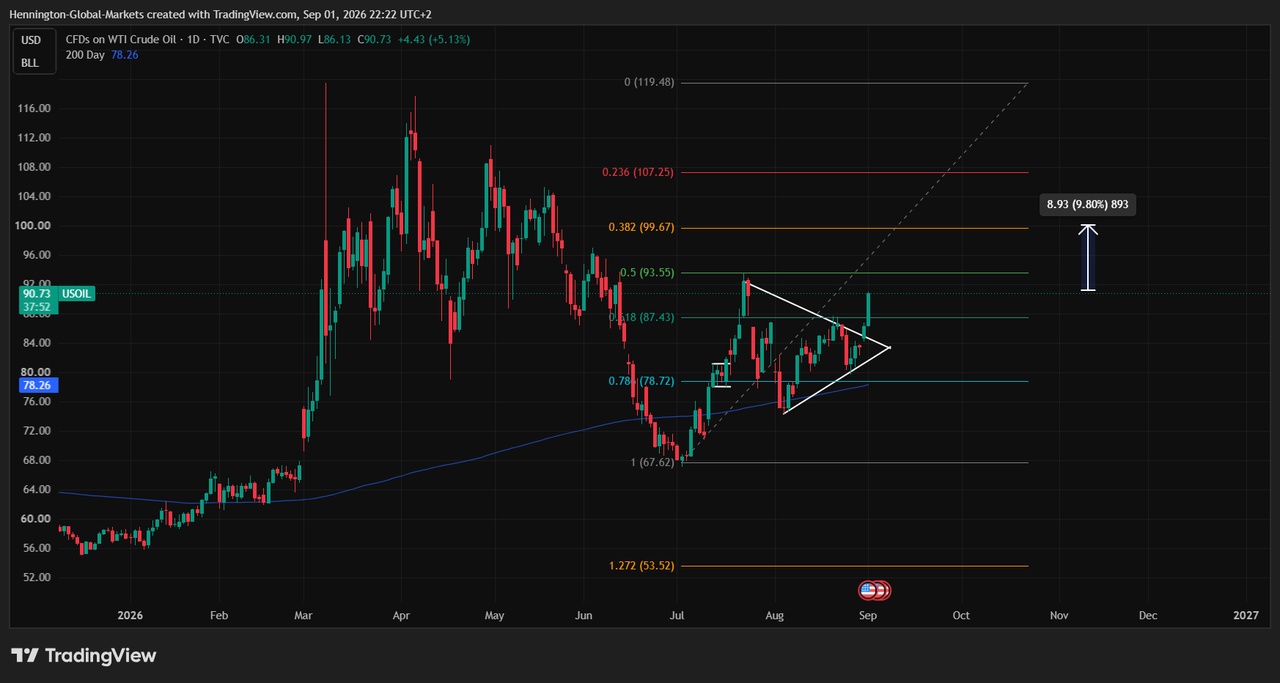
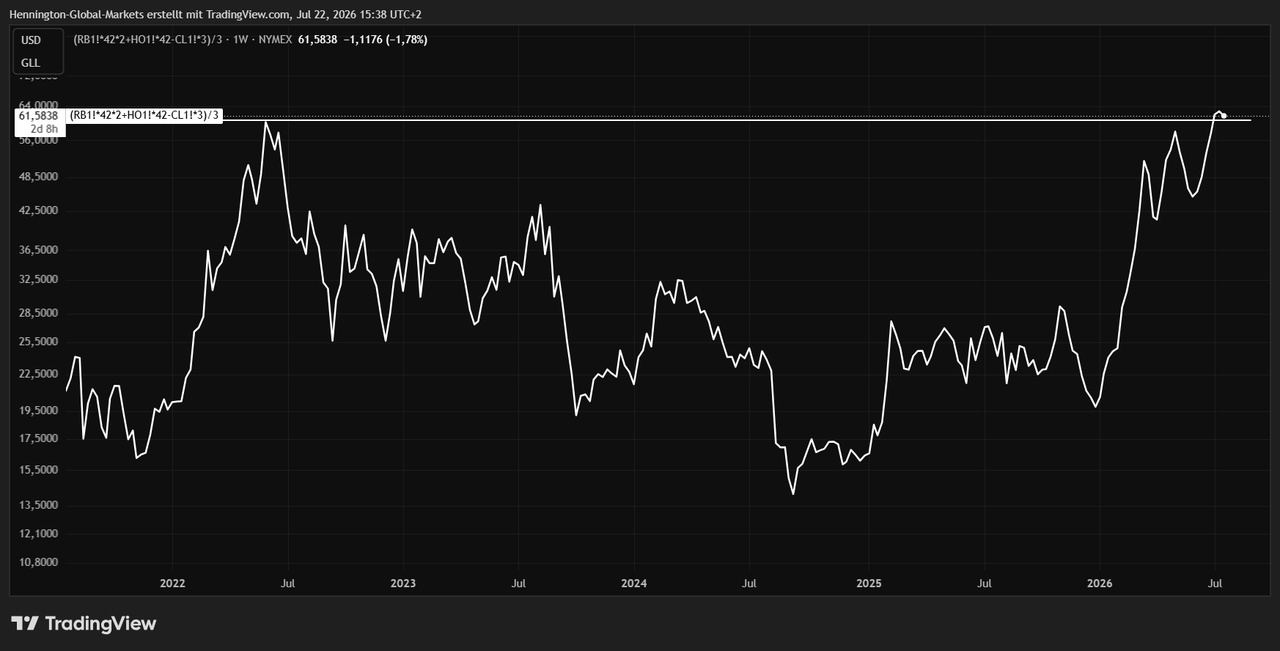
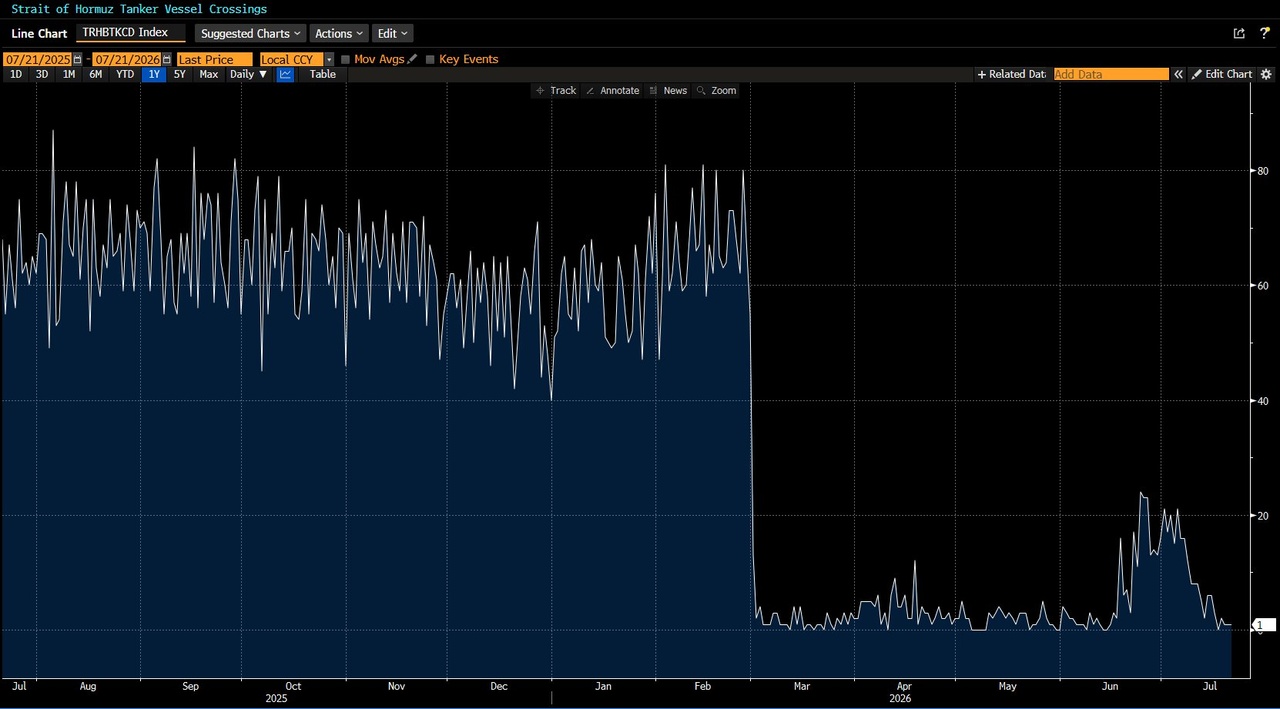
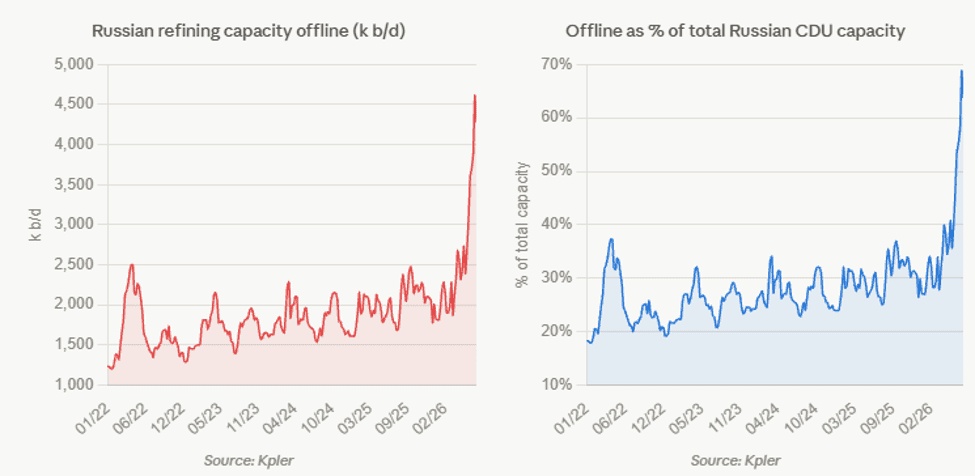
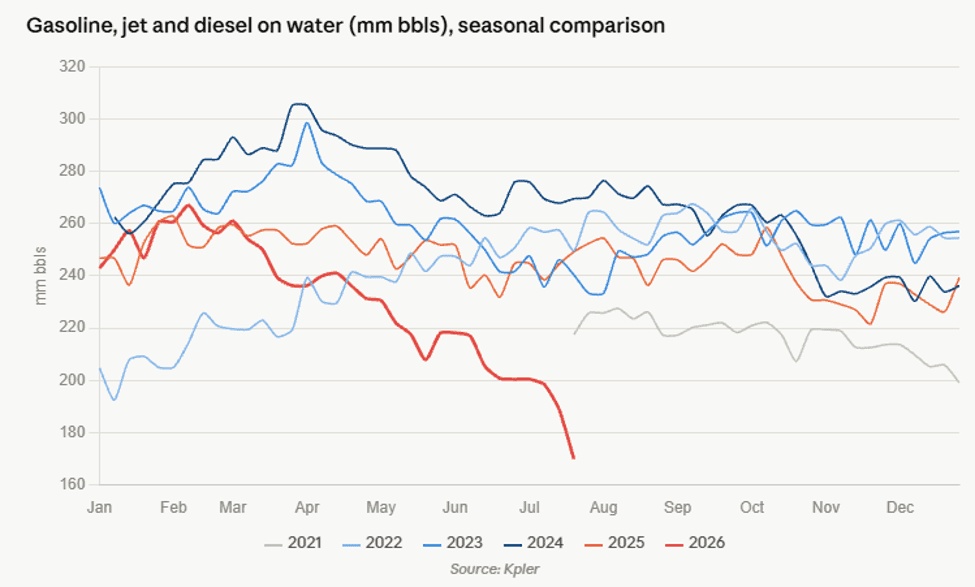
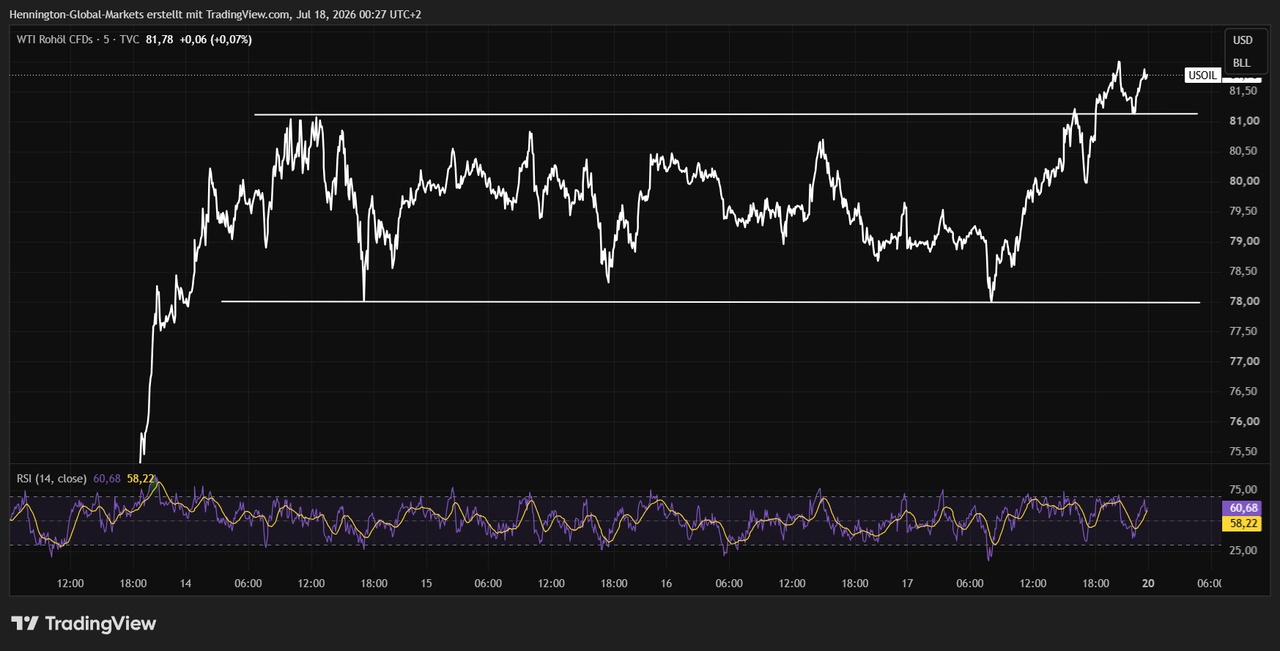
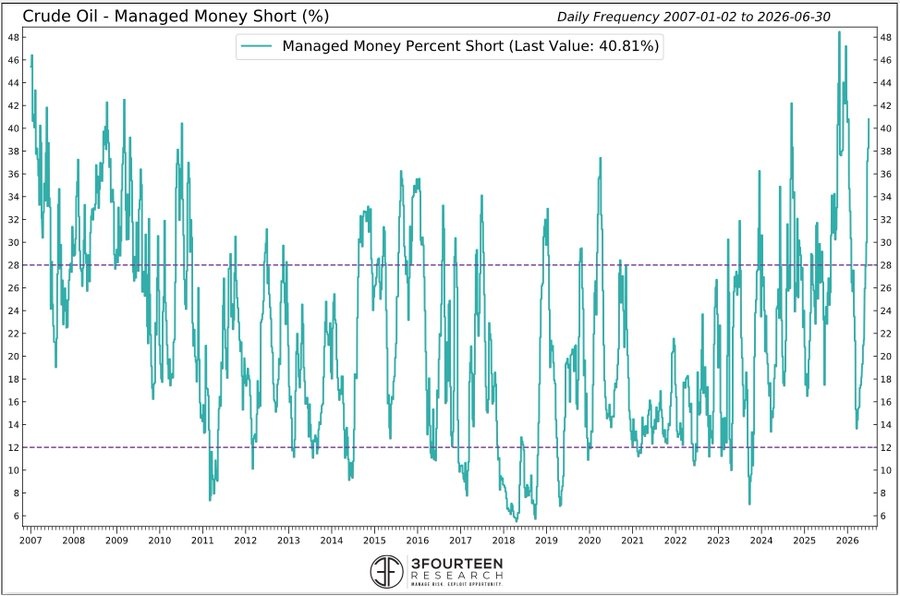
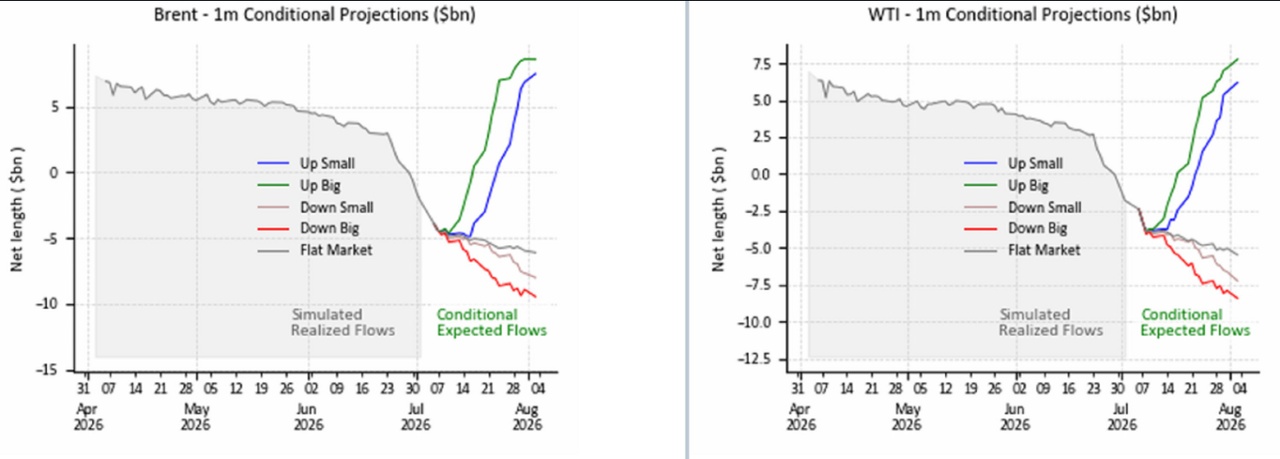
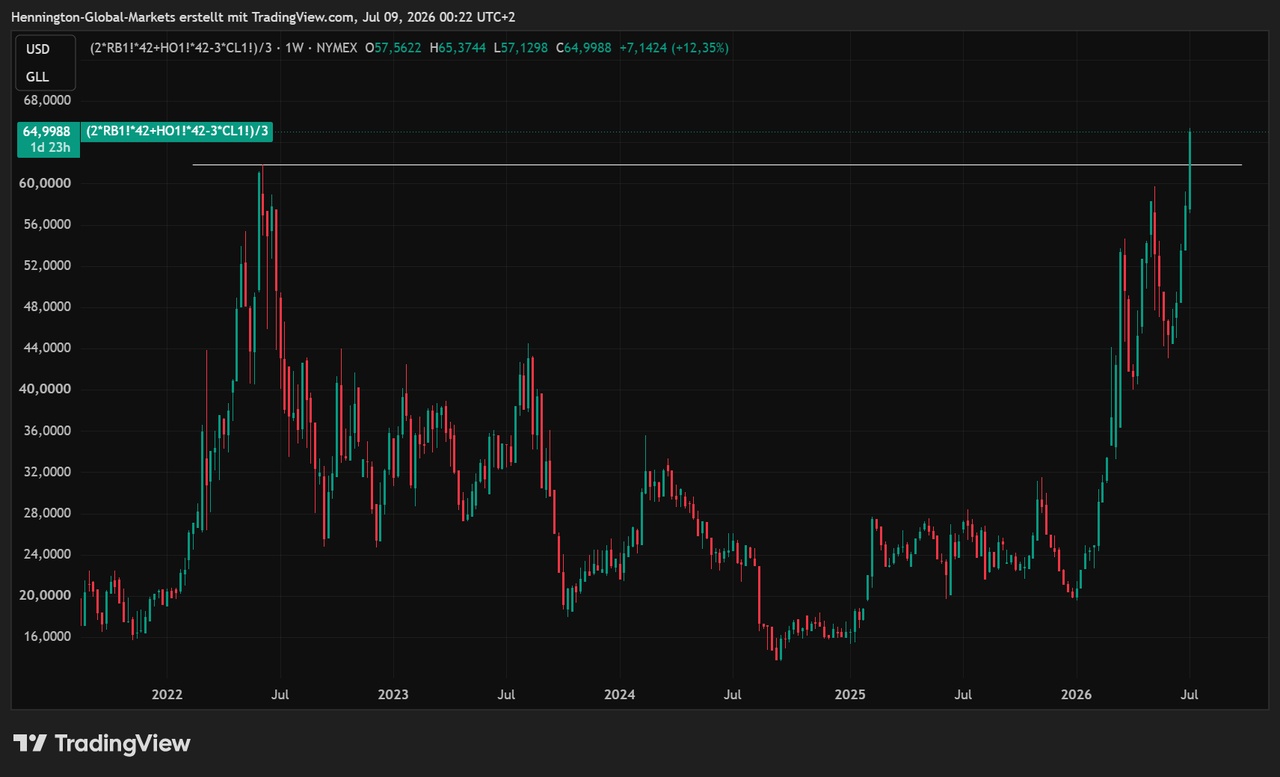
$BRNT (+7,5 %) and $CRUD (+5,6 %) 🤔. Have we already reached the top or are we still a long way off? Please give us your assessment......

WisdomTree WTI Crude Oil
Price
Debate sobre CRUD
Puestos
5Commodity rotation approach - a technical attempt to make commodity trends tangible
Reading time: approx. 10 minutes
Many shares have performed very well recently. But where there has been nothing but upward movement for a long time, there will also be setbacks at some point. The market is currently reacting sensitively - even minor news leads to significant movements. One example is the recent concerns about the credit quality of smaller US regional banks, which triggered noticeable price losses yesterday and today.
This also raises the question of whether commodities could play a greater role again in the future - not as a substitute, but as part of a broader diversification. Especially in phases when stock markets react nervously, commodities can provide a tactical counterweight. This consideration gave rise to the idea of trading them systematically - not through emotion, but through rules.
The inspiration came from a natural gas trade that @Epi had presented. It was less exciting because of the result than because of the underlying dynamics. How can something like this be mapped using rules? When does momentum arise, when is a trend sustainable - and when does it end?
This is how the commodity rotation approach came about - an attempt to understand the movements of the commodity markets with technical discipline. The approach consistently relies on momentum: it does not aim to guess the bottom, but to accompany the strength. I have not yet tried it out in practice. But the structure is in place and it shows how a tactical, signal-based commodity approach can be constructed.
Commodities rarely move evenly. They move in waves, driven by demand, inventories, politics and currency. These movements are hardly predictable - but they are measurable. The approach therefore views the market as a rotating playing field: energy, metals, agriculture - capital constantly moves between these segments. The aim is not to predict where the next impulse will come from, but to invest where the trend is already visible. Only the strongest commodity counts - the rest is left out.
The universe comprises nine liquid underlying ETFs that can be traded via WisdomTree. Each represents its own cycle, together they form the entire spectrum of the global commodities market:
- $PHGP (-0,08 %) (Gold) - anchor of stability during periods of high uncertainty, typical counterbalance to risk assets.
- $PHAG (-1,46 %) (Silver) - more volatile than gold, with an industrial component, strong in bull phases.
- $CRUD (+5,6 %) (WTI oil) - central energy source, sensitive to OPEC policy and the economy.
- $NGAS (+1,42 %) (Natural gas) - highly volatile, weather and storage-driven, with high momentum in bottleneck phases.
- $COPA (-0,15 %) (copper) - leading indicator of the global economy, benefits from electrification and infrastructure.
- $PHPT (-0,1 %) (Platinum) - Precious metal with industrial significance, for example in the automotive and hydrogen industries.
- $WEAT (+1,83 %) (Wheat) - cyclical and weather-dependent, represents the agricultural sector.
- $CORN (+0,97 %) (Corn) - basic raw material for food and energy production, often parallel to oil and agricultural trends.
- $COFF (+0,92 %) (Coffee) - seasonal market with strong price fluctuations, influenced by climate and currencies.
Energy, industry, precious metals and agriculture are thus fully covered - without overlaps, but with sufficient breadth to make rotation visible.
The approach follows a fixed process that is reviewed weekly. A commodity is only included if its six-month performance is positive. It is only considered eligible for activation above one percent. This is followed by the trend check: the price must be above the GD50 and the short-term average (GD20) must exceed the GD50. Only then is the trend considered confirmed. The RSI serves as a control variable. Values between 50 and 70 signal stability, above 75 overheating, below 40 weakness. If the RSI rises too sharply or falls significantly, the approach reacts automatically: overheated movements are reduced, broken trends are sold.
The strength of the trend determines the leverage. If the six-month performance is over 10 %, a triple-leveraged ETF may be used. Between 5 % and 10 %, the 2× variant is used. Below this, the basic ETF is traded - the risk increases with the strength of the trend, not with your gut feeling.
The loss limitation is also clearly regulated. With the 1× variant, the exit takes place at a loss of more than 5 %, with 2× from 10 %, with 3× from 15 %. This means that the maximum risk per position remains constant. Profit protection takes place in two stages. If the RSI rises above 75 or the price falls below the GD50, half of the position is sold, while the rest continues to run as long as the long-term trend (GD50 > GD200) remains intact. If the price falls below GD200, the entire position is sold.
All signals are re-evaluated on a weekly basis. If another commodity outperforms in the ranking, an exit is also made - the position is rotated. The approach never holds more than one position at a time.
For a better overview, the rules can also be summarized in a condensed form:
- Momentum: Only active commodities with a positive six-month performance (> 1 %).
- Trend structure: Price > GD50 and GD20 > GD50 as a prerequisite for long signals.
- RSI filter: Entry only at 50 < RSI < 70; above 75 partial sell, below 40 sell.
- Leverage control: performance > 10 % → 3× ETF; 5-10 % → 2× ETF; < 5 % → basis.
- Stop loss: - 5 % (1×), - 10 % (2×), - 15 % (3×).
- Take profit 1: RSI > 75 or price < GD50 → 50 % Verkauf, Rest halten bei GD50 > GD200.
- Take profit 2: Price < GD200 → complete sell.
- Rotation: Weekly re-evaluation - in the event of a stronger commodity or violation of one of the rules → exit and switch.
This summary shows that the approach does not rely on intuition, but on clear, repeatable decision-making logic. It is not about the perfect forecast, but about reacting consistently - that is the core of every momentum strategy.
It is easy to see how this works in practice. Climbs $CRUD (+5,6 %) rises to a six-month performance of +12 %, GD20 > GD50, RSI = 63, the entry is made via the 3× ETF. If the RSI later rises above 75, half is sold. If the price falls below GD200, the complete exit follows. Or: If another commodity in the weekly ranking, such as $COPA (-0,15 %) (copper), provides stronger signals, a switch is also made. In this way, the approach remains flexible, but consistently rule-based.
The commodity rotation approach is not a rigid trading system, but an attempt to bring structure to the volatility of the commodity markets. It defines when an entry is justified, how much leverage is allowed, when profits should be secured and when to consistently exit - be it through a trend break or through relative weakness compared to the rest of the universe.
I have not yet put this approach into practice. But developments have already shown how helpful it can be to replace emotions with rules. Whether it proves itself in practice remains to be seen.
What do you think of the approach?
Are raw materials missing - or could some be removed?
What do you think of the rules - are they plausible?
Let's discuss this idea.

Aug 15 / Alaska Summit, Warren Buffett and FinTech
Trump Meets Putin in Alaska – A Meaningless PR Stunt?
Finally, after weeks of speculation, President Trump has arrived in Alaska to supposedly discuss how to end the war in Ukraine. This is the first face-to-face meeting in several years for the two presidents.
Trump warned of “very severe consequences” if a ceasefire can’t be reached – whatever that’s supposed to mean. Hopefully, it has nothing to do with the ballistic submarines stationed near Russia after Trump and a Russian official engaged in a verbal sparring match on social media. Let’s see where this goes.
UnitedHealth – The Stock Has Found Its Savior
Berkshire Hathaway sold shares in Apple and added to a new, very attractively valued position: UnitedHealth Group. Warren Buffett is known to buy when others are fearful, and speculation surrounded his latest pick until it was finally announced yesterday.
I can gladly say that I’m apparently not the only one who sees great potential in the unloved giant. The company has faced major headwinds – including the vicious and brutal killing of its CEO, higher medical costs, and controversies over its business practices. However, let’s not forget: UnitedHealth is the 9th-largest employer in the U.S. and the largest health insurer worldwide. 1 in 6 Americans is covered by UnitedHealth.
Warren Buffett finally gave the stock the spark it so badly deserved. UnitedHealth is a great company that – and quote me on this – will climb back to all-time highs. The insurer has a massive moat, strong fundamentals, and generates cash like King Midas. This is one of the positions in my portfolio I’m least worried about. I’ll let it sit there and take profits in two years.
Dlocal vs. Adyen – I Suppose I Chose Correctly
Investor’s reaction to the earnings of these two fintech companies couldn’t have been more different. One stock fell 20% after the report, while the other jumped more than 40%. Dlocal and Adyen both operate as international payment processors – Dlocal primarily in South America and other emerging markets, and Adyen across global markets.
Dlocal raised its guidance, beat expectations, and impressed with excellent execution, while Adyen struck a cautious tone and predicted a soft outlook. I find both companies highly interesting, but I decided to invest in Dlocal a few weeks ago due to its superior expansion potential, more attractive valuation, and strong leadership.
I feel proven right after the recent reports, though I wouldn’t be opposed to opening a position in Adyen if the stock drops further.
$UNH (-0,38 %)
$BRK.A (-0,12 %)
$BRK.B (+0,01 %)
$AAPL (-0,36 %)
$DLO
$ADYEN (-1,88 %)
$ADYEN (-1,88 %)
$BRNT (+7,5 %)
$CRUD (+5,6 %)
Additionally, after last week’s dip, Adyen has already rebounded by approximately 20% 😁
Oil Market Report: Analysis of current developments, political influences and market forecasts
The oil market is facing one of the most complex challenges since the pandemic, due to a combination of geopolitical tensions, long-term production strategies and volatile demand, particularly from China and Europe. OPEC+ decisions and uncertainties in the US are currently shaping market conditions and putting pressure on both producers and consumers.
OPEC+: strategy of production delays
OPEC+, an association of 23 oil countries, has continuously extended its voluntary production cuts since 2022. These measures were aimed at stabilizing oil prices post-pandemic slumps. In June 2024, the original plan was to gradually increase production by 2.2 million barrels per day. In the most recent decisions, the following was decided:
- The production increase has been postponed again and is now scheduled to begin in April 2025 at the earliest.
- OPEC+ originally planned to extend its current production cuts until September 2025 completely. This deadline has now been extended by one year, meaning that the cuts will not be reversed until September 2026 be completed.
- This is the third delay in 6 months.
Reasons for the delay
Weak demand:
- China is experiencing slower economic growth, which is dampening demand for oil. In the third quarter of 2024, the Chinese economy grew by 4.6%, the weakest growth in a year and a half. Economic growth of around 4.8% is expected for 2024, with a further slowdown to 4.5% in 20251. The World Bank forecasts real GDP growth of 4.5% for 2024 and 4.3% for 2025. The main reasons for the slowdown in growth are weak domestic demand and consumer restraint, the real estate crisis and uncertainty on the labor market.
- European demand also remains subdued due to the energy transition, economic uncertainties and geopolitics.
Alternative offers:
- Countries such as the USA, Brazil and Canadawhich are not part of OPEC+, are taking the opportunity to increase their own oil production in order to benefit from the higher prices resulting from the OPEC+ production cuts.
- These countries can supply the market with additional oil, which could enable them to gain market share.
Risk of excess supply:
- If these countries continue to increase their production volumes while global demand for oil may stagnate or grow more slowly, this could lead to an oversupply.
- Such an oversupply would lower the oil price again, which would undermine OPEC+'s strategic cuts.
Internal tensions in OPEC+:
- States such as the United Arab Emirates are pushing for higher production volumes, while Saudi Arabia continues to pursue a restrictive policy in order to ensure price stability.
- The UAE produced around 700,000 barrels more than agreed with OPEC+ from January to October 2024. The agreed output for the UAE was 2.91 million barrels per day, but this is excused by a waiver to increase its output by 200,000 barrels per day to 3.2 million barrels per day in 2024.
- Saudi Arabia has extended its voluntary production cuts until the end of June 2024. They reduced production by 1 million barrels per day in addition to an earlier cut of 500,000 barrels per day. Saudi production will be around 9 million barrels per day by the end of June 2024.
Reasons for the tensions:
- The UAE has invested heavily in capacity reserves and is pushing to use them. However, Saudi Arabia is aiming to support oil prices by cutting production.
Price trends and market forecasts
The Brent price is currently at $IOIL00 (+8,84 %) which represents a decline of around 18% compared to the peak in July 2024. The price of US WTI oil $CRUD (+5,6 %) are in a similar range.
Forecasts
- $C (-0,85 %) has revised its forecast upwards and sees an optimistic scenario of 60-65 USD per barrel for the end of 2024 and the beginning of 2025.
- $JPM (-0,33 %) forecasts an average Brent oil price of 84 USD per barrel for 2024. For 2025, JPMorgan expects an average price of USD 75 per barrel
- $GS (+0,17 %) has revised its forecast for 2024 to an average of USD 81 per barrel for Brent oil.
Long-term prospects
The US Energy Information Administration (EIA) forecasts an average Brent price of USD 61 per barrel for 2025 and 73 USD per barrel for 2030.
Effects on the producing countries
Saudi Arabia:
- Saudi Arabia needs high oil prices to balance its budget. According to forecasts, the threshold is currently around 96 USD per barrelwell above current market prices. This dependency is particularly evident in megaprojects such as Neom City and the Vision 2030which are dependent on stable income. In addition, the organization of events such as the Soccer World Cup 2034 and the Expo 2030 massive budgetary resources.
- Despite these conditions, there are signs of a possible change in strategy. Saudi Arabia could abandon its previous target of an oil price of 100 USD per barrel in order to regain market share. However, this could mean lower oil prices, which would make it more difficult to finance projects and put additional pressure on budget stability.
Russia:
- Oil plays a central role in financing the war in Ukraine. In 2024, almost a third of the Russian state budget is to be used for military spending, which amounts to around 111 billion euros equivalent. The Kremlin is financing this high expenditure through budget reallocations and is relying heavily on oil revenues to fund the war.
- Western sanctions have affected Russian oil exports, but Russia has found ways to partially circumvent them, as I explained in another report (link in the comments). A shadow fleet of oil tankers makes it possible to continue exporting oil despite sanctions. However, revenues are no longer as high as before the sanctions, and lower oil prices could further limit Russia's financial options for the war.
- Despite the sanctions, the Russian economy has adapted faster than expected. Through more intensive trade with countries such as China and other non-Western countries, the circumvention of the G7 oil price cap and increased government spending on the military industry, Russia has been able to take countermeasures. Nevertheless, it remains vulnerable to price fluctuations on the global oil market and faces an acute labor shortage.
- The extension or tightening of Western sanctions could significantly further impact Russia's oil exports and thus revenues, which would pose new challenges to the country's economic stability.
Iran:
- Iran has significantly increased its oil exports since 2021, with an average export of 1.56 million barrels per day in the first 3 months of 2024 (the highest in 6 years). This increase of 1.2 million barrels per day since 2021 is plausible given the low level of exports at the time.
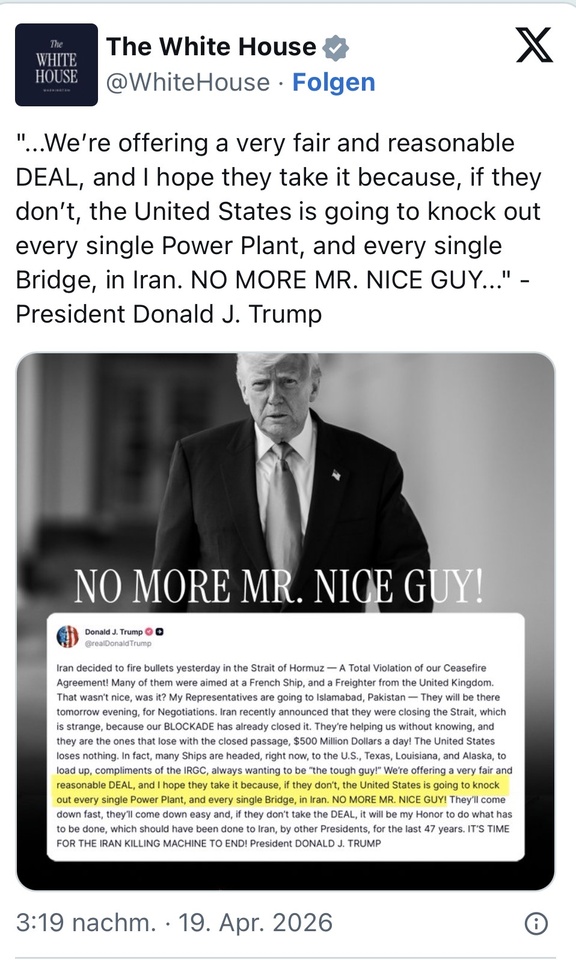
- With the election victory of Donald Trump in the 2024 US presidential elections, however, Iran is facing a possible new round of sanctions. Trump is planning a return to the "maximum pressure" strategy that drastically reduced Iran's exports from 2.5 million to just 350,000 barrels per day within 2 years during his previous term.
- The reintroduction of such sanctions could have a significant impact on the global oil market. Especially China's China's role is crucial here, as it absorbed more than 85% of Iran's oil exports this year. At the same time, Iran has improved its mechanisms for circumventing sanctions, which could reduce the effectiveness of new measures. Overall, renewed sanctions could destabilize the oil market, but the exact extent remains difficult to predict as Iran has significantly increased its ability to maintain trade routes.
Long-term challenges and opportunities
Energy transition and decarbonization
- Europe: Promotes investment in renewable energy and reduces oil consumption.
- China: Is investing massively in electromobility, which will reduce oil demand in the long term
Technological innovations
- Countries such as the USA are focusing on technologies to increase oil extraction from shale oil deposits.
- This could reduce production costs and increase competitiveness.
Role of OPEC+ in the future
- Long-term coordination within OPEC+ is becoming more difficult as national interests increasingly diverge.
- A possible split in the alliance cannot be ruled out if countries such as the UAE and Russia assert their own interests more strongly.
This morning I decided to hedge our family against the fluctuating oil price for our old heating system (as long as it is still running).
The aim is to hedge against the volatile oil price, as I am forced to buy oil exactly when the tanks are empty. This can be in a low or in a high.
For this purpose, I have calculated half the expected price for a full tank in $CRUD (+5,6 %) and thus based on the WTI (West Texas Intermediate). The price of my purchased shares at [€8.3853] is a pretty good price compared to the prices in 2024.
In addition, I now invest €250 each month via a savings plan in $BRNT (+7,5 %) and thus into Brent (North Sea oil fields). I hope to use this to save for the second half of the heating oil tanks. With the monthly savings rate, I hope to achieve a normal average price.
What do you think?
How do you do it with your heating oil supply?
Valores en tendencia
Principales creadores de la semana