Oil needed for a cocktail 🍹. 250 shares @ $61.98, representing 1.80% of the portfolio.

WisdomTree Brent Crude Oil
Price
Debate sobre BRNT
Puestos
9Oil price participation
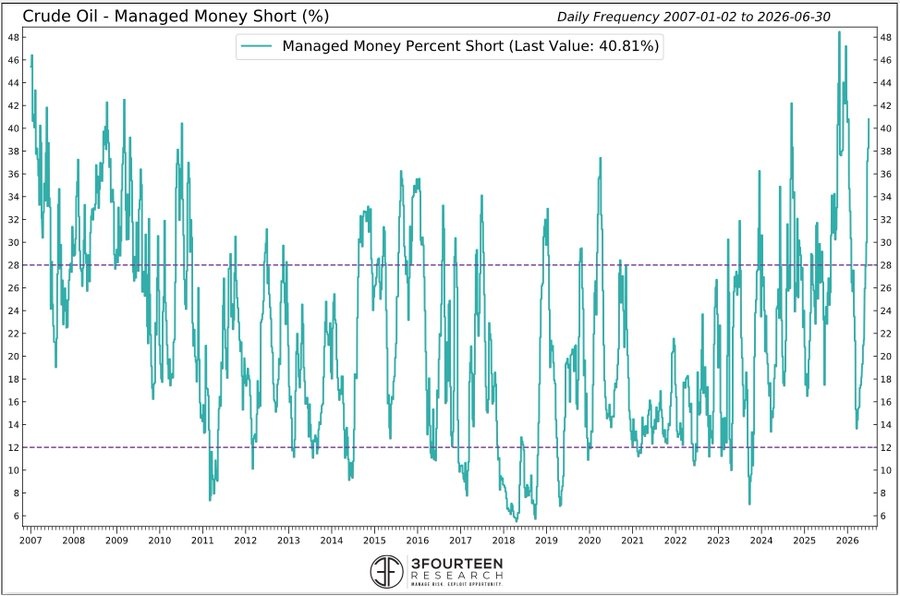
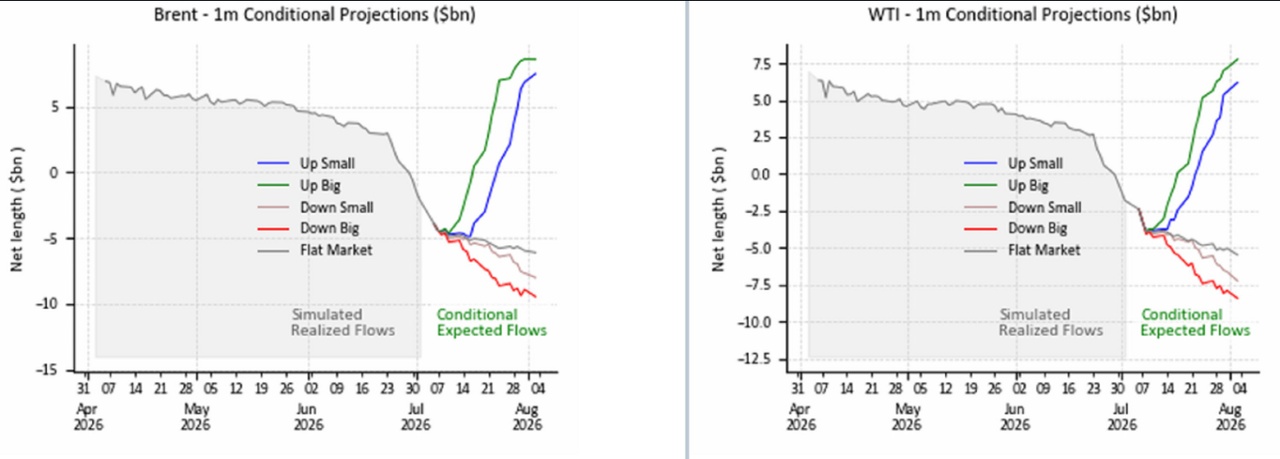
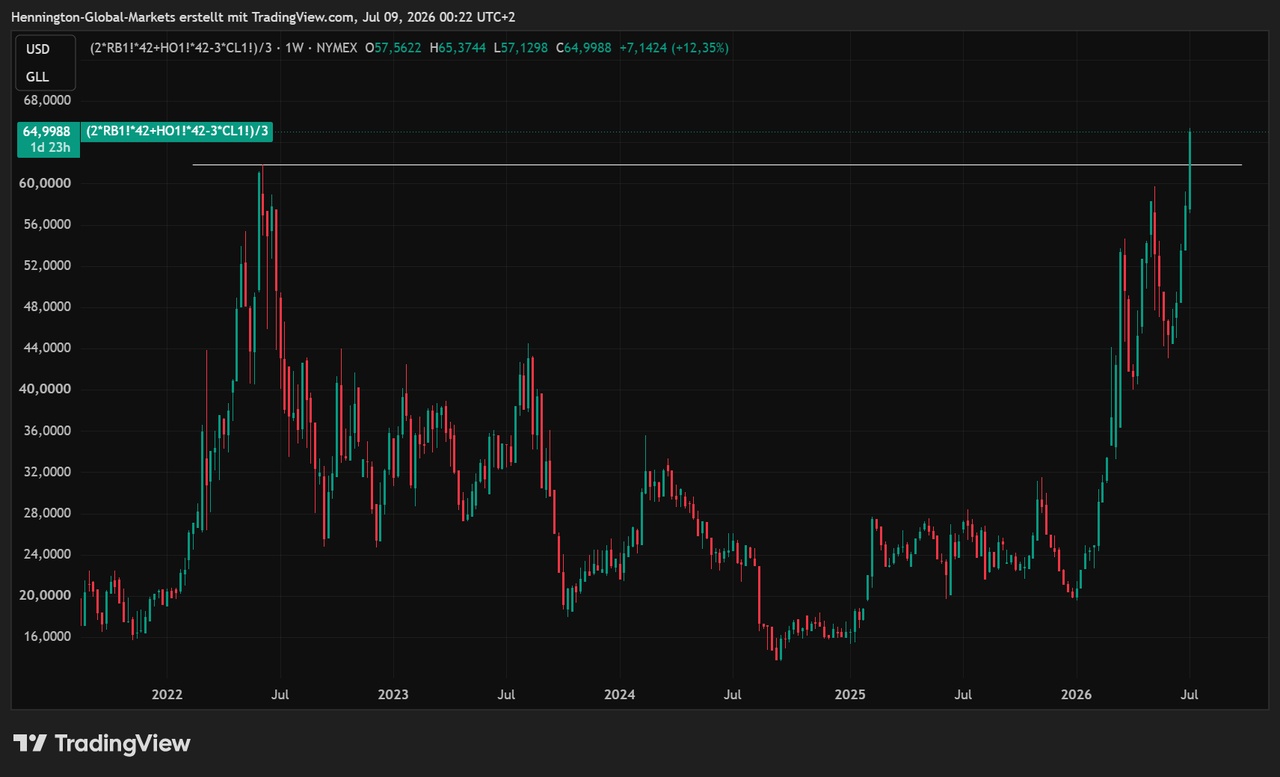
The proceeds of the $SPGI (+1,58 %) bill into a small mini future (leverage of 4) with an SL on $BRNT (+5,13 %) in order to participate in further rising oil prices.
The decisive factor here will be to exit at the right moment. A manual SL is therefore regularly readjusted.

Aug 15 / Alaska Summit, Warren Buffett and FinTech
Trump Meets Putin in Alaska – A Meaningless PR Stunt?
Finally, after weeks of speculation, President Trump has arrived in Alaska to supposedly discuss how to end the war in Ukraine. This is the first face-to-face meeting in several years for the two presidents.
Trump warned of “very severe consequences” if a ceasefire can’t be reached – whatever that’s supposed to mean. Hopefully, it has nothing to do with the ballistic submarines stationed near Russia after Trump and a Russian official engaged in a verbal sparring match on social media. Let’s see where this goes.
UnitedHealth – The Stock Has Found Its Savior
Berkshire Hathaway sold shares in Apple and added to a new, very attractively valued position: UnitedHealth Group. Warren Buffett is known to buy when others are fearful, and speculation surrounded his latest pick until it was finally announced yesterday.
I can gladly say that I’m apparently not the only one who sees great potential in the unloved giant. The company has faced major headwinds – including the vicious and brutal killing of its CEO, higher medical costs, and controversies over its business practices. However, let’s not forget: UnitedHealth is the 9th-largest employer in the U.S. and the largest health insurer worldwide. 1 in 6 Americans is covered by UnitedHealth.
Warren Buffett finally gave the stock the spark it so badly deserved. UnitedHealth is a great company that – and quote me on this – will climb back to all-time highs. The insurer has a massive moat, strong fundamentals, and generates cash like King Midas. This is one of the positions in my portfolio I’m least worried about. I’ll let it sit there and take profits in two years.
Dlocal vs. Adyen – I Suppose I Chose Correctly
Investor’s reaction to the earnings of these two fintech companies couldn’t have been more different. One stock fell 20% after the report, while the other jumped more than 40%. Dlocal and Adyen both operate as international payment processors – Dlocal primarily in South America and other emerging markets, and Adyen across global markets.
Dlocal raised its guidance, beat expectations, and impressed with excellent execution, while Adyen struck a cautious tone and predicted a soft outlook. I find both companies highly interesting, but I decided to invest in Dlocal a few weeks ago due to its superior expansion potential, more attractive valuation, and strong leadership.
I feel proven right after the recent reports, though I wouldn’t be opposed to opening a position in Adyen if the stock drops further.
$UNH (-1,3 %)
$BRK.A (+0,93 %)
$BRK.B (+0,79 %)
$AAPL (-0,01 %)
$DLO
$ADYEN (-0,54 %)
$ADYEN (-0,54 %)
$BRNT (+5,13 %)
$CRUD (+3,51 %)
Additionally, after last week’s dip, Adyen has already rebounded by approximately 20% 😁
Iran Israel geopolitical tensions
$OXY (+0,21 %)
$OD7F
$OOEA
$XOM (-0,79 %)
$BRNT (+5,13 %)
$SLB (-3,88 %)
$COP (+1,39 %)
$WENS (+0,31 %)
$EXH1 (-2,08 %)
$SHEL (-1,63 %)
$PETR4 (-2,48 %)
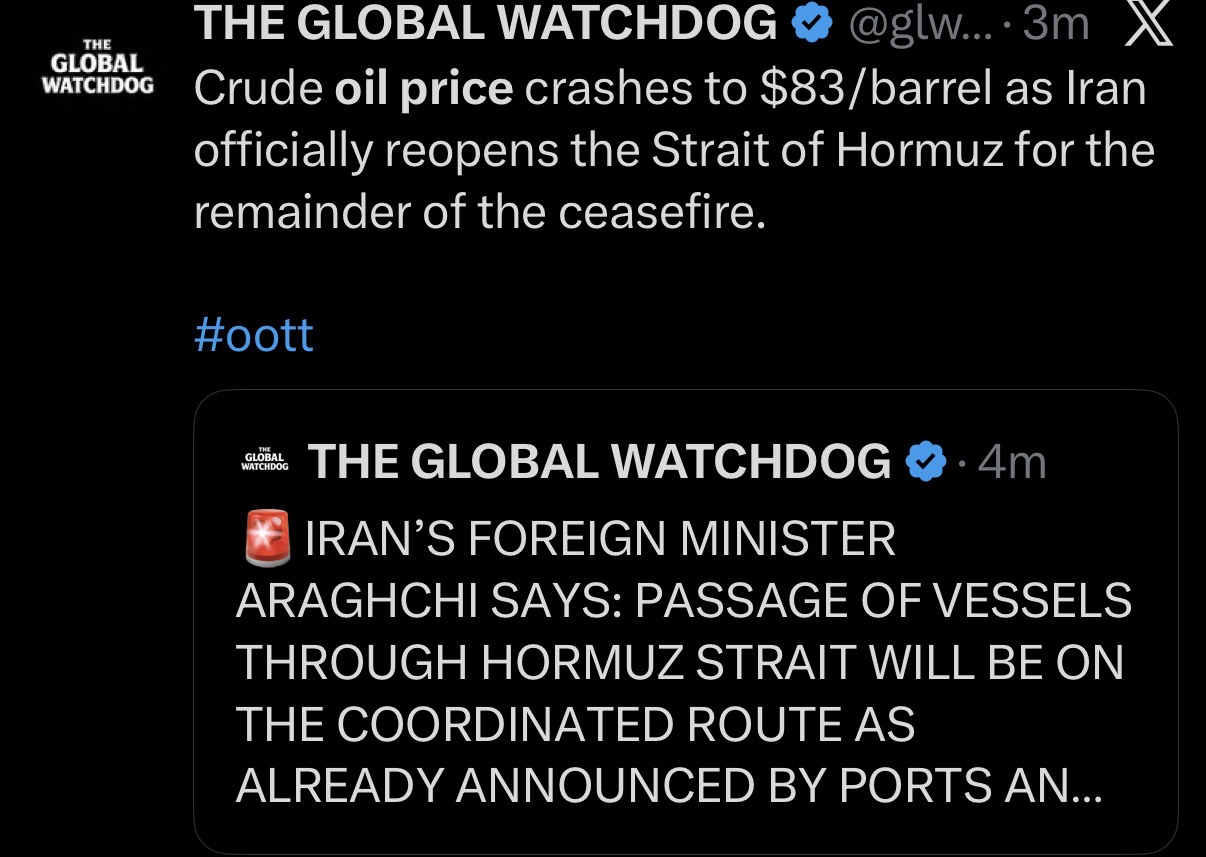
The tensions will be resolved quickly. High oil prices harm American consumers. Trump wants to prevent that. He also wants to conclude an agreement with China. China imports a lot of oil from Iran, which will hurt them. The same applies to India, with which Trump also wants to conclude an agreement.
Trump is pro-Israel and wants to help Israel achieve its military goals. However, he will not give Israel much time to do so. It will either be over as quickly as the Six-Day War or after two weeks at the latest, enforced by Trump.
Crude oil could rise to 130 dollars in the worst case (warns JP Morgan) Strait of Hormuz - possible consequences
$OXY (+0,21 %)
$OD7F
$OOEA
$00XM
$BRNT (+5,13 %)
$IS0D
$SLB (-3,88 %)
$COP (+1,39 %)
$WENS (+0,31 %)
$EXH1 (-2,08 %)
$WNRG (+0,31 %)
$SC0V (-1,98 %)
https://oilprice.com/Energy/Oil-Prices/JP-Morgan-Oil-Could-Hit-130But-Were-Still-Calling-60.html
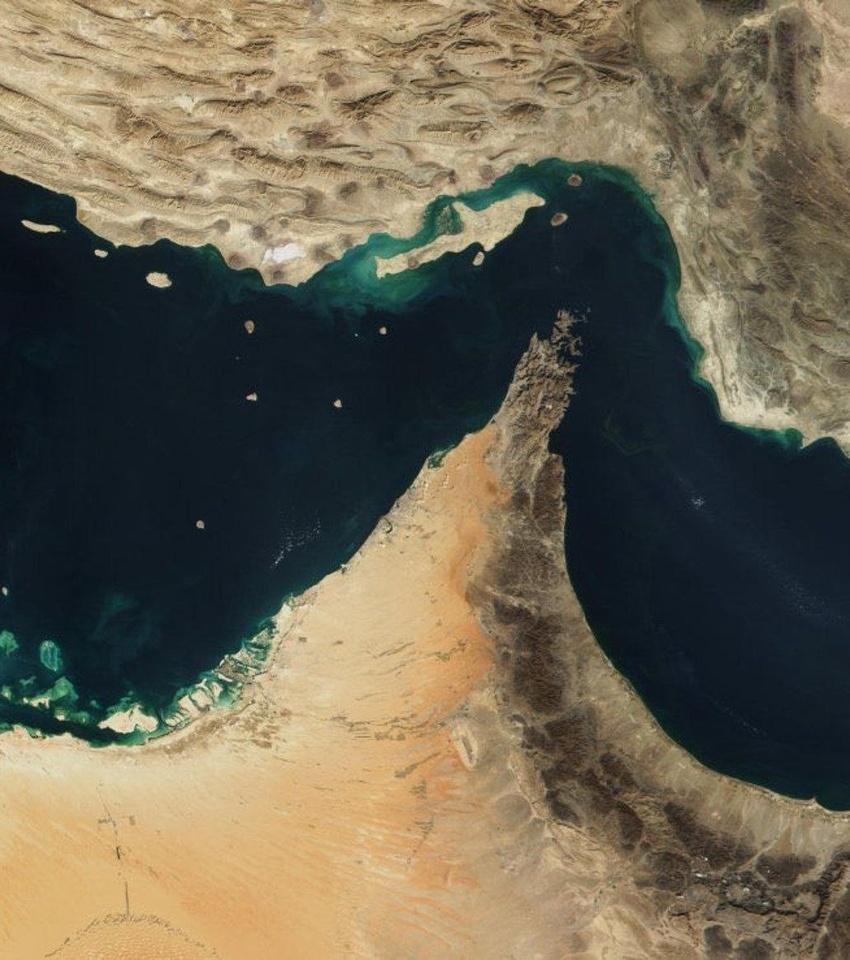
Around 20 % of global oil production flows through the Strait of Hormuz
Around 90% of Iran's oil exports pass through the Strait of Hormuz every year, which corresponds to around 83% of all Iranian exports. This is due to the fact that almost all Iranian oil export terminals and major ports are located in the Persian Gulf and there are no significant alternative routes such as deep-sea piers or pipeline infrastructure outside the Strait.
The Strait of Hormuz is a narrow stretch of sea between Iran and Oman.
It is only 33 kilometers wide, but almost 21 million barrels of oil are transported through it every day.
That is equivalent to one in every five barrels consumed on earth. It is by far the most important energy bottleneck on our planet.
For this reason, it would be a disaster if the Strait of Hormuz were even partially closed, we would lose access to more than 10 million barrels of oil per day.
There are no realistic alternative routes. Pipelines? Already almost at capacity. Alternative ports? Too small.
You can't divert 20% of oil traffic overnight.
After some research and my assessment what would happen/what would be the consequences if the Strait of Hormuz was blocked, closed:
Strategic:
The Strait of Hormuz is the world's most critical maritime bottleneck. Around 20% of the world's traded crude oil and 30% of the world's liquefied natural gas supplies pass through these narrow waters every day. If Iran were to block or significantly disrupt the Strait with mines, anti-ship missiles, drone attacks or speedboats, this would not only trigger a regional crisis, but also cause a systemic shock to the global economy, supply chains and security architecture.
Presumed initial effects:
Peak energy price: crude oil could rise by 30 to 60 US dollars within a few days. Brent could reach 130 to 150 US dollars, depending on the expected duration of the disruption. Natural gas, especially liquefied natural gas for Asia, would become acutely scarce. Expect *JKM LNG benchmarks in Japan and Korea to rise.
*JKM stands for Japan Korea Marker and is an important price benchmark for liquefied natural gas (LNG) in the Asian market, especially for deliveries to Japan, South Korea, China and Taiwan. The JKM is calculated by S&P Global Platts and reflects the spot market price of LNG cargoes delivered ex-ship (DES)
Naval and kinetic escalation: the US Fifth Fleet stationed in Bahrain would be rapidly mobilized. Mine sweeping, naval escorts and possibly kinetic attacks on Iranian coastal positions would result. Israel could take preventive action in Lebanon or Syria, fearing a regional encirclement.
Consequences:
Global trade shocks: energy shipments would have to be rerouted via the Suez Canal or the Cape of Good Hope, increasing costs and delivery times. Transport insurance premiums are rising rapidly. Prices for container transportation are rising again, especially to Europe and Asia. Additional port congestion and cascading logistical delays are to be expected.
Macroeconomic:
The central banks of energy-importing countries (India, Japan, EU) begin defensive foreign exchange market interventions and emergency procurement of energy. A reduction in reserves, a redistribution of state assets and possible covert bilateral agreements with the Gulf states are to be expected.
Supply chains will be strained:
Fertilizer prices are rising due to natural gas shortages. Food prices, especially wheat and soybeans, are soaring. Countries that rely on subsidized energy (Pakistan, Egypt, Indonesia) are confronted with currency problems and domestic instability.
Sovereign credit risk:
Rising energy costs are putting pressure on emerging markets' current accounts. Countries are coming under increasing pressure, leading to IMF interventions and sovereign debt downgrades. The periphery of the eurozone comes under renewed pressure.
US financial and military pressure:
Rising oil prices push inflation back up, while the Fed is under pressure to cut interest rates. Interest expenses for US debt are rising. At the same time, defense spending is soaring. The demand for dollars from foreign central banks is weakening, while the supply of government bonds is increasing. This increases the risk of a long-term liquidity vacuum. Interest rates could rise even if growth stagnates.
China, the main buyer of Iranian oil, finds itself in a geopolitical dilemma. It could intervene diplomatically or even provide a naval escort for Iranian supplies. This would be a direct challenge to US hegemony. Russia benefits from higher energy prices and global distraction, strengthening its influence in Ukraine.
Maritime cyber sabotage, hacker attacks on oil infrastructure or psychological disruption campaigns against the Gulf States or US critical infrastructure could also have consequences.
Other probable consequences of a closure of Hormuz:
- Re-introduction of energy shortage prices in markets where energy was priced in abundance
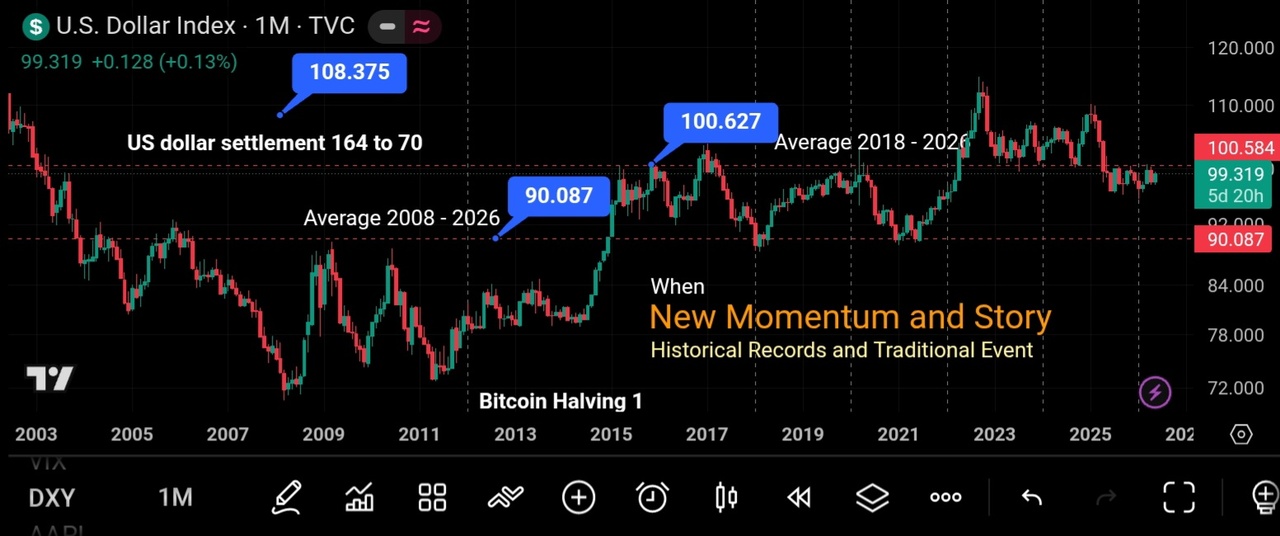
- Undermining confidence in the dollar and the US policy of deterrence, especially if the conflict drags on
- Acceleration of BRICS-led de-dollarization efforts as energy security becomes sovereign again

+ 1
This morning I decided to hedge our family against the fluctuating oil price for our old heating system (as long as it is still running).
The aim is to hedge against the volatile oil price, as I am forced to buy oil exactly when the tanks are empty. This can be in a low or in a high.
For this purpose, I have calculated half the expected price for a full tank in $CRUD (+3,51 %) and thus based on the WTI (West Texas Intermediate). The price of my purchased shares at [€8.3853] is a pretty good price compared to the prices in 2024.
In addition, I now invest €250 each month via a savings plan in $BRNT (+5,13 %) and thus into Brent (North Sea oil fields). I hope to use this to save for the second half of the heating oil tanks. With the monthly savings rate, I hope to achieve a normal average price.
What do you think?
How do you do it with your heating oil supply?
Vicki HollubCEO of Occidental ($OXY (+0,21 %) ), warns of a possible bottleneck in oil supply by the end of 2025 due to insufficient replacement reserves for crude oil ($BRNT (+5,13 %) ).
It emphasizes the need for increased exploration (search for new sources of oil) and productionto meet future demand.
Currently, an oversupply keeping oil prices low, but Hollub expects a shift in the balance of supply and supply and demand by 2025.
The forecast of OPEC points to rising global demand for oil, which will lead to a supply supply deficit unless production is increased.
Citi Research ($C (+0,62 %) ) has revised its Brent price forecasts ($BRNT (+5,13 %) ) for 2024 and 2025 lowered due to concerns about oversupply.
Nevertheless, prices are expected to 2024 above 70 US dollars per barrel in 2024, as the global oil market is expected to remain Citi by OPEC+ is "finely balanced".
The recent events in the Red Sea could lead to an increase in the risk premium in the short term.
The forecast for 2024 envisages that OPEC+
production cuts will be maintained and only 2025 to start reducing them.
For 2025 challenges for OPEC+ expected, as despite extended production cuts a considerable surplus is looming, which could make it difficult to maintain the price of 70 US dollars per barrel for Brent.

Valores en tendencia
Principales creadores de la semana