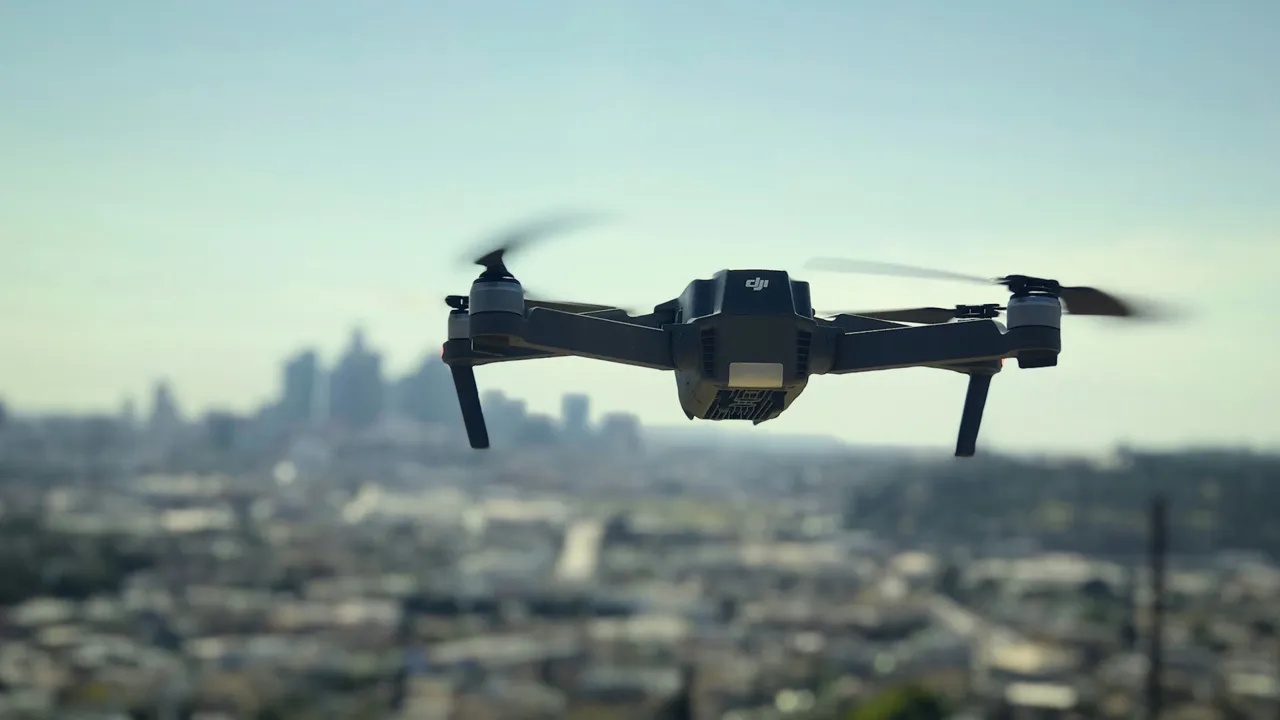
A new analysis by Stifel shows why the next surge in military drones is likely to be distributed differently than many investors expect.
The US defense sector is facing a profound upheaval, according to a new study by Stifel. The analysts expect 2026 to be the "year of the drone" as the Pentagon increasingly shifts its spending from traditional weapons systems to unmanned platforms. In the analysis published on December 15, they speak of an "important turning point", triggered by the interplay of technological advances, growing geopolitical threats and a new political will following the change of government.
Stifel compares the current situation with the role of manned aircraft in 1935, when airplanes accounted for only a marginal share of military budgets before becoming the dominant focus of investment within two decades. Today, unmanned systems also account for only a low single-digit percentage of US defense spending. The analysts see this as a "1935 moment" for drones and expect them to account for a "massive share of budget gains" in the coming years.
According to Stifel, the political tailwind for this change of course is unusually strong. US President Donald Trump has issued several executive orders in 2025 to accelerate the purchase of new military technology and specifically promote drones. The analysts believe that the "Big Beautiful Bill" passed on July 4 is particularly important. It provides billions for unmanned systems, including drones at sea, so-called "kamikaze" drones, $PNG (-3,91%) unmanned underwater vehicles and systems to defend against enemy drones. Additional pressure is being exerted by a new directive from US Secretary of Defense Pete Hegseth entitled "Unleashing US Military Drone Dominance", which Stifel describes as a "declaration of war on the Pentagon's bureaucracy" because it is intended to break up slow decision-making processes and established structures.
The study warns of significant market shifts. Established defense companies could come under pressure if they do not adapt their production models to the fast and scalable production demanded by the Pentagon. "If we were on the board of a large defense company, we would advocate a temporary dividend cut or a reduction in share buybacks," the analysts write. Long-term winners are companies with high manufacturing flexibility and strong commercial integration.
Stifel names several companies as potential beneficiaries of this development. Among the pure drone specialists, the analysts highlight $KTOS (-2,08%) Kratos Defense, $ONDS (-4,64%) Ondas (@All-in-or-nothing ) and $AVAV (-0,02%) AeroVironment. Among the more broadly positioned defense companies $TDY (-2,66%) Teledyne (@Simpson ), $CACI (-0,76%) Caci International and $LDOS (+4,41%) Leidos are well positioned. The analysts expect particularly strong growth in drones that accompany and support fighter aircraft, so-called "kamikaze" drones, unmanned systems for use on and under the sea and technologies to defend against enemy drones. Additional demand could come from the area of homeland security, as the 2026 FIFA World Cup is considered a high-risk event and is likely to trigger increased demand for drone defense.
Despite high valuations, Stifel warns against prematurely dismissing drone stocks as too expensive. Many investors underestimate "how early we are in the transformation of warfare". For 2026, the US House expects a wave of new programs and a possible ban on Chinese drones, which could further strengthen the domestic industry.