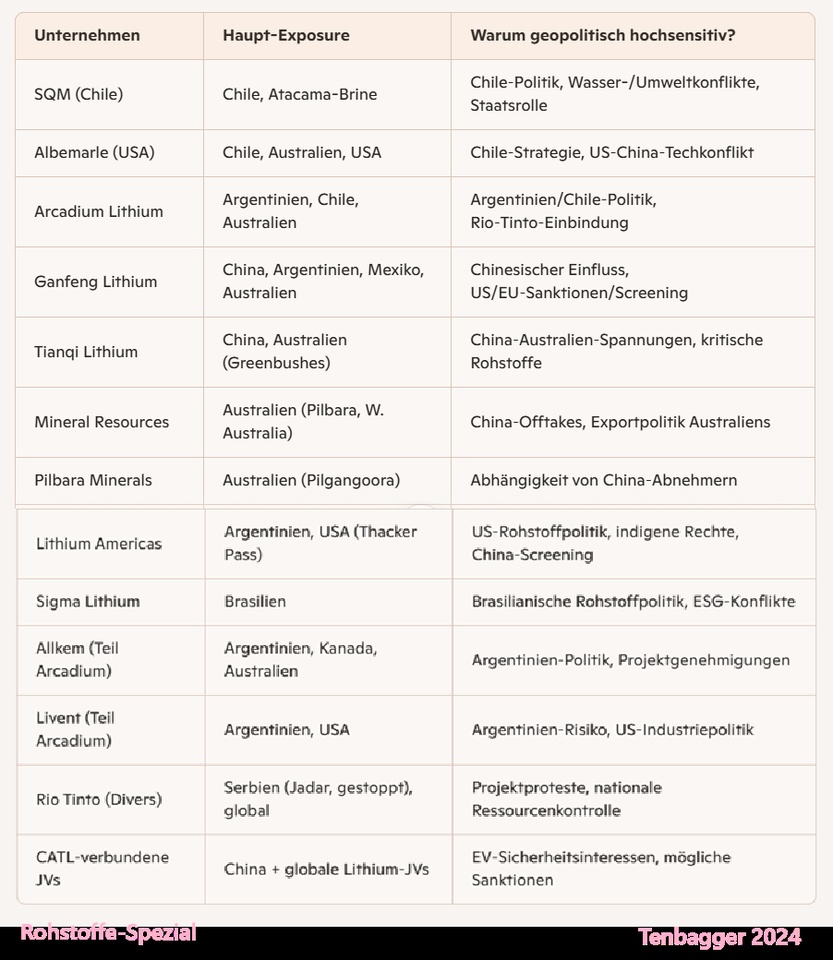
$ALB (-0,23%)
$LAC (+7,39%)
$SLI (+1,56%)
My dears, I remain invested in Albemarle.
In short, the Iran war is driving lithium prices significantly higher because geopolitical risks, supply chain disruptions and the strategic importance of the metal are increasing massively. The fear of shortages and the use of lithium as geopolitical leverage is having a particularly strong impact.
🔍 Why the Iran war is affecting lithium
🌍 1. geopolitical uncertainty → price shock
- The price of lithium has risen sharply since the escalation began: +130 % over the year and +12 % in the last month. This correlates directly with the military tensions and concerns about blockades of important trade routes.
🚢 2. blockade of the Strait of Hormuz
- Although the Strait of Hormuz is not a major route for lithium, it is a critical route for energy and global trade.
- The blockade leads to massive disruption to global tradewhich also makes the transportation of other raw materials more expensive and slower.
🛡️ 3. Lithium becomes a defense raw material
- In 2026, lithium is no longer just a battery raw material, but a strategic strategic defense commodity.
- Military demand (drones, energy storage, mobile systems) is increasing - and with it prices.
🇮🇷 4. Iran claims large lithium reserves
- Iran speaks of 8.5 million tons of lithium reserves.
- In a conflict scenario, this can be used as political leverage similar to oil in previous crises.
🔗 5. supply chain stress due to energy crisis
- The war leads to extreme oil and gas priceswhich makes the entire extraction of raw materials more expensive - including lithium mining and transportation.
📈 What does this mean for lithium investors?
In the short term
- Extremely high volatility
- Prices react sensitively to every headline from the Middle East
- Lithium shares benefit disproportionately
Medium term
- Sustained high prices likelyas long as the conflict remains unresolved
- Military demand + energy transition = structurally increasing demand
- Risk: Should Iran actually develop large reserves, this could have a dampening effect in the long term
Long-term
- New geopolitical alliances could reorganize the lithium market
- Countries without their own deposits (EU, Japan, South Korea) will expand strategic partnerships
- Diversification of supply chains (Chile, Australia, Canada, Africa) will be accelerated
🧭 Conclusion for you
The Iran war acts as a catalyst for lithium: higher prices, greater strategic importance, higher volatility. For investors, this means opportunities - but also geopolitical risks that need to be actively managed.