

Hello, everyone,
As previously announced, here is the company profile for Lilly
The Pharmaceutical Revolution for Your Portfolio
With its blockbuster drugs Mounjaro and Zepbound, Eli Lilly is positioned in the most attractive growth market in pharmaceutical history. Why the Indianapolis-based company remains the core investment for a healthcare portfolio despite its high valuation. Eli Lilly has evolved from a traditional pharmaceutical company into a dynamic growth stock.
As Charlie Munger once said, “Quality comes at a price.”
Better to have a great company at a fair price than a mediocre one at a bargain price.
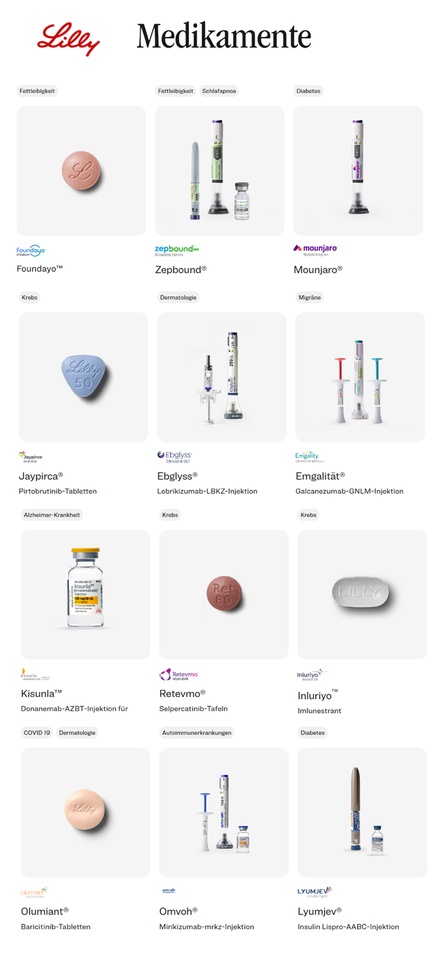
Lilly is benefiting enormously from the structural GLP-1 trend. Just recently, we’ve seen just how strong the demand is: Lilly’s new oral weight-loss drug Foundayo has already captured more than 30% of new U.S. patients using oral obesity drugs, according to Reuters. At the same time, Zepbound/Mounjaro is performing very strongly.
Even more importantly: Mounjaro received FDA approval in August to reduce the risk of heart attack and stroke in certain diabetes patients. This significantly expands the addressable market
And this is precisely where a Democratic victory could even have an interesting positive effect :
More government funding + more Medicare coverage + lower barriers to access → more patients → higher GLP-1 sales volume.
This is because Lilly has a decisive advantage over many traditional pharmaceutical companies:
The company sells drugs for which demand is extremely high and the range of medical applications still has significant room for growth.
Lilly is already projecting revenue of $85–87 billion, and analysts continue to see significant potential in Zepbound, Mounjaro, Foundayo, and next-generation drugs like retatrutide.
According to current analyst estimates, the market for obesity drugs could grow to over $100 billion annually by 2030
Eli Lilly and Company is one of the world’s leading pharmaceutical companies. Net sales are broken down by therapeutic area as follows:
- Endocrinology (74%): products for the treatment of osteoporosis, diabetes, and growth disorders;
- Oncology (14.4%);
- Immunological diseases (8.1%);
- Neurology (2.1%): primarily drugs for the treatment of depression and schizophrenia;
- Other (1.4%).
Net sales are distributed geographically as follows: United States (66.7%), Europe (17.7%), Japan (3.2%), China (3%), and Other (9.4%).
Number of employees: 50,000
Latest News
September 15, 2026
September 11, 2026
September 1, 2026
August 31, 2026
Lilly to Acquire Merida Biosciences to Advance Treatments for Severe Autoimmune and Allergic Diseases
Finance
Merida’s antibody engineering platform is designed to enable the precise, lasting removal of disease-causing antibodies while preserving normal immune function. Initial Phase 1 data show that MER511 achieved robust reductions in pathogenic thyroid-stimulating antibodies with favorable initial safety.
August 28, 2026
The FDA approves Lilly’s Mounjaro (tirzepatide) to reduce cardiovascular risk in adults with type 2 diabetes
Product
Mounjaro is the first and only GIP and GLP-1 receptor agonist proven to reduce the risk of heart attack, stroke, or cardiovascular death in adults with type 2 diabetes who are at high risk for these events —in addition to its established benefits for A1C and weight loss. It is estimated that up to one in three
August 5, 2026
Lilly Reports Second-Quarter 2026 Financial Results, Raises Full-Year Outlook, and Highlights Continued Growth and Pipeline Progress
Financials
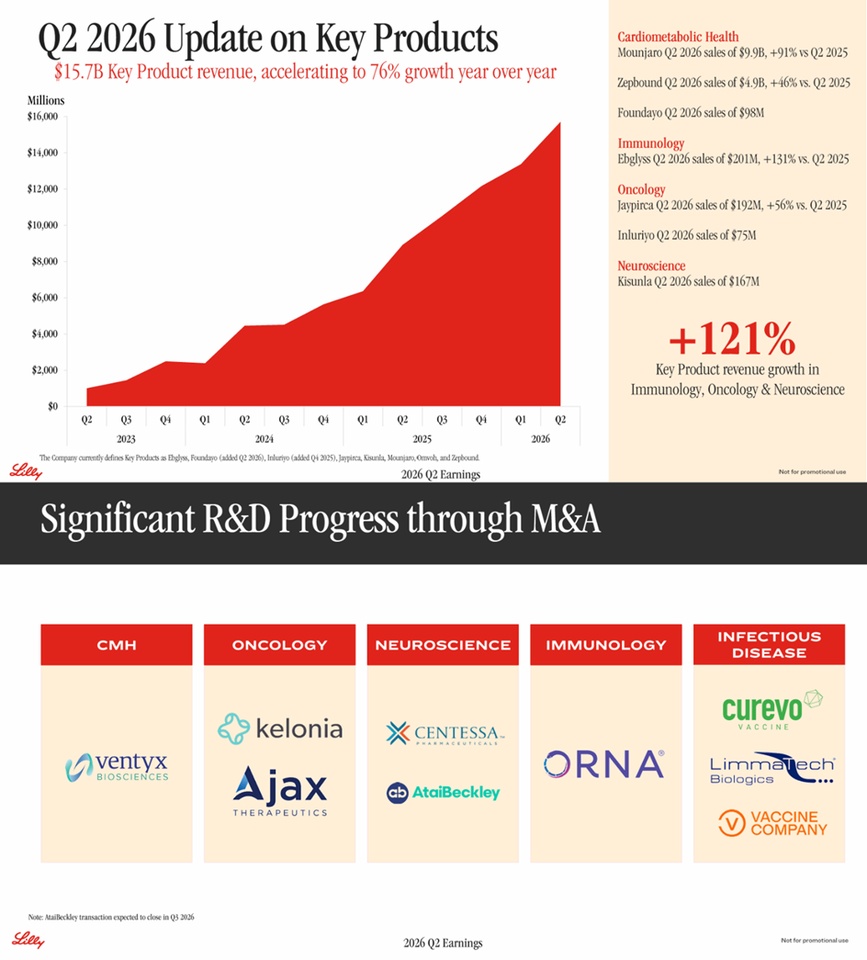
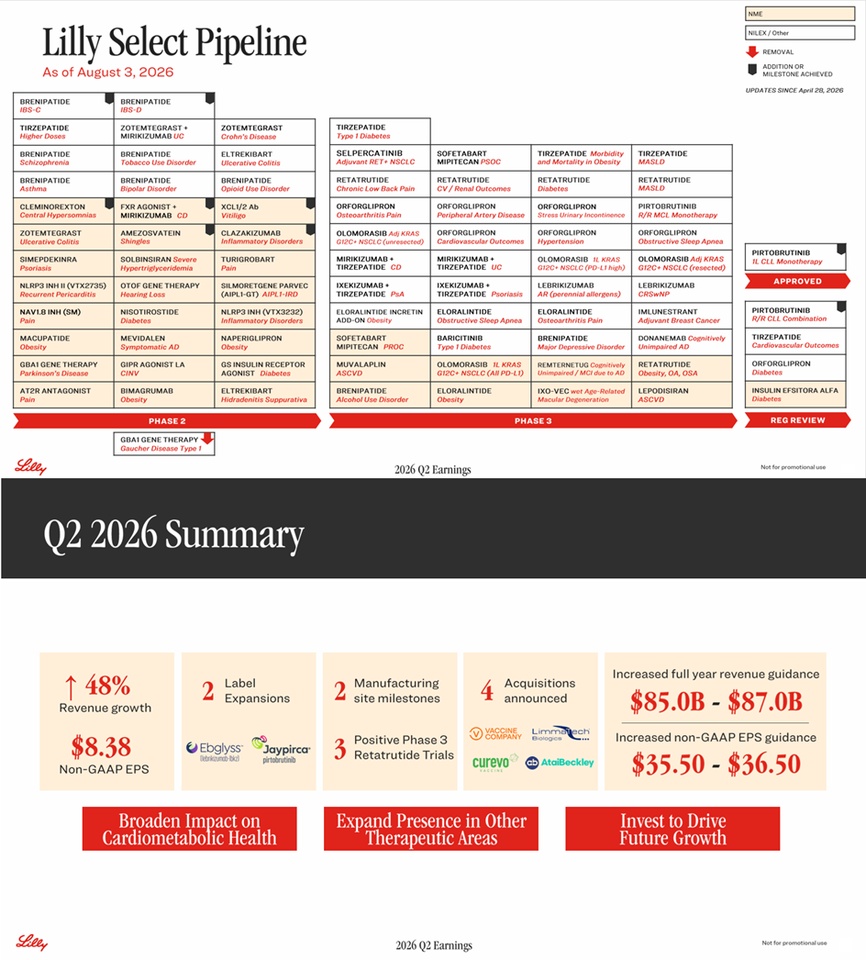
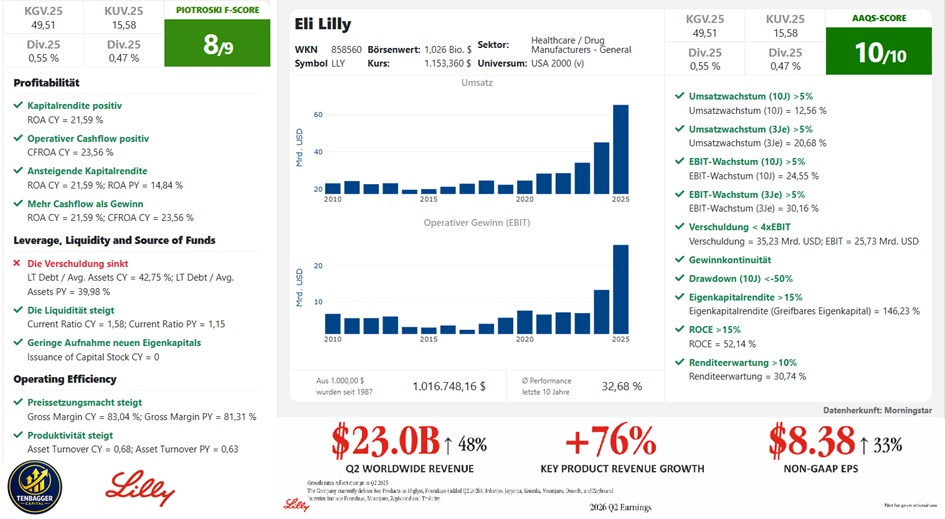
Revenue in the second quarter of 2026 rose 48% to $23.0 billion, driven primarily by volume of Mounjaro and Zepbound. Reported earnings per share for the second quarter of 2026 rose 26% to $7.94 and increased 33% on a non-GAAP basis to $8.38. Reported and non-GAAP EPS for the second quarter of 2026 included $3.03 in acquired IPR&D charges, compared to
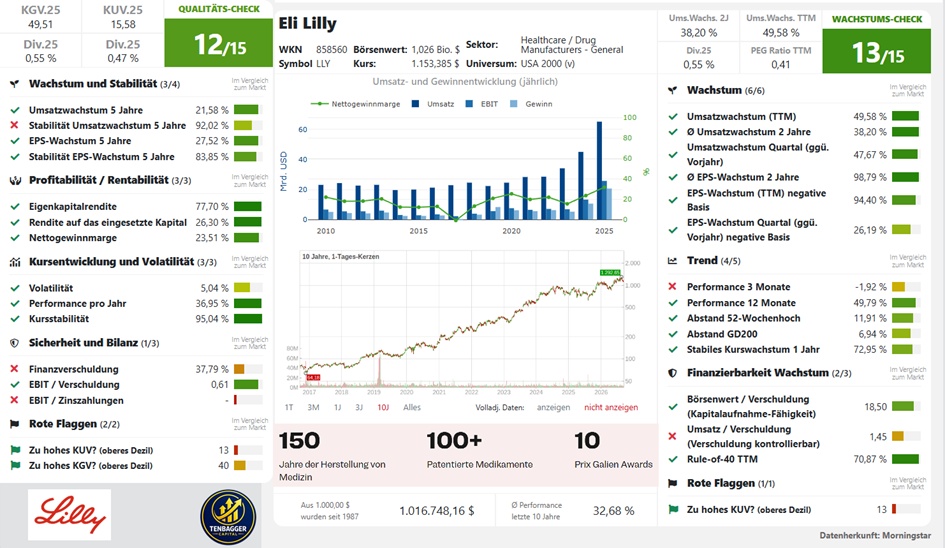
🔎 Performance at a Glance
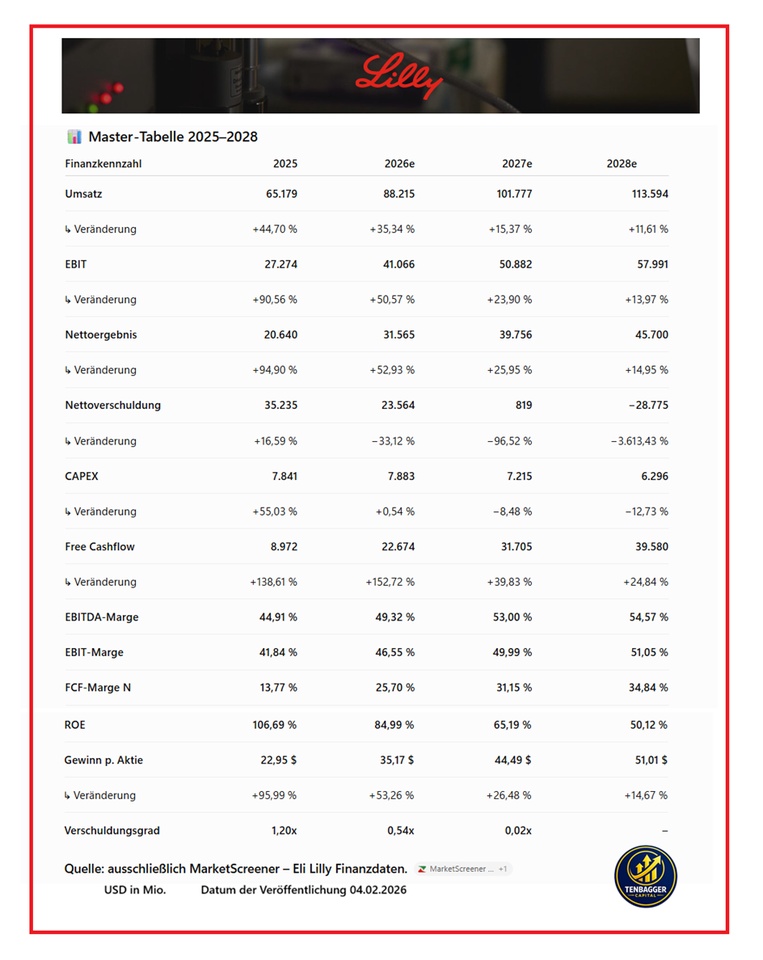
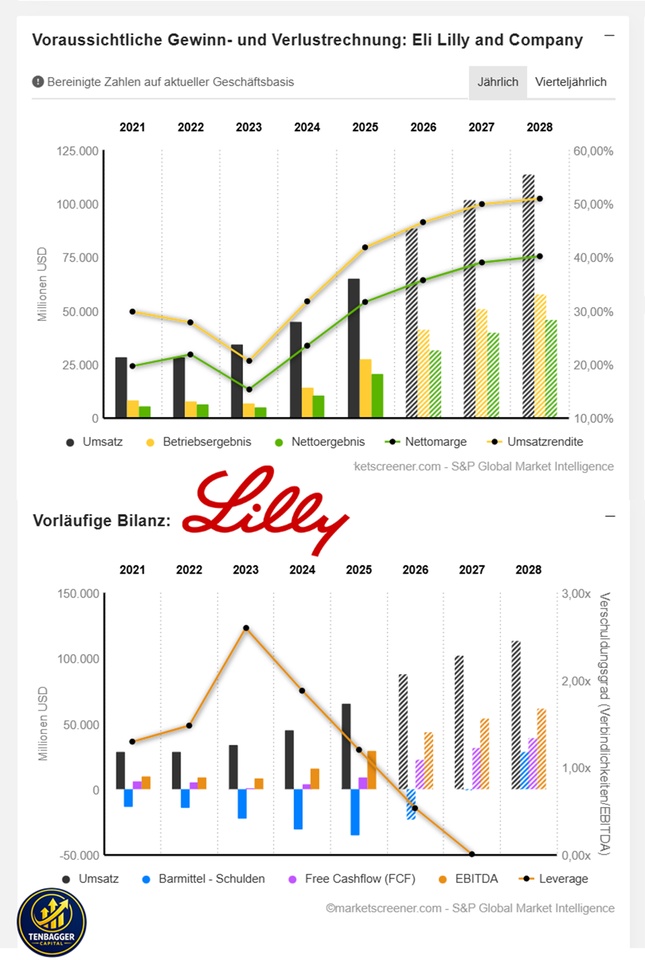
🚀 Revenue: $65.2 billion → $113.6 billion by 2028. This represents a very strong growth trajectory.
💰 Profit: Net income will rise from $20.6 billion to $45.7 billion. Growth is particularly strong in 2025–2026, at +94.9% and +52.9%, respectively.
📈 Margins: The EBIT margin improved from 41.84% to 51.05%, while the FCF margin will rise from 13.77% to 34.84%.
💵 Cash Flow: Free cash flow skyrockets from $9.0 billion in 2025 to $39.6 billion in 2028.
🏦 Balance Sheet: The expected debt reduction is particularly impressive: $35.2 billion in net debt in 2025 → a net cash position of $28.8 billion in 2028.
⚠️ ROE: Although ROE is falling from 106.69% to 50.12%, it remains exceptionally high. At the same time, the debt-to-equity ratio is falling from 1.20x to 0.02x.
Conclusion: MarketScreener’s forecasts paint an an exceptionally strong 2025–2028 scenario: strong revenue and earnings growth, a massive increase in FCF, rising margins, and a dramatic improvement in debt levels.
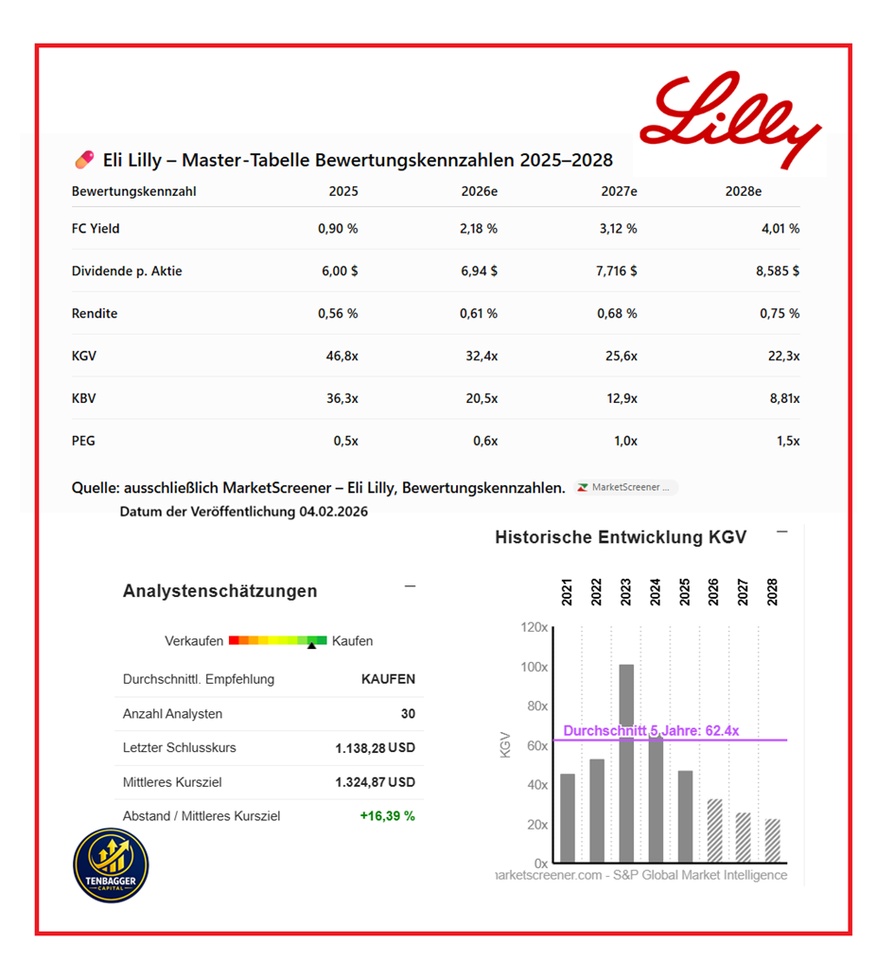
- P/E ratio: 36.3x → 8.81x – also a significant compression.
- FC Yield: 0.90% → 4.01% – expected free cash flow is growing significantly faster than the valuation.
- Dividend: $6.00 → $8.585 per share.
- PEG: 0.5x → 1.5x – expected earnings growth is being valued higher and higher over time.
Conclusion: According to MarketScreener forecasts, Eli Lilly will be become significantly cheaper from a fundamental perspective, particularly in terms of the P/E and P/B ratios. At the same time, the FCF yield is rising sharply.
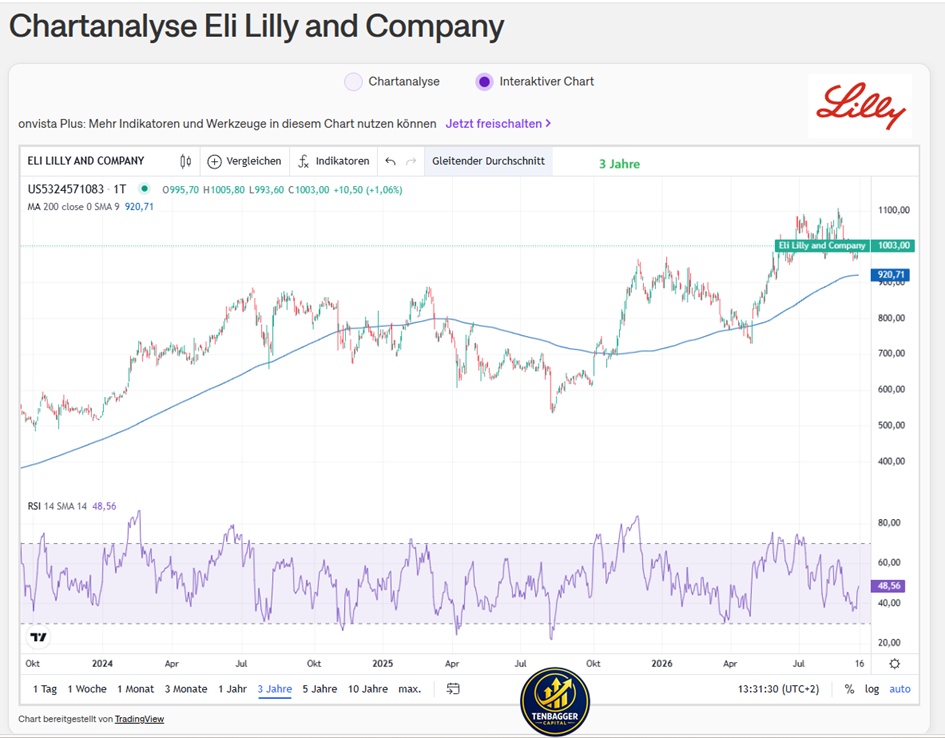
Performance:
1 week +0.45%
1 month -3.06%
6 months +14.78%
1 year +55.01%
3 years +77.56%
5 years +398.12%
7 years +889.93%
10 years +1,318.26%
15 years +2,993.99%
(@topicswithhead , @Raketentoni )
September 15, 2026, 5:07:53 PM •
Lang & Schwarz (EUR)
988.10 EUR
+4.50 EUR+0.46%


