

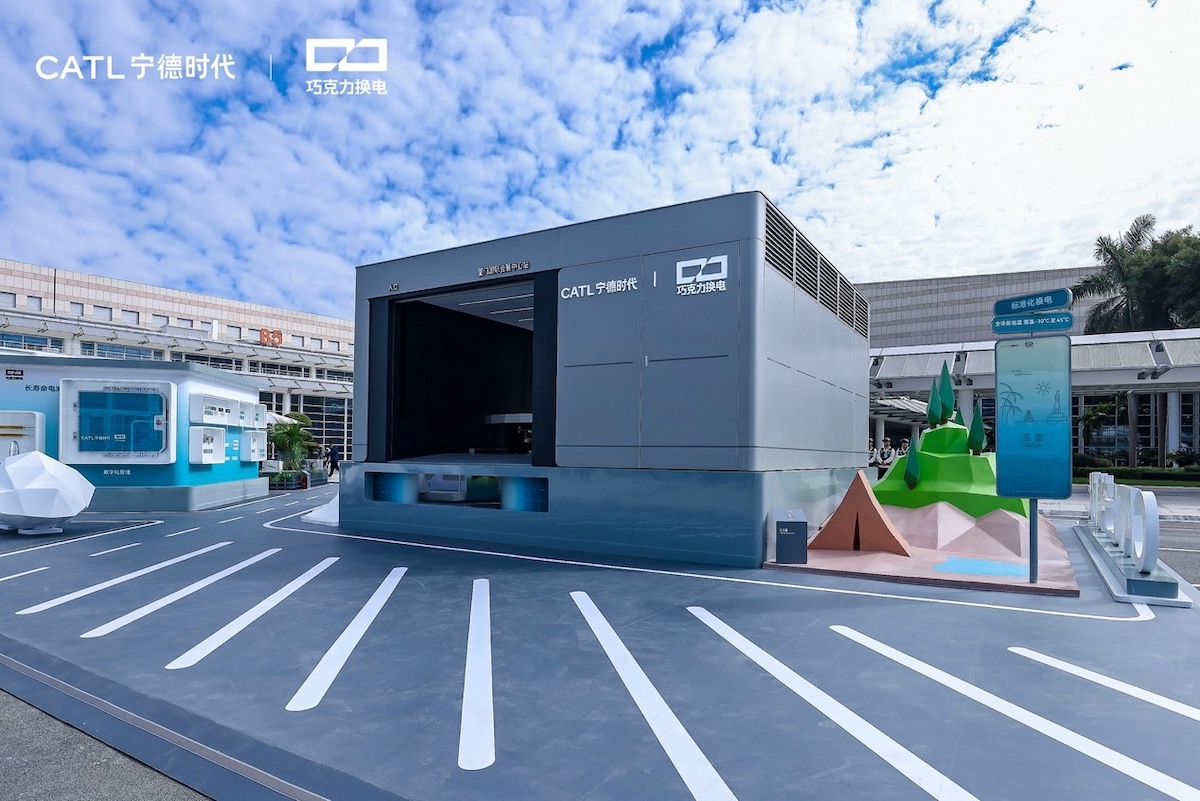
CATL $3750 (-0.89%) has recorded a strong final spurt in 2025:
In October 2025, the company reported 700 battery exchange stations designed for passenger cars still on the grid.
Just two months later, there are already over 1,000.
CATL has thus achieved its consistently communicated target of 1,000 stations in China by the end of the year.
The pace of expansion is set to increase further by the end of 2026: Specifically, CATL is targeting over 2,500 battery exchange stations in more than 120 Chinese cities by then.
This is likely to include an increasing number of stations built by partners:
CATL had announced that the first 1,000 stations would be built by its subsidiary Contemporary Amperex Energy Service Technology (CAES) - and stations 1,001 to 10,000 together with partners. In the long term, 30,000 locations are to be created if the business is also expanded to Europe.
Depending on the exchange station, there are currently 14 to 30 batteries in stock, divided between types #20 and #25 at the car stations - with LFP and NMC cell chemistry.
》We remember《
In December 2024, CATL introduced two standardized battery packs as part of its Choco-SEB system.
》Two fixed sizes available《
The 20# pack is designed for small electric vehicles with a wheelbase between 2.2 and 2.3 meters, while the 25# pack is designed for vehicles with a wheelbase of up to 2.9 meters. SEB stands for "Swapping Electric Blocks" and the name "Choco" is intended to evoke the look of a chocolate bar with its individual "blocks".
In addition to the two versions mentioned, there is also a battery pack called 75# for electric trucks, which is a 171 kWh block with LFP cells. This type of battery is now available at 305 exchange stations in China, which were installed by CATL subsidiary Qiji Energy.
The Car News China portal also writes, citing company information, that the stations are compatible with over 95 percent of current truck models in China, "so that vehicles of different brands can change batteries in around five minutes". One to three battery blocks of 171 kWh each can be installed. So a maximum of 513 kWh.
By 2030, Qiji Energy plans to build a nationwide battery swap network for trucks with a coverage of around 180,000 kilometers, covering 80 percent of the truck transport routes in China and 16 major city clusters. Qiji Energy recently opened the first truck route equipped with battery exchange stations on the Sichuan-Chongqing-Hubei section of the expressway between Shanghai and Chengdu. It will cover a good 1,250 kilometers.