9H·

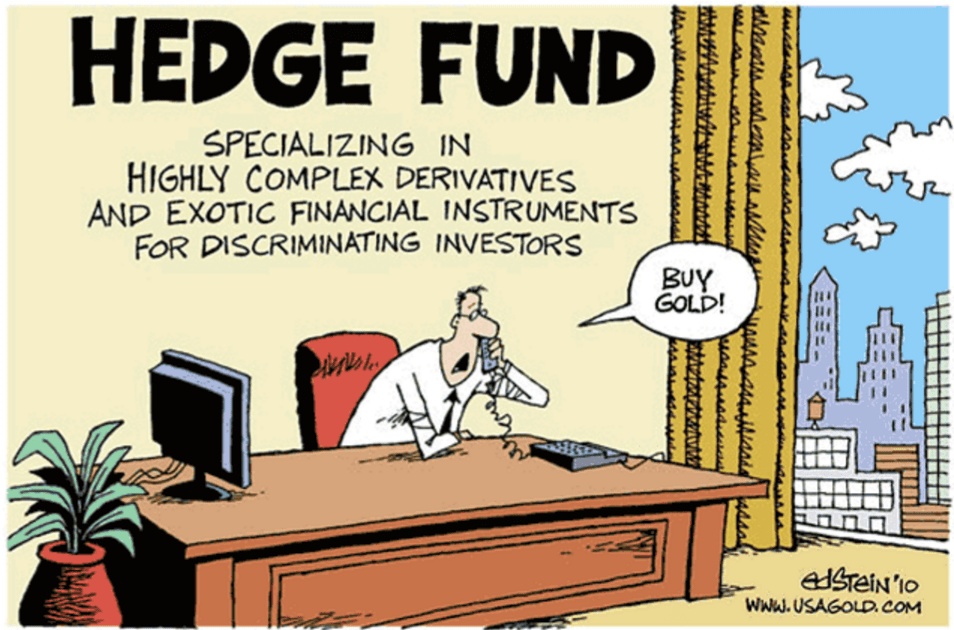
Hedge funds in an ETF wrapper

I don't have the time to write a detailed explanation right now, but I don't want to withhold the following from you, so I'll keep it short, but I will link to sources that you can browse through if you are interested in the topic.


There is a relatively new ETF that attempts to track the mean value of various trend following hedge funds. Also known as managed futures.

$DBMFE


Advantage, compared to classic hedge funds:

-Lower costs

-Flexible trading

-no manager risk

-no high capital thresholds, anyone can invest


Why should you care?

Managed futures have almost no correlation with the stock market and are often referred to as "crisis alpha", as they tend to perform better when there is a clear upward or downward trend.

To put it simply:

When the market is doing really well or really badly, managed future strategies perform best, but have problems in "kangaroo markets".


Who is this interesting for?

For anyone who wants to smooth out volatility in their portfolio or is looking for a source of return that is uncorrelated to equities.

Please remember that uncorrelated and negatively correlated are two different things. 😅


Managed futures are not voodoo and have been well researched in the academic literature since the 1980s.

Here is a recent study:

https://people.duke.edu/~charvey/Research/Published_Papers/P140_The_best_of.pdf

(at some point I'll link a porno, nobody reads the sources anyway ;)


Here is a summary that is better than anything I could ever write:

https://www.imgp.com/documents/iMGP_The_Case_for_Managed_Futures_in_an_Investment_Portfolio.pdf

Still, please treat with caution as it comes directly from DBi and they want you to buy the ETF.


For investors in Austria:

CAUTION! At the moment it is still a non-reporting fund!

If you don't know what it is, then stay away or you will get a nasty surprise from the tax office at the beginning of the year.


Hedge funds in an ETF wrapper, what do you think?


😘
attachment
23
8 Comentarios

Imagen de perfil
Now I've had to read up a bit more. So essentially it would be relevant for me at most as an addition to the multifactor portfolio, in perspective I lower my volatility somewhat more than my return if I add it, for example, 10%?

Interesting in any case.
I think I can ignore it for several reasons:

1) long investment horizon; almost 35 years to go. So I still have time diversification
2) more in the portfolio than previously planned: only when prices fall by around 30% will I be at the portfolio size I should have according to my original planning. So I have some room for risk
3) whether the implementation works would also be a bit of luck, because you don't yet know whether the fund will do what it's supposed to.
‱
2
‱
Imagen de perfil
@SchlaubiSchlumpf If you can withstand the drawdown, you don't really need such a product.

It has been available in the USA for some time $DBMF.
The important thing is to rebalance it regularly.

Keyword:
Shannon's Demon - a positive return can be achieved if the underlying assets themselves have no long-term upward return at all - as long as they fluctuate.
‱‱
Imagen de perfil
Thanks for the introduction!

But 4.1%pa since 2000 is not the world. Is it worth the trip into the uncertain world of hedge funds?

A $XEON almost manages 4.1%pa and a $XDEM beats that hands down.
‱
1
‱
Imagen de perfil
@Epi Where did you get the 4% from?
The best proxy is probably the SG CTA Index, which is at around 6% p.a.

https://www.rcmalternatives.com/fund/sg-cta-index-societe-generale-newedge-uk-limited/?hl=de-AT
‱‱
Imagen de perfil
@TotallyLost The yield of the SG CTA is shown on page 2 of the information brochure: 4.1%pa. đŸ€·
‱‱
Imagen de perfil
@Epi sorry what?
You mean the 4.7% between 06/2019 and 06/2024 on page 2, right?
‱‱
Imagen de perfil
@TotallyLost Your split document: https://www.imgp.com/documents/iMGP_The_Case_for_Managed_Futures_in_an_Investment_Portfolio.pdf p. 2, graphic on the right, partial graphic 1, green left bar.

Shows the performance of the index on which the ETF is based: Annualized Return since 2000: 4.1%. đŸ€·
‱
1
‱
Imagen de perfil
@Epi now I see where you are.

One thing to remember: from 1999 to 2009 we had a massive underperformance of equities and during that time positive returns were achieved.

It's a hedge against long bear markets, outperformance is not the goal.

But for 90% of all investors it is probably nothing.

I bought it once and use it as part of my reserve.
The lack of correlation makes it ideal for rebalancing.

And with a money market $ fund you would only have made about 1.5% p.a. from 2000 - 2025, not 4%, I have picked out a relatively old fund here.
https://www.bmo.com/main/personal/investments/mutual-funds/us-dollar/bmo-us-dollar-money-market-fund/

😘
‱‱
Únase a la conversación