4D·

Keyence - fair value trap or opportunity?

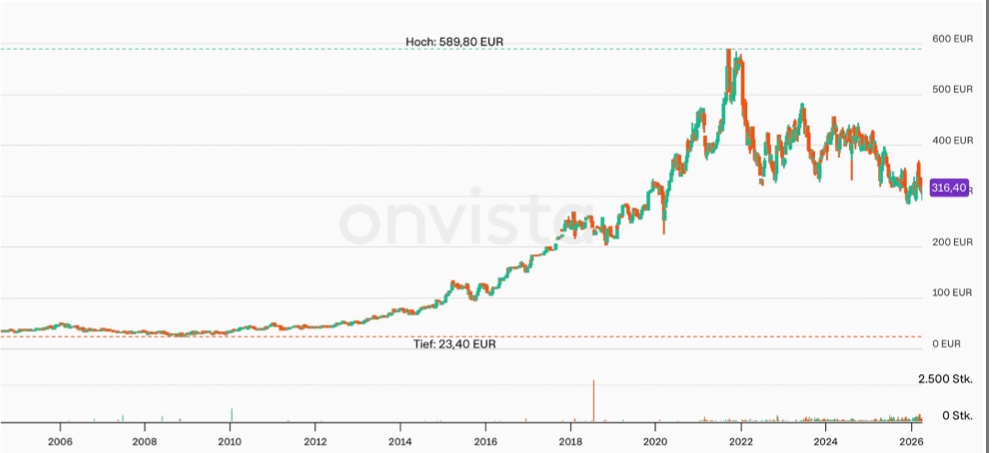
To answer this question, it is first worth taking a look at the chart.

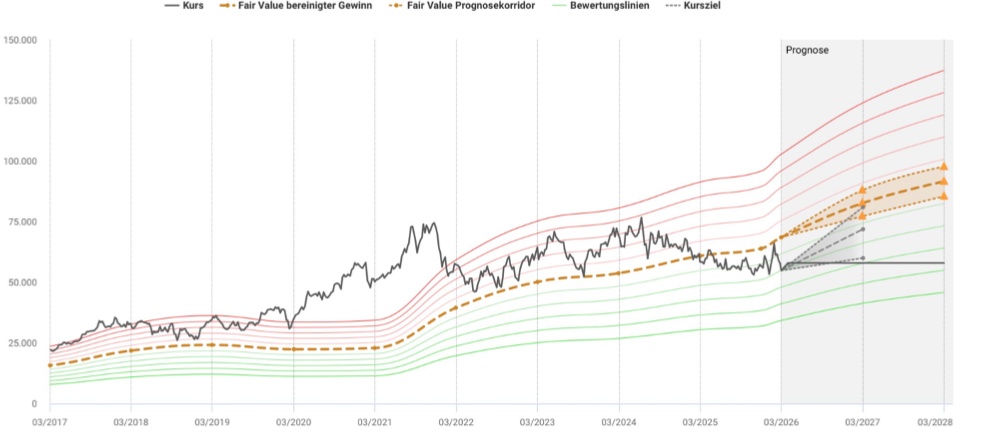
The share has lost around 45% since its high of around €590 and is currently trading at €317. If the question arises as to why the share has been sold off so strongly, this is due to a real exaggeration on the upside, which in my view has caused an exaggeration on the downside. You can see how, according to the share finder, it was well above fair value for a long time. Recently, however, it has come back significantly.
$6861 (-1.99%)

attachment


attachment


1. the "fabless" miracle: assets without ballast

Keyence develops sensors, microscopes and vision systems for factory automation. Yet they do not own a single factory.


- The effect: they have almost no tied-up capital (asset-light). If the economy falters, they do not have to close any factories or lay off workers.


2 The direct sales monopoly

Normally, companies sell through intermediaries. Keyence does the opposite:

- On-site problem solvers: Keyence engineers go directly to customers' factories. They don't just sell a product from the catalog, but solve a specific problem (e.g.: "How do I detect this micro-crack at 200 km/h belt speed?").

- Pricing power: Since they offer a solution that saves the customer millions in downtime costs, the price of the sensor hardly plays a role. This leads to a gross margin of over 80%.

This is the biggest moat there is. They have a virtual monopoly in this area of automation and problem solving.


The EBIT margin is a legendary 53% and the net income margin is around 37%. This means that almost half of every euro of turnover remains as pure profit. And that for an industrial company.


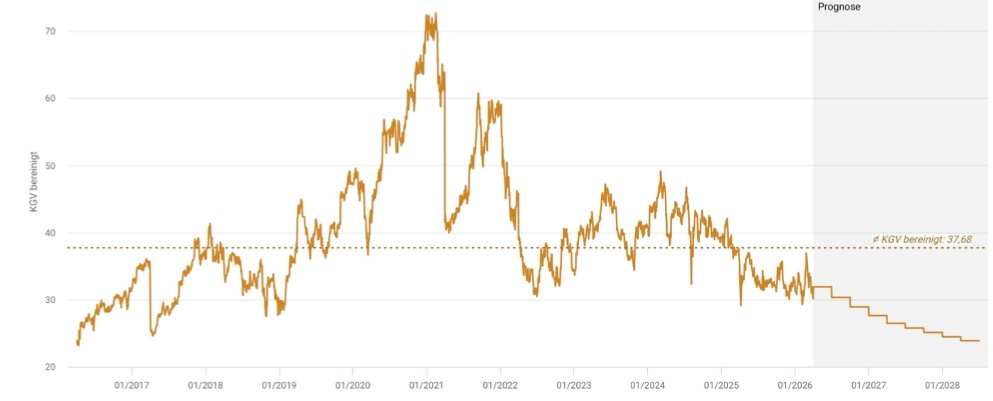
The current P/E ratio is around 30, which is 7.68 points below the historical average of 37.68 for the last 10 years. The 5-year average is even 45. From this perspective, the Keyence share appears to be reasonably valued.

favorably valued from this perspective.
attachment

Keyence is also sitting on a high cash mountain and is practically debt-free.
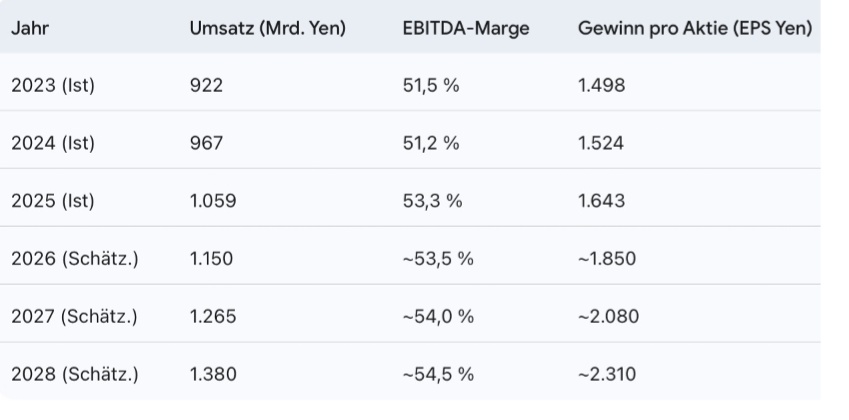
attachment

What about the risks?

China exposure & geopolitics

Keyence is heavily dependent on the global propensity to invest.


- Problem: A significant proportion of sensors end up in Chinese factories (e-car production, batteries, electronics). If the trade conflict between the USA and China escalates in 2026 or China makes access for foreign high-tech even more difficult, Keyence will be directly affected.


- Currency risk: The weak yen has visually inflated profits. If the yen appreciates massively in 2026 (e.g. due to interest rate hikes by the Bank of Japan), foreign income will be lower when converted into yen.


Opportunities:

The labor shortage.

This is the biggest opportunity for Keyence. In almost all industrialized nations (Japan, Germany, USA) and even in China, the working population is shrinking.

- From "nice-to-have" to "must-have": in 2026, companies will no longer automate just to save costs, but because they can no longer find people.

- Keyence advantage: As Keyence sensors are extremely easy to install, companies can automate their factories faster than with the complex individual solutions of the competition.


Scalability: Since Keyence has no factories, they can roll out software updates for their AI sensors worldwide and charge subscription fees or higher margins. This makes the business model even more "software-like".


Finally, if we look at the heuristics, the following picture emerges.
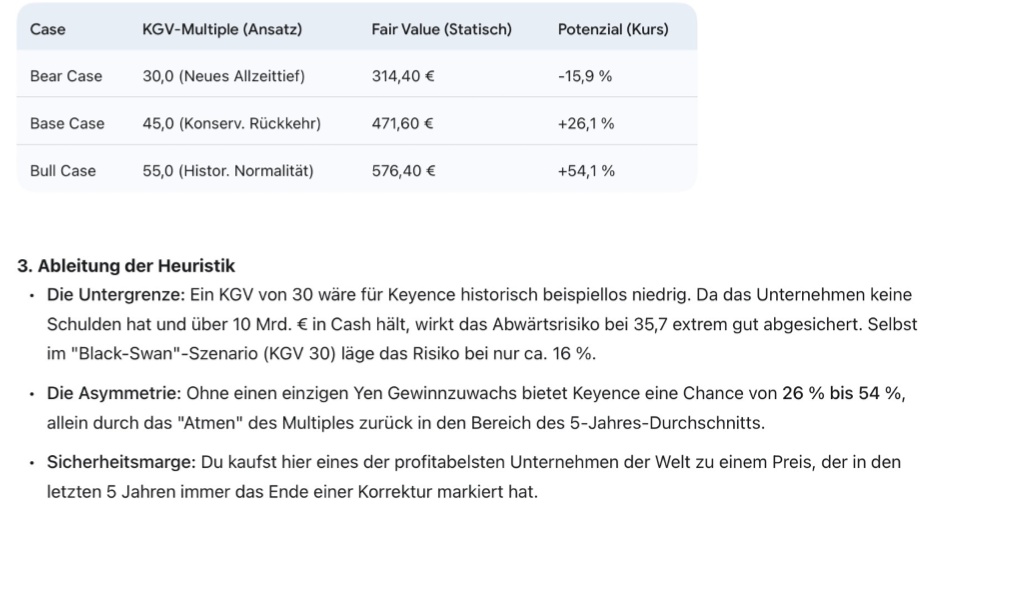
attachment
attachment

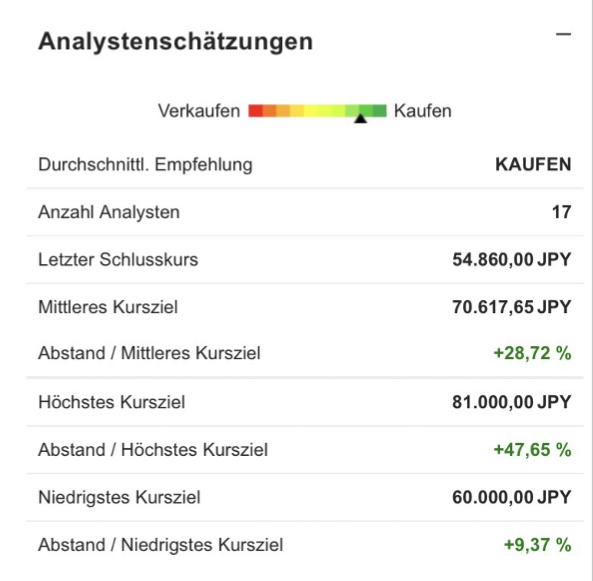
The majority of analysts also recommend buying with a premium of almost 30% to the average price target.


Conclusion: I personally see Keyence as a good stock for diversification. The margins are also outstanding and you are still buying a quality company at a high price, albeit well below its historical average. Looking at the heuristics, my model also shows a good risk/return ratio. I don't think you can do much wrong with the share, as the company has a huge cash reserve and also holds a monopoly-like position in Japan.


What do you think of the company? Are you already invested?

Feel free to write your opinion, also with regard to the current market risks.


@Tenbagger2024
@Get_Rich_or_Die_Tryin
@Raketentoni
@PikaPika0105 etc......

11
16 Comments

profile image
Good company with mega margins. The wave of automation suits them. Not a tenbagger, but you can't go wrong. Suitable for people who want to build a strong quality portfolio. But you should keep an eye on China. The trade conflict between the USA and China doesn't play a role here, this is always said directly out of reflex. You should take a much closer look at the trade conflict between Japan and China, which has recently intensified.
8
profile image
@PikaPika0105 Thank you for your assessment.
But you're not invested, are you?
The only thing that could really cause problems is, as you said, the trade conflict between Japan and China. How dangerous do you think that is for the company?
profile image
@capital_captain_2693 I am not invested. I can't say much about the impact as I don't know exactly how dependent Keyence is on Chinese customers. However, the trade conflict will continue for the next few years.
1
profile image
Thanks for your analysis. Keyence's market position is definitely outstanding, the margin profile is melting away.🫠

The huge cash buffer and the generous FCF margin provide a certain degree of fall protection.

I like the value, am invested and regularly top up.👌🏻

So as you can imagine, I see it as an opportunity. In my view, the multiple compression is mainly driven by yen appreciation, which of course also represents a certain risk overall.
5
profile image
@Get_Rich_or_Die_Tryin You wrote about this stock before, and I was skeptical at first, but after a thorough analysis, I'm now invested and am also adding to it via a savings plan.
Do you have a target size for the position, i.e. how big the share in your portfolio should be?
1
profile image
@capital_captain_2693 As with all individual stocks, my target size is around 2-3%.👍🏻 The chart doesn't look so great at the moment either, mainly due to the increased strength of the yen.🤷🏼‍♂️ But basically I have a lot of confidence in Japan, which is why I have a relatively strong weighting in my portfolio.
1
profile image
@Get_Rich_or_Die_Tryin But you can also take a positive view of the yen's strength. I mean, if the yen gains in value again in the next few years, Europeans can theoretically buy into the "cheap yen" with a strong euro. So now is the time when you can buy the biggest shares for the euro. So the position would gain in value through the exchange rate alone.
1
profile image
Thank you for this excellent and in-depth analysis! Your summary of the "fabless" model and ingenious direct sales hits the nail right on the head. Keyence is fundamentally an absolute masterpiece of capitalism.

But you asked for an honest assessment - and my AI assistant "Mr. Prompt" has no reverence for big names. He pulled the current, real data (as of April 1, 2026) and ran Keyence relentlessly through our quantitative AOK scanner.

Is the 45% crash a historic opportunity or a "fair value trap"? Here is the reality check:

📉 1. the chart check (beware of the anchor effect)
The share is currently trading at around EUR 313 (or just under JPY 58,000 in Tokyo). You say that the share has "come back significantly". That is true. But a fall of 45% does not automatically make a share cheap, but often only reduces an absurd historical overvaluation. The chart still shows a one-year drop of over 17%. We do not currently have a new, intact upward trend here, but rather a volatile bottom formation.

🔬 2. the "Mr. Prompt" formula check
Let's run the monopoly through our merciless filters. Based on the latest Q3 figures for the current financial year 2025/2026:

The Core Quality Formula (Sales Growth + Operating Margin = Score):

Sales growth (9 months): +7.7 %.

Operating margin (EBIT): Incredible 49.9% (gross margin at 83.1%).

Result: 7.7 + 49.9 = score 57.6!

Conclusion: Our golden threshold of > 25 ("very good") is completely pulverized here. This is an absolutely world-class score. The company prints money like a central bank.

The dividend & cash flow rule:

The dividend yield is a tiny ~0.8%. Normally we demand >= 3.5 %. But: Our exception rule works perfectly here. We accept small dividends if the balance sheet is extremely strong (Keyence is virtually debt-free and sits on a huge cash mountain of billions) and the margins are outstanding. Filter passed.

🪤 3. the valuation trap (why the P/E ratio is deceptive)
Here comes the critical point where your thesis of the "favorable valuation" wobbles: You argue that the current P/E ratio of around 31 to 33 is far below the historical average of 45.
The problem is that the historical average dates back to a time when Keyence increased its turnover by 15% to 20% per year! However, sales are currently only growing at 7.7 % and operating profit has recently only grown by just under 5 %.

A P/E ratio of 32 for profit growth of 5 % means a PEG ratio of over 6, which is anything but favorable. The stock market simply no longer pays the old P/E ratio of 45 because the explosive growth of the past has stuttered in the current macro situation. This is the classic "fair value trap" that you fall into when you apply historical P/E ratios to a slowing present.

🌍 4. macro risks 2026: Yen & China
You have already named the risks perfectly, but we need to emphasize them even more for 2026:

The currency hammer: Keyence now makes around 70% of its sales abroad. If the Bank of Japan (BoJ) continues to raise interest rates this year and the yen appreciates massively, these foreign profits will melt away mercilessly when converted into the domestic currency on the balance sheet. This is currently a massive currency risk.

China / e-cars: The extreme price war and consolidation in the Chinese EV and battery market are currently curbing the willingness to invest (CapEx). Keyence is feeling this directly in terms of incoming orders.

📋 5 Conclusion & Mr. Prompt's verdict
Is Keyence a buy? In terms of quality, Keyence is one of the best industrial companies on the planet. The Core Quality Score of almost 58 speaks volumes, and the monopoly in direct sales is a moat of solid steel.

Is the price currently fair?
No, it's a premium price for diminishing growth. At EUR 313, you're buying superior quality, but you're not buying it cheap.

If you want to diversify for the growth side of your portfolio, Keyence is fantastic as an underlying investment - but only with patience. Don't chase this chart blindly. Take advantage of the weak yen and geopolitical concerns to pick up the stock in tranches via a savings plan, or put a hard stop-limit just below EUR 300 into the market in case the overall market coughs again.
4
profile image
@Raketentoni with the valuation in the past and the comparison to today you have of course a really good point.
Keyence is betting that the global automation cycle will pick up again and Keyence will return to low double-digit growth (approx. 10%), in which case the peg would still be high but rather "normal" for a debt-free monopoly.
And you also have to bear in mind that in a crash, companies without debt and very high margins are the last to go bust. Of course, this is also reflected in the Kgv. Overall, I do not expect that we will see such a high Kgv again.
But even without the decline to such a high Kgv, there is still plenty of room for improvement
1
profile image
@Raketentoni what does Mr. prompt say about my new comment and what is your conclusion? Do you really see no upside potential (especially in the share price, of course 😁)?
profile image
@capital_captain_2693 Great feedback! This is exactly the kind of in-depth discussion we are here for. You have absolutely understood the core of Keyence and argue at the highest level.

I've sent your additions straight back to "Mr. Prompt" in the engine room. Here is his (and my) conclusion to your points:

🛡️ 1. the moat in the crash (your shield)
You are 100% right! In a real bear market or crash, companies like Keyence are the absolute rocks in the surf. No debt, billions in the call money account and an EBIT margin of 50%. They can ride out a year-long recession without shedding a drop of sweat, while highly indebted competitors are going bust by the dozen. That's the ultimate "sleep-well" argument for this stock.

⚙️ 2. The bet on the automation cycle
Your scenario is the exact bull thesis: If the global investment backlog (CapEx) is resolved and Keyence returns to around 10% to 12% growth, then the current P/E ratio of ~32 is immediately put into perspective. For a pure, debt-free global market monopoly, the market is then historically absolutely prepared to pay this premium (and also a higher PEG ratio). So today you are buying the anticipation of the start of this cycle.

🚀 3. did we say "no upside potential"?
Let's clear up a little misunderstanding here! Mr. Prompt did not say that the share has no more upside potential. He merely warned that the share price of -45% does not mean that the share is currently "cheap" and will automatically fly back to its old all-time high.

There is massive upside potential IF two things happen:
The global automation cycle picks up (as you described).
The weak yen is not torpedoed by aggressive interest rate moves by the Bank of Japan.

Our final conclusion:

Keyence is an absolute world-class compounder. Anyone buying this share is doing absolutely nothing fundamentally wrong - you just need a little more patience at the moment until the macro environment plays along again. It is not a short-term "snapper" for a quick rebound, but a premium foundation for the next 5 to 10 years.
1
profile image
@Raketentoni Thanks for the assessment
1
@Raketentoni What do you say to Paypal?
profile image
The live databases are glowing (as of April 4, 2026). Here is the merciless AOK analysis for your forum on the question: PayPal - Crap or no crap?
1. what the company does
PayPal is the dinosaur of digital payment processing. They operate the classic PayPal checkout button, the P2P app Venmo (in the US) and the unbranded payment gateway Braintree, which runs in the background for many merchants. The current problem: while the Braintree business is growing, the high-margin, classic PayPal button is stagnating.
2. the bare facts & key figures
The share price was completely shaved after the weak Q4/2025 figures in February and the weak outlook for 2026.
* Current share price: ~ USD 45.34 (brutal crash from the January 2025 high of over USD 94!)
* Market capitalization: ~ USD 40.1 bn
* Price-earnings ratio (P/E ratio): 8.38 (historically extremely cheap)
* Price-cash flow ratio (KCV / P/FCF): 8.02
* Price-Sales Ratio (KUV): ~ 1.2
* Price-Book Value Ratio (KBV): ~ 2.0
* Dividend Yield: 1.28 % (annual distribution).
3. the "Mr. Prompt" formula check
Now it gets bloody, because we apply our tough new rules:
* Core Quality Formula (Live TTM constraint):
* Sales growth (TTM): 4.0 %
* Operating margin (TTM): 17.4
* Score: 4 + 17.4 = 21.4 (Solid on our scale of 15-25, but miles away from the >25 "very good" mark for real quality).
* Cashflow Quality Formula:
* With a P/FCF of 8.02, we arrive at a massive FCF yield of 12.4%! (Anything > 8 % is extremely attractive for us). PayPal is still printing massive amounts of hard cash despite the dip in growth.
* Dividend filter:
* At 1.28%, we fall well short of the hard 3.5% threshold for pure income stocks. The exception rule (high FCF, strong balance sheet) mitigates this somewhat, but it is not enough for real income investors.
* Rule of 40 (R40) - tough as nails after the last quarter (Q4/2025):
* Sales growth (4%) + operating margin (17.4%) = 21.4%. Clear failure at the 40% mark. No historical averages can conceal this.
* Momentum (M) - The hard metric:
* The share price is at ~ USD 45. The 200-day line (SMA200) runs high at just under USD 64.
* Rule applies: share quotes below the 200-day line = 5 / 20 points. A pure falling knife without bottoming out.
4. future prospects & competition
Competition from Apple Pay (in the lucrative mobile segment) and Stripe or Adyen (in the B2B segment) is extremely tough. PayPal does not currently have a general sales problem, but a margin and positioning problem. Transaction margins are shrinking because the low-margin Braintree business is growing while the profitable core business is stuttering.
5. chart analysis of the last few months
According to our new rule, there is no subjective chart romanticism here: the share price has almost halved since the beginning of 2025. The SMA200 is almost 20 dollars away. The technical and fundamental uptrend has been completely broken.
6 Special Entry Zones ("Bargain Hunter's List")
* Zone 1 (The recent trough): ~ USD 40.00 to 42.00. This is where the share has found a foothold for the time being after the Q4 massacre in spring 2026.
* Zone 2 (The absolute sell-off): ~ 38.00 USD. If the broad market (Nasdaq/S&P 500) corrects properly, this will be the next fundamental stop.
7. conclusion: sustainability, margins & alternatives
Crap or no crap?
PayPal is definitely not crap. But it is also no longer a technological growth stock. It is a transformed value trap that has mutated into a gigantic, stoic cash cow. An operating margin of over 17% and an FCF yield of over 12% are an absolute bargain for a P/E ratio of 8.
The problem is the focus: for the dormant pole of the barbell, the dividend of 1.28% is simply too low to flood your Danish bank account with decent cash flows. For the aggressive growth engine, the paper falls mercilessly through the Rule of 40. If you are looking for real moats on the left-hand side, you have to reach for the more expensive but unassailable top dogs Visa or Mastercard in the sector.
1
profile image
Very exciting company, perhaps take a look at $JDG from Great Britain, they have 23 subcontractors who are highly specialized subcontractors and are de facto world market leaders in their field.

The P/E ratio is ~15 looking backwards and between 16-20 looking forwards, the holding company has nicely diversified sales across industries and countries, but was badly hit by the federal funding and order timing of some customers.

I have one more point about Keyence, China is now pursuing the "Buy Chinese" approach, which could be dangerous for the mass of measurement technology.
1
profile image
@Jesko Thanks for the article. I'll take a look at the company
Join the conversation