3Wk·

Not hungry, or what?

I have noticed that shares in food manufacturers are somehow not in demand at all at the moment. Why is that? Consumer staples and food should actually offer a certain degree of resilience in turbulent times, as people always eat regardless of economic growth and the economy. So why is this sector just bobbing around like this?
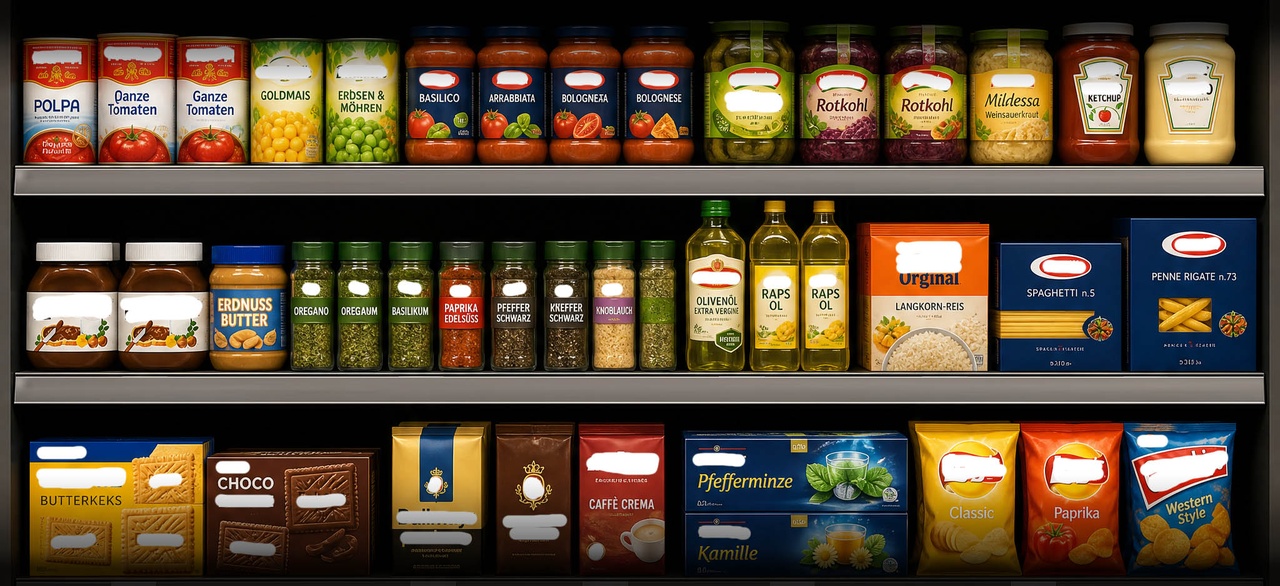
attachment

Here are a few examples:


$ULVR (-0.89%) Unilever, YTD = -9.1% , P/E=18.3, Divi = 4%

$NESN (-0.99%) Nestle, YTD = + 2.4%, P/E=22.4, Divi = 4%

$HRL (+0.04%) Hormel Foods, YTD = -11% , P/E=23.3 , Divi = 5.7%

$GIS (-0.45%) General Mills, YTD = -21.8%, P/E=8.6 , Divi = 6.8%

$KHC (-1.95%) Kraft Heinz, YTD = -3.1% , P/E=negative , Divi = 6.8%

$FLO (+0%) Flowers Foods, YTD = -20% , P/E=21.81 , Divi = 11.5%

$NOMD (+0.58%) Normad Foods, YTD = -17.2% , P/E=9.8 , Divi = 6.8%

$TBS (-2.33%) Tiger Brands, YTD = -20% , P/E=12 , Divi = 11.4%


I understand that many branded companies are coming under increasing pressure from the discounters' own brands when the economy is bad, but is that really the whole truth?


(Illustration generated with lovart.ai, modified in Photoshop)

13
16 Comments

profile image
In turbulent times, you grow your own food or steal it from your neighbor 👍
20
profile image
@DonkeyInvestor The latter is the maximum return on investment! 😅
3
profile image
@DonkeyInvestor Inflationsausgleich 🤝
1
profile image
After these defense, crypto, gold, silver, lithium, AI, chip, energy, Japan and oil rallies, are you surprised that consumer staples are not performing?
What major investor is parking cash in Coca Cola when he could be earning big returns in Japan? A little tip: Who starts with B and ends with uffet doesn't do that :)
3
profile image
@BeachPlease I am also of the opinion that this has less to do with the product portfolio, own brands vs. branded products etc., but that the capital is simply being invested elsewhere due to hype in other areas, where there is currently more to be gained, and that is what investing is all about.
The customers of major investors also expect to be part of these hypes.
3
profile image
So Coke is actually doing quite well
profile image
They cannot pass on the increased prices to consumers so easily.
2
profile image
... the times are coming back. Good opportunities to invest and collect dividend stocks more cheaply
2
profile image
I don't see the point in buying the expensive branded product for many foods if it is no better than the discount version. I'm sure many people will think that way and it puts pressure on margins.
1
profile image
@Psychedelic_Sunflower I also buy a lot of discount goods for exactly the same reason. Especially as the price gap between discount products and "brands" seems to have widened even further recently.
1
profile image
One look at the product portfolio of the companies mentioned here is enough and it is no longer so surprising that these companies are just bobbing around. 😄
1
profile image
@SSIT The "brands" are, of course, usually highly processed foods. They are not really suitable for a healthy diet.

But manufacturers of less highly processed foods are also apparently struggling at the moment - e.g. $CALM (Cal-Maine Foods) or $MOWI (Mowi).
$ULVR is no longer a food company. The price is justified because they are constantly selling off their biggest successes (food brands) and now want to go all $PG in the non-food sector.
1
profile image
Best times to collect the titles
1
Deleted User
3Wk
Comment was deleted
profile image
@stayhydrated01 I totally agree with you - I also think that's the main reason. I'm just surprised that the share prices of these companies are being hit so hard. Often, the discounters' cheap products are also manufactured by the same producers as the brands (so sales don't go to zero) - but it's estimated that an extremely high margin is lost, which would otherwise be achieved with the "brands".
1
Join the conversation