

When looking at your portfolio, most of you will probably have noticed in the last few days that your net worth has gone down a bit. My portfolio has also gone down quite a bit and the obvious emotion is anger/disappointment. Here I would like to point out that this anger/disappointment is actually irrational for the majority of us.
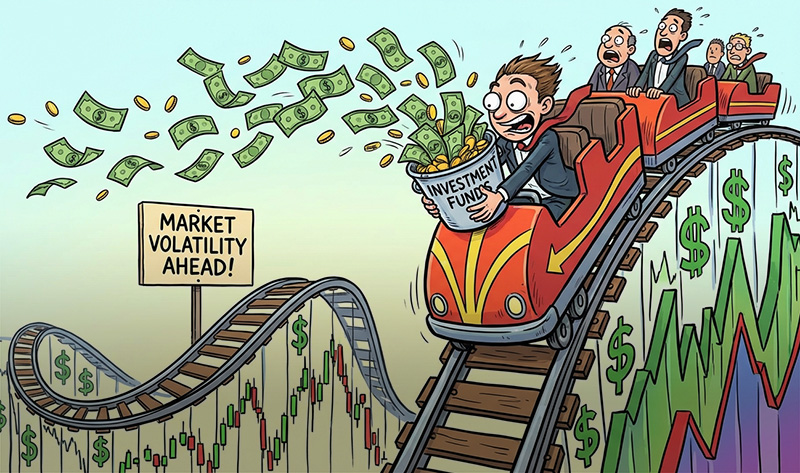
Most investors strive for long-term wealth accumulation in order to have built up a nice fortune in 10 or 15 years, for example - perhaps only at the beginning of retirement. Whether you pass the assets on to your children, gradually consume them in the autumn of your life or want to live off the dividends depends on your individual strategic orientation and life situation. However, very few people here are probably already in the "withdrawal phase" and are therefore only just building up their assets for later.
And here comes the point. Even if the value of the portfolio has decreased for the time being, you still have the same number of shares and company units (provided you haven't sold anything). The company or companies themselves do not care at all about the price of their own share certificate for their operating activities. The price drop - especially because it is a price drop resulting from a nervous market and not from bad news from the company - has ZERO influence on the company itself in the vast majority of cases. The company's market capitalization goes down, as does the P/E ratio. The dividend yield goes up. A purchase is now more attractive than before, provided it is a stable company with a reasonably crisis-proof business model.
So if you invest for the long term and gradually buy more and more shares, the dip or even a major slump is good for you, as you get more company shares for the same money while the share price is lower. Settlement takes place at the end when you need the money - in the meantime it's really just a screenshot!
Are there exceptions? Yes. If you were just about to withdraw money by selling shares and you need the money (buying a house, moving house, new car, starting a business) etc., it is of course stupid. If you're making speculative investments and possibly using financial instruments to bet on rising prices, it's even worse. But that doesn't apply to most of us.
Conclusion: Don't get angry, it's not sensible. If possible, use the low prices to buy in a disciplined and stoic manner. In a few years, you will be really happy that you were able to buy shares for cheap money.
Finally, an example from my own portfolio: My largest single position is Munich Re ( $MUV2 (+0.57%) ). At one point last year, the share price was at 600 euros per share, today it is at 520. The company is doing brilliantly, the insurance business is not dependent on the economy. No one has yet tried to impose tariffs on insurance or reinsurance services. There are also no supply chains that could be interrupted. Profits are up, dividends are up. The company's share buyback program will result in even more shares being taken off the market than originally assumed at a reduced share price. Earnings per share will therefore continue to grow organically due to both the development of the operating business and the shortage of shares. From the point of view of a long-term investor, therefore, there is really no reason to tinker frantically with the portfolio despite the fall in the share price.
(Graphic generated with Lovart.ai, modified in Photoshop)


