

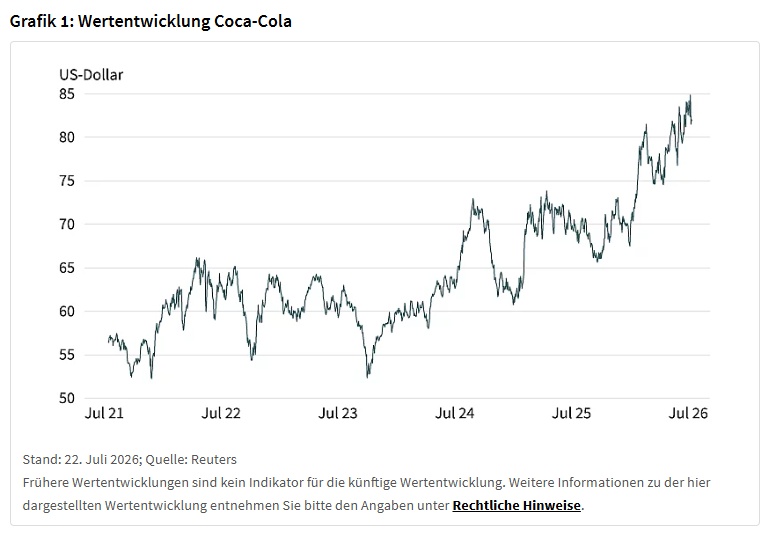
$KO (+0,2%) has, in some respects, reinvented itself in recent years. Instead of bottling its own products, the company now primarily sells concentrates and brand licenses (with independent partners handling the capital-intensive production). This “asset-light” model ensures high margins and explains why the company continues to grow even in a challenging consumer climate.
In the first quarter of 2026, organic revenue rose by 10 percent, significantly more than expected. Notably, this growth came primarily from volume rather than just price increases. The earnings per share forecast was raised accordingly.
Growth areas such as Energy—through the stake in$MNST (+0,2%) or protein milk with Fairlife complement the traditional business in competition with $PEP (+0,16%) ; however, most of the major brands with over a billion in revenue stem from the company’s own development.
However, one should not overlook a tax dispute with the U.S. Internal Revenue Service (IRS): up to $20 billion is at stake, and $6 billion has already been paid. Added to this is a leadership change in the important North American division.
👉 The full analysis is available in the verlinkten Artikel.
This article is part of an advertising partnership with Société Générale