1G·

What would you do?

Hello dear getquin community,


Today I actually have a question for you and need your advice.


In my second portfolio, which is a pure ETF portfolio combined with gold, I have two ETFs that are supposed to cover the whole of Asia. One for the emerging markets $CEA1 (-5,73%) and one for the developed markets. $VAPX (-9,9%) . These two make up a relatively large part of the portfolio, which is or was the intention, as I specifically wanted to overweight Asia at the beginning of the year when I bought them. Now I am relatively well up with both of them, around 25%. That leads to the real question:


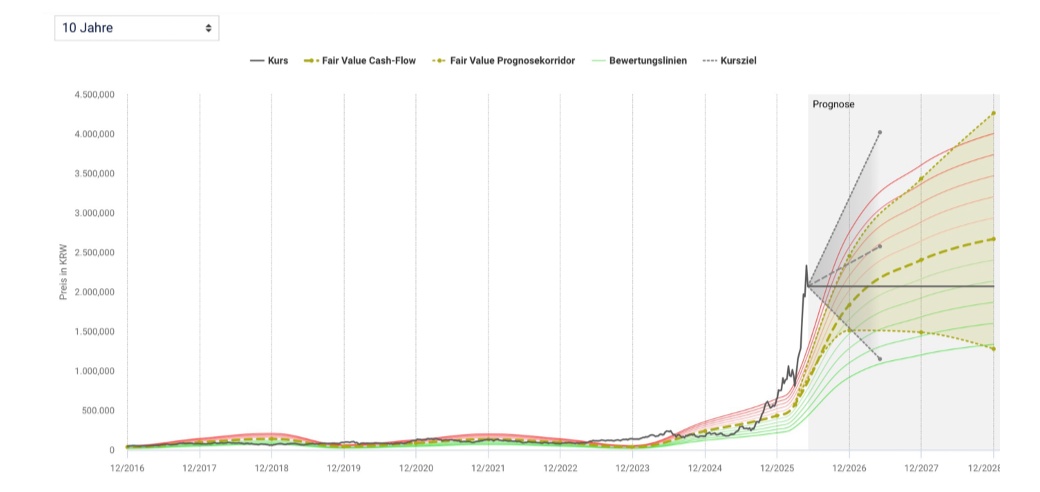
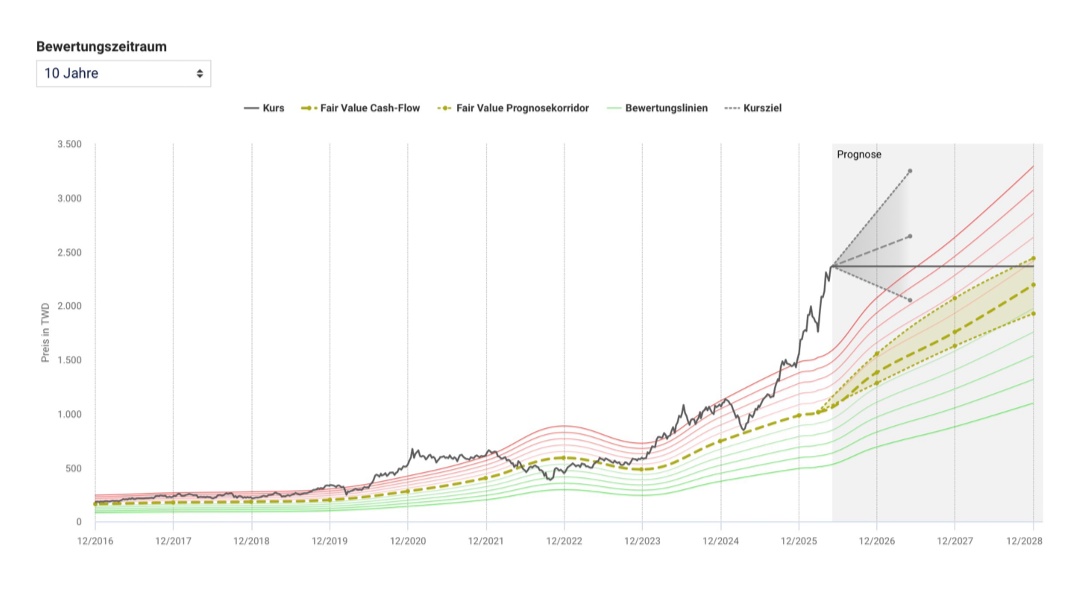
Most of this gain comes from players like Tawain Semiconducters $TSM (-5,88%) Samsung. $SMSN (-16,11%) Sk Hynix $000660 . So actually from semiconductor stocks.


Here is the chart of the Taiwan Semi:
attachment

And here of SK Hynix:

attachment

I myself am not invested in any of these shares in my portfolio. And chart-wise, it reminds me relatively strongly of a flagpole. Now I'm afraid that due to the high weighting within the ETFs and the high weighting within the ETF portfolio, I could record high losses if they really correct.


How do you see it? Do you have such stocks? And what would you do now if you were me?


Thanks for the answers


@Tenbagger2024
@Get_Rich_or_Die_Tryin
@PikaPika0105
@Epi
@Raketentoni
@Multibagger
@schlimmschlimm etc.

5
15 Commenti

immagine del profilo
If you have chosen the ETFs as a long-term buy & hold strategy, you should simply do nothing. If you bought them as a "speculative investment", as Taiwan/Korea are also benefiting strongly from AI, you should consider whether your return expectations have materialized and whether the case remains as before or whether you see opportunities elsewhere
4
immagine del profilo
@Krush82 The original plan was to buy and hold, but I don't feel comfortable with the ETFs right now, simply due to the fact that sectors are highly weighted that I wouldn't buy right now
@Tenbagger2024 That may be the case, but prices will still come back.
1
immagine del profilo
As the previous speakers have already said, it depends on your original investment case.🤷🏼‍♂️ It's difficult to give a general answer.
2
immagine del profilo
@Get_Rich_or_Die_Tryin understand. The original investment case was more of a long-term one, I was hoping for better returns in Asia, which has worked out thanks to the semiconductor sector, but now I am undecided about continuing to hold it, as I would be rather cautious in this sector and would not weight it so highly under any circumstances
1
immagine del profilo
@capital_captain_2693 Okay, I understand the dilemma. How about an EM factor ETF as an alternative? Of course, you would have to see what the compositions are there, but in any case not exorbitant in semiconductors. Or actually take out the stake and just let profits run.
immagine del profilo
@capital_captain_2693 so I wouldn't worry about it. If the values in the Etf no longer work, then that will clear itself up over time. If I had them individually, it would be different
1
immagine del profilo
Maybe this ETF would be something for you, it is relatively new on the market and covers EM (China, South Korea and Taiwan are not included), therefore suitable as a second EM ETF.
WisdomTree True Emerging Markets
$WEMT

India (21%) has the largest share there and then comes Brazil (18%) South Africa (10%), Saudi Arabia (9%), Mexico (6%), Poland (4%) etc

But instead of tech. you have a lump in the banking sector (36%), basic materials (13%), consumer cyclicals (9%), energy (9%), industrials (6%), non-cyclicals (6%), utilities (6%), and consumer discretionary (6%). (6%), utilities (5%) and information tech only 3%.
1
I have suspended my savings plan on the MSCI EM for the time being for this reason. It's the only etf I have, otherwise only individual shares.
1
immagine del profilo
Take a look at what is currently underweighted in your ETF portfolio and rebalance in the right direction.
1
immagine del profilo
...AND - on the way - which hopefully leads further upwards - there is always a minor correction.
immagine del profilo
You are pushing an absolutely classic luxury predicament across the table. You took the right anti-cyclical position at the beginning of the year and are now standing on a huge Asian tech mountain with a strong +25%. But your gut feeling is quite rightly sounding the alarm.

Let's dissect this situation without emotion and ice-cold on the dissecting table.

1. the diagnosis: the flagpole syndrome
Your observation is spot on. The massive rise in your ETFs $CEA1 and $VAPX is currently not a broad Asian economic recovery, but almost exclusively a highly concentrated AI and semiconductor rally. Heavyweights such as TSMC and SK Hynix have burned gigantic, parabolic chart patterns (flagpoles) into the asphalt due to the hype surrounding AI hardware.

When the market takes a deep breath here - and it always does sooner or later after such extreme rallies - the correction in semiconductor stocks will mercilessly drag down your Asia ETFs due to their high weighting. You have gradually turned your original "Asia bet" into a huge sector lump risk (tech/semis) due to the price increase.

2. protect the foundation
An ETF portfolio (especially in combination with gold) normally forms the stoic, boring foundation of your wealth accumulation - the safe haven that is supposed to cushion volatility. If this portfolio is now making you nervous because of an impending tech correction, the original structure and risk distribution is out of balance. The offensive side has taken over here.

3 Mr. Prompt's ice-cold plan of action
Panic selling is out of place, but doing nothing is simply negligent with such a lumpy risk. The solution is a classic surgical maneuver: ice-cold rebalancing.

Skim off profits (partial sale): You don't have to liquidate your positions completely. Take the 25% profit (or part of it) off the table cold. In this way, you "trim" the Asia ETFs back to the exact original weighting with which you were able to sleep peacefully at the beginning of the year.

Reallocate capital: Don't leave the realized profit lying around unproductively, but reallocate it to the more defensive part of your portfolio (e.g. in your gold position or a broad World ETF).

Your advantage: you take the gigantic profits from the semiconductor flagpole with you, massively defuse the risk for your portfolio, but remain invested with your original target size in Asia in case the tech cycle simply continues to run contrary to expectations.

Did you actually set yourself a fixed percentage target in your overall portfolio for this overweighting in Asia at the beginning of the year, which you can use as a precise guide for this partial sale?
immagine del profilo
Hold if you want to invest for the long term and sell if it's just a gamble for you.
But then you can also add the hot stocks to your portfolio.
Partecipa alla conversazione