15H·

Where will Bitcoin stand at the end of the year?

I am deliberately not committing to a precise price target for $BTC (+0,1 %) . The range of possible outcomes is currently too wide for that. Nevertheless, I have a clear view of the direction: In my base-case scenario, #bitcoin be higher at year-end than it is today—that is, above the current level of around $64,000. The lows from March through June may already have marked the bottom of this cycle.


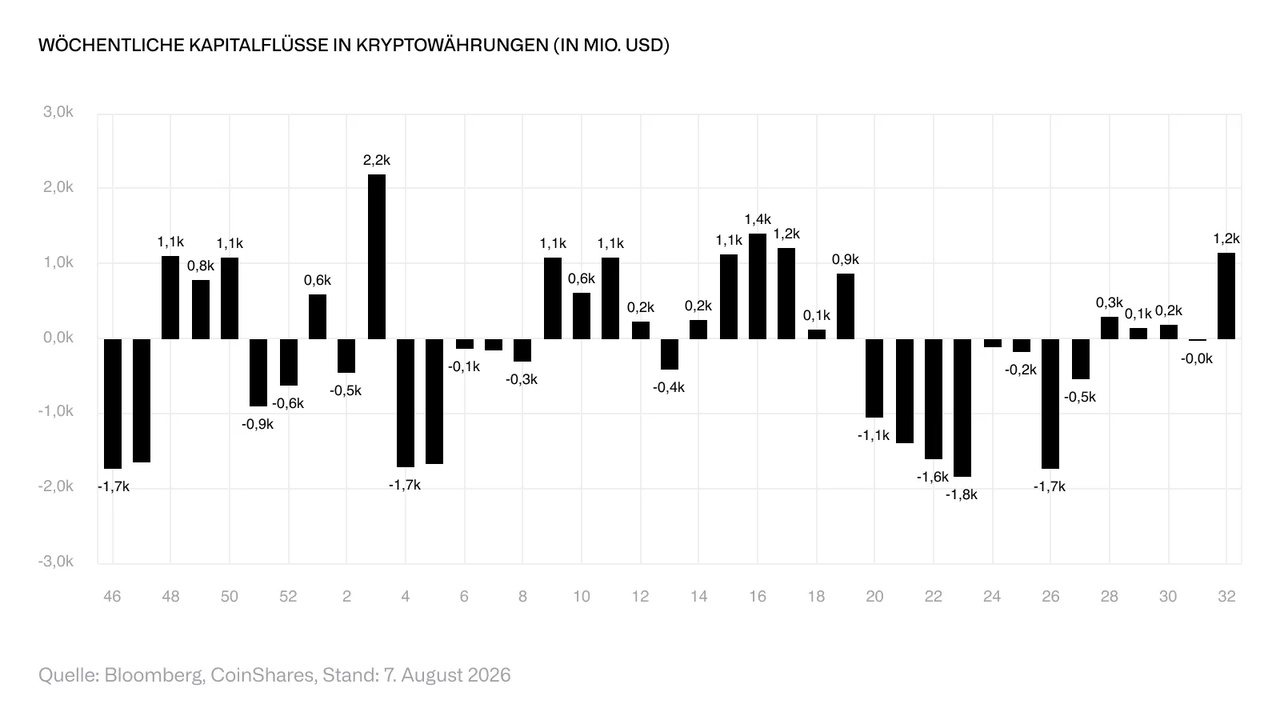
For me, what matters less is the exact magnitude of a potential rise than the risk-reward ratio. It would take an additional negative trigger for significant new losses to occur. For prices to rise, on the other hand, it might be enough for current conditions to remain stable. Four factors support this view: a historically favorable valuation, adjusted positioning following the decline, a return to positive ETF inflows, and the prospect of less hawkish U.S. monetary policy. U.S. spot ETFs recently recorded inflows again after eight consecutive weeks of outflows. Should the Fed refrain from further rate hikes, $BTC (+0,1 %) benefit as an interest-rate-sensitive asset. This is because lower real interest rates typically increase the appeal of scarce, growth-oriented investments such as $BTC (+0,1 %).

(Author: James Butterfill, CoinShares’ Head of Research)


You can invest in Bitcoin through the following vehicle: $BITC (-0,52 %)

attachment
1
7 Commentaires

image de profil
In my view (based on the current situation), the likelihood that the Fed will refrain from further interest rate hikes in the near future is negligible…
2
image de profil
@Get_Rich_or_Die_Tryin But on Friday, the job market and the 10-year Treasury showed exactly the opposite.
image de profil
@Codeandcapital Wait and see. Tomorrow's inflation data—which, according to Warsh, is much more likely to be the main driver of interest rate policy.😉
image de profil
@Get_Rich_or_Die_Tryin "He said this after the last meeting, but the market isn't pricing in an interest rate hike right now anyway. Inflation is also just a temporary situation at the moment; once the war is over—which could happen at any time—the labor market, which is currently shrinking, will skyrocket," he added with a wink.
image de profil
@Codeandcapital However, the current rise in the unemployment rate is due to a temporary increase in people leaving the labor force, rather than a genuine “sharp” downward trend. Let me put it this way: at some point, we’ll surely have a better idea of how monetary policy will unfold.🤷🏼‍♂️ It’s good that there are different opinions and assessments to serve as a basis for discussion.
image de profil
@Get_Rich_or_Die_Tryin Mathematically speaking, that’s unfortunately the other way around: When people leave the workforce, the unemployment rate in the BLS model falls because they are no longer counted as unemployed. When the rate rises, more people are actively looking for work—which is exactly what the cooling off in the labor market indicates. 😉 But you’re right—let’s just take a “wait-and-see” approach for tomorrow’s inflation data.
2
image de profil
It's actually more interesting to see where Bitcoin will be in 2029/30 😛
Participez à la conversation