4J·

Is there a four-year crypto cycle?

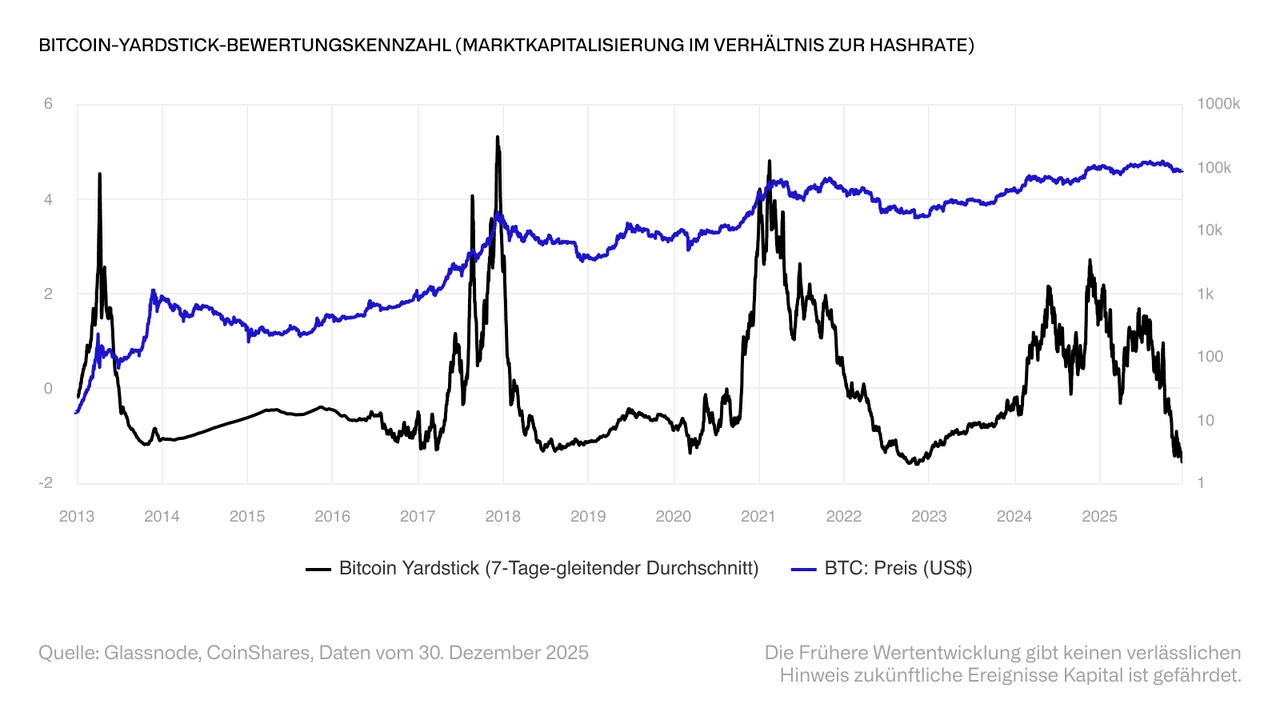
The notion of a four-year crypto cycle is usually associated with Bitcoin halving, a protocol event that reduces new supply at regular intervals. While this mechanism remains important, its direct influence has diminished over time as market liquidity has grown and become increasingly embedded in global capital markets. #bitcoin increasingly embedded in the global capital markets. Today, halving acts less as a mechanical shock and more as a structural reference point for investor behavior.


Positioning and psychology play an important role here. In recent months, strong selling pressure from large holders has weighed on price performance and contributed to a feeling of late-cycle fatigue. This pattern has existed before: A period of distribution typically transitions into a tighter supply environment once the selling pressure subsides. In this sense, halving can continue to coordinate expectations rather than dictate outcomes.

The current cycle also reflects significant changes. Spot Bitcoin ETFs have created a new demand channel, and prices reached new highs for the first time in 2024 ahead of a halving. This change alone suggests that the cycle is evolving rather than disappearing.


Ultimately, the four-year cycle remains a useful framework, but not a rule. Liquidity, positioning and macroeconomic conditions are becoming increasingly crucial and should be considered in conjunction with the halving, not subordinate to it.

$BITC (-1,98 %)

attachment
4
3 Commentaires

image de profil
Thank you for your contribution.

Would you advise an investor who has not yet invested in $BTC to wait until around the middle of the year before investing? ✌🏻
image de profil
Hi @Anderle, thank you for your question. Although we urge a certain degree of caution in the coming quarters, we fundamentally reject the approach of relying on perfect market timing for long-term Bitcoin investors. In our view, the decisive factor is rather the long-term investment potential of an asset that is already presenting itself as a fundamentally stronger competitor in the global monetary system, both today and in the future. Against this backdrop, we believe that a consistent strategy for managing one's own purchase price is much more rational and relevant than the question of the optimal entry point.

In order to reduce the volatility risk and at the same time participate in the long-term development of Bitcoin, we advocate a long-term approach in the form of cost averaging or rebalancing. We are extremely optimistic about the long-term, transformative impact of Bitcoin on the global monetary system and its ongoing adoption process. Therefore, we recommend that investors look beyond short-term price fluctuations and instead focus on the underlying fundamentals and strategic management of their Bitcoin holdings for long-term value creation.
1
image de profil
Participez à la conversation