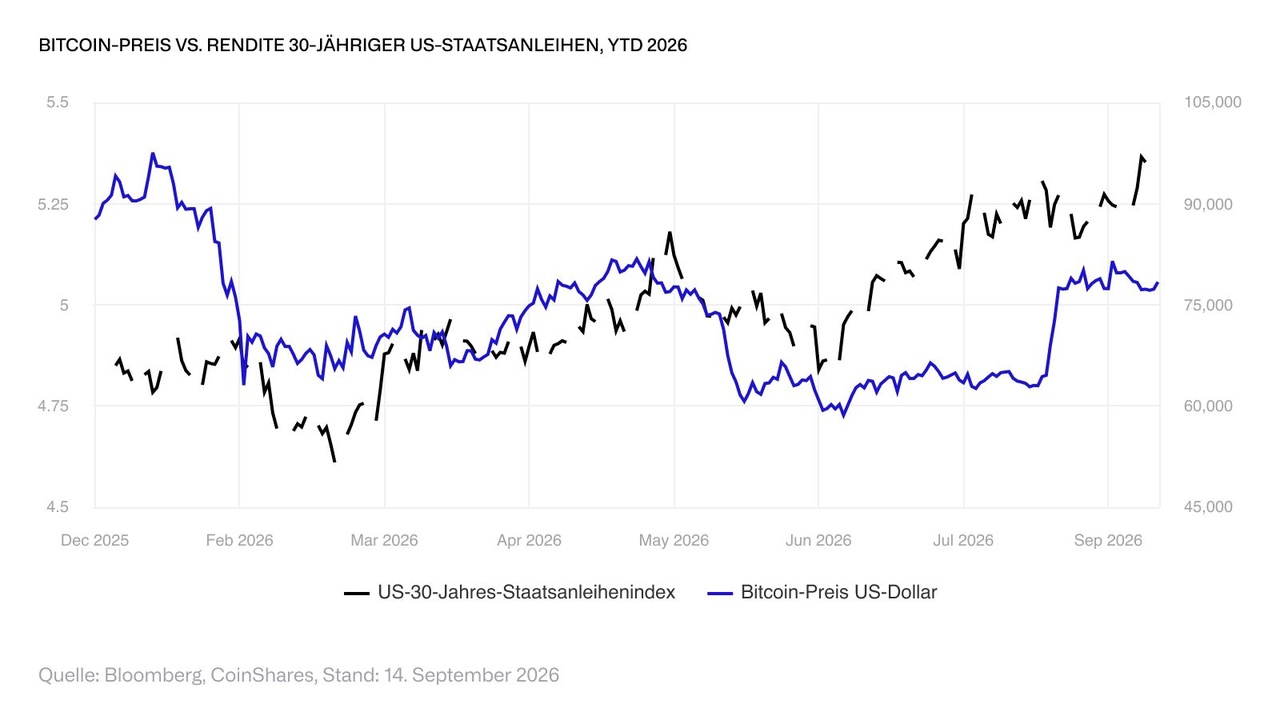
The latest U.S. inflation data is dampening hopes for a rapid easing of monetary policy. In particular, the surprisingly high core inflation rate increases the risk that the Federal Reserve will maintain a restrictive stance for longer or raise interest rates again. For #bitcoin this represents headwinds in the short term: Following inflows of about 1.3 billion U.S. dollars the previous week, investors have withdrawn 243 million U.S. dollars from digital asset investment products so far this week. A sustained break above $80,000 is therefore likely to be more difficult for the time being.
In the medium term, however, the picture could change. The U.S. Treasury is already stepping up its repurchases of long-term government bonds, but has barely managed to lower yields as a result. Persistent inflation and fiscal concerns have so far overshadowed the impact of these purchases. If financing costs remain high, political pressure for a significantly larger buyback program could increase.
Such an intervention would exacerbate concerns about government debt, fiscal dominance, and the dollar’s long-term purchasing power. It is precisely this environment that reinforces the narrative of monetary devaluation, from which scarce assets such as $BTC (+1,05 %) and $GOLD could benefit.