3D·

Deutsche Telekom considers complete merger with US subsidiary T-Mobile

Deutsche Telekom $DTE (+0,51 %) is the largest shareholder of the US subsidiary. The companies have already considered closer cooperation in recent years. Now insiders are reporting an idea.
attachment

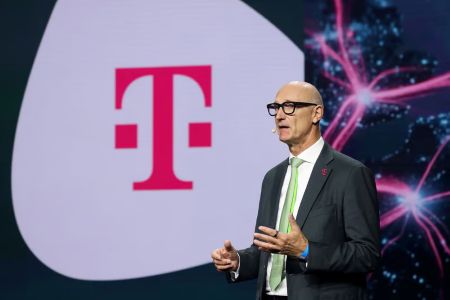
New York. The Deutsche Telekom is considering a complete merger with its US subsidiary T-Mobile US. According to insiders, the Bonn-based telecommunications group has discussed the idea of founding a new holding company that would make a takeover bid for the shares of both Deutschen Telekom and T-Mobile shares.

Deutsche Telekom is already the largest shareholder in T-Mobile with around 53 percent. The move could represent the largest listed merger to date.

A simplified corporate structure owned by the existing investors of both companies is planned, which would bundle the businesses of Deutsche Telekom and T-Mobile in the future. The merged company could then seek a dual listing on a US stock exchange and a major European exchange, according to people familiar with the matter.

The companies have repeatedly examined closer cooperation in recent years. However, it remains to be seen whether this will happen this time. When asked by the news agency Bloomberg neither company commented for the time being.


Source and image: Handelsblatt online from 21.04.2026

30
10 Comentarios

Imagen de perfil
Thanks for the message. At the moment I can't really assess the effects of such a merger.

I think the value of the German share could benefit, as the added value of T-Mobile would then be directly incorporated and visible. There may also be a few smaller synergy effects. On the negative side, however, I see the higher risk for the Group as a whole in terms of liability issues in the US market and the likely loss of the tax deferral on dividend payments from the German share.
6
Imagen de perfil
@NichtRelevant @Dividendenopi

Valid consideration ... I was thinking along similar lines. In fact, I've held the majority of the shares for around €9 (2013/14) and have always been happy about the (at least initially) tax-free dividends. But similar to $FNTN, this can suddenly be completely over with such an action and then, of course, a sale hits tax.

Let's see if we still get a 4%+x dividend yield. It's not that far now.

@ALLEHas anyone had any experience of selling $DTE after a few years of dividends? How is the tax calculated then? e.g. LIFO vs. FIFO? Can you then offset against losses (which ones?)?
1
Imagen de perfil
@DatMischi_22 not with Telekom now, I was invested in $PBB years ago and there were also tax-free dividends, this was done according to the FiFo principle, and for this part according to the difference method, as I had also bought them from this broker at the time and he had all the cost prices. For the part that was sold, cost price minus tax-free dividend = new cost price. The selling price at cost price is a taxable gain if you sell at a profit, if you sell at a loss, it reduces the amount that can be offset against losses. If you no longer have reliable purchase prices with your current broker due to your long investment history and possibly several changes of broker, then the substitute assessment basis comes into play. This is then somewhat more complex and usually leads to incorrect accounting for tax purposes. This can usually be to your disadvantage. You need to look into this specifically. And in your case, when you bought in 2013, you can mentally deduct around €7.50 in dividends from your €9, which means your purchase price for tax purposes is €1.50, and with a share price of €23 today, let's say, that really hits you in terms of tax. If you still have an allowance or something in the loss pot, that part will be offset. You can do this step by step.
Imagen de perfil
This will be a disaster. T-Mobile is a competitive company in the USA and a quasi-monopolistic, quasi-state-owned company in Germany. It will not work to bring both under one roof. It's just like Deutsche Bahn trying to take over a subsidiary in Japan.
3
Imagen de perfil
@Soprano The market seems to see it the same way you do for the time being.
1
Imagen de perfil
@Soprano well, idk how you imagine it, but A DTE already has a proper say in the company's development and B the new CEO is someone who comes from DTE's value concept anyway. Of course, he now has different freedoms and was not a classic telecom before, but basically nothing changes except compliance stuff. If DTE in general were to be more in the USA, that would be very positive in my opinion
Imagen de perfil
@Soprano In addition, globalization in telecom makes sense but is extremely difficult. It would make a lot more sense to operate in every country and thus be able to better position mobile phone masts, better use or lay cables, better distribute overhead or brand awareness, and so on. The thing is that this has never worked in the past and has often been done completely wrong.
Imagen de perfil
@Soprano This actually only leaves the statement like but A the listing has to be mainly in the USA and secondarily in Germany. B more international operations than national and C the C suite must be thin but also nationally tailored. What should not be the case is that Germans rule the US market and then carry the culture with them. The same applies the other way around. There is little point in bringing America to Greece if you then only bump up against politics.
Imagen de perfil
@topicswithhead The fact that TMUS has performed so well so far was a surprise to many. Because Telekom actually has no idea how to survive in a free market. But the secret of its success was that TMUS was not managed from Bonn and that the people there really had a plan for the USA.

What is supposed to happen now sounds like a merging of processes because otherwise what would be the point of the merger? And even if not, it will only be a matter of time before some UB intern recognizes the "potential for savings by reducing duplicate structures".

What then follows is the same thing that happened to Walmart Germany. Some people from the ivory tower at headquarters think they know how everything is right and make decisions for a business they don't understand.

So even if only the payroll accounting for the USA and Germany is done by the same clerk, there will be problems.
Imagen de perfil
@Soprano well, again, I'm not talking to you now, I just meant that it makes sense to go more in the direction of the USA. At the same time, there is now a chance to reduce bureaucracy, not just underneath it. DTE actually had a lot of influence on what happened in the USA, it wasn't really a do-it-yourself thing. Luck is part of it, of course. Regardless of that, I hardly see how that could work. The federal government has so much to do with DTE, it's hard to imagine them getting involved. Above all, it would make more sense to have the main listing in the USA and the secondary listing on Euronext. Then Germany would lose twice.
1
Únase a la conversación