Hello, everyone,
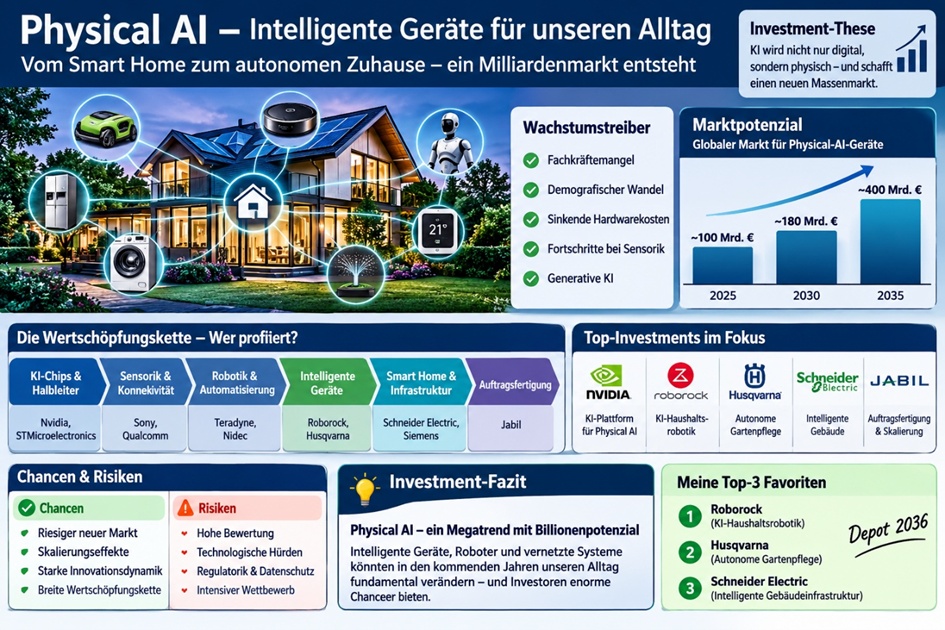
The next AI revolution isn’t just happening in data centers—it’s increasingly taking place in our everyday lives: in the kitchen, the living room, the garage, and the backyard.
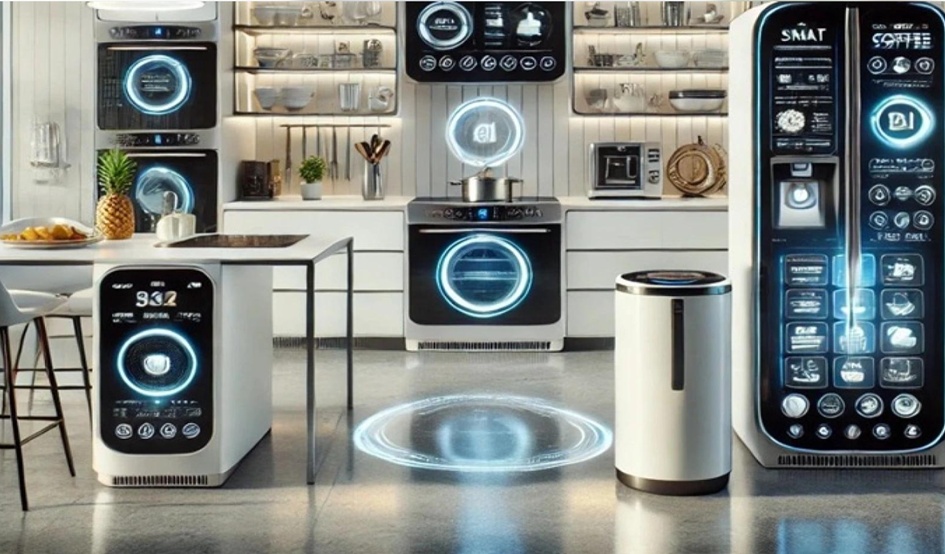
1. What AI-enabled everyday devices are already available?
We need to distinguish between traditional smart-home technology and true AI.
A device with Wi-Fi and app control isn’t necessarily an AI device. It gets interesting when it perceives its environment, learns from it, makes decisions, and acts independently.
Here are a few examples:
Product Category
AI Application
Stage of Development
Lawn mowers:
Obstacle detection, autonomous navigation
Already market-ready
Vacuum cleaners:
Object recognition, room recognition, autonomous cleaning
Already market-ready
Refrigerators:
Food recognition, inventory management
First applications
Ovens:
Food recognition, automatic adjustment of cooking time
First applications
Washing machines:
Load recognition, optimization of wash cycles
Already available
Coffee makers:
Personalized flavor profiles, voice control
Already available
Irrigation:
Soil moisture, weather data, plant needs
Already available
Pool robots:
Mapping, obstacle detection, autonomous cleaning
Already available
Window-cleaning robots:
Object recognition and autonomous navigation
Already available
Household robots:
Grasping, sorting, and transporting objects
Still in the early stages of development
The key development: Individual smart devices are increasingly becoming systems that communicate with one another.
2. Which companies are leading the way?
I would categorize the companies into five investment areas.
A. Home Appliances and Smart Home
Companies
Stock Exchange Listing
AI Focus
Samsung Electronics
AI refrigerators, washing machines, smart home
LG Electronics
AI home appliances, home robotics
Haier Smart Home
Connected home appliances
Midea Group
AI Home Appliances, Robotics
Electrolux
Smart Home Appliances
Of particular interest:
- Samsung Electronics is building a comprehensive AI ecosystem centered around its home appliances.
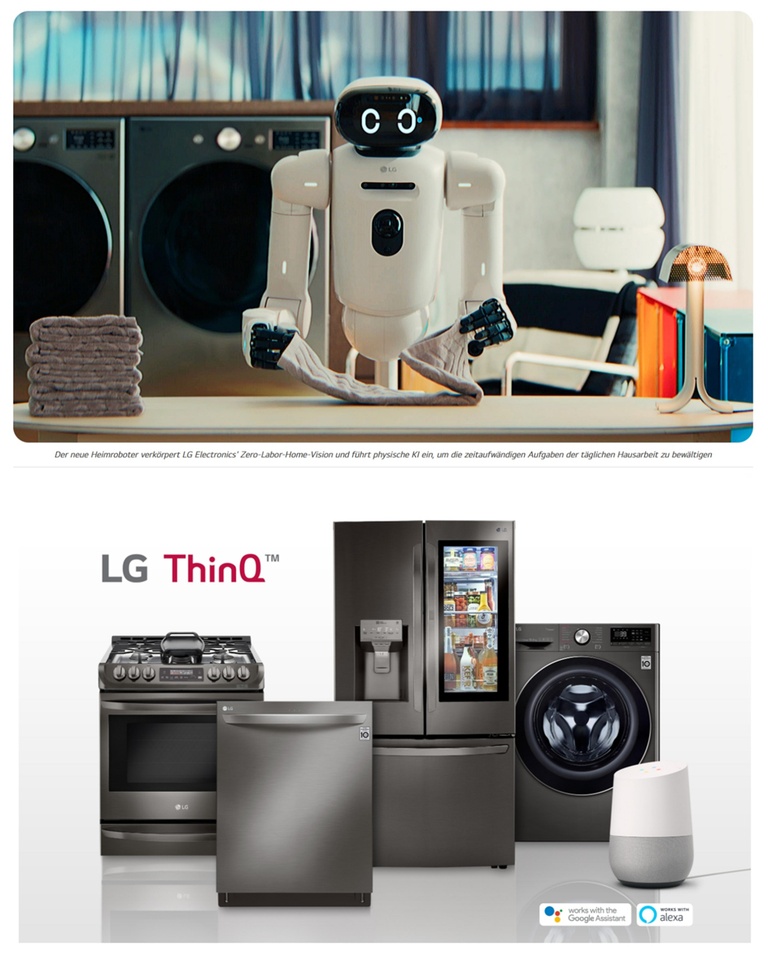
- LG Electronics is working with CLOiD on a home robot designed to handle tasks such as laundry and kitchen chores.
- Midea Group is developing SMART MASTER, an AI-based home ecosystem.
LG CLOiD is particularly exciting: This is no longer just about a smart home appliance, but about a robot that can interact with various devices.
LG ELECTRONICS PRESENTS LG CLOiD HOME ROBOT TO DEMONSTRATE “ZERO LABOR HOME” AT CES 2026
Schneider Electric with Shelly
$SU (+0,95 %) / $SLYG (+0,7 %)
Schneider Electric plays a particularly interesting role here. I would even go so far as to say: The planned acquisition of Shelly is a strategic building block for establishing a comprehensive physical AI and smart home ecosystem.
However, the initial focus is less on household robots and more on the intelligent networking and control of the entire home.
In the long term, this could be a key prerequisite for autonomous household appliances to be able to communicate effectively with one another at all.
Important: The acquisition offer has not yet been finalized. Regulatory approvals and other conditions are still pending. Shelly Group - Investor Relations
Why is Shelly so interesting to Schneider?
Shelly has evolved from a manufacturer of affordable smart-home components into a provider of a software-oriented IoT platform.
Among other things, the company offers:
- Smart switches and relays
- Energy consumption measurement
- Motion and environmental sensors
- Smart outlets
- Lighting control
- Automation systems
- Cloud Services and Software
The key point is the integration of hardware, software, and energy management.
This gives Schneider greater access to the residential housing market.
The truly exciting aspect: the smart home as a platform
This is where I see the connection to our topic of Physical AI.
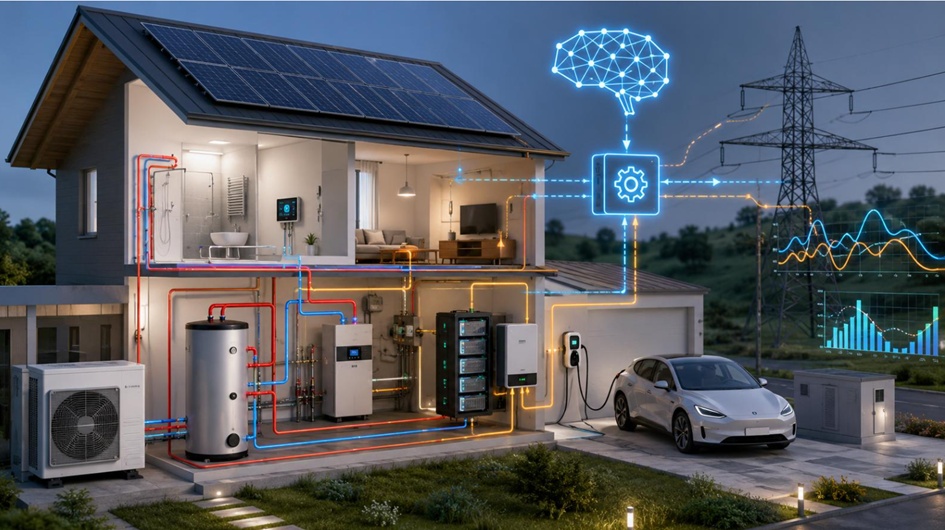
Imagine a house where all devices communicate with one another.
Here’s an example:
In the morning, the system detects:
- The solar panel system is generating electricity.
- The battery storage system is 80% charged.
- The electric car needs power.
- The heat pump needs to heat the hot water tank.
- The washing machine can run automatically during an off-peak time slot.
The system decides on its own how to optimally distribute the energy.
And now comes the next stage of development:
The AI home robot also communicates with the building.
The robotic lawn mower charges automatically when there is sufficient solar power available. The irrigation system takes weather forecasts into account. The vacuum cleaner starts when no one is home.
Schneider could provide the technical infrastructure that connects these devices.
This represents a different positioning than that of a pure household appliance manufacturer.
Tenbagger Capital’s Investment Thesis
From the smart building to the autonomous home.
The next stage of artificial intelligence development is not taking place exclusively in data centers or on software platforms. It is increasingly finding its way into our apartments and homes.
Smart energy distribution, connected home appliances, autonomous yard care, and household robotics are becoming components of a shared ecosystem.
With the planned acquisition of the Shelly Group, Schneider Electric is expanding its presence in the smart home and IoT market. In the long term, this could position the company as a key infrastructure provider for the smart and increasingly autonomous home.
My conclusion: I wouldn’t view Schneider Electric primarily as an AI investment, but rather as a potential infrastructure winner in the physical AI revolution. It is precisely this distinction that is important for evaluating a long-term investment opportunity.
B. Gardening Tools and Autonomous Garden Care
In my view, this is a particularly exciting market.
Company
Stock Exchange Listing
Focus
Husqvarna
Robotic mowers, autonomous lawn care
Deere & Company
Autonomous machines, precision agriculture
Segway-Ninebot
AI-powered robotic mowers, navigation
Dreame Technology
Private
Robotic mowers, household robotics
Mammotion
Private
Autonomous lawn care
STIGA
Private
Robotic lawn care
An interesting development is currently taking place here.
Some of the new robotic lawn mowers no longer require boundary wires. They use:
- Cameras and image recognition
- LiDAR
- GPS and RTK navigation
- AI-based obstacle detection
- Autonomous route planning
This is a real technological leap forward.
Particularly noteworthy: According to IDC, the market for robotic lawn mowers grew by about 64% in 2025. In the first half of 2026, growth was as high as about 76%.
This is concrete evidence that a niche application can evolve into a larger consumer market.
C. Household Robots and Autonomous Cleaning
Companies are emerging here that could, in the long term, build a kind of robotic platform for the home.
Companies
Stock Market Listing
Focus
Roborock
Vacuum cleaners and household robots
Ecovacs Robotics
Window, floor, and garden robots
SharkNinja
$$SN
Home Appliances, Cleaning
Maytronics
Autonomous Pool Cleaning
Nilfisk
Autonomous Professional Cleaning
I find Roborock and Ecovacs particularly interesting.
Why?
Because they already possess key capabilities:
- Sensor technology
- Navigation
- Object recognition
- Software
- Motor control
- Mass production
These technologies can be applied to other areas of the home.
IDC forecasts that global shipments of home cleaning robots will rise from approximately 33 million units in 2025 to about 54 million by 2030. IDC
What role does Nilfisk play?
Nilfisk certainly fits into the “Physical AI” category. I would even classify the company as an interesting specialist in autonomous cleaning robotics.
However, there is one important distinction.
Nilfisk develops professional cleaning machines and autonomous cleaning robots.
One particularly interesting product is the Nilfisk SC25:
- AI-powered obstacle detection
- 3D LiDAR sensors
- Autonomous navigation
- Autonomous mapping of buildings
- Optimization of cleaning routes
This means Nilfisk is already operating in the field of Physical AI. nilfisk.com
In addition, the company has a partnership with robotics specialist LionsBot. nilfisk.com
Investment Outlook
Nilfisk is targeting a particularly interesting market: the automation of cleaning tasks in airports, hospitals, shopping centers, offices, and industrial facilities.
The shortage of skilled workers and rising labor costs could drive demand for autonomous cleaning systems in the long term.
4. Important Note for Investors
Nilfisk was acquired by the German Freudenberg Group in 2026.
- Acquisition completed: April 15, 2026.
- Delisting: May 12, 2026.
- Nilfisk is no longer publicly traded. nilfisk.com
A direct investment in the stock via ISIN DK0060907293 is therefore no longer possible.
My Conclusion
Nilfisk is a good example of how Physical AI has long since moved beyond humanoid robots.
I would classify Nilfisk as a specialist in autonomous B2B cleaning robotics.
D. The Next Generation: AI Robots in the Home
This could become the largest market in the long term.
Imagine:
A household robot can:
- Unload the dishwasher.
- Sort laundry.
- Put away groceries.
- Pick up objects.
- Water plants.
- Prepare meals.
- Taking care of pets. (@Dividendenopi )
However, the technology is not yet advanced enough to perform these tasks reliably and cost-effectively in a typical household.
Companies of interest:
Tesla
Optimus
UBTECH Robotics
Walking robots
Xiaomi
Smart Home and Robotics
LG Electronics
CLOiD
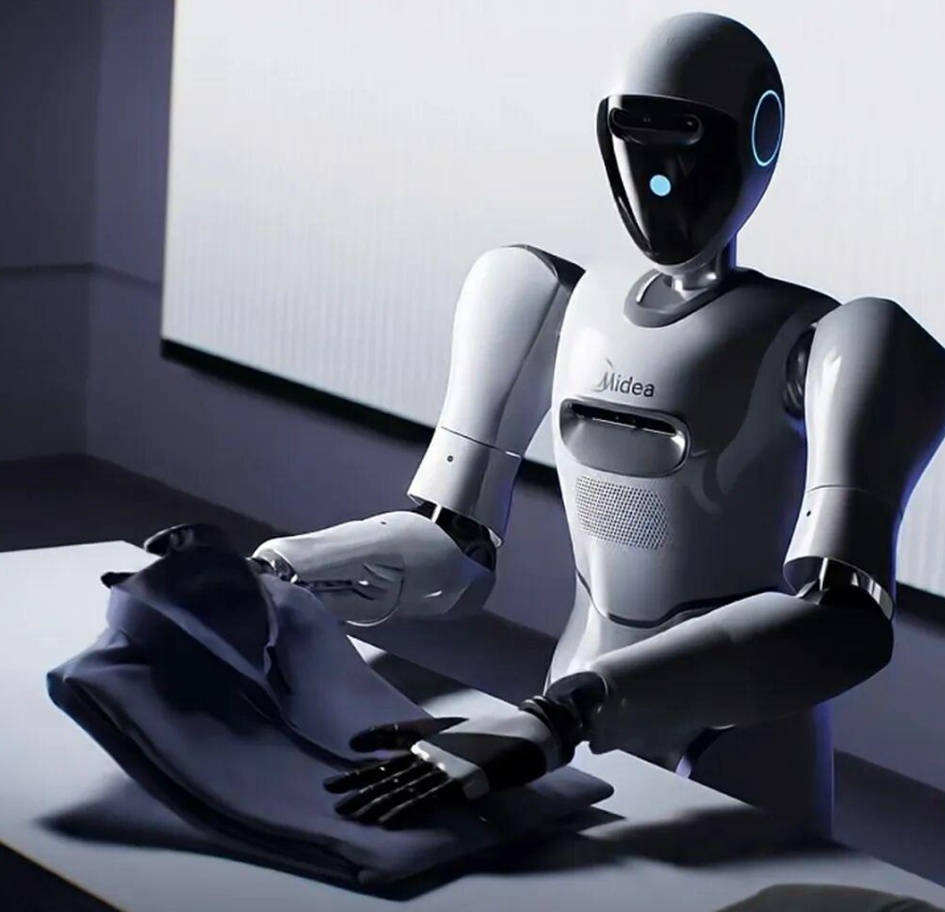
Midea Group
Home Robotics
Here, however, I would distinguish between products already on the market and visions of the future.
3. Who stands to gain the most from this development?
This is particularly important for a long-term investment strategy.
The manufacturer of the finished household appliance isn’t necessarily the biggest winner.
I would break down the value chain as follows:
Sector
Company
Significance
AI chips
Nvidia
$NVDA (-0,41 %)
Computing Power and AI Platform
Processors
Qualcomm $QCOM (+5,1 %)
Edge AI and Smart Devices
Sensors
Sony $6758 (-0,2 %)
Cameras and Image Sensors
Sensor Technology
STMicroelectronics $STMPA (+2,91 %)
Sensors and Microcontrollers
Semiconductors
NXP $NXPI (+2,39 %)
Control and Edge Computing
Robotics
Teradyne $TER (+3,57 %)
Robotics Technology
Drives
Nidec
$6594 (+2,02 %)
Motors and Drive Technology
Smart Home
Samsung $SMSN (+5,49 %)
Device Ecosystem
Home Robotics
Roborock $688169
Ready-to-Use Autonomous Products
Garden Robotics
Husqvarna $HUSQ A (+1,57 %)
Autonomous Lawn Care
Contract Manufacturing
Jabil
$JBL (+3,45 %)
Industrial Scaling
Humanoids
Agility $CCXI
Industrial Applications
My Investment Rationale:
If millions of households own autonomous devices in the future, the demand for the following will increase:
AI processors.
Cameras and sensors.
High-performance motors.
Batteries and energy management.
Software and connectivity.
Robotics and navigation.
This is a much larger value chain than simply selling a robotic lawn mower.
Jabil’s role $JBL (+3,45 %)
I see Jabil as an industrial enabler of the Physical AI revolution—that is, as a contract manufacturer working behind the scenes.
While companies like Schneider Electric provide the smart building infrastructure and Roborock or Husqvarna develop the finished autonomous devices, Jabil could benefit from the increasing volume of mass production.
Jabil’s Role
- Electronics manufacturing: Production of complex control boards and electronics.
- Sensors & Connectivity: Integration of sensors, communication modules, and control systems.
- Robotics: Manufacturing and integration of electromechanical components.
- Scaling: Transition of new AI devices from prototype to industrial mass production.
- Supply Chain: Global procurement and manufacturing networks.
My Investment Thesis
Jabil could benefit indirectly if Physical AI evolves from a technology trend into a mass market.
This is because millions of smart home appliances, garden robots, and autonomous systems must not only be developed but also produced cost-effectively and in large volumes.
Jabil doesn’t necessarily profit from the most successful brand, but rather from the growing demand for industrial manufacturing.
This makes Jabil an interesting investment in the supply chain and for scaling within the Physical AI sector.
Agility Robotics $CCXI
– A Speculative Pure Play on Physical AI
Agility Robotics is an exceptionally interesting candidate for the future theme Physical AI. The U.S. company is developing, with Digit , a humanoid robot that is not primarily designed for household use, but rather, initially, for logistics, warehousing, and industrial applications.
Investment Thesis
- Application Areas: Transportation, order picking, and material handling in logistics centers.
- Technology: Humanoid robotics, AI-powered motion control, and autonomous navigation.
- Market Potential: A shortage of skilled workers and the push toward automation could drive demand in the long term.
- Scaling: With RoboFab, Agility is building its own production infrastructure for humanoid robots.
- Customer potential: Logistics companies and industrial manufacturing facilities.
Risk Factor
Assessment
Profitability: Not yet achieved
Capital requirements: High
Technological development: Challenging
Mass production: Yet to be proven
Competition: Very intense
Commercialization: Still in an early phase
Why the company is interesting
The key advantage could be that Digit is designed for existing work environments. In the future, humanoid robots could utilize existing workstations, transport routes, and workflows without requiring the complete restructuring of factories
My assessment:
Agility Robotics would be, in my view, a highly speculative future investment candidate. The company offers access to a potentially enormous market, but is still in a phase where technological breakthroughs, customer acceptance, and economic scalability have yet to be proven.
4. Could this become a true mass market?
I see five key drivers for this.
Growth Drivers / Why They Matter
Skilled Labor Shortage: Automation is becoming more attractive
Demographic Change: Household assistance is gaining importance
Falling Hardware Costs: AI devices are becoming more affordable
Advances in sensor technology: Devices can better understand their environment
Generative AI: Natural language control becomes possible
However, there are also obstacles:
- Initial costs
- Data protection
- Reliability
- Repair costs
- Security concerns
- Compatibility across different manufacturers
A key point: Consumers won’t buy a new home appliance just because it has AI. They’ll buy it if it actually saves them work or money.
This is also confirmed by NIQ’s market research: The benefits of convenience, performance, and energy savings are more important than the “AI” label. NIQ
5. My Investment Assessment for the 2036 Portfolio
I would definitely consider this topic a new long-term investment trend.
I find three areas particularly interesting:
Investment Sector
Companies
Investment Perspective
Autonomous Garden Care:
Husqvarna, Segway-Ninebot
Growing robotics market
Home Robotics:
Roborock, Ecovacs
Scalable consumer products
AI Infrastructure:
Nvidia, Qualcomm, STMicroelectronics
Companies benefiting from rising demand for AI hardware
Home ecosystems:
Samsung, LG, Midea
Integration of various devices
Robotics technology:
Teradyne, Nidec
Components and automation
There are three companies I would take a closer look at:
1. Roborock
A company that is already incorporating AI, sensor technology, navigation, and home robotics into its products. Its expansion from vacuum cleaners to other autonomous home appliances is particularly interesting.
2. Husqvarna
An established provider with a strong position in robotic lawn mowers. The transition from traditional gardening tools to autonomous systems is a long-term growth driver.
3. LG Electronics
Particularly interesting due to its combination of home appliances, a smart-home platform, and its own line of home robotics.
6. A theory I find particularly exciting
Today, we talk a lot about the first and second waves of AI:
- First wave: data centers, GPUs, memory, and networking technology.
- Second wave: Monetization of AI through software and applications.
- Next wave: Physical AI—AI takes on tasks in the real world.
Physical AI could bring AI out from behind the screen and into our everyday lives.
And this is precisely where a huge new consumer market could emerge.
An interesting thought for the 2036 portfolio: While billions are being invested in data centers today, in a few years billions of household appliances with AI functionality could be sold.
That would be a completely new source of demand for semiconductors, sensors, motors, batteries, and robotics.
My recommendation: I’m going to turn this into a separate research topic titled “Physical AI – The Intelligent Automation of Our Everyday Lives.” I’ll be taking a closer look, in particular, at publicly traded specialists in home and garden robotics.
My dear readers, would you like to see company profiles on this topic?