5H·

Freenet now pays my Freenet HD fees

As I like to buy shares in companies whose products I also use personally (then you really understand the business model), Freenet $FNTN (+2.71%) has been on my watch list for some time. As a user of DVB-T2 terrestrial television, I pay €9.49 a month to Freenet to receive HD programs. It therefore makes sense to recoup these fees through the dividends. After all, Freenet has announced a dividend of €2.07 and intends to maintain this for at least the next few years.

So the calculation was clear: €9.49*12=€114 in fees per year. 60 shares make €124 in dividends per year.


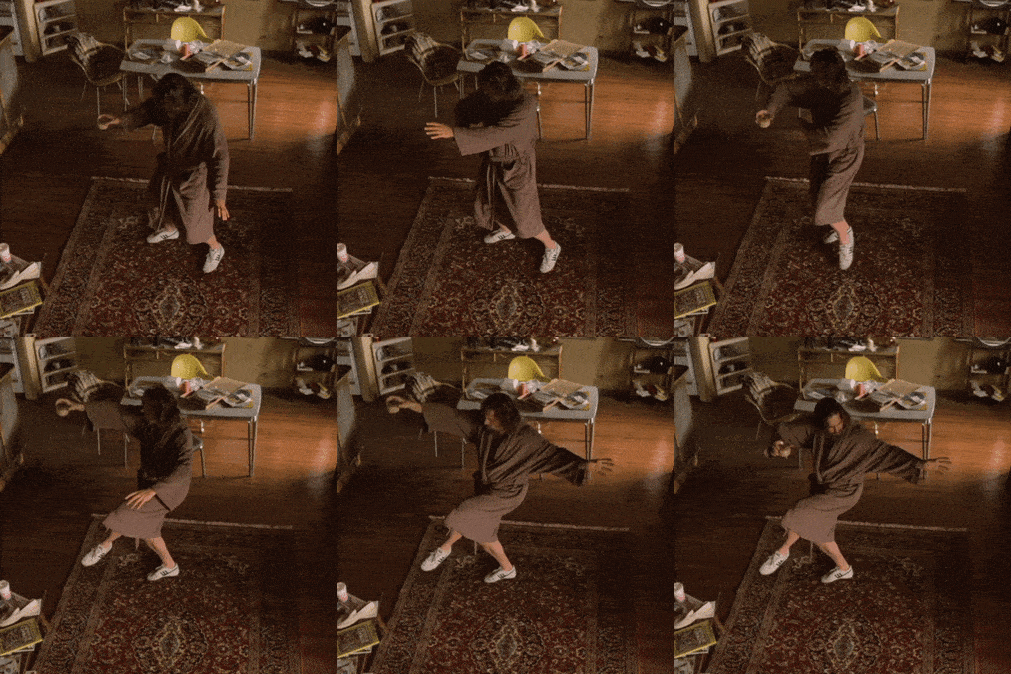
And if my everyday things pay for themselves, that's totally in line with my dudesque lifestyle...
attachment
26.02
FreeNet logo
Bought x60 at €27.00
€1,620.00
10
9 Comments

profile image
Did you buy too little or is Freenet tax-free? 😅
1
profile image
@GoDividend he has received the new customer bonus😂
profile image
@GoDividend If Freenet pays in May, I won't have exhausted my allowance yet...😬
profile image
@Dividenden-Penner freenet dividends are tax-free or gross = net and are only offset when sold
1
profile image
@Alpalaka Not anymore. The full tax has been due since 2026.
profile image
Well, is not exactly paying for itself. The ex-dividend drop will be part of your 1620€. In other words, a share of your 1620€ will be monetized to pay your subscription, the rest will stat with the stock. So, Indeed, you had to block 1620€ in order to have your subscription paid. I don't know, that is expensive choice.
1
profile image
@GiCi Well, accordingly to your logic I have now every month 9,49€ of free cash to invest.😬
profile image
@Dividenden-Penner Indeed. But those are already a "slice" of your 1620€. By the way, I am not criticizing and see the point of having cash flow to cover expenses directly from the source of those expenses. I Just have the feeling that people misunderstand dividendo and think they are money coming "out of thin air".
2
profile image
Your train of thought is captivating. Unfortunately, it's also a trap.
Essentially, you are saving away your capital growth and thus foregoing the compound interest effect. The 124€pa today is 1850€ in 40 years at 7%pa.
Join the conversation