
Hi everyone,
The market currently features several formerly well-known, high-quality companies that are trading 75% to 80% below their all-time highs. But not every cheap stock is a bargain.
I’ve taken a fundamental look at three well-known turnaround stocks. I’ll present two of them in detail here in this post. Which of the third candidate and what my personal overall conclusion is, you’ll find out in the video.
1. PayPal Holdings Inc. ($PYPL (+0.14%)
)
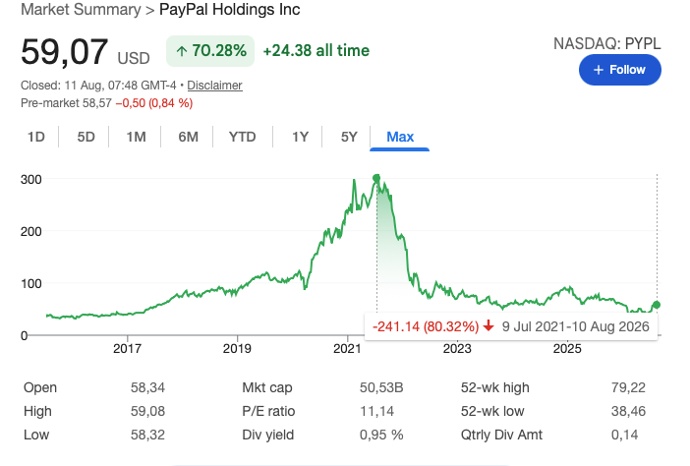
PayPal is one of the hardest-hit Big Tech and fintech stocks of recent years. While the market has primarily punished the company for its slowing user growth and competitive pressure from Apple Pay and Google Pay, a closer look at its margins and cash flow reveals a more nuanced picture.
Key metrics:
- Current price: ~$59.00 (-80% from all-time high)
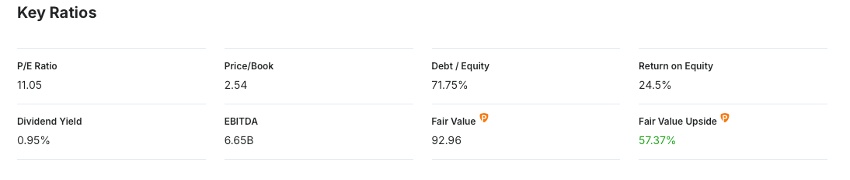
- P/E ratio (TTM): 11.05 (industry average: ~29.35)
- Return on Equity (ROE): 24.5%
- Fair Value (InvestingPro): $92.96 (+57.37% upside potential)
- Revenue Growth: From $15.4 billion (2018) to over $33 billion projected for 2025/2026
Why the market is skeptical:
The bears’ main criticism concerns transaction margins. For years, it was primarily the lower-margin, unbranded payment processing business (Braintree) that grew, while the highly profitable Branded Checkout (the classic PayPal button) lost market share to Apple Pay.
The turnaround catalyst:
Under the leadership of CEO Alex Chriss, PayPal has launched a clear strategy:
Margins over volume at Braintree: Unprofitable merchant contracts were renegotiated or terminated (“Price-to-Value”), which, while dampening pure transaction volume, stabilizes the transaction margin in absolute dollar terms and allows it to grow again.
Monetization of Venmo: "Pay with Venmo" is growing at double-digit rates. Increased issuance of Venmo debit cards is driving recurring revenue.
Agile Capital Allocation: PayPal consistently generates over $5 to $6 billion in free cash flow per year. This is used almost entirely to repurchase its own shares. In the last 12 months alone, the number of outstanding shares was reduced by just under 7%, which provides sustained support for earnings per share (EPS).
2. Nike Inc. ($NKE (+0.4%)
)
The sporting goods industry experienced a significant slowdown following the pandemic boom. At Nike, however, this was compounded by internal strategic missteps that weighed heavily on the stock price.
Key metrics:
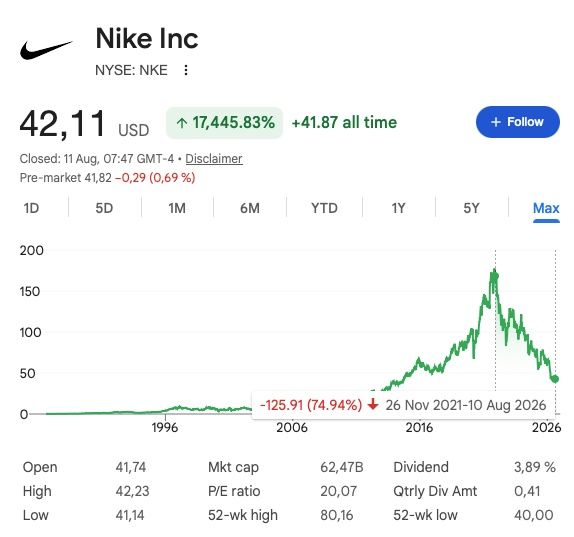
- Current price: ~$42.00 (-75% from all-time high)
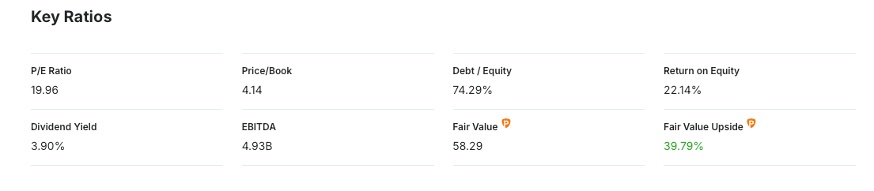
- P/E ratio (TTM): 19.96
- Dividend yield: 3.89% (industry average: 2.27%)
- Dividend History: 24 years of consecutive increases (nearing Dividend Aristocrat status)
- Fair value: $58.29 (+40.00% upside potential)
What Went Wrong:
Under the previous management, Nike relied heavily on its own direct-to-consumer (DTC) channel and partially withdrew from long-standing wholesale partners such as Foot Locker and JD Sports. As a result, competitors like On Running and Hoka filled the vacant shelf space in stores. In addition, declining consumer spending in China and a wave of discount promotions on Nike.com led to an erosion of gross margins and pricing power.
The “Win Now” turnaround under Elliott Hill:
Since the leadership change to Nike veteran Elliott Hill, the company has been changing course:
Return to wholesale: Partnerships with specialty retailers are being reestablished to secure a presence at the point of sale.
Inventory Cleanup & End to Discounts: Nike is reducing aggressive promotions to restore the brand’s exclusivity and, with it, its pricing power.
Focus on performance and innovation: Merging the design and development teams for running and basketball to sell products primarily through athletic innovation rather than pure lifestyle marketing.

The 3rd Stock & Final Conclusion in the Video
The third stock from my analysis is X (see video) Here, a historically low P/E ratio and a discount to book value are offset by significant risk factors: U.S. legal disputes and high net debt.
In the video, I discuss the following in detail:
- The Opportunities and Risks
- Which of the three stocks has the best risk-reward ratio .
- How I personally weight these stocks right now and where it’s worth buying in.
👉 Click here to watch the full video analysis on YouTube:
Which Turnerbund stocks have you already successfully held in your portfolio?


