1D·

My life has changed drastically...

...including when it comes to my “relationship” with money and stocks!


Over the past few weeks and in the coming weeks, I’ve had—and will continue to have—the opportunity to do my social internship at the hospital in the cardiology and radiology departments.


The question that comes to mind is: WHY DON’T THESE PEOPLE EARN MORE?


The workload is demanding on every conceivable level:

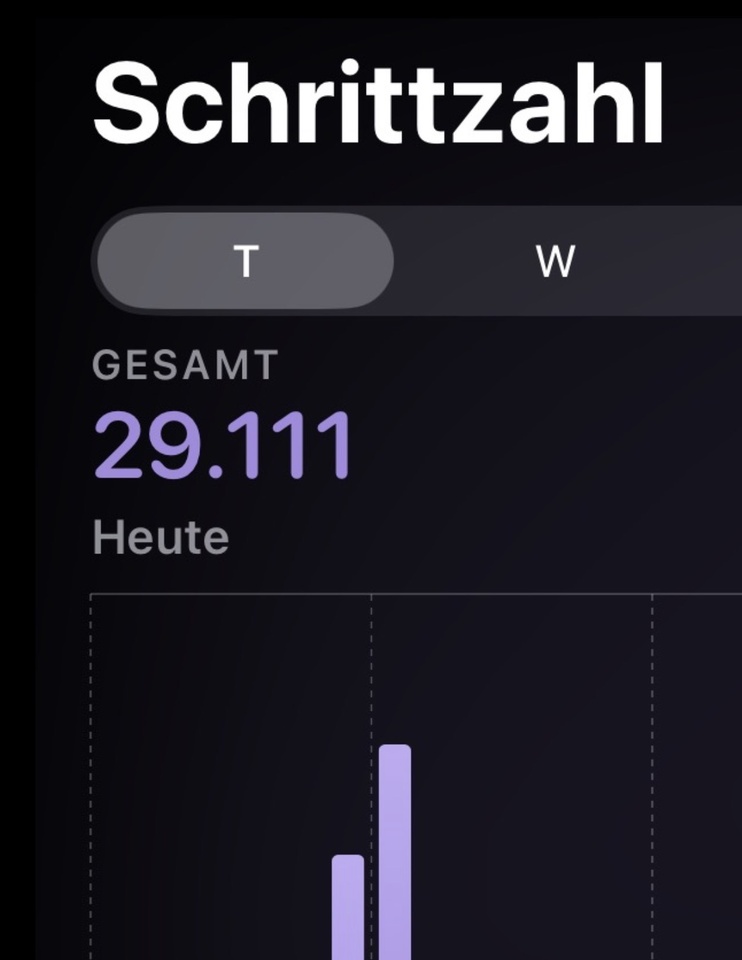
  • Physically—I sometimes walk nearly 30,000 steps on a typical day—not to mention constant shift work and working every day, including holidays
  • Mentally—direct exposure to the dying process (which I’ve unfortunately witnessed firsthand)
  • Financially—ask yourselves why we don’t have that many nurses here—I’ll tell you: as a regular caregiver, you don’t earn enough to feel like you’re hyping the next memecoin ;)


To be honest, the job fulfills me because you can help people directly. The problem is, I’d like to be able to provide for a family someday and lead a stable life—both of which are pretty difficult when you’re always on the go caring for people and saving lives! Sometimes on weekends, up to 30 patients for just 1!!! nurse!


Let that sink in for a moment: 1–2 nurses responsible for 25–30 critically ill patients in the cardiology unit...


But who, for heaven’s sake, wants rising health insurance premiums? No one...


And this insight is really shaping me right now. I’ve hardly looked at my investment portfolio because it just doesn’t feel that important when you see people “passing away” every day. That’s why money—at least I think—has become much less of a priority for me. I’m very grateful to the people who do this tough, underpaid job because money isn’t their top priority in life.


Take a moment to think about what would happen if all caregivers went on strike once a week ✌️


Sorry for this post that isn’t quite as stock-focused as usual—I promise to do better ;)

Best regards, your nurse

attachment
attachment
82
28 Comments

profile image
We generally live in a society where many utterly useless jobs are massively overpaid, while other, truly important jobs sometimes pay only slightly more than the minimum wage.

Just think, for example, of ESG managers, analysts, insurance brokers, or other desk-bound bureaucrats in corporate headquarters. If you could easily cut their numbers in half, no one would even notice.
Try cutting the number of caregivers, tradespeople, emergency responders, or construction workers by 50% instead… you’d have chaos within a week.
Yet the former group earns, on average, significantly more.

This raises the legitimate question: how could such misallocations of resources have occurred?
42
profile image
@FairValue I think it's simply because there's no direct economic benefit to be gained from it, and you can't achieve economies of scale either. But as you said, think about what would happen if there were a week-long strike?

Plus, there are negotiations with the health insurance companies—because money is just tight right now!
1
@FairValue I come from middle management—and I don’t think much of middle management. People here will accuse me of badmouthing my own organization, but it’s precisely this level that’s often filled with people who create problems rather than solve them. In the end, when the economy slows down, cost-cutting starts at the lower levels first—even though they’re the ones who bring in the money and have the best ideas for cutting costs. It’s a tragedy, and it happens over and over again.
6
profile image
@FairValue Yeah, well, I think a lot of those jobs will disappear soon anyway because AI will easily take them over.
1
profile image
@Aelthred I see it exactly the same way you do.
1
@ReneWu I compare middle management to the civil service—a self-perpetuating apparatus. Resourceful people will come up with plenty of reasons why their jobs can't be eliminated through streamlining—and if not, they'll run to the works council.
profile image
Hi and hello from Raketentoni,

I have the utmost respect for you, and now let’s leave the AI out of it for a moment—I’ll write to you the way it should be done: personally.
I think it’s great that you’re seeing this internship through and sharing these honest, raw impressions.
When you’re confronted daily with the process of dying and the absolute limits of the human body, the next memecoin or your portfolio’s daily performance suddenly becomes completely irrelevant. It really grounds you—I know what I’m talking about, because I have family members who work in this field.

To be honest, it’s just sad and frustrating to read about the conditions under which staff in German hospitals have to work. One or two nurses for 30 critically ill cardiology patients? That’s no longer a functioning healthcare system—it’s pure crisis management at the expense of those who keep the whole thing running with their own health.

It’s absolutely justified for you to wonder how anyone is supposed to support a family and lead a stable life under these conditions. But let me tell you: there’s another way.

Here in Denmark, fortunately, the reality is completely different. A look at our Scandinavian system shows how a society can address and value the issue of care:

The staff-to-patient ratio (quality over quantity): Ratios of 1 to 30 simply don’t exist here. The staffing ratios in Danish hospitals are significantly better. Fewer patients per caregiver not only mean more dignified and safer care, but above all, that staff don’t end up in a state of chronic burnout after just three years.

Fair pay & genuine respect: Nurses in Denmark are paid decently and fairly. Strong collective bargaining agreements ensure that people don’t have to choose between a fulfilling, socially vital job and providing financial security for their own families. Furthermore, the hierarchies are extremely flat—doctors and nurses work here as equals.

Tax-Funding Instead of Health Insurance Madness: Our system is funded through taxes. There aren’t dozens of health insurance companies competing against each other and driving hospitals into ruin with flat-rate billing. Healthcare is managed directly by the regions—which takes that perverse, profit-driven pressure off the hospitals.

The fact that money is taking a back seat for you right now is a completely healthy and human reaction to this extreme reality check. But maybe keep this one thought in mind: A stoically and solidly built investment portfolio will later give you exactly the financial independence you need to pursue precisely these kinds of fulfilling jobs—without ever having to worry about providing for your family.

Thanks for this powerful post that goes beyond the bare stock ticker symbols. Hang in there on the ward!

Greetings from Denmark

Toni
7
profile image
@Raketentoni Denmark should really be the model here. But nobody here gets it—that even though travel distances are longer, the chances are better under their system because the staff there is simply more qualified. A very good example of how less can actually be more.
1
profile image
@dirko68 That's right—sure, sometimes you have to drive an hour to get to the nearest MRI, but my wife got an appointment within 8 days.
The dermatologist took 7 weeks because it wasn't an emergency 🤷
profile image
Unfortunately, our system isn't designed to be fair—it's all about efficiency. That's why caregivers who really go the extra mile are often paid poorly, while others rake it in despite contributing little to society. Oscar Wilde’s quote fits perfectly here: A cynic knows the price of everything but the value of nothing.
Just try your whole life to fight against becoming a cynic. ❤️
7
profile image
@Olli68 It's totally inefficient to take care of people after they retire. (This comment may contain a hint of satire.)
profile image
Which hospital were you at? I’m glad you’ve gained a new perspective.

After completing my training, I earned 27,000 € gross. Back then, it was simply impossible to invest more than 400 € a month. Today, 17 years later and after moving abroad, I’m in a much better financial position.

Am I better off professionally in my day-to-day work on the ward? No.

The nursing crisis has been going on for over 30 years. The profession is too socially oriented to go on strike. The system thrives on us “yes-men”—myself included.

Medicine is becoming increasingly modern, and cases are getting more and more complex. Someone who would have died immediately upon receiving a diagnosis ten years ago now, with a bit of luck, faces a long hospital stay and perhaps two additional years of life—often with a critical prognosis.

If I don’t do this job, will someone else do it? That’s exactly the problem: there always has to be someone there. But the main problem with the healthcare system is that hardly anyone cares about it until they or a loved one becomes a patient. Then, more often than not, things can’t happen fast enough; people start cursing, and care becomes a ping-pong ball bouncing back and forth between doctor and patient.

When I’m on the night shift caring for 20 patients on my own, I don’t even have 30 minutes per patient during a 9-hour shift.

Do I love my job? Definitely yes. Nowhere else do you learn more about life than in a hospital. So many people, so many stories, so many fates and professions—you hardly experience that anywhere else.

Of course, there are quiet days, too. We also have fun at work, and sometimes you even get a sincere “thank you.” But there are also those other moments: when a minor dies. When someone passes away completely unexpectedly. When any help comes too late. Or when a person dies alone because no one is left.

On average, I work between 24 and 28 weekends a year and put in 100 to 200 hours of overtime. I drink over 100 liters of Coke a year and countless cups of coffee. Sleep problems have also become part of the job.

Is the job fairly paid? That’s hard to answer. After all, we’re talking about people. What is a human life worth?

Personally, I could do more with more free time than with even more money. Everyone can imagine for themselves just how much my family suffers because of this job. I work on holidays so that—if all goes well—someone else might be able to spend the next holidays with their family.

Will I continue in this profession until retirement? I’ll try. But to be honest, I’m aiming more for early retirement.

@DonkeyInvestor exits the stage
5
profile image
A lot of people always ask, “Why don’t these people earn more money?” Do you want to know why? They earn so little because society isn’t willing to pay them more. How are all these people paid? Through our taxes and social security contributions. Anyone would immediately say, “Yes, of course, they all need to get a lot more money,” but if you then asked them whether they’d be okay with paying 5% more in taxes or social security contributions, they’d all fall silent very quickly. Ultimately, the only ones who can afford to pay more are private clinics and practices, but of course they’re then criticized precisely because they’re private. I think it’s a very difficult issue, and it’s a debate we need to have as a society. It just bothers me how hypocritical this debate often is, because in the end, nobody really wants to pay more out of their own pocket.
3
profile image
@PikaPika0105 To put it simply: We should just tax the super-rich more.
profile image
@Rubirubber I would support lower income tax, no wealth tax, no capital gains tax, and, in exchange, a 70% inheritance tax on non-business assets. Reward performance; tax inheritance. Consistently close tax loopholes. No foundations for hiding money. I would, however, allow the option to invest the 70% in the business (if applicable) or donate it to a reputable, accredited domestic organization. This might increase people’s willingness to pay if they retain a certain degree of self-determination.
1
profile image
It's great that there are a few people here from the nursing field! I'm a healthcare and nursing professional, too 👍👍
2
profile image
The article started out like a classic LinkedIn post, along the lines of
“My child dropped their spoon while eating. Then they kept eating with that same spoon. That taught me a thing or two about business processes and streamlining.”


What are the salaries like where you are? I’ve always thought of nursing this way:
Job: stressful because of shifts, long hours, etc.
Salary: it depends. It’s decent considering it’s a social service job and people in the field are often underpaid. Bad considering the amount of physical stress.

Although I think it depended heavily on the employer, and some of the people I dealt with in nursing were potentially nursing managers or ward managers—or were supposed to become them.

I didn’t think I could handle the job mentally. Sudden deaths wouldn’t be so much of a problem, but gradual deaths—where you can watch as people, young and old, get worse and worse… That’s really tough.
1
profile image
@Koenigmidas enters the room
1
profile image
@DonkeyInvestor I don't think I have any catheters for donkeys, but telemetry and gastroscopy should be an option for you, too—when are you available?
1
profile image
@Klein-Anleger Now. Come over. I'm already naked.
2
profile image
profile image
Well, the chances of earning a good salary in that field aren't too bad. Continuing education is supposed to be the key.
1
profile image
Agree im a care giver for disabled people.On minimum wage ...Had an heart attack 27 years ago ..But i keep going and helping people...Just recently started a portfolio hoping i can retire early to enjoy a bit of my life i have left
profile image
First of all, I’d like to express my personal respect for your outstanding work, which is far too rarely appreciated in our society. The level of stress tolerance and sense of responsibility required in the medical field is certainly immense. Personally—as a former civil service worker—I would also be in favor of its direct reinstatement. It raises awareness of your work and fosters appreciation that, ideally, lasts a lifetime. And it would likely significantly alleviate staffing shortages and reduce the workload in the nursing sector.
profile image
Hey, you really don’t need to apologize for THIS post. I’ve just been through a serious accident myself AND a tragic death in the family, and once again I’ve seen firsthand how everyday life in hospitals works. And what I find hard to understand is how, despite these circumstances, staff can still pour their heart and soul into a job that’s so fundamentally important for social cohesion—without eventually throwing in the towel. Our problem is politics—shaped by privately insured, out-of-touch creatures in an unholy alliance with the privatized, profit-driven operators of the healthcare system, who will stop at nothing to generate the profits they’re required to make. You realize this, at the very latest, when you need an urgent appointment—for a cancer diagnosis or something similar, for example… Public insurance patient… “We can offer you an appointment in three to five months.” Private… “Psst, how about this afternoon?” Questions? I don’t have any more. In the healthcare system, we’re on our way back to the Middle Ages, even if we’re still at a fairly high standard for now. Suggestion… Abolish private insurance; anyone who wants to can get additional coverage on top of mandatory public insurance—EVERYONE pays into the system—and the public insurance is consolidated into ONE company. No one needs 250 health insurance companies, each with its own executive board, all chasing bonuses and profit maximization. But that will never happen to us.
Great article, @Klein-Anleger —well thought out and told from a young person’s perspective. So many true words. I did my civilian service with the Maltese Order over 20 years ago now. Let me put it this way: it really grounded me as a young, “wild” person. Ever since then, I’ve thought a mandatory year of community service for everyone would make perfect sense. There are many good things about our society (yes, yes, there are a thousand problems—I know— but I like living in Germany because I feel safe and I feel the same way about my family, despite all the complaining about current issues), but it doesn’t hurt anyone to see the less pleasant sides of their immediate surroundings—like conditions in nursing homes, social services, workshops for people with disabilities, hospitals, etc.
@Migu11 In 2024/2025, I completed my Federal Volunteer Service in the emergency medical services.

I recently had a conversation with an acquaintance. He had a medical emergency at his workplace. The fire department was the first responder. They did their job and provided initial care.

Because of his role, my acquaintance later joined the response (not to provide medical care). He ended up talking to the firefighters, and they said something like: “It’s going to take a while—the ambulance is coming from a few towns over, from another emergency medical service district, because there aren’t any more available due to the high volume of calls.” (Spoiler: About a 35-minute drive with emergency lights on)

He was surprised that something like this happens and asked me if it was an exceptional case. I had to smile—actually, laugh. No, it’s not an exceptional case—it’s just everyday life. 😂

I still remember the radio conversations with the dispatch center—for example, when you’re sent out as an ambulance to a medical emergency that, based on the initial report, seems to require a bit more resources, and you hear the dispatch center say: “Check it out, give us a status update. If you need anything, I’ll have to work some magic.” 😏

I’ve experienced so many stories over the past year—from beautiful moments to incredibly sad tragedies and accidents, all the way to friendships with former colleagues (now friends). It was an incredibly exhausting year, but I was able to experience so much during that time, learn new things, and further my education. The knowledge and experience I gained have since helped quite a few complete strangers (first responders while hiking, on vacation, ...)

For today’s population, including young people, a year of social service would be a good stepping stone. However, just like in the Bundeswehr, it should be compensated in such a way that one can afford, for example, rent and food—not be “exploited” as is currently the case with about 400 € per month. Our government and we as a society can and should be able to afford this.

In my opinion, everyone who receives any form of financial support here in Germany (whether child benefits, etc.) should be required to complete this service, not just those with German citizenship. After all, other groups of people also readily make use of these social services, including emergency medical services.

This would certainly help foster greater appreciation for medical personnel and all emergency responders (issues such as “gawking,” stealing equipment, verbal abuse, physical altercations, damaging emergency equipment, etc.).
Join the conversation