1D·

Company Profile: IQM Quantum Computers Oyj ($RAAQ / $IQMX)

Europe’s High-Tech Response to the American Quantum Boom 🇪🇺⚡


First off, a big thank you goes out to my buddy @Multibagger .

He recently brought this hot topic to our attention. A promise is a promise, buddy—here’s the no-holds-barred in-depth analysis of Scandinavia’s quantum hope!

$IQMX
$RAAQ (+0.32%)

attachment


1. What the Company Does & Its History


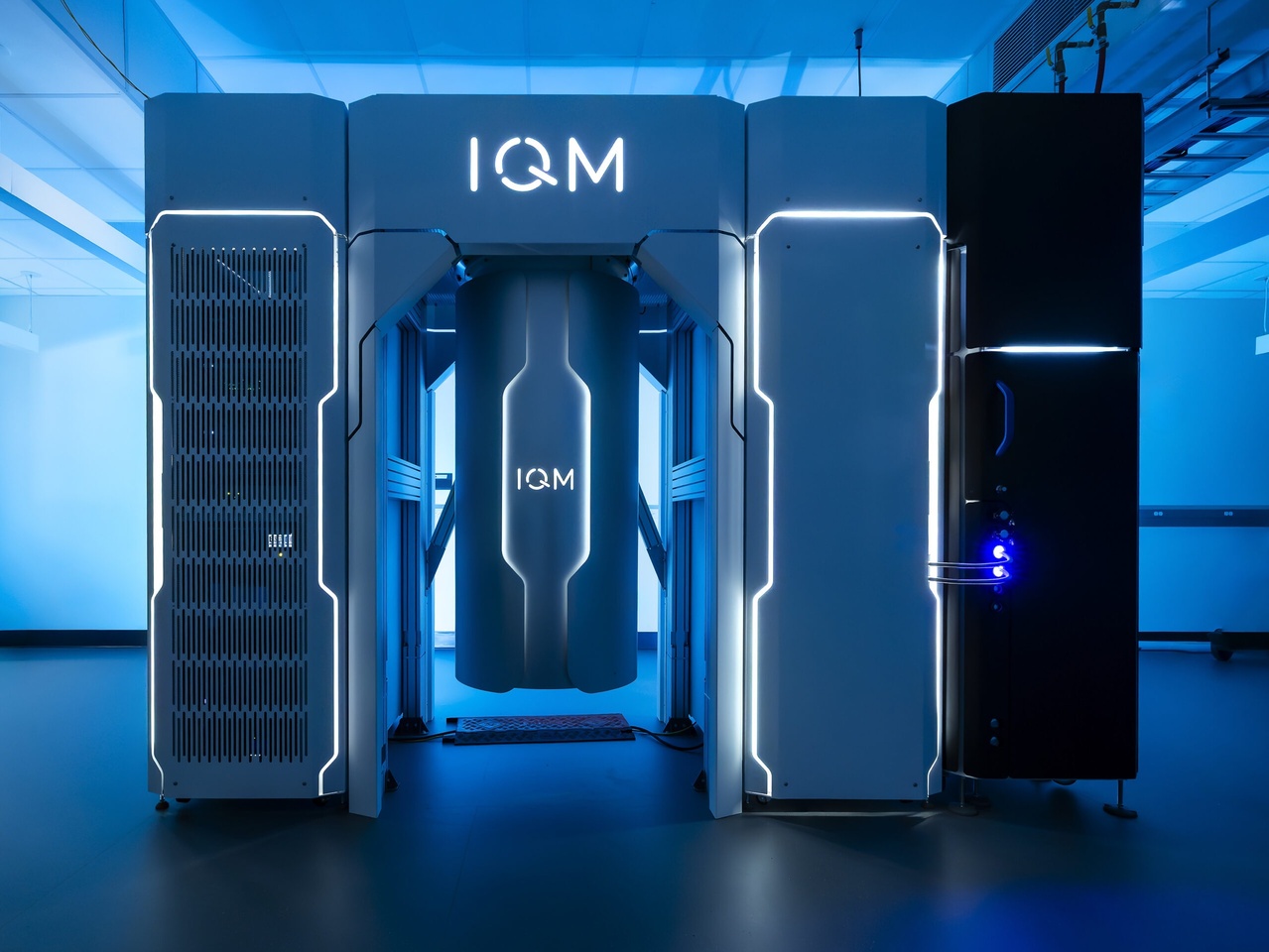
IQM Quantum Computers was founded in 2018/2019 as a spin-off of Aalto University and the Finnish government-funded research center VTT in Espoo. While U.S. heavyweights like IBM and Google primarily work on universal supercomputers, IQM focuses on so-called “application-specific” quantum computers. They connect superconducting qubits directly to custom-built software to solve complex industrial problems (e.g., materials science, chemistry, logistics) more efficiently.


Through its recent merger with the special purpose acquisition company Real Asset Acquisition Corp , the company has become investable for us via a sponsored ADR in the U.S. ($RAAQ) and, in parallel, through a dual listing on its home exchange in Helsinki ($IQMX). This makes IQM the first true European quantum pure play on the stock market.


Addition by @Multibagger (Thanks for that)


I’d like to add one or two more points.

Very important point 1.

The systems are self-contained and completely independent of any remote cloud controlled by third parties.

This is where IQM’s business model comes into play. The company delivers the closed hardware systems directly to its customers’ basements. These so-called on-premises systems operate completely autonomously. There is no connection to a

third-party cloud. A data outflow overseas is physically impossible. This model effectively guarantees IQM a politically protected monopoly in Europe for security-critical tenders.


Foreign competitors are kept out for data protection reasons. 2.) They have cash reserves of €337 million. 3.) They are not resting on their laurels in Europe. Oak Ridge National Laboratory, the U.S. Department of Energy’s largest research laboratory, has ordered a system from the Munich-based company. CEO Goetz aims to have half of the company’s revenue come from Europe and half from the U.S. within five years

. I find the stock extremely exciting from a 3- to 5-year perspective.


2. Key Figures / Data / Facts (as of July 2026)


  • Current Price (ADR): €10.88 (Primary Ticker: RAAQ)
  • 52-week range: €8.22 to €13.18
  • Opening Price: €8.785
  • EBITDA (TTM): $-569,540 (deep in the red, typical for the early hardware phase)
  • Free Cash Flow (TTM): $-224,510 (Strongly negative from operations)
  • Dividend Yield: 0.00%


3. Check against our established formulas


  • Core Quality Formula: Current revenue growth, combined with the lack of operating margins, results in a strongly negative score here. It falls far short of the magic threshold of >25.


  • Cash Flow Quality Formula: Free cash flow stands at approximately -$224,500. Since a quantum computer requires massive CapEx (clean rooms, extreme helium cooling near absolute zero), no positive FCF yield will be generated here for the foreseeable future.


  • Dividend Filter: Zero dividend payout. The focus is 100% on reinvesting research funds.


  • Exclusion Rule:
    Serious violation! Actually, our ironclad rule is: Do not buy story-driven stocks without a clear path to profitability. IQM is the absolute prime example of a pure bet on the future. The fact that we’re invested here breaks the system—but makes the whole thing exciting as an isolated bet for the risky side of the portfolio.

attachment


4. Insights into Future Prospects and Competition


The competition never sleeps: Tech giants (Google, IBM) and U.S. startups (IonQ, Rigetti) have significantly deeper pockets. IQM’s biggest trump card, however, is Europe’s geopolitical and technological sovereignty.


European governments and data centers do not want to route their sensitive data through U.S. or Chinese infrastructure.


This aligns with the breaking news: Just a few days ago, IQM received the official order from the Finnish IT Center for Science (CSC) to integrate a new 50+ qubit system ("IQM Halocene H4") into the European LUMI supercomputer infrastructure by 2027. A massive operational milestone!


https://de.investing.com/news/assorted/iqm-sichert-sich-auftrag-zur-lieferung-eines-quantencomputers-an-die-finnische-lumi-ai-factory-432SI-3553008


5. Analysis of the charts from the past few months


Contrary to the initial visual setback following the IPO, the long-term trend on the getquin chart (Max setting)—which we’ve $RAAQ (+0.32%) taken, absolutely positive. After opening at €8.78, the stock hit a low of €8.22 and has since fought its way up in a steady upward trend to €10.88.


This represents a gain of 23.86% since the IPO. The all-time high of €13.18 is the next technical target once the momentum from the recent news out of Finland takes full effect. $IQMX
$RAAQ (+0.32%)

6. Specific Entry Zones (The Bargain Hunter’s List)


Since the stock remains highly volatile, we’re lying in wait for potential follow-on purchases or initial positions:


  • Limit 1 (Quick Foot in the Door): €10.20 – To capture smaller profit-taking moves following the news.
  • Limit 2 (The Value Safety Net): €8.80 – A test of the historical opening level.
  • Limit 3 (Knockout Pickup): €8.25 – Right at the all-time low, in case the overall market corrects sharply.

attachment


7. Detailed Report: Outlook, Alternative Stocks & Margins


  • Future Viability: Anyone buying IQM today is buying into a venture capital project. Long-term survival depends on whether the company can maintain its technological edge in application-specific systems until commercial adoption by the industry generates substantial revenue.


  • Profitability Outlook: The traditional hardware business (selling quantum computers to universities) has low gross margins. The real potential lies in the “Quantum as a Service” (QaaS) sector—cloud access to the computers. This sector offers the prospect of high-margin software revenue in the long term.


  • Possible Alternatives: Investors looking to diversify risk should consider established supercomputing and AI service providers such as Super Micro Computer or the major hyperscalers (Alphabet/Google), which treat quantum computing as a nice side bet within their multi-billion-dollar balance sheets.


8. Management and Analyst Opinions


The CEO’s vision (Dr. Jan Goetz):

Dr. Jan Goetz, the co-founder and sole CEO since early 2026, is extremely clear about the company’s strategy. He recently explained that IQM was founded from the very beginning for a single purpose: to put working quantum computers into the hands of people who want to use them to solve real-world problems. His motto, in essence, is: “Not someday. Now.” According to Goetz, quantum computing is no longer purely a scientific project but a real industry in which customers own, operate, and build upon advanced quantum computers.


What the Market and Analysts Are Saying (Market Sentiment):

The market views the IPO through the special purpose acquisition company Real Asset Acquisition Corp (RAAQ) with a mix of fascination and justified caution. Observers point out that this so-called SPAC route to the stock market carries certain precedent risks, as SPAC listings are often more volatile and investors have historically suffered losses following a wave of underperformance.

On the other hand, analysts and investors appreciate the hard, operational facts that distinguish IQM from mere cloud-based pipe dreams:


  • Proof of Concept: The company is considered an industry leader and has already sold 23 quantum computers, 18 of which have been delivered—this is the largest publicly known number among select quantum companies.


  • Solid Revenue: For the year 2025, IQM reported audited revenue of 31 million euros (or 36 million U.S. dollars).


  • Financial Strength: As early as March 2026, even before its initial public offering, IQM secured massive financing of 50 million euros from BlackRock. Upon completion of the merger, IQM’s liquidity position is expected to exceed 450 million U.S. dollars thanks to trust funds and additional financing.


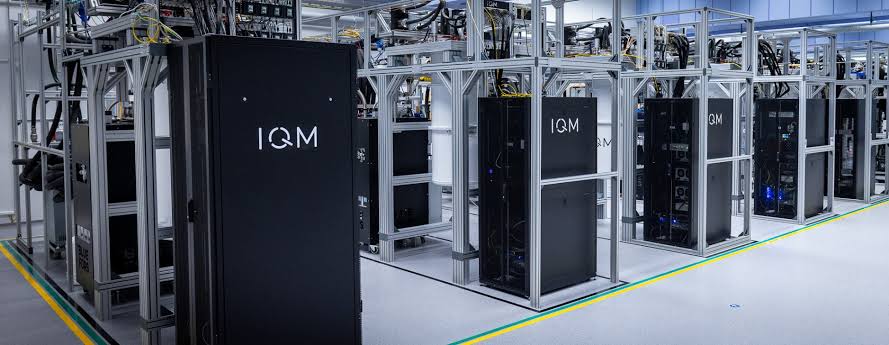
  • Vertical Integration: A major plus for analysts is the business model. IQM controls the entire value chain. It has a vertically integrated model that ranges from its own chip design tools and software platforms to its own quantum chip factory and assembly line. This enables extremely fast innovation cycles.


Side Note: What Does Quantum Computing Achieve, and Why Is European Autonomy So Important?


The technical mechanism in a nutshell:

Classical computers operate with bits that have a state of either 0 or 1. Quantum computers, on the other hand, use so-called “qubits” (IQM relies on superconducting quantum circuits here). Due to quantum mechanical effects such as superposition and entanglement, these qubits can assume an extremely large number of states simultaneously. Put simply: While a classical computer must calculate complex possibilities one after another, a quantum computer explores the entire solution space all at once. As a result, problems in drug development, materials research, logistics, or cryptography—which would take today’s high-performance computers millennia to solve—could be solved in minutes in the future.


Why Europe Needs Its Own Player (Technological Sovereignty):

This is about nothing less than the digital master key of the future. If Europe doesn’t get involved here, we’ll make our entire high-tech research, our military, and our cybersecurity completely dependent on U.S. giants or Asian providers. IQM addresses precisely this sore spot: They build on-premises systems (i.e., computers located directly at the customer’s site), allowing buyers to retain direct control and ownership of their quantum infrastructure. In a world where data protection, IP security (intellectual property), and geopolitical independence are vital to survival, a European frontrunner like IQM is an absolute prerequisite for avoiding being reduced to a mere follower on the global tech stage.


Conclusion on who this stock is for:


Not for the faint of heart and absolutely unsuitable for a defensive dividend portfolio. As a small, highly speculative addition—as is already the case on my “Risk Side B”—IQM $IQMX
$RAAQ (+0.32%) is the perfect vehicle for strategically betting on the European deep-tech turnaround.
attachment


@Keineui

@Aktienhauptmeister

@Multibagger

@Tenbagger2024

@Get_Rich_or_Die_Tryin

@Stocktective

@Simpson

@WarrenamBuffet

@SAUgut777

@TradingHase

@PikaPika0105

@Derspekulant1

@NichtRelevant

@Klein-Anleger

@Dividendenopi

And, of course, everyone else :)

29
35 Comments

profile image
Raketentoni, my friend. Jack on the Mic ✌️

The Scandinavian Quantum Fortress
IQM isn’t just a software pipe dream—it’s a physical deep-tech pioneer. With its on-premises strategy, the Finnish company installs closed, self-sufficient quantum computers directly in the basements of sovereign clients and supercomputing centers. In a world where geopolitical independence and absolute data security are vital, IQM is thus establishing a politically protected monopoly in Europe—U.S. and Chinese competitors must stay out for data protection reasons.

🛠️ DNA Check
Capital-Destruction Mode: ROIC and FCF margin are deep in the red due to the extremely early stage of hardware development (FCF TTM at approx. -224,500 USD).

Margin Hangover: The traditional hardware business with universities is currently dragging the gross margin down to a meager ~30%.

Gigantic Capex Trap: Building its own quantum chip factory and the extreme helium cooling near absolute zero are devouring vast amounts of capital.

Quality Filter Broken: A Piotroski F-Score of 2/9 confirms the company’s fundamental instability. The system’s magic threshold is missed by a mile—a clear violation of ironclad investment discipline.

🚀 Growth Leverage & Catalysts

Proof of concept established: Not just a PowerPoint venture. IQM has already sold 23 systems and successfully delivered 18—a sector-leading figure.

LUMI Milestone: The latest major order from the Finnish IT Center (CSC) for a 50+ qubit system (“IQM Halocene H4”) by 2027 demonstrates government-backed traction.

Financial Runway: Thanks to the de-SPAC (RAAQ) and a 50-million-euro injection from BlackRock, a liquidity buffer of over 450 million USD is available.
Margin of the Future: The long-term growth potential rests on the scaling of Quantum as a Service (QaaS)—cloud access designed to sustain gross margins through software revenue.

⚠️ Valuation & Risks
SPAC Multiples of Horror: With a pre-money valuation of approximately $1.8 billion and 2025 revenue of $36 million, the stock is trading at an absurd P/S ratio of ~50x.

The Curse of the Stock Market Newcomer: The de-SPAC path via $RAAQ / $IQMX carries historically proven risks of underperformance and volatility for retail investors.

Dead Money & Dilution: Profitability remains a distant prospect. If the company’s technological edge cannot withstand the deep pockets of Google or IBM, total loss looms.

Jack’s Conclusion:
“IQM is the absolute prime example of a highly speculative bet on the future. Technologically and geopolitically, the on-premises narrative makes sense, but fundamentally, at the current price, this is nothing more than a pure shareholder execution on the Nasdaq. Anyone investing here isn’t buying an established company, but a venture capital project. The system completely rules out jumping in during the IPO hype. Instead, we’re lying in wait far below the current price with ice-cold discipline.”

Status: 🔴 JUNK / WATCHLIST (Do not buy at current prices)
Reaper Score: 2/10
8
profile image
@Aktienhauptmeister It's just completely off the mark for your strategy :) But hey, I have a position on the B side
3
profile image
@Aktienhauptmeister When Jack writes about junk stocks, it really motivates me—but it has to fit my risk profile exactly. Over the weekend, I spent some time looking into the short report on $BE. In terms of valuation, it’s not that far off in terms of multiples and is more of a hype stock.
3
profile image
@Raketentoni That's true, but I just wanted to weigh in anyway 🤣 Are you adding them to your portfolio? 😏
2
profile image
@Multibagger Then I guess Jack will have to keep “crashing”🤣 to live up to your challenge 😎 No, but I know how you roll! Go for it, my friend 🚀🤝 You’ve got my support 😬
1
profile image
@Aktienhauptmeister I already did 😬 I jumped on it Friday right before the market closed 😂🤷
2
profile image
@Raketentoni I think €9 would be a good starting price, but will we actually see that?
1
profile image
@Multibagger Let's see—why don't you just place an order? 😬
1
profile image
@Raketentoni It already happened on Thursday
1
profile image
@Multibagger Then I'll have to buy another 250 at 9.10 so your order doesn't go through 😂😂😂 Just kidding
1
profile image
@Aktienhauptmeister What is the Reaper Score?
1
View all 6 further answers
profile image
I’d like to add one or two more points. Point 1 is very important. The systems are self-contained and completely independent of any remote cloud controlled by third parties. This is where IQM’s business model
comes into play. The company delivers the closed hardware systems directly to its customers’ basements. These so-called on-premises systems operate completely self-sufficiently. There is no connection to a
third-party cloud. A data outflow overseas is physically impossible. This model effectively guarantees IQM
a de facto politically protected monopoly in Europe for security-critical tenders. Foreign competitors are kept at bay for data protection reasons. 2.) They have cash reserves of €337 million 3.) They are not resting on their laurels in Europe. Oak Ridge National Laboratory, the U.S. Department of Energy’s largest research laboratory, has ordered a system from the Munich-based company. CEO Goetz aims to have half of the company’s revenue come from Europe and half from the U.S. within five years
. I find the stock incredibly exciting from a 3- to 5-year perspective.
3
profile image
@Multibagger What is point 2? :)
profile image
@Raketentoni I added not only that one, but also point 3.😉
profile image
@Multibagger I'll go ahead and add that to the introduction right now, from you
1
profile image
@Multibagger By the way, I have another stock that I won't be discussing, but it might be worth a gamble: $CDXC
I've opened a small position; analysts are forecasting $12–$14, and the studies have been positive.
1
profile image
Thanks for the introduction 🙏

Great story, and quantum computing could become a game-changing technology, but the competition is also fierce, with some real heavyweights in the mix.
For me, there are too many questions to take such a big risk. I also don’t see any truly defensible advantage with IQM yet; the current advantage in Europe sounds good, but who’s to say it will still be that way in 3–5 years? Maybe IBM will have better technology by then and simply wipe out a smaller company like this. Who will develop the leading technology is still unknown at this point, and until then, a lot of money could be burned.
2
Great analysis, thanks for that—I'll add it to my watchlist.
1
profile image
@M_P_V I'd be happy to— @Multibagger brought this to my attention. I knew something like this existed in Finland, but I didn't know you could invest in it directly now.
1
profile image
@Raketentoni I have to be good at something with my strategy, after all.
1
I've already got one foot in the door.
1
profile image
@Fatboy2050 Yep, me too—since Friday.
1
profile image
What percentage of your portfolio's value did you invest in this stock?
I'm asking to see if I'm investing too much or too little in risky stocks. 😉
1
profile image
@TradingHase You're following me, so you can see my portfolio too :) All speculative or second-tier stocks make up a maximum of 3% of my portfolio.
I got in with 1%. But I have an order in for another 1%.
Depending on what you want to and can invest, you can start with 50 shares—that’s about 500 euros.
1
profile image
@Raketentoni Yeah, that's right, I never look at other people's portfolios 🙈
1
profile image
@Raketentoni Great presentation and an exciting company—what a gem @Multibagger has unearthed. I’m 100% on board with the story. The only thing that’s making me hesitate right now (aside from the current lack of cash) is the illiquidity—I’m not sure if it’s worth getting in at this point.
1
profile image
@Keineui Well, they're sitting on a good 450 million in cash 😬. The important thing is that we become independent of U.S. corporations, and Europe has finally understood that.
1
profile image
@Raketentoni Does it make a difference which of the two tickers you use?
1
profile image
**Yes, that actually makes a noticeable difference, both operationally and financially!**
Even though both tickers represent the same company (IQM), you’re essentially buying two different things: **$IQMX** is the genuine, original Finnish stock (Helsinki), while **$RAAQ** is the U.S. ADR (American Depositary Receipt)—that is, a depositary receipt issued by a U.S. bank that represents the original stock.

There are four solid reasons why the **Finnish ticker ($IQMX)** is generally the much better choice:

### 1. The fee trap: Currency conversion
* **Finland ($IQMX):** Listed in **euros (EUR)**, as is standard.
* **U.S. ($RAAQ):** Listed in **U.S. dollars (USD)**.
* When you buy the U.S. ADR, your broker must convert your Danish kroner or euros into U.S. dollars for every buy and sell transaction. Saxo—like almost every broker—charges a percentage-based exchange rate fee (FX fee) for this. You can completely avoid these unnecessary additional costs by buying directly in euros in Helsinki.

### 2. Ongoing ADR Management Fees
* The banks that issue these U.S. certificates naturally charge for this service. Almost all ADRs incur a so-called **“ADR pass-through fee”**. These typically range from 0.01 to 0.05 USD per share per year, which your broker automatically deducts from your brokerage account.
* With the original Finnish stock, these hidden holding costs do not exist.

### 3. Trading Hours and Liquidity
* The home exchange in Helsinki has core trading hours from **9:00 a.m. to 5:30 p.m. CET**. This fits perfectly into the European workday.
* The U.S. stock exchanges don’t open until **3:30 p.m. CET**. If you want to react to news in the morning or adjust a limit order, US ADRs often see no movement at all for hours, or you’ll have to trade at worse spreads (the difference between the bid and ask prices) during the pre-market session.

### 4. Broker Commissions
* Saxo has different minimum fees for various countries. Often, European home exchanges or liquid euro trading venues are cheaper in the standard rates or offer tighter spreads than U.S. securities that have to be routed across the Atlantic.
### 🎯 Conclusion
The U.S. ADR really only makes sense for American investors who don’t have direct access to European stock exchanges. Since trading in Europe is straightforward, it’s best to **always go with the original stock in Helsinki ($IQMX)**. Bottom line: it’s cheaper, more transparent, and free of hidden certificate fees!
2
Join the conversation