
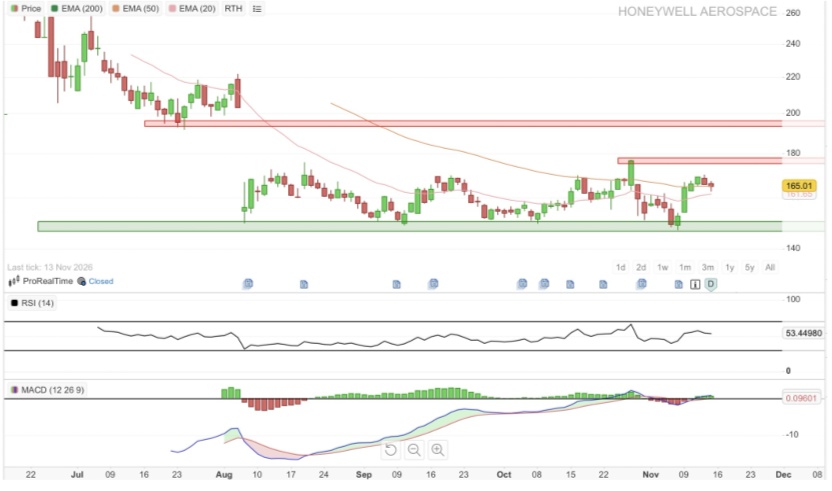
1. Business Model
Honeywell Aerospa $HONAV (-1.69%) spun off from the Honeywell Group as an independent company in mid-2026 and has since operated as a pure-play aerospace and defense company.
The business is divided into three main segments:
Electronic Solutions: Avionics, sensors, navigation, communication, and defense systems
Engines & Power Systems: Engines, auxiliary power units (APUs), and power generation systems
Control Systems: Air, temperature, motion, and control systems, as well as lighting systems for aircraft cabins
2. Competitive Moat: 8 / 10 points
Reasoning: The aerospace industry has one of the strongest competitive moats of any sector. Certification cycles for safety-critical avionics and engines take years and cost hundreds of millions. Neither Airbus nor Boeing can simply switch suppliers for critical systems (extremely high switching costs). The growing order backlog of over $19.3 billion (+12% YoY) underscores this strong market position.
Disruptions & Risks: The greatest risk recently stemmed from persistent supply chain bottlenecks for mechanical components, which temporarily slowed the ramp-up. In addition, the megatrend toward zero-emission aviation and autonomous systems requires massive research and development spending. While HONA is making targeted investments in this area (e.g., engines for the U.S. Air Force’s autonomous platforms), it must hold its own against fierce competitors. Its competitive moat remains strong but requires ongoing capital investment.
3. Financials, Margins & Growth: 7.5 / 10 points
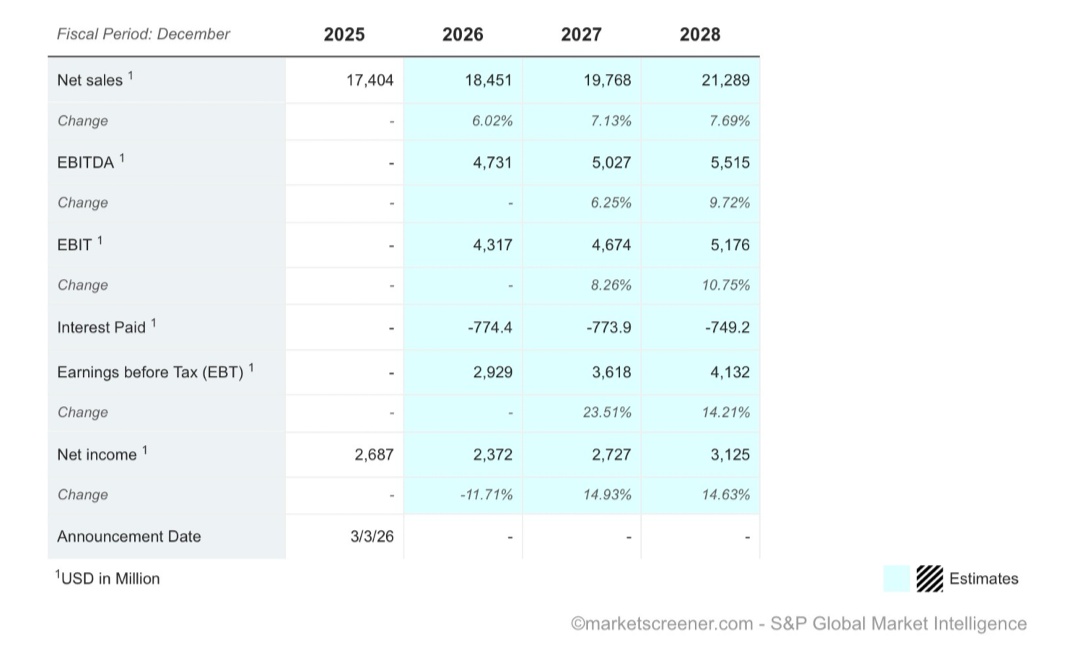
Margins: Excellent. The adjusted EBIT margin is at a high level of approximately 25% (though this includes temporary one-time effects such as customs revenue and tariff refunds totaling over 100 basis points).
Growth: Organic revenue growth remains stable in the 4% to 5% range. Management has raised its forecast for adjusted pro forma EPS for the full year to $7.85 to $8.00. Free cash flow is very robust at $1.2 to 1.4 billion in the second half of the year.
Criticism: This represents classic, rock-solid industrial growth rather than explosive tech growth. Furthermore, due to the recent spin-off (mid-2026), there is a lack of long-term, historical standalone financial data, which somewhat limits the reliability of long-term, multi-year models.
4. Valuation
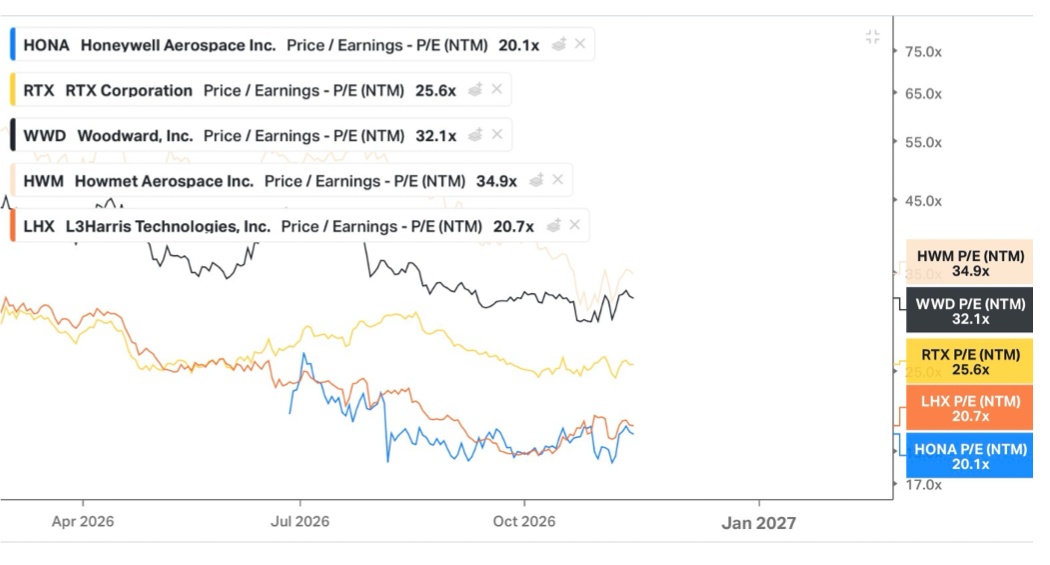
From a valuation perspective, Honeywell Aerospace is trading at a P/E ratio of 20. This is not cheap, but it represents a significant discount compared to the peer group, whose P/E ratio is around 30.
Why is that? Growth: The peer group is growing several times faster, and the forecast for HONA was lowered in August from 7–9% to 4–5%. Even Morgan Stanley calls HONA the cheapest major aerospace stock but acknowledges its weaker growth.
Another factor is debt: With $16 billion in bonds (approximately 3x EBITDA), HONA has more debt than its peers.
HONA is also currently experiencing delivery issues, meaning that only a portion of its backlog can be converted into actual revenue.
The peers are also expensive themselves: GE is trading at approximately 38x (trailing), above its five-year median of 35x, and some analysts consider Howmet to be overvalued. So, in part, HONA isn’t cheap—it’s just that the others are expensive.
Where the opportunity lies:
Part of the discount is a “prove-it-first discount.”
Part of the discount would disappear if:
1. organic growth moves toward the 6–8% target by 2030,
2. the margin holds steady at approximately 24–25%,
3. the aftermarket closes the gap with orders,
4. suppliers deliver (multi-source procurement is expected to exceed 30% by year-end),
5. free cash flow of approximately $2.5 billion rises toward the target of over $4 billion and debt decreases.
Balance Sheet Review
Debt & Notable Items: As a result of the spin-off process, long-term debt totaling approximately $15.85 billion was transferred to the balance sheet of the new independent company. This is offset by cash on hand of around $1.56 billion.
Exclusion criterion? No. While the debt is substantial, it is entirely manageable given the strong cash generation (operating cash flows of around $2.1 billion) and a conservative dividend payout ratio of approximately 20%. There are no balance sheet red flags that would signal a threat to the company’s survival.
Conclusion:
This is not investment advice. It is solely my personal opinion and a record of my portfolio. Investments carry the risk of loss.
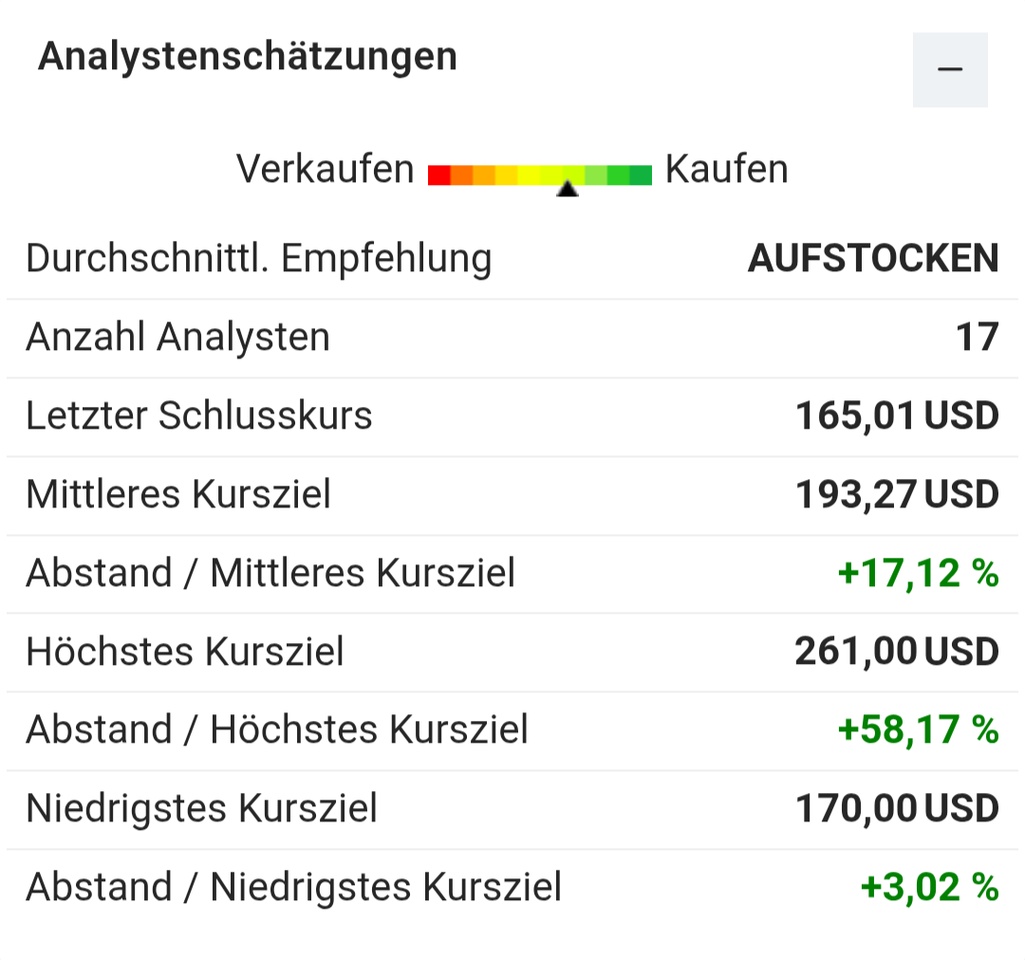
Despite the decline in its price, the stock is not particularly cheap at the moment but is rather fairly valued. It is by no means a must-have in a portfolio. The company is expected to grow steadily but is struggling with supply bottlenecks, so it may not be able to fully meet its forecasts. However, management promises to get these issues under control. The real opportunity lies in the fact that, if such problems can be resolved, a higher multiple—on par with that of the peer group—becomes possible. That could then provide long-term support for the stock price.
Personally, I’m invested in a small position through the Honeywell spin-off, but I haven’t bought any shares myself yet. What’s your take on the stock? And which do you find more exciting, Honeywell Technologies or Aerospace? $HONAV (-1.69%)


