

Hello community from Denmark!
While everyone here is philosophizing every day about the next AI chips from Nvidia and AMD, we seem to have completely forgotten the absolute foundation of this hardware. What happens when a 30,000 dollar AI chip runs under full load? That's right: it gets beastly hot.
And this is exactly where a tiny microcap comes into play, which, absurdly enough, no one here has ever had on their radar: inTEST Corporation. $INTT (+0.43%)
1. introduction: The real "shovel and pickaxe" play
inTEST is not AI software hype. The company is based in New Jersey and builds physical, highly complex test and temperature management systems for the semiconductor industry. When Nvidia, TSMC or AMD roll new chips off the production line, they have to undergo extreme stress tests before they are sent to the data centers.
2. what the booth does & why it is absolutely vital for AI!
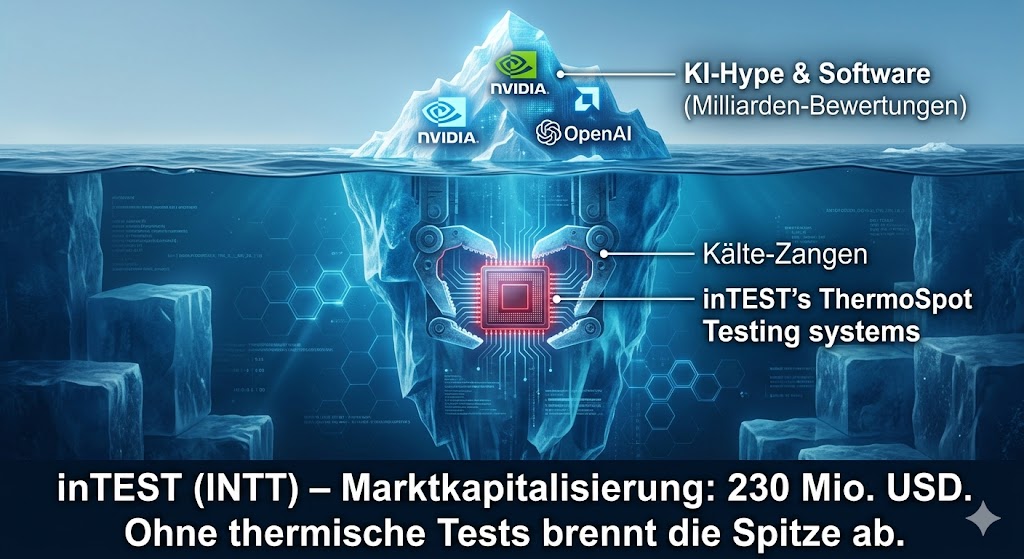
This is where we need to get physical: AI chips (GPUs) and advanced advanced packaging modules (like CoWoS) eat up absurd amounts of power (sometimes 700 to over 1000 watts per chip). Heat is the absolute mortal enemy of semiconductors. To prevent these chips from simply melting in the data center, they have to be tested for reliability during production under extreme temperature fluctuations (from freezing cold to extreme heat). inTEST supplies systems such as ThermoSpot and Temptronic provide exactly these precision test environments. They physically dock onto the silicon wafers and chips and put them through extreme thermal cycles. Without the thermal equipment from inTEST and its direct competitors, there would be no functioning high-performance AI chips. Item.
3. key figures, facts & figures (as at the end of May 2026)
- Market capitalization: Tiny ~230m USD (An absolute micro-cap!).
- Share price: ~17.20 USD.
- Q1/2026 figures (reported on May 05, 2026): An absolute blowout! Revenue: USD 33.9m (expectations pulverized).
- Dividend yield: 0.0% (every cent goes into growth).
4. core quality formula check
- Sales growth: +27.2% YoY in Q1/2026 just ended. That's brutal organic growth in an extremely challenging hardware market.
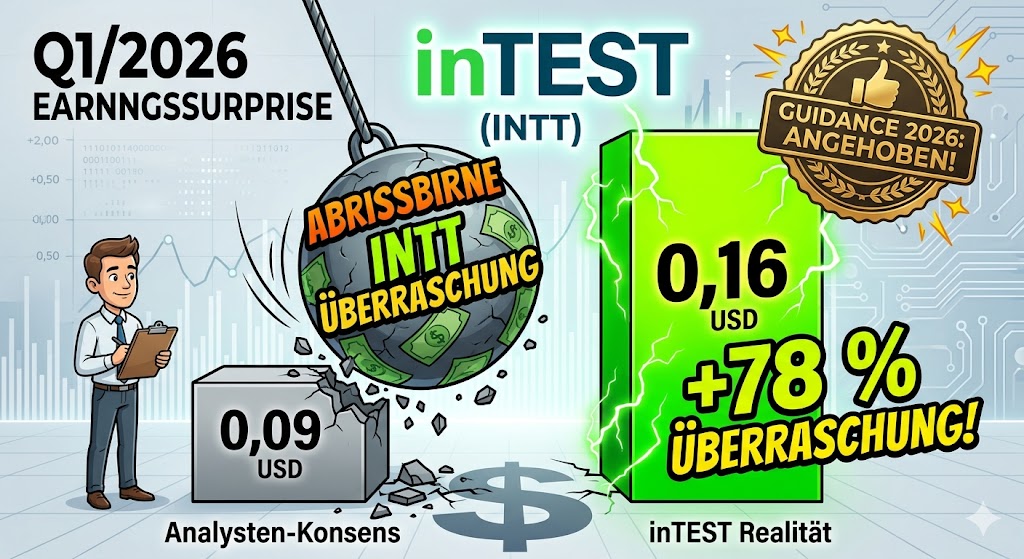
- Operating margin: inTEST is operating profitably. EPS (earnings per share) amounted to USD 0.16 (non-GAAP) in Q1, beating analyst estimates (USD 0.09) by almost 78%!
- Verdict: Strong points! The operating leverage is kicking in massively right now.
5. cash flow quality formula check
The balance sheet is rock solid. They have survived the historic hog cycle of the semiconductor industry and have strong quick/current ratios (>2.0). No toxic debt piles eating up cash flow.
6. dividend filter check
Fail. Zero dividend. $INTT (+0.43%) is a pure, crystal-clear play for the Side B of my portfolio (growth/gamble).
7. exclusion rule check
Does my ice-cold exclusion rule ("Story > Numbers") apply? Absolutely not!
InTEST delivers hard figures. The order backlog at the end of Q1 was over USD 51 million. These are signed, real hardware orders.
8. future prospects & competition
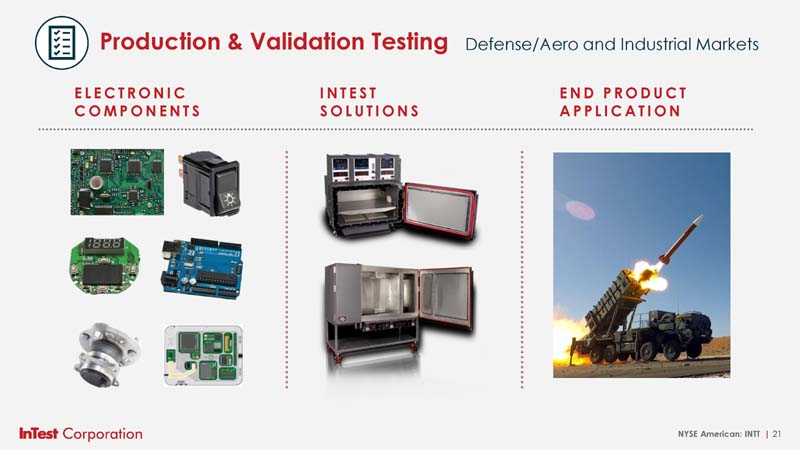
The highlight: inTEST is not only dependent on the AI semiconductor market. They are aggressively diversifying into the defense/aerospace and medical technology segments, where extreme thermal stress tests are also required. The competition is fierce (Teradyne, Cohu), but inTEST occupies the highly complex, high-margin niche.
9. chart analysis of the last few months
The chart has shown massive strength after the Q1 figures and has broken out of its low of around USD 6 last year. Over a 6-month period, the share price has risen by over +140 %. The share is currently consolidating extremely cleanly in the USD 18 range and building a new base.
10 Special Entry Zones (Bargain Hunter's List)
- Zone 1 (The breakout setback): 17.50 USD - 18.00 USD. The share price is currently oscillating here after the strong Q1 figures.
- Zone 2 (The panic dip): < USD 15.00. Should the overall market (Nasdaq) take a deep breath.
11. perspective on future viability
As long as physics applies, more powerful chips generate more heat. The more heat, the more and more precise test devices are required by inTEST. The business model is absolutely crisis-proof for the next decade as long as AI continues to grow.
12. potential alternatives / replacements
If you want to play the semiconductor test market but shy away from the micro-cap risk (USD 230 million), you can go for Teradyne or Cohu $COHU (-0.68%) . However, these are billion-dollar heavyweights and far more sluggish.
13. votes of the CEO
The new CEO Rich Rogoff (at the helm since April 2026) delivered massively right from the start. Based on the strong Q1 performance, the management has raised the annual forecast for 2026 to USD 130 to 135 million. The management exudes absolute confidence.
14. opinion of the analysts
Wall Street is slowly waking up. After the Q1 figures, price targets were raised from USD 10 to up to USD 19.30 (or just under USD 20). Although some analysts warn of general macro risks, they emphasize the massive undervaluation in a peer group comparison.
15 Conclusion & Side B classification
Raketentoni's personal verdict:
$INTT (+0.43%) Is the perfect, profitable micro-cap play for Side B. We are not buying the AI chip that may be overtaken by the competition tomorrow. We are buying the company that is testing the furnace. More info also at https://www.intest.com/
and of course all the others :)


