1Yr·

$VWCE (-0.21%)
is a scam...

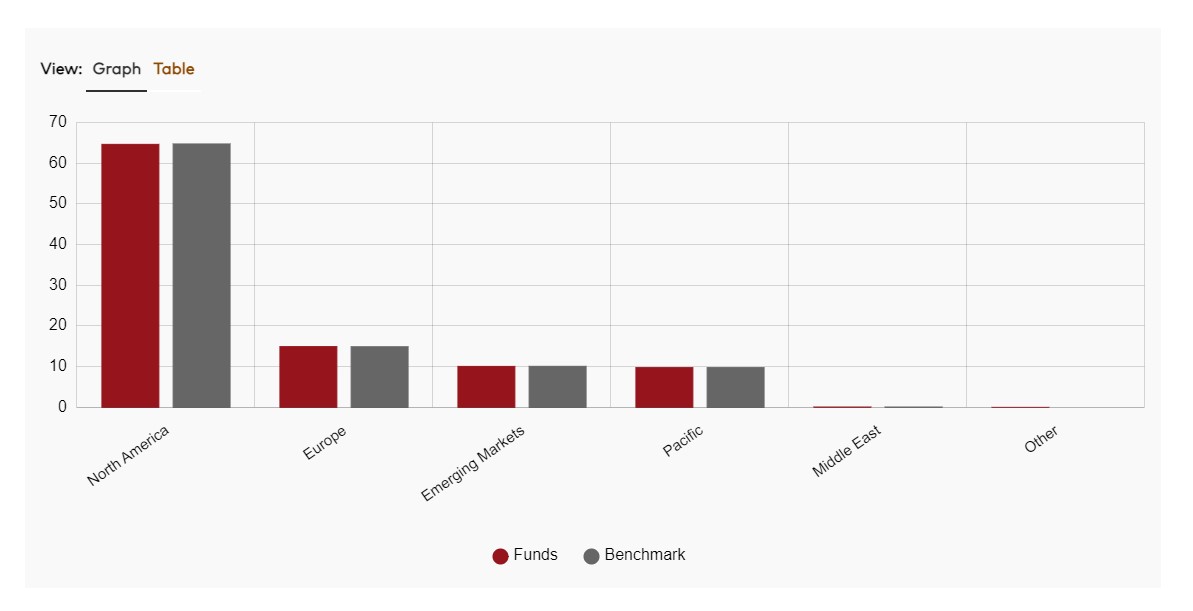
At what point is a US overweight harmful?


The US weighting in the $VWCE is still blatant.
attachment

And yes, of course, it doesn't bother anyone, because that's exactly what has outperformed in recent years and is now alone at the top of the global economy


But isn't investing in an AllWorld about risk diversification? Diversified investment in large parts of the global economy in order to cushion any bubbles in individual sectors as much as possible?


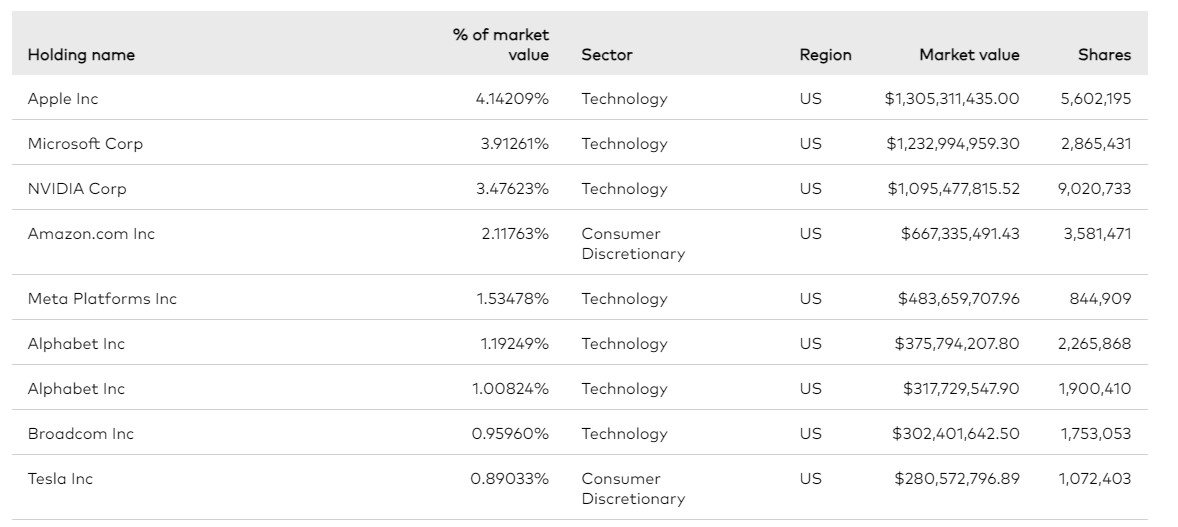
That is not at all the case with US tech.
attachment

The biggest 10 make up 20%. That doesn't have much to do with risk-free diversification, maybe it's yield-oriented overweighting, but is that the purpose of an All World ETF?


Not in my eyes, so what should be changed?


The All World ETFs have 2 defined focuses: The companies covered are large and just over 60% American.

So to at least balance out the diversification I would need an ETF without US participation, as well as an All World Small/ Mid Cap


Before I start my search, do you see it the same way or have I overlooked something?

6
36 Comments

profile image
Yep, that's why it's all in the USA😂🫡🍾
4
profile image
If successful companies were to be shifted, the weighting within these world indices would also change accordingly. Otherwise, there is always the option of using other ETFs to increase the weighting of missing countries and sectors within the portfolio.
I have also done the latter, adjusting areas in the AllWorld ETF that are too underweighted for my taste by adding further ETFs, and I am still adjusting this month by month via my savings plans.
2
profile image
@Metis Which ETFs have you added?
profile image
@leveragegrinding Uhm. My AllWorld already has a US share of less than 50% (because it focuses on dividends), to which I have so far added an EM. My savings rate is still pretty low, so I can't do everything at once, but I have my eyes open for Asia and will go for it if my wallet allows it.

Apart from that, more and more of the same ETFs with ex-USA are coming out, so I might take another look at them.
1
profile image
So if you want to avoid the USA, you can consider something like $EXUS, or something with EM and Europe

Otherwise I have a similar view. Even if I don't mind the USA... AW is just weighted by market cap and you can question that
1
profile image
@Fetzen would have chosen the FTSE ex us rather than blackrock, but yes, similar.
profile image
@leveragegrinding yoar I just mean "something like"
1
profile image
That's why I've also added an IT ETF to my portfolio. That way I get even more USA 🚀
1
profile image
Let's not kid ourselves - without a US overweight you won't get these returns either. I don't understand the panic many people are feeling about this. If things don't go well in the US, they won't go well anywhere else. Diversification or not. Have you ever experienced a phase where the stock markets in the US went down and that didn't affect the rest of the world?
1
profile image
@Johann_van_der_Smut yes.
However, most people want diversification to minimize risk. And that doesn't work with overweighting 😂
profile image
@leveragegrinding Yes, and a maximum return at the same time. It just doesn't work.
1
profile image
I think most people who are involved in investing are aware that the US is simply overweighted in the ETFs.
However, I don't think it's a bad thing, the companies are so big and so global, I can't think of any scenarios that explicitly hit the US so hard that I'm at a disadvantage.
If you really want to focus more on All World then I think it's a trade off with strong returns for high risk.
profile image
@Chris_legt_an Scenario for Us Tech? China attacks Taiwan, semiconductors become a scarce commodity. Tech would be f*cked
profile image
@leveragegrinding That would be a scenario that would definitely have a strong impact on the tech sector. But it will have a wider impact than the strong US tech sector.
Moreover, it's not a scenario that wasn't previously considered unlikely and I wouldn't be surprised if the US already had an emergency solution for these scenarios.
profile image
If the US market crashes, then everyone crashes. Nevertheless, I take a similar view and have also bought the Europe ETF with 25%. It costs a bit of a return, but I feel a bit better...
profile image
@HighFoxtrot Which one did you choose?
profile image
Core Stoxx Europe 600
1
Deleted User
1Yr
Comment was deleted
profile image
@Iwanowitsch Time in the market beats timing the market.
profile image
@Iwanowitsch I wouldn't justify it with iming either, that's exactly what I want to avoid. Always investing the same amount in everything and timing becomes irrelevant, I'm not interested in returns but in risk neutrality
Deleted User
1Yr
Comment was deleted
profile image
@Iwanowitsch You can no more see into the future for years and decades than anyone else before you and consistently outperform the global market for 30 years ;)
You are neither the first nor will you be the last to believe this and fail.
profile image
@Metis nana, don't be so pessimistic ;)

It's possible, it just takes MUCH more time
1
profile image
@leveragegrinding The statistics show that not even professionals who do the stock market full-time can do this for decades. :D In what way should private investors be able to do that?
1
profile image
@Metis Show me the statistics

The only statistics available show that funds never outperform. However, this is largely due to the cost structure.

As an example, just think how simple it has been in recent years; if you bought US tech (IcH mAg IPhoNeS, KauFe AppLe shares), you outperformed.

It's not a question of whether it's down to skill afterwards, it's just a question of having outperformed afterwards :)
1
profile image
@leveragegrinding Well. Who puts together the funds? That's right, people who do the stock market full-time. Do you think they would still be working in such companies if they were permanently so successful on the stock market? And it's always easy to say afterwards what was easy. But nobody knows what will be successful in the future.
profile image
@Metis Do you know how funds and fund managers work?
They usually have countless requirements compared to private investors. Small companies are often not investable, many companies are out because of ESG criteria. A large overweighting of individual companies is also not possible because there are caps.
On the other hand, look at what has happened with good active management. Buffet, Lynch, Graham, Icahn, are of course the spearheads - but there is also a lot between the broad market return of ~9% and "superstars" with 25%+.

The fact that people like Buffet now also have lower returns is also due to the size of the company. With >100 billion cash, you can forget about any small caps - because they no longer have any impact on the overall result.


PS: there are studies on what percentage of private investors beat the market. Depending on the study, it was 5-15%. Yes, not very promising.

But I can tell you: my father is in a stock exchange association run by a Volksbank MA. I've since managed to get my dad out of it and he now also invests in ETFs. The name of the association (similar to "Börsezocker") was actually the program. They only ever bought and sold the "new hot shit". If you don't deal intensively with companies, you will never beat the market. Or you are extremely good at technical analysis. At best, you understand both at least to some extent.

I see both on gq and in my circle of friends that most people simply invest blindly in something. But there are also enough people, both here and in my circle of friends, who have beaten the market for years.
1
profile image
@KevinE And my core statement was that most private investors do not beat the market for years and decades. You confirm this with your statement that 5 to 15% of private investors ever beat the market over a few years. Conversely, this means that 85 to 95% do not beat the market.
View all 8 further answers
Join the conversation