3G·

The future of the pharmaceutical industry bought!

I have today increased my position in Fujifilm $4901 (-1,01%) as I remain convinced that they represent the future of the pharmaceutical industry. And all this at a ridiculously low valuation, as Fujifilm is still valued like an ordinary conglomerate (P/E ratio: 13.5).


In the future, the most advanced stem cell therapies, mRNA vaccines or antibodies will be produced by Fujifilm, within their global network of state-of-the-art biologics manufacturing facilities. They are currently expanding aggressively, opening additional sites in the US, Japan and the UK. The trend is clearly moving towards foundries, as was the case in the semiconductor industry. In future, pharmaceutical companies will only conduct research and develop active ingredients; they will no longer build the expensive production facilities themselves, but order everything from Fujifilm.


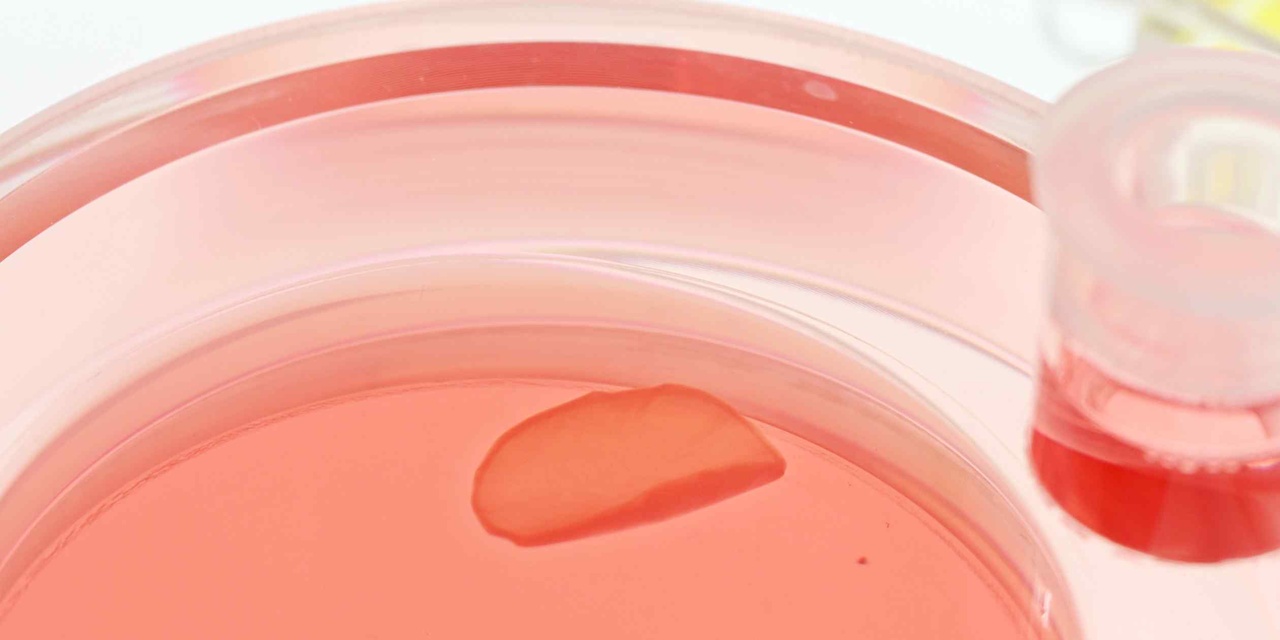
I've already written a longer post about Fujifilm, but yesterday there was big news for the global pharmaceutical industry that prompted me to write another little something. Two stem cell therapies have been provisionally approved in Japan, with full approval likely to follow in March, making them the first country in the world to bring this technology to commercialization. These are based on iPS cell technology, which can revert ordinary cells back to an embryonic (pluripotent) state, allowing them to subsequently develop into any cell. This technology is truly groundbreaking as it is capable of curing numerous conditions such as Parkinson's disease, heart failure, blindness, paraplegia and more. The first two approved therapies focus on Parkinson's and heart failure.


https://asia.nikkei.com/business/pharmaceuticals/japan-panel-approves-world-s-first-ips-cell-based-therapies


Fujifilm is positioning itself as one of the leading manufacturers of these complex cell therapies. This market alone could bring them additional billions.


Overall, I think Fujifilm's enterprise value is very likely to multiply. I expect 5-12x by 2035. Which end of the range we aim for depends primarily on the achievement of medium-term targets.


And that's it for my mini update! If you find the company interesting, you can also take a look at my previous detailed article! :)

20.02
Fujifilm logo
Acquistato a 16,45 €
previw image
36
18 Commenti

The only problem I see is that I think the pharmaceutical industry has little interest in curing chronic diseases. They prefer to treat them...
3
immagine del profilo
@Daniel1212 then the pharmaceutical industry would have to buy the patents at a very, very, very high price and let them disappear into a drawer.

That's my thought on the matter.
@Artiskon And it should never come out. Who knows how many times that has happened 😅
immagine del profilo
@Daniel1212 The pharmaceutical industry is interested in anything that makes them money. If you are the company that treats chronic diseases, you will make a fortune and because everyone thinks so, everyone will develop the corresponding products. In addition, there are always new patients regardless of the fact that you cure them. Politically, it would also be difficult to justify withholding something like this. And if the big companies really don't want it, there will be start-ups that will do it. So I'm relatively confident. And Fujifilm will benefit anyway, no matter whose drug it is, because they will produce the biologics for everyone. That's just the TSMC approach.
@PikaPika0105 I am basically convinced too. I even think that I will reallocate and invest. I think this sector and Japan as a country are easier on the nerves than Hims or Novo with their battles over patents 🫩
My two years of investing have already taught me that much.

But apart from that, I believe in nothing as much as human greed. And I absolutely believe that corporations are more interested in chronically ill patients than in cured patients. Lifelong subscriptions, so to speak. Cure Parkinson's? Cure Alzheimer's? Cure cancer? We'd rather do the thing with the pills and radiation...
What are a few billion for patents that are left in a drawer or start-ups that are swallowed up?
1
immagine del profilo
@Daniel1212 That is of course a very cynical view of the world. I don't think it's automatic that as soon as you work in a large corporation, you shed your humanity.
1
Not as soon as you start there, of course. But as soon as you get into positions in which you participate in sales to a not inconsiderable extent. From an economic point of view, it simply doesn't make sense for the pharmaceutical giants to cure diabetes or Parkinson's or other chronic conditions. It's simply not worth it. And greed takes precedence over ethics. It's almost naive not to believe that.
1
immagine del profilo
@Daniel1212 I really think this is a conspiracy theory that is based solely on personal prejudices and cannot be substantiated. It also deliberately ignores the economic benefits for companies. The companies that will be able to cure chronic conditions in the future will make billions from them, which is a huge financial incentive to develop and commercialize such therapies. The risk of someone else beating them to the punch and taking away their business is too high to do nothing, which is why all the big pharma companies are pushing these novel products instead of hiding them. This is no secret either. I think this image of the entrepreneur is toxic beyond all measure and it doesn't help us as a society to demonize the business elite in this way. Just as Blackrock does not want to control the world from the shadows, the pharmaceutical giants do not want to keep us all sick forever.
1
@PikaPika0105 It's not just the pharmaceutical companies. This can easily be transferred to so many areas. The oil industry, politics, etc... Self-preservation comes first everywhere. I think there's a consensus across the various companies and parties. Call it conspiracy theories. I can live with that. Unfortunately, we've just learned the hard way that sometimes there's more to it than you can imagine.
But I won't try to exorcize you of your lofty worldview. It's all fine. We all look at the world through different eyes. And that's a good thing.
1
immagine del profilo
@Daniel1212 agree to disagree 🤝🏼
1
immagine del profilo
@Daniel1212 Many of these diseases — including diabetes and obesity (currently in the financial hype, unfortunately) — are extremely complex. They often involve metabolic dysfunction, which is highly individual. People sleep different numbers of hours, have different diets, vary in activity levels, and are influenced not only by genetics but also by parental lifestyle and environmental factors.
IMO, no single medication or intervention will ever “cure” everyone, given the current technology available for R&D. The realistic goal in the short term is to improve quality of life and life expectancy, and many treatments already do that.
It is also worth acknowledging that society often expects science and pharma to provide all the solutions instead of addressing even minimal lifestyle changes. That’s understandably difficult for patients, especially in a society where unhealthy habits are deeply structural.

Notably, if a company or research group truly discovered a cure, it would be one of the most profitable and historically significant breakthroughs imaginable. Suggesting that pharma “doesn’t want a cure” ignores both the scientific complexity and the financial incentive behind real advances.
The cure will come. It is just a question of knowledge and technology.
1
immagine del profilo
Japanese pharmaceutical companies are the best I just say $4519 🫡🙌🏼
2
immagine del profilo
Thank you very much 🙏 great contributions and extremely exciting company.
1
They can still tread water, my position is not yet full 😂
1
immagine del profilo
Great news! Thanks for sharing.

I remember reading the clinical trial report on Amchepry (for Parkinson’s treatment) last year and was very enthusiastic about the safety results. $4506
Fujifilm’s brands are indeed dominant behind the scenes in iPSC-based regenerative medicine development, and I agree that the company will be critical over the next 10 years or so.
Btw, I believe that $CRSP could gain significant long-term benefits from an iPSC-derived approach, particularly by developing individualized, immune-compatible treatments — even if the target patient population is narrower.
1
immagine del profilo
Thank you very much, very interesting!
1
immagine del profilo
Thank you, very exciting
1
immagine del profilo
I bought the first tranche earlier today ✌️
Partecipa alla conversazione