Good morning, everyone,
Everything related to the AI value chain is currently being treated as if:
An “AI apocalypse” were imminent, one that would permanently destroy the business.
As if AI were on the verge of a structural collapse.
For experienced investors, this raises the question of whether we’re seeing a market bottom with mispricing.
The market is pricing in an extremely negative scenario
AI “Apocalypse” Narrative: A Discrepancy Between the Story and the Fundamentals
The term “AI apocalypse” is meant to illustrate just how much the market is overemphasizing the negative aspects.
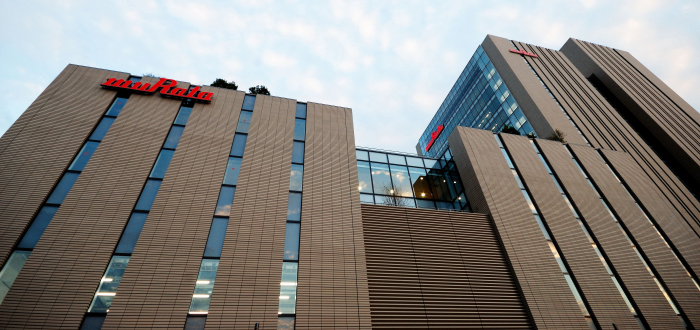
One example would be MuRata
- Half-year revenue grows by 20.8 percent
- Operating profit rises by 48.9 percent
- Approximately ¥1 trillion in capacity expansion announced
- Data centers are driving demand
Murata Manufacturing fell 4.1% yesterday amid a broader decline in Japanese electronics and semiconductor stocks. According to media reports, concerns about AI spending and stricter U.S. regulation weighed on the sector. In addition, Apple’s outlook fueled fears regarding growth and profitability, which also put pressure on shares of Japanese electronics component manufacturers.
Today, according to media reports, regional losses in chip stocks deepened. The earnings reports from Qualcomm and Arm reportedly reignited doubts about semiconductor growth and returns on AI investments.
Murata investiert eine Billion Yen in den Ausbau seiner MLCC-Fertig...
Murata Plans Major Capacity Expansion
On October 30, Murata announced that it would invest approximately ¥1 trillion over the fiscal years 2026–2030 to expand its global production capacity for multilayer ceramic capacitors.
For fiscal year 2030, the company aims to achieve sales in this product segment that are at least double those of fiscal year 2025. The announced investments thus represent an expansion spanning several fiscal years.
In addition, on October 28, Murata entered into a three-year strategic partnership with Accenture. Both companies intend to leverage artificial intelligence and data in manufacturing to improve quality and productivity.
Data centers drive the business
In its half-year results released on October 30, Murata reported revenue of ¥1,090,764 million for the six months ending September 2026. This represented year-over-year growth of 20.8%.
Operating profit rose 48.9% to ¥245,907 million. The company cited data centers as a key driver of strong demand.
Net income attributable to owners of the parent company reached ¥186,152 million, up 40.6% from the previous year.
On October 29, Murata also began mass production of its SWL series of switched high-frequency and microwave coaxial connectors. According to the company, they require approximately 40% less mounting space on the printed circuit board compared to the previous series.
Murata Mfg Aktie: Operativer Gewinn springt um 49 Prozent
Murata Is Investing One Trillion Yen to Expand Its MLCC Manufacturing in Asia
Japanese electronics component manufacturer Murata plans to invest approximately one trillion yen (about 5.69 billion euros) in additional manufacturing capacity for multilayer ceramic capacitors (MLCCs) in Asia by the fiscal year 2030. This was announced in a company press release dated October 30. With new production facilities in Japan and Thailand, as well as the expansion of other Asian plants, the company aims to increase its capacity in response to rising demand from data centers and other electronics markets.
New Production Facilities for MLCC Manufacturing
To expand its Asian MLCC production, Murata plans to construct new manufacturing facilities and equip existing plants with additional machinery. To this end, the company intends to acquire new land and invest in several locations in Japan, Thailand, and the Philippines. Murata plans to upgrade existing plants in China and other Asian countries.
In Japan, the subsidiary Okayama Murata Manufacturing plans to construct two buildings: one for MLCC production and another for capacitor foils and raw materials. Murata Electronics also plans to expand its manufacturing operations in Thailand with a new production building. In the Philippines, the company intends to equip previously unused areas of an existing factory with new production equipment and infrastructure. At the Yasugi site in Japan, another production facility for electronic components, including MLCCs, is to be built.
Growing Demand Driven by AI and Electronics
According to Murata, this manufacturing push is a response to the rising demand for passive components. Multilayer ceramic capacitors are used in smartphones and vehicles as well as in industrial equipment and data centers. In particular, the increasing prevalence of AI applications is expected to drive demand in the long term. The company also anticipates demand from robotics, mobility, and decentralized AI devices.
With plants in several Asian countries, Murata aims to ensure a stable supply even in the face of demand fluctuations. To this end, the manufacturer plans to secure its material supply and collaborate more closely with its equipment suppliers. Murata also intends to recruit new skilled workers and provide further training for its employees.
For the fiscal years 2026 through 2030, Murata plans to invest approximately one trillion yen (about 5.69 billion euros). Of this amount, approximately 350 billion yen (about 1.99 billion euros) is to be allocated to buildings and 650 billion yen (about 3.70 billion euros) to production facilities. The company estimates a total of approximately 150 billion yen (about 853 million euros) for the two new facilities in Okayama. Murata expects its MLCC revenue in fiscal year 2030 to at least double compared to 2025.
In Okayama, Murata plans to begin construction of the new MLCC production facility in April 2027 and complete it by the end of 2028. The second facility, for capacitor foils and raw materials, is scheduled to follow in 2030. By then, the company plans to expand the workforce at the site to a total of 1,500 to 2,000 employees. In Thailand, Murata expects the new facility to be completed in 2030, while work in the Philippines is scheduled to be finished as early as 2027. No completion date has yet been set for the new production facility in Yasugi.