$285A (-8,73 %)
$SNDK (-10,61 %)
I just invested in Kioxia.
Japanese memory chip manufacturers plan to significantly increase their production. Over the next six years, more than five trillion yen are set to be invested in new and existing factories.
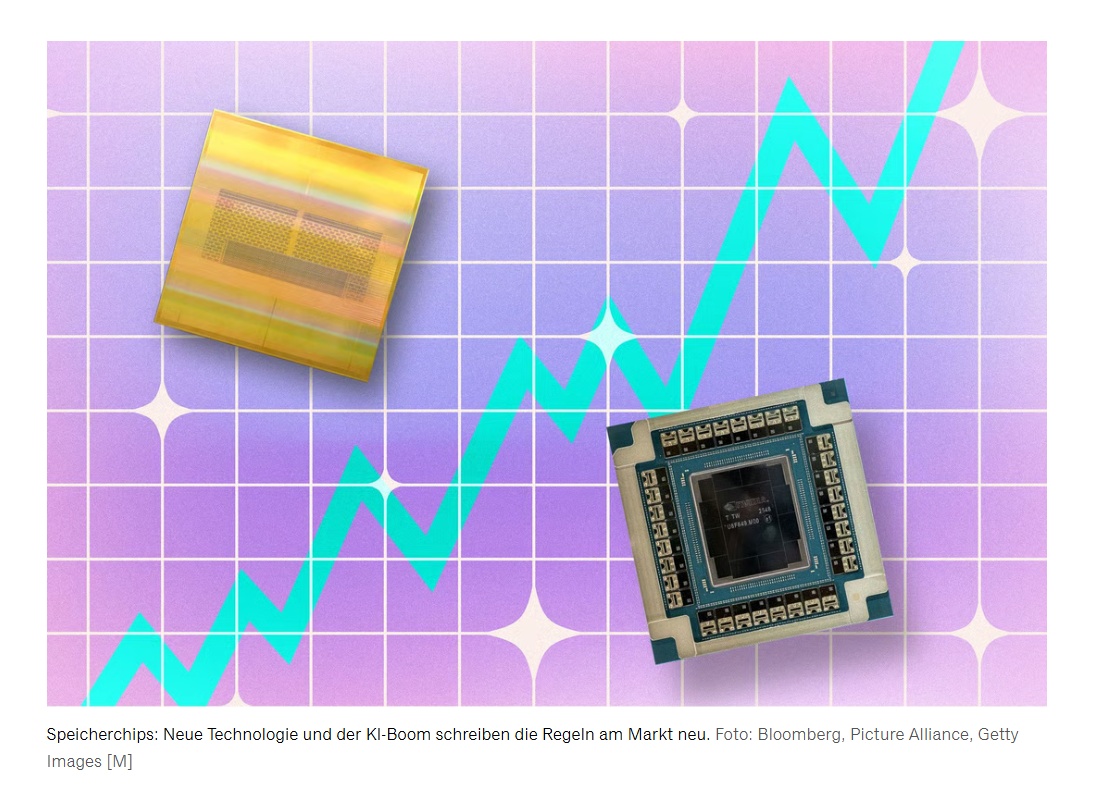
Tokyo. Memory chip manufacturers Kioxia and Sandisk plan to invest Japan more than five trillion Yen . That amounts to approximately 26.9 billion euros. With this expansion over six years, the companies aim to increase production of a component critical to AI data centers, which is currently in short supply.
The Tokyo-based NAND flash memory specialist plans to invest 1.8 trillion yen alone in a new factory in Kitakami, Japan, Kioxia CEO Hiroo Ota said on Thursday. The plant is set to manufacture the company’s latest high-density 3D flash memory chips. These chips are designed to process the enormous volumes of data generated by AI services. The companies wished to remain anonymous because the plans have not yet been made public.
Kioxia plans to carry out the investments together with its manufacturing partner, SanDisk. Demand for memory chips has risen sharply recently, and so have prices. These components are indispensable for data centers and are putting pressure on the margins of companies—from Nvidia to auto and smartphone manufacturers. During a conference call following the release of quarterly earnings, executives from Nvidia warned of supply bottlenecks and pressure on profit margins.
Kioxia Hints at Government Support
Kioxia and SanDisk plan to apply for subsidies from the Japanese government for their projects, reports the financial news agency Bloomberg, citing insiders. Kioxia stated in a press release that the company is considering, among other things, the construction of new facilities to increase corporate value “steadily and sustainably.”
Kioxia has likely secured favorable long-term contracts with customers that will underpin future growth, said Kazuyoshi Saito, a senior analyst at Iwai Cosmo Securities. “That’s extremely positive.”
Major technology companies such as Alphabet and Meta are signing multi-year contracts to secure memory and data storage capacity for their data centers. This has triggered SK Hynix a series of extensive investment plans.
Concerns About an Oversupply
Meanwhile, in the lower-margin consumer memory chip business, Chinese manufacturer Yangtze Memory Technologies is gaining market share. Concerns that Kioxia will only invest once a future oversupply has already begun to weigh on the market again have put pressure on the company’s stock price. Since its peak in June, the stock price has fallen by half.
Kioxia could easily finance investments amounting to billions using its existing cash reserves, said Citi analyst Takero Fujiwara in a report. In his view, a decision to invest would signal that the company has secured long-term contracts. These contracts point to high demand at least through 2028.
“Although the company remains cautious about its investments, it has demonstrated its willingness to invest when necessary,” Fujiwara wrote.
For some time now, Japan has been providing financial support to chip manufacturers with production facilities in the country. These include Taiwan Semiconductor Manufacturing (TSMC), Sony and Micron. The government aims to regain some of Japan’s former leadership role in the semiconductor industry.
Last month, Kioxia began shipping its tenth-generation stacked BiCS flash memory chips. At its facility in Iwate Prefecture, the company plans to produce higher-end NAND chips for data centers. The other major production center in Yokkaichi, Mie Prefecture, will focus on chips for consumer products such as smartphones.
More:
Plötzlich heiß begehrt: Speicherchips werden zum Flaschenhals der KI
Speicherchips: Kioxia und Sandisk planen Milliardeninvestitionen