

In the traditional financial world, gaming is often underestimated as a volatile project business.
Many of the older generation don't know much about it, they may have played Pokemon, Tetris or Tekken, but in my young generation gaming is a major part of everyday life together with social media (you can debate whether this is good or bad).
Why does the younger generation play so much?
There are structural reasons why gaming is more present today than in the past:
- Social meeting place: For many young people, Fortnite, Roblox or Minecraft is the "digital playground". They meet there after school, talk on headsets and spend time together. It is often not a retreat from social life, but part of social life. Reinforced by corona.
- Reward systems: Developers use psychological tricks (especially in mobile games) such as gacha mechanics or daily log-in bonuses to keep user loyalty extremely high.
- Creation of identity: Successes in competitive games (e-sports) provide confirmation and self-confidence, which can be lacking in the often stressful everyday life at school/work.
For the age group of 12 to 25-year-olds age group, current data from 2026 shows that gaming is no longer just a hobby, but the dominant leisure activity and the primary social space.
On a global average, teenagers and young adults spend around 8 to 12 hours per week with gaming.
Gaming time rises sharply at an early age, peaks among 16- to 19-year-olds and stabilizes in early adulthood when work and studies come into play.
- 12 to 17 years
- Daily: approx. 2 to 3 hours (on school days) / 4 to 6 hours (on weekends).
- Weekly: Average 15.2 hours.
- Special feature: In this group, around 94% play games at least occasionally; gaming is the "new television" here.
- 18 to 25 years (young adults):
- Daily: approx. 1.5 to 2.5 hours.
- Weekly: On average 10.8 hours.
- Special feature: Although time decreases slightly due to obligations, the willingness to pay. Around 8% of this group are considered "high-commitment gamers" with over 20 hours per week.
Engagement king: Gen Z (13-28 years old) now spends over 9 hours of screen time per day. A significant proportion of this is spent on interactive media (gaming) rather than passive consumption (TV).
Social capital: For 12-25 year olds, gaming is where they meet friends. For them, leaving a game means losing contact with their social group. This is the reason for the extremely stable player numbers of titles such as Genshin Impact.
Cross-platform advantage: Since Asian titles (such as NTE) cover both the short mobile sessions and the long PC evenings, they "occupy" the young generation's entire leisure time.
The Asian dominance of the gaming industry
The data from May 2026 prove it: While the West almost always (there are 2 exceptions in my list) relies on cyclical sales, Asian publishers have created highly stable digital ecosystems that generate billions in cash flow every month.
1. the model: SaaS structure instead of software sales
The success of Asian titles such as Genshin Impact, Zenless Zone or NTE is based on the live ops model. They do not act like a movie (release -> peak -> end), but like an infrastructure:
- Asia: High user base through free-to-play, cross-platform optimization (PC, console, mobile sync) and monthly content updates.
- West: Often still focus on one-time full-price purchases (€70), which limits the target audience (TAM) to core gamers with expensive hardware .
Feature
Western AAA model (e.g. Sony/EA) vs Asian cross-platform model
(e.g. miHoYo/Tencent)
Starting price
~70 € to 80 € vs 0 € (Free-to-Play)
Example: Reach vs. revenue per capita (ARPU)
A classic calculation example :
- Western blockbuster (e.g. Spider-Man 2):
- Sales: 15 million units x € 70 = 1.05 billion € turnover (one-off).
- Asian giant (e.g. Honor of Kings):
- Users: 110 million active players per month.
- ARPU (revenue per user): Even if the average user only spends 2 € per month per month (through small purchases), the game generates 2.6 billion per year - over a period of approx. 10 years.
2. global performance comparison (average values 2025/2026)
Some of the games have e-sports tournaments, tournaments, European championships, etc., but I have excluded this because it would go beyond the scope.
Game
Publisher
Ø players/month (MAU)
Ø profit/month (net)*
Honor of Kings
Tencent
~112 million
~185 million USD
Most profitable game worldwide. With active e-sports leagues.

Mobile Legends
Moonton
~90 million
~85 million USD
Massive dominance in SEA. With active e-sports leagues.

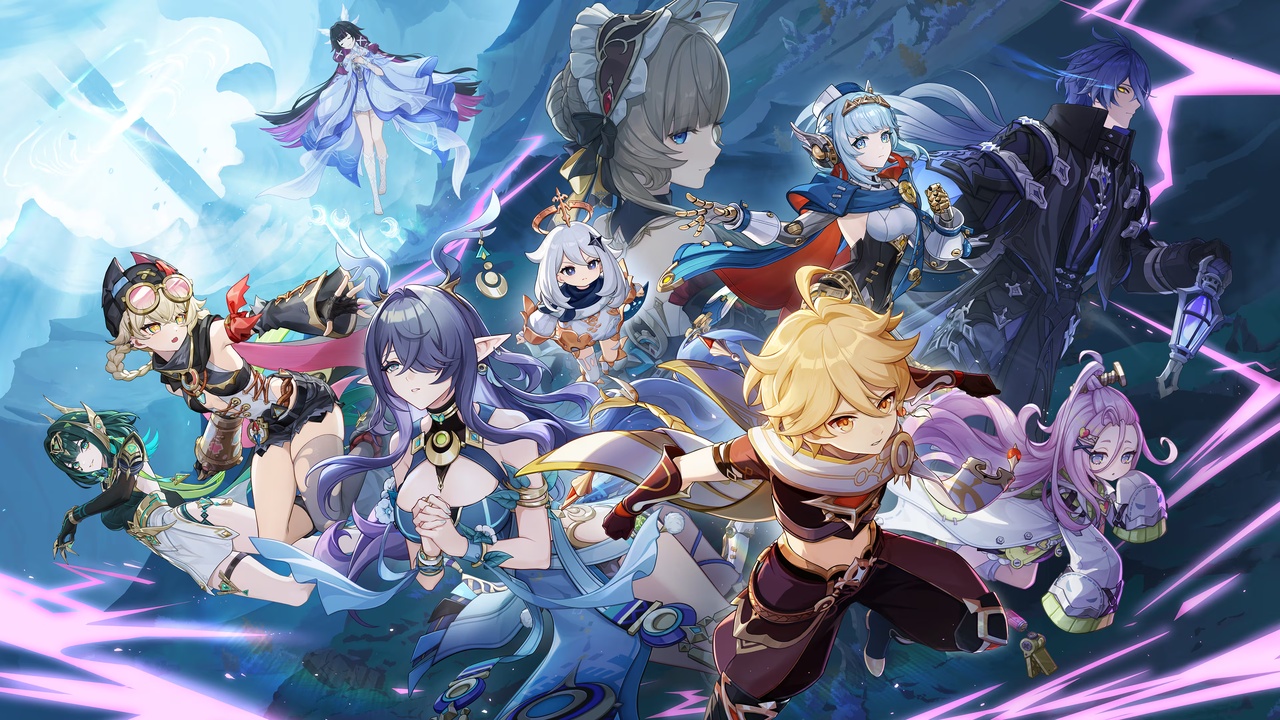
Genshin Impact
miHoYo
~62 million
~55 million USD
Stable cash flow giant for 7 years. Fans are already speculating on genshin 2 in 2029.
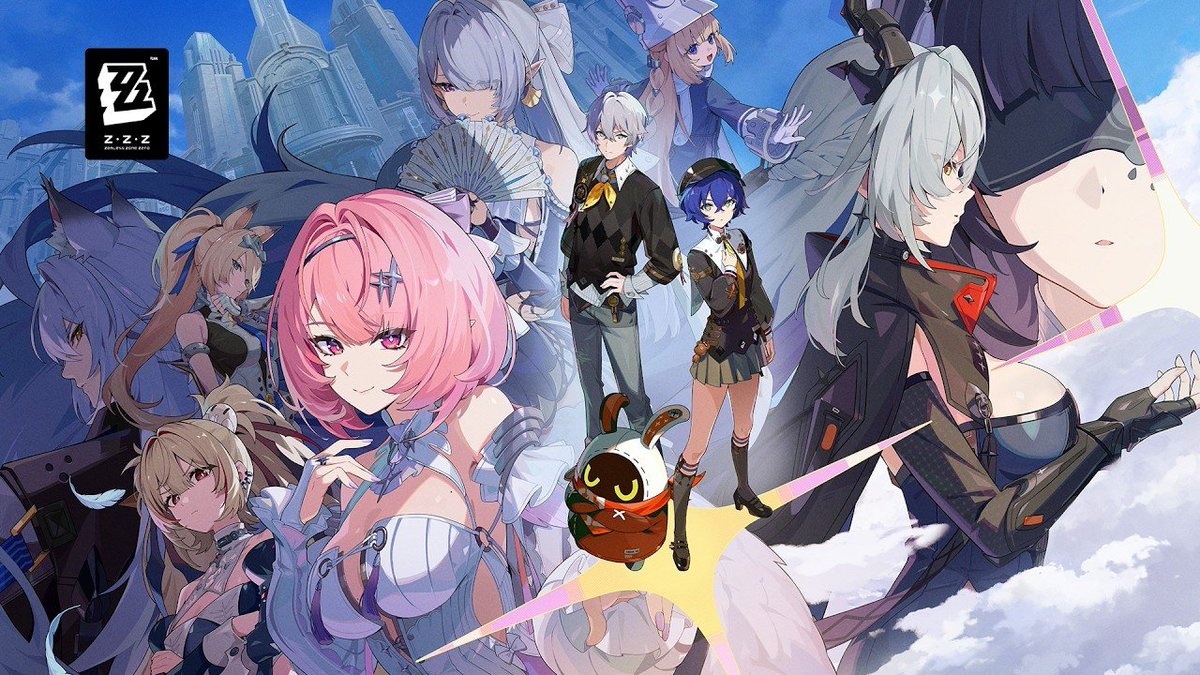
Zenless Zone Zero
miHoYo
~32 million
~50 million USD
Strong growth since launch in 2024.
I am a huge fan myself (global top 1% Yixuan :).
CS2 (Counter-Strike)
One of the few Western titles in my list (so far everything was Asian)
Valve
~26 million
~42 million USD
Western leader (PC). With active e-sports leagues.
FC 26 (EA Sports) The 2 western title.
EA
~16 million
~45 million USD
Strong through Ultimate Team but already in critique for years. With active e-sports leagues.

NTE (Neverness to Everness)
P. World
~25 million (est.)
~14 m USD (day 1)
Global release April 2026. What's special here is that the game is only 24 hours old and the numbers are constantly growing.

Arena of Valor
Tencent
~14 million
~18 million USD
Stable, but behind HoK. The special thing here, the game is over 10 years old. With active e-sports leagues.
*Net profit after deduction of 30 % store fees (Apple/Google). The margin is sometimes higher for PC's own launchers.
The investment logic behind the figures:
- Sales stability: A game like Honor of Kings earns more in one month than most western blockbusters do in two years.
- NTE effect: Released worldwide on April 29, 2026. NTE (Neverness to Everness) earned an estimated 14.7 million USD on the first day alone. This proves that the market potential for Asian urban open-world RPGs is far from saturated.
3. why the investment world is overlooking the sector
- Platform blindness: Many analysts only look at Steam charts or consider the gaming sector to be too niche. As Asian titles often use their own PC launchers or dominate on mobile, they hardly appear in Western top lists.
- Underestimation of margins: Cross-platform integration allows these games to reach users without a PC/console. The smartphone is the most used gaming device worldwide - Asian companies own this market.
4. strategic investment options (unfortunately, in my opinion, quite a mao selection, hopefully more in the future!)
Investors who want to profit from this shift will find the technological pacesetters in the Asian sector:
- Tencent $700 (-0,9 %)
(TCEHY / 0700.HK): The "S&P 500 of gaming". Dominates almost the entire market through its holdings (Kuro Games, Moonton, Riot, etc.). - NetEase $NTES (+1,8 %)
(NTES): Innovation leader for high-end mobile graphics. They often scale their titles to the global market faster than Tencent. - Perfect World $$002624
002624.SZ): With the record launch of NTE this company is the current insider tip for growth investors. - Sony $6758 (-0,51 %)
: Profits as a hardware partner. Many of these titles are marketed as PS5 exclusives (console), which drives hardware sales in Asia and globally.
I can't say how AI will change the gaming sector in the future, but I think that developments in AI will be an enrichment in the gaming sector.
#gaming
Conclusion:
Asian developers have written the code for infinite scalability cracked. While Western studios often fail due to "blockbuster risk" (high costs, uncertain success), Asian market leaders deliver data-driven, technologically superior platforms that retain a global user base. Anyone not investing in this sector today is ignoring the most profitable part of digital entertainment.
In the gaming sector, we are guaranteed to see records in the future and decades of stability!

