A case study on why publicity at all costs works
A year ago, American Eagle was a textbook “dead mall brand” that had a few legacy customers but no excitement. The name was familiar, but the relevance was fading. Most fashion brands, even luxury ones to an extent, go in cycles. From in to out, from hype to forgettable. And American Eagle seemed to be at the end of its cycle. This led to stagnating revenues, falling margins, and a bored stock. Nobody would be buying into something like that. But then the marketing team flipped the board.
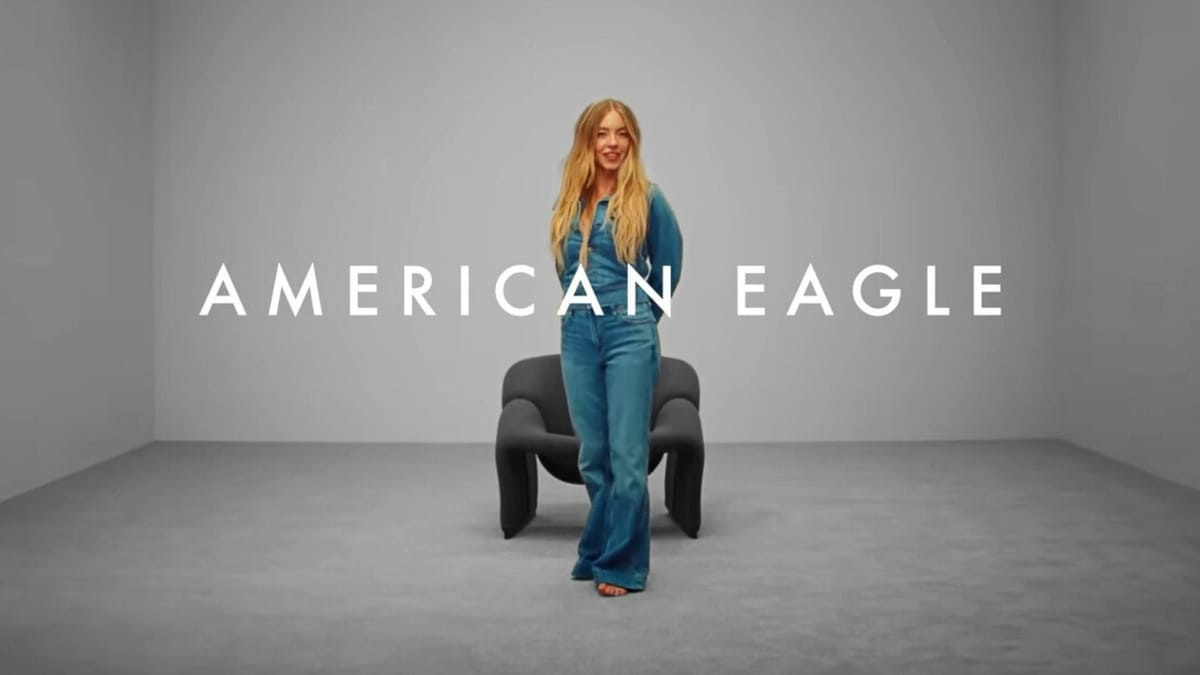
On June 23 the now-infamous ad campaign hit. A harmless pun, a bit of wordplay, and suddenly the internet did what it does best: turn absolutely nothing into a nationwide controversy. Social media pettiness might be detrimental to society, but it definitely helped pull off the PR stunt of the year. Columns in legacy newspapers, outrage posts on Instagram, counter-outrage posts on X. And right in the middle of it all, enjoying the chaos, was American Eagle.
Does a 150% jump seem ridiculous based on that news? Maybe. But that’s not how it works in the current market environment, especially for supposedly “dead” stocks. A brand that most people had labeled as “out” suddenly came back to life with a bang. Nobody knows whether the campaign was a calculated, deliberate provocation by a very clever marketing team or whether management simply got lucky while the public handed them free exposure on a silver platter. But it’s almost irrelevant, because nothing matters more than the outcome.
American Eagle achieved something every retailer is after: massive, organic brand recognition across a divided audience. At least half the country loved it, the other half didn’t care, and a few very loud people made everyone aware of it. In an attention economy, that’s the absolute jackpot. The one thing all marketing teams aim for. American Eagle re-entered cultural relevance overnight; memes and social media did the distribution at zero cost.
Was it a stroke of marketing genius? Or did the public just inflate management’s stock bonus by turning a silly pun into a full-blown scandal? Probably a bit of both.
And the result is that a “boring” apparel stock suddenly became interesting again. Sentiment flipped, old customers returned, new ones were created, and shareholders got an early Christmas present.
Moral of the story: fundamentals matter, but attention matters too (if not even more right now). Sometimes all you need is “good genes,” “good jeans,” and an over-sensitive internet that can’t help but overreact.