23H·

3xGTAA – August 2026 Monthly Review

Finally, a completely normal month for the strategy again! Here’s the update:


Asset Performance 08/26 (July 31–August 31, according to Wikifolio)

3xUSDEUR: -2.3%

3xQQQ: +11.6%

3xEU50: -7.1%


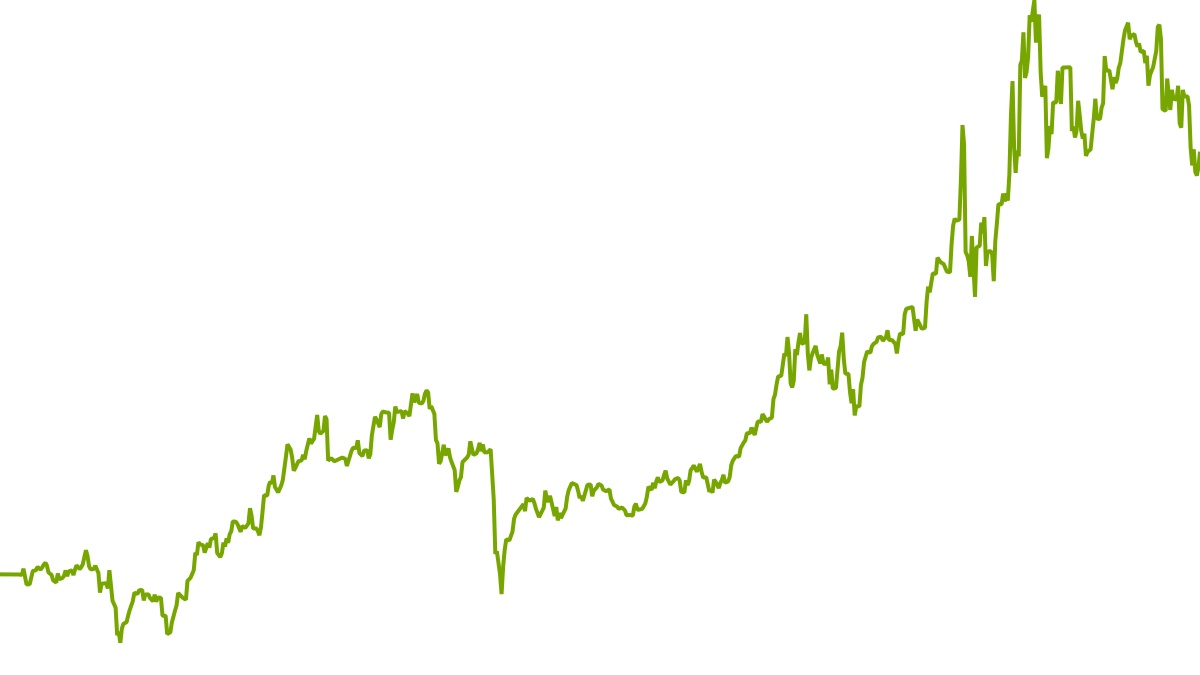
3xGTAA Portfolio (Aug. 31, according to Getquin)

July 31, 2026: €124,540

August 31, 2026: €127,700


Wikifolio Certificate (August 31, mid-market rate according to Wikifolio)

July 31, 2026: €193.70

August 31, 2026: €198.60


Month: +2.5%

YTD: +21.5%


August 2026 Review


With a monthly performance of +2.2%, 3xGTAA barely moved in August. The gains in the Nasdaq 100 were almost entirely offset by losses in the Euro Stoxx 50 and the USDEUR—even though things looked significantly more positive at one point. A quick note for the record: the losses in these two asset classes had already been foreshadowed last month, as they had almost completely lost their momentum.


Outlook 09/26


There have been some shifts in momentum within the asset pool. The EU50 and USDEUR are falling back and are thus being removed from the active allocation. They are being replaced by two familiar names: WTI and BTC. WTI has stabilized significantly and is now trading above the SMA150 again. Since the margin is narrow, the signal could still change on September 1. In that case, EU50 would remain in the portfolio. The price at approximately 12:00 p.m. on September 1 will be decisive, to allow enough time for execution (finding a favorable spread, partial sales in low-liquidity conditions). The situation is different for BTC, which is trading well above the signal line following the August rally and has also shown positive momentum overall over the past six months.


The allocation for 9/26 is therefore:

2xWTI

3xQQQ

1xBTC


Report from the 3xGTAA Workshop


As already mentioned in recent monthly reports, the issue of interest rates is increasingly becoming a focus for investors. This is a good opportunity to take another close look at the bond asset class in the 3xGTAA.


As some of you may know, the dominant regime of falling interest rates over the past 40 years came to an end in 2022 and is now reversing. However, this also reverses the logic behind including bonds in portfolios and strategies. What has worked over the past 40 years will not necessarily work over the next 40 years. This is relevant—even for every ordinary B&H investor. In what way? Due to their negative correlation with stocks, bonds have served as a hedge or risk buffer in many standard portfolios. You’ll still hear this from your personal financial advisor. However, when inflation reaches around 3%, this correlation flips to positive, and the risks of both asset classes amplify each other. You won’t hear that from your advisor anymore.


What does this mean for 3xGTAA? The asset pool consists primarily of uncorrelated asset classes, of which—according to the plan—a few are always trending upward. If stocks now fall due to rising interest rates, then bonds will also fall, and there will be no diversification. One idea would be to add short bond ETFs—that is, ETFs that rise when bond prices fall or interest rates rise.

One problem with this idea is that the new interest rate regime was only implemented in 2022 and has not existed long enough to conduct meaningful backtests. Inclusion in 3xGTAA would therefore be purely speculative. A specific candidate would be the WisdomTree US Treasury 30y 3x Short $UL3S (+1,59 %) (I’d call it the “short -3xTLT”).


Now my question for you: What do you think of the idea of adding a -3xTLT to the portfolio in order to potentially profit from rising U.S. interest rates? I’m still undecided on this (new interest rate regime vs. lack of backtests) and would appreciate any input!


Whatever your opinion on this may be: May the momentum be with you!


Yours, Epi

$DE000LS9U6W1 (+0,24 %)

https://www.wikifolio.com/de/de/w/wf03x0gtaa

previw image
32
19 Commentaires

image de profil
True to my motto, “No Risk, No Fun,” I’d take them on. Where else are you going to make a positive return? Okay, you could, of course, also short stocks or gold.
6
image de profil
@Multibagger It's just not a "No Risk, No Fun" strategy
1
image de profil
@Multibagger Gold and stocks are difficult to short in momentum systems, primarily because of the asymmetric volatility and the resulting numerous false signals.
2
image de profil
I’m invested because your strategy is strictly based on facts and data, not on emotions and assumptions. That’s why I don’t think much of adding -3xTLT to the pool. On the contrary, it could lead me to pull out. I’d have to think it over if it comes to that.

It’s a good thing I got in early on the BTC bull market. Even if naysayers claim that a “green August” has never been followed by a “green September.”

Glad to see you’re still around.
4
image de profil
@DonkeyInvestor The end of the 40-year cycle of interest rate cuts is more than just a hunch—it’s more like a logical fact. You simply can’t go below 0.

But the lack of backtests is certainly a compelling argument. It would be a leap into the unknown...
4
image de profil
I’d already given this some thought, but I was undecided about whether I should include 30-year bonds or stick with 10-year bonds in my model.

I came to the conclusion that if interest rates were to level off on the higher end, gold and BTC should pick up steam again, right? That’s why, in my view, a position in U.S. bonds would be an unnecessary risk.

I’m really curious to see how you and the other momentum traders here will adjust your models for such a scenario.😄
1
image de profil
@HomoOeconomicus That's an interesting thought! Why do you think gold and BTC rise when interest rates go up? Intuitively, you'd think that assets yielding high interest rates would outperform non-interest-bearing assets, right? What goes against this classic logic?
image de profil
As I understand it, a high-interest-rate environment is one in which high inflation is likely to prevail and economic growth is likely to be rather moderate, with a tendency toward stagnation.

Therefore, I would expect that, in addition to bonds—due to their more attractive risk-adjusted returns—gold and BTC would also gain momentum due to the loss of confidence in fiat currencies and the institutions behind them.
Personally, I’m not a fan of government bonds, since I don’t want to finance the debt of someone whom I don’t trust to handle money responsibly.
image de profil
Good idea. Let's do it! If a significant number of investors in 3xGTAA see it differently, maybe we should consider creating a new certificate so everyone can decide for themselves?
1
image de profil
@Keineui Well, I can just do it alongside 3xGTAA in my trading portfolio.
The real question is, how do you deal with untested asset classes?
image de profil
@Epi Your question in the article was, after all, what we think of it. That's why I'm answering.
As for your second question: backtest as much as you can. But the future will always be different from the past anyway. So for me personally, a 40-year backtest is interesting to look at, but ultimately not decisive.
2
image de profil
@KeineuiThanks for your answer! I find the reasoning behind the answers even more interesting. I can learn from that.
So, why do you think it would make sense to include -3xTLT?
image de profil
@Epi Somehow, we need to hedge against the debt crisis. Only time will tell whether Bitcoin and gold will be able to do that, so I think the approach using options makes sense.
1
image de profil
This is the August recap, right? The headline is wrong.
1
image de profil
@Knapp That's right, thanks! 👍
1
image de profil
Hi @Epi, I don’t know enough to offer a technically sound opinion on the inclusion of -3xTLT. In my experience, though, it’s never hurt to leave a system that’s working as is. As far as I understand, your 3xGTAA model has delivered what it was supposed to so far. Strictly speaking, there hasn’t been a new all-time high since March 2026, but that’s just part of the game, and the average return is still around 34% per year—which is enormous and absolutely excellent. As I mentioned earlier, though, I know far less about the technical details, so I appreciate you asking me for my input as an investor and will leave the decision up to you.
1
image de profil
So what's the idea behind SpyTipps?
1
image de profil
@T-Dax Good question. My first thought: yes. Tips is a liquidity indicator, regardless of the underlying trend in interest rates. Systematically, in an environment of rising inflation and even steeper increases in interest rates, the indicator should be negative more often.
Hmm. It seems like the momentum has already run out for Bitcoin again. It jumped for three days and now it’s flat again. Or to put it another way: the momentum has already faded again.
WTI is another story. It seems to me that it’s reacting less to momentum and more simply to day-to-day political events—mainly in Iran—which are essentially unpredictable.
But we’ll see.
The tlt thing might be a useful addition to our toolbox.
1
Participez à la conversation